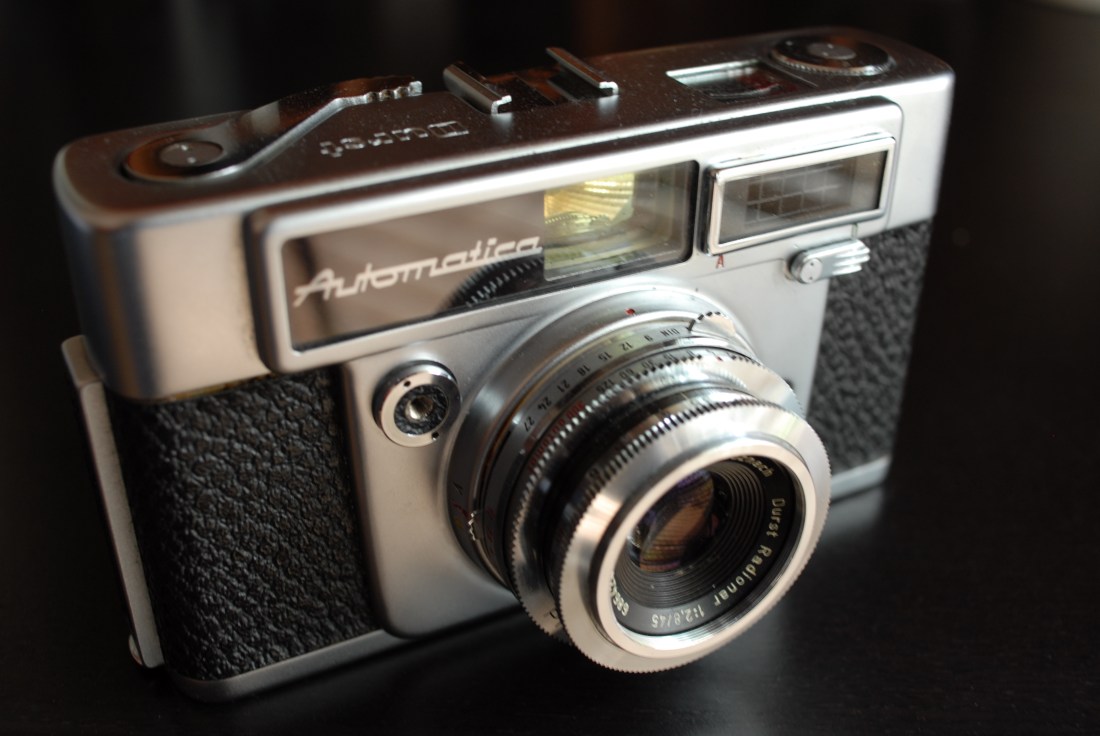
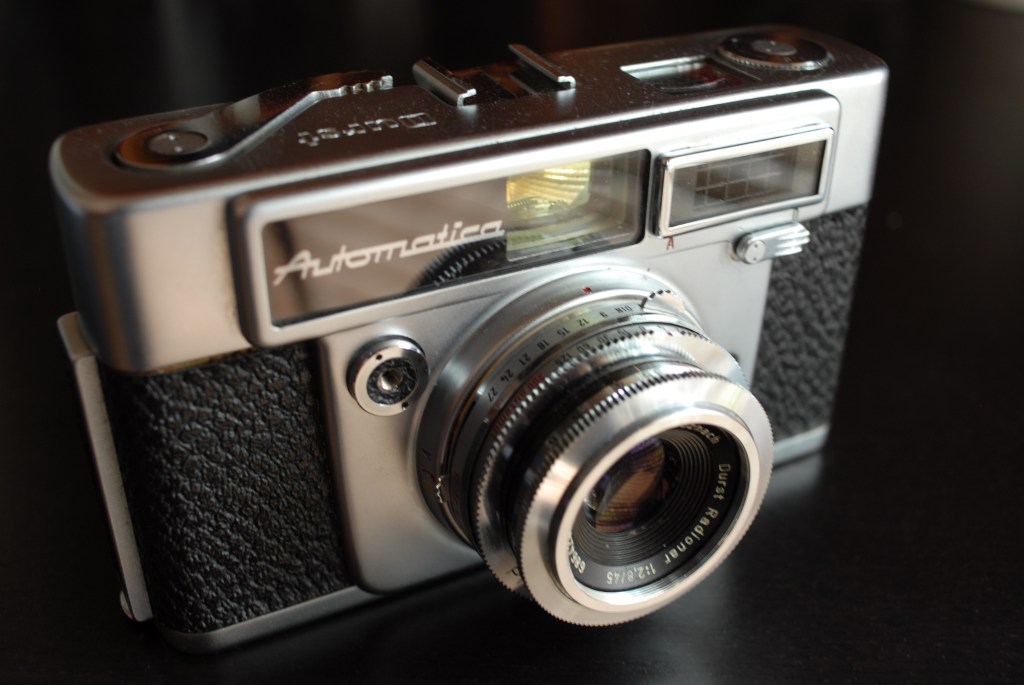
Photos from the Durst Automatica in 2023

Much has been said about the Durst Automatica camera. When I bought mine at a flea market in 2008 I thought it was an unusual brand rangefinder. I knew Durst made copiers but not cameras. Later I found out it was in fact a viewfinder camera. It had no rangefinder built in. You had to guess the subject distance and use the distance scale or use zone focusing.

But it was a such a cool camera from the 1960’s. Nice design by the Italian makers. The advance lever sat flushed with the top plate of the camera giving the top plate a clean flat top. During the film advance motion, the lever moves up above the top plate to enable it to rotate fully to advance to film. The film rewind knob on the other side of the top plate also sat flushed and pops up when a button at the bottom plate is pressed to release it.
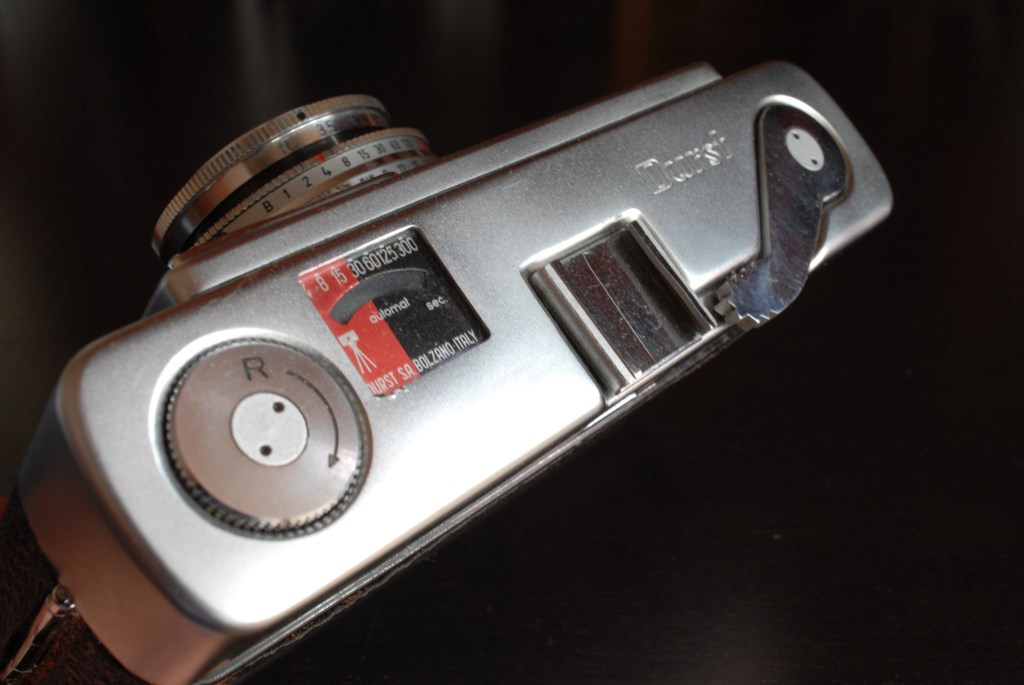
The shutter release button sits in the front plate and is driven by a pneumatic mechanism which gives it a slightly different feel and sound from other mechanical shutter release mechanisms.

Mine came stored in its original case and was in very good condition. I have never used it before to take photos until now in 2023. The Prontor-SVS leaf shutter seems to fire at the correct speeds except for the slower speeds 1/2 and 1 sec where it seems a bit more sticky.

By the way the camera has a very unusual aperture priority system (probably one of the first aperture priority systems in the world). The f-stop used for aperture priority mode is dependent on the ISO of the film that you use. For example, if you use an ISO 400 film, the only f-stop you can use for aperture priority is f22, f16 with ISO 200, f11 with ISO 100 and so on. This is because both the aperture priority ISO setting and aperture priority f-stops are on the same ring of the lens. Turning the ring to set the ISO of the film used for aperture priority mode will set the f-stop at the same time.

The aperture priority AE is set by turning the lever in the front of the camera from O to A (in red) and setting the shutter speed at its max 1/300s (also in red). Once aperture priority mode is set, the camera will automatically choose the shutter speed using the built in selenium light meter. If you wish to use manual exposure by manually turning the f-stop and shutter speed rings on the lens, you simply just set the lever from A to O.

Loaded up with expired Walgreens ISO 100 colour film, I set out to the Eastern suburbs of Sydney, Australia on a fine winter’s day to test run the Durst Automatica. Is the selenium meter still working? I don’t know but since it has been kept in its original leather case, I am keeping my fingers crossed!
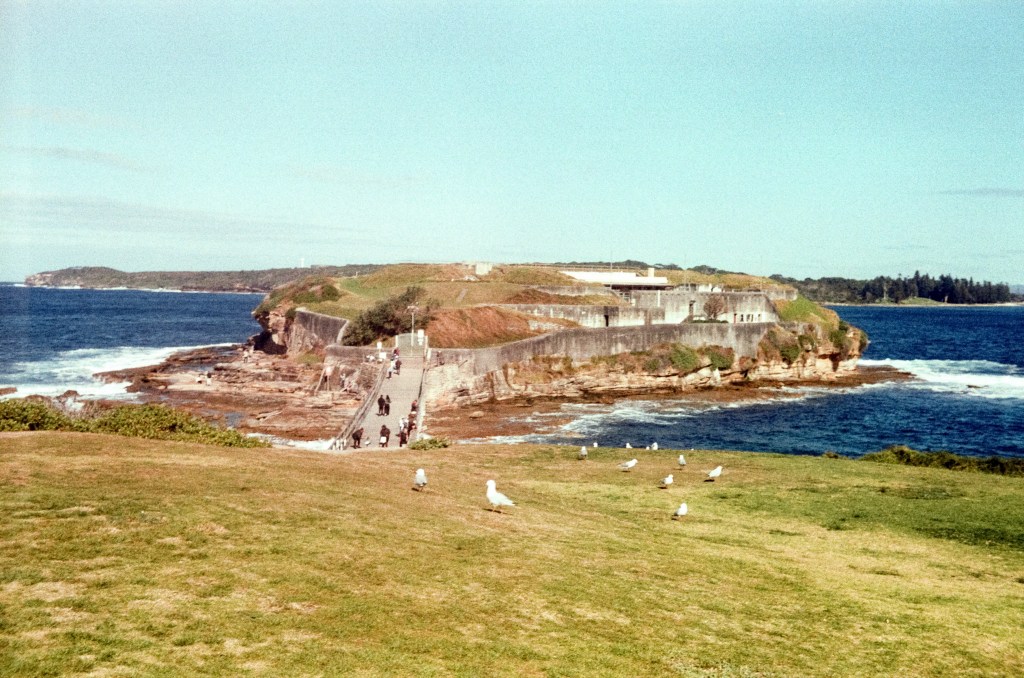
I drove all the way to the southern-most tip of the Eastern suburbs to La Perouse and parked at the Bear Island Fort parking area. This is where they filmed the end action scene of Mission Impossible II. Setting the camera on AE mode, I shot everything on f11 (ISO 100). I guessed as it was a bright sunny day, shooting at f11 would be safe even if the selenium meter wasn’t working.
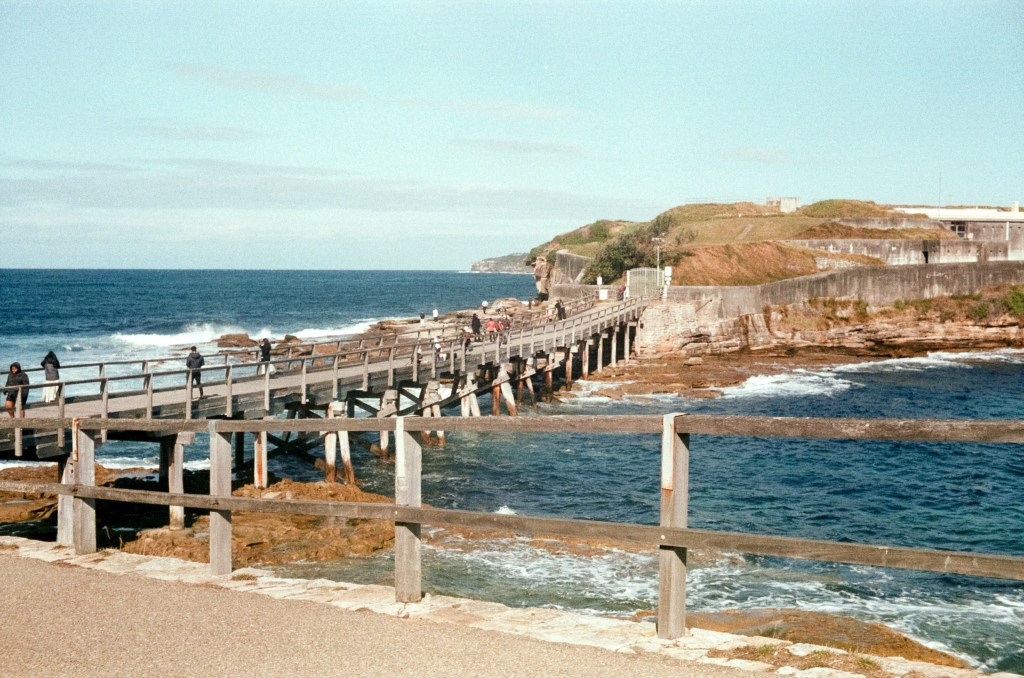
This camera was built with zone focussing in mind. The focus ring had a click stop at 10 ft which was the average distance for group pictures. So I either left the focus ring at 10 ft or focused to near infinity as needed. You know that you are at 10 ft focus distance without looking because of the click stop. At f11, most subjects in my photos were in focus. I was pleased with the sharpness of the Schneider-Kreuznach Radionar 45mm f/2.8 lens on the Automatica.

Bear Island Fort bridge where Tom Cruise chased after the baddies on his motorbike

University of New South Wales at the Eastern suburb of Kensington.
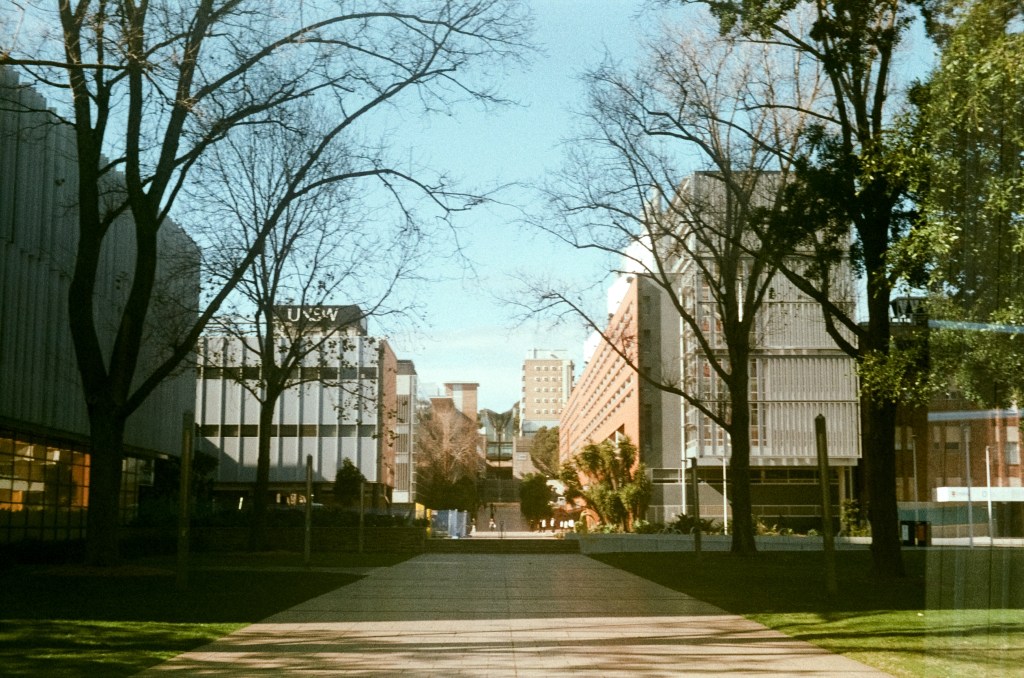
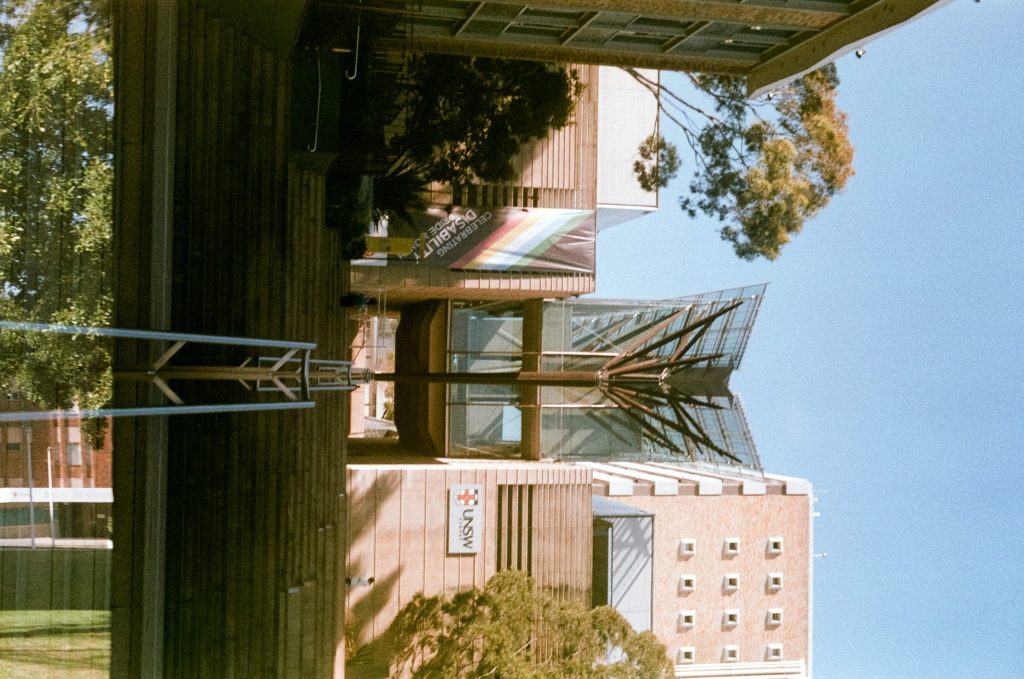
I think it was me not fully advancing the advance lever of the camera – there were a couple of pictures that were double exposed at the border between each frame due to the film not advancing fully by 1 full frame when the film was advanced. See the adjacent borders of the pictures above.

When I tried to rewind the film after taking the last photo, I could feel a lot of resistance trying to rewind the film. After trying to use some force to rewind the film, I felt a sudden give. I knew something had given in the film chamber. Not risking exposing the film while outside, I took the camera back to the darkroom at home before opening up the camera back. The film had broken away from the film canister and I had to manually rewind the film from the camera spool in the dark.
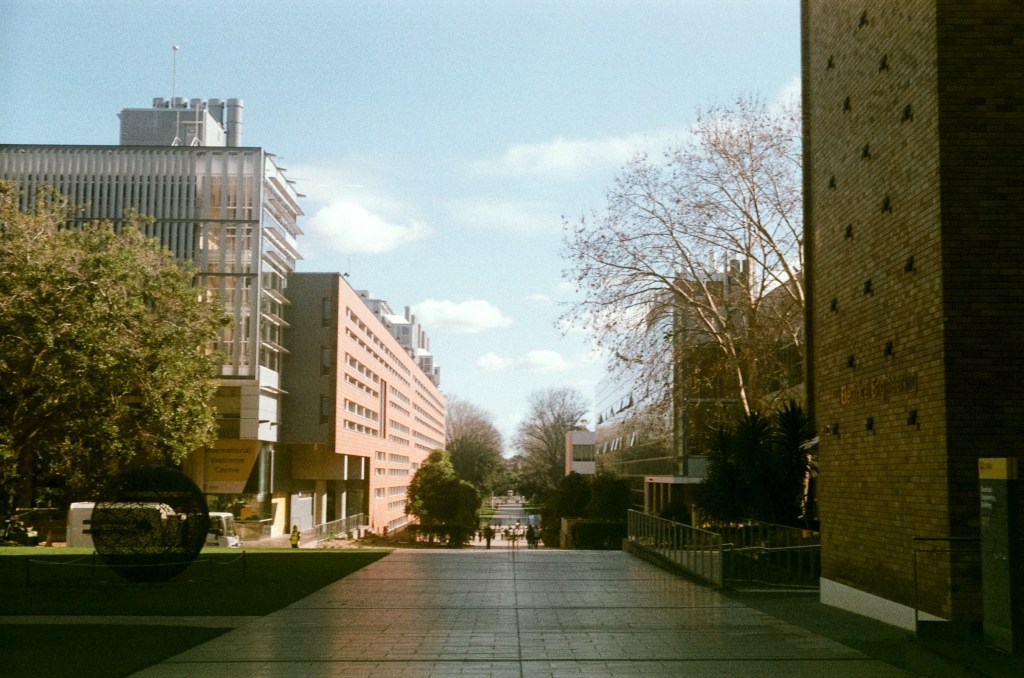
All in all, I was pretty pleased with the performance of this vintage Durst Automatica camera.

Here is a nice write-up of the Durst Automatica camera by Mike Eckman: https://mikeeckman.com/2023/04/durst-automatica-1956/

Thanks for reading.
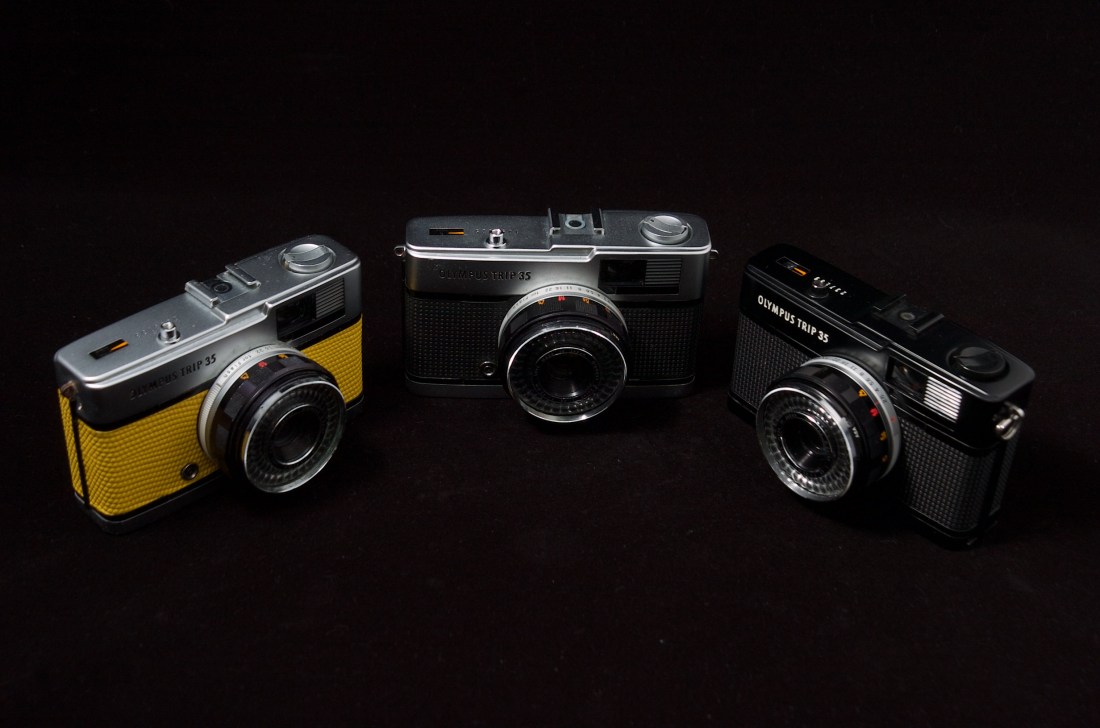
Olympus Trip 35

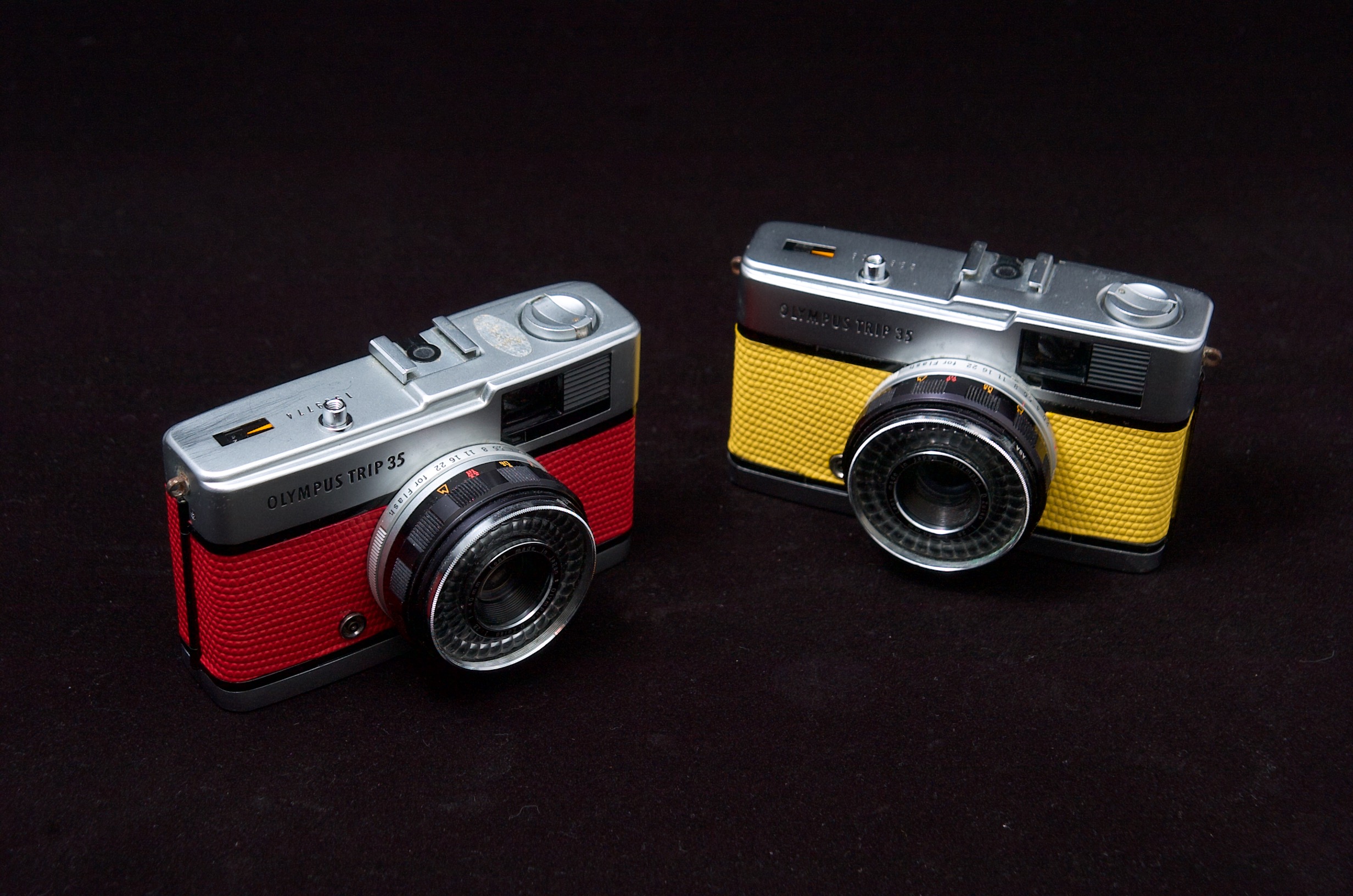
Earlier model of the Olympus Trip 35 with the chrome shutter button (left) and later model made after June 1978 with the black button (right)

The Olympus Trip 35 was an extremely popular camera. Over 10 million units were sold from 1967 to 1984. It is a fully automatic 35mm camera and simple to use but ingenious design. With the aperture ring set to “A”, the camera operates as a programmed automatic. There are only two shutter speeds, 1/40 and 1/200 of a second. The combination of aperture and shutter speed that the exposure mechanism chooses depends on the amount of light available – 1/40 in low light situations and 1/200 when there is bright light. The camera will refuse to fire if the light is too low even for a 1/40 sec, f2.8 exposure. A red plastic flag will also appear simultaneously in the viewfinder in those situations. Its simplicity made it popular with the masses of people who just wanted to point the camera and shoot without worrying about exposure settings.

The 40mm f/2.8 Zuiko lens that the Trip packs has a reputation for being extremely sharp, even in the corners. Coupled with its small, light weight, inconspicuous design, makes the Olympus Trip 35 an excellent street photography camera.

Over the years, I’ve acquired several Olympus Trips of varying conditions often bundled with other old cameras that I wanted to buy. The chrome version of the Olympus Trip 35 are more readily attainable and can generally be acquired for cheap. The black Olympus Trip 35’s are rarer, making these more desirable among collectors.

A couple of mine had been neglected and suffered from minor corrosion and deterioration. The grey-black plastic covering of the Trip is fairly durable and protects the main body from further damage however suffers from wear as a result. They are also easily removed and replaced. These can then be used as templates for new “skins” for the Olympus Trip. If you are not good with your hands, Aki-Asahi Camera Coverings offer reasonably priced coverings for the Olympus Trip 35 as well as other camera makes. As these already have adhesive backing, you don’t have to mess around with adhesives/glue and can easily just put them on. I replaced mine with Aki-Asahi coverings and they now have a new lease of life!

Red and yellow lizard embossed (cowhide) leatherettes from Aki-Asahi Camera Coverings

Fruitful day at the Flea-Market

This weekend’s trip to the flea-market netted 4 nice little pieces of photographic equipment.

It was a fairly large flea market located in a multi-level car park. My wife seemed to be finding more things to her liking than I was with used cameras. I was almost resigned to going home without anything, when at the final level of the flea-market at the top of the carpark, someone was selling old photographic prints and mounted photographic slides. Other items strewn around the table included some really junky old cameras from the 70’s and 80’s.

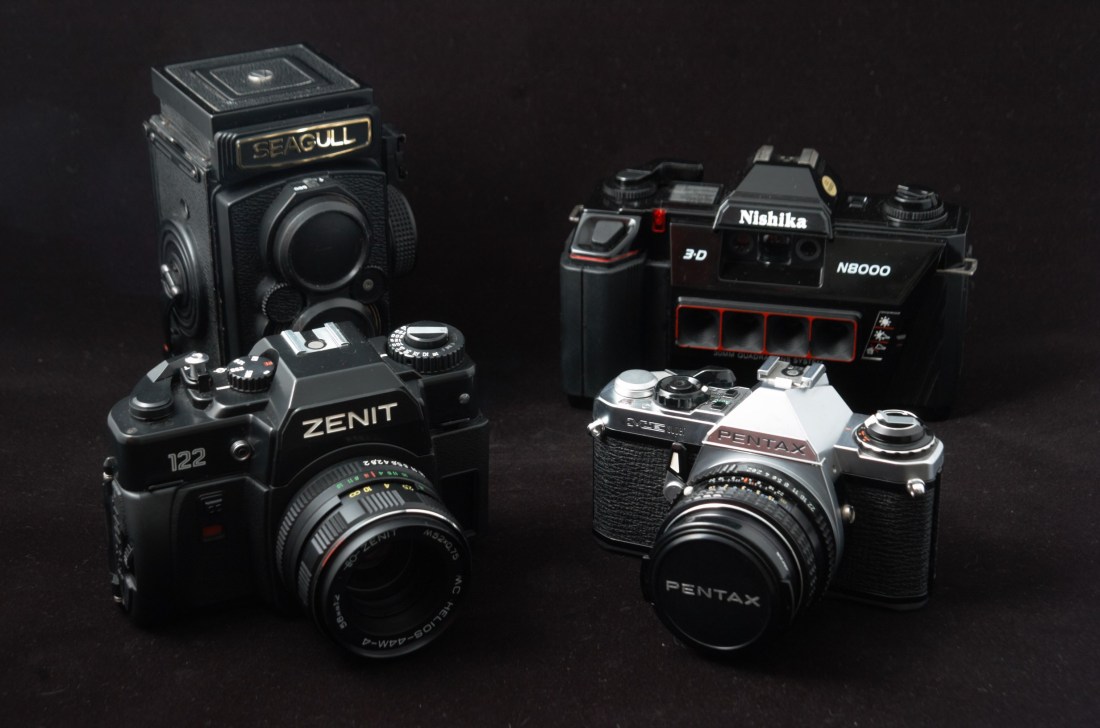
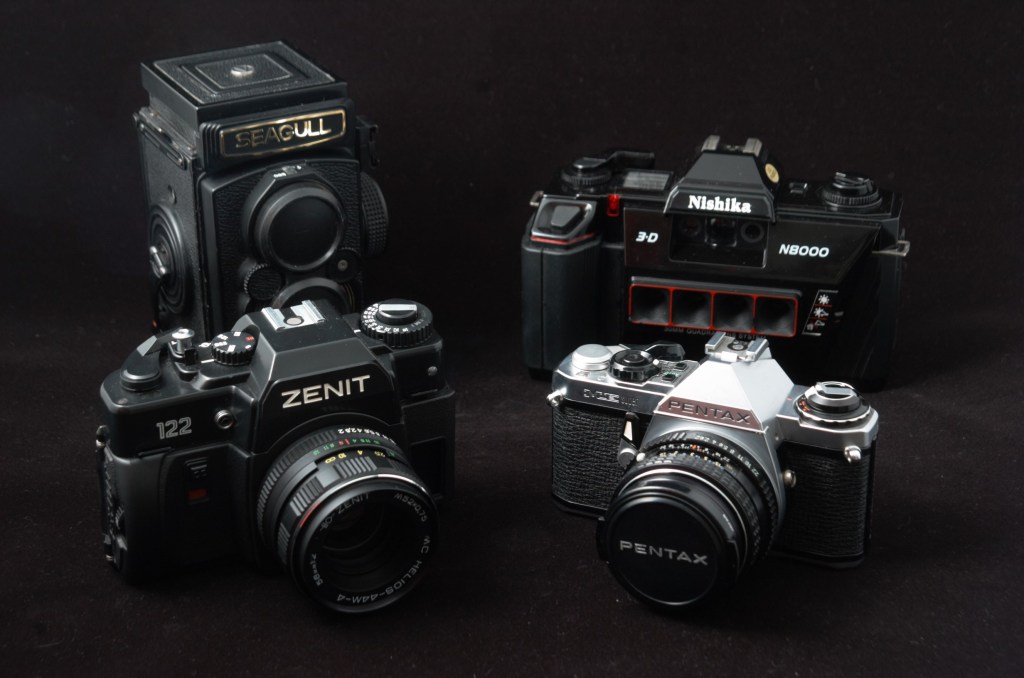
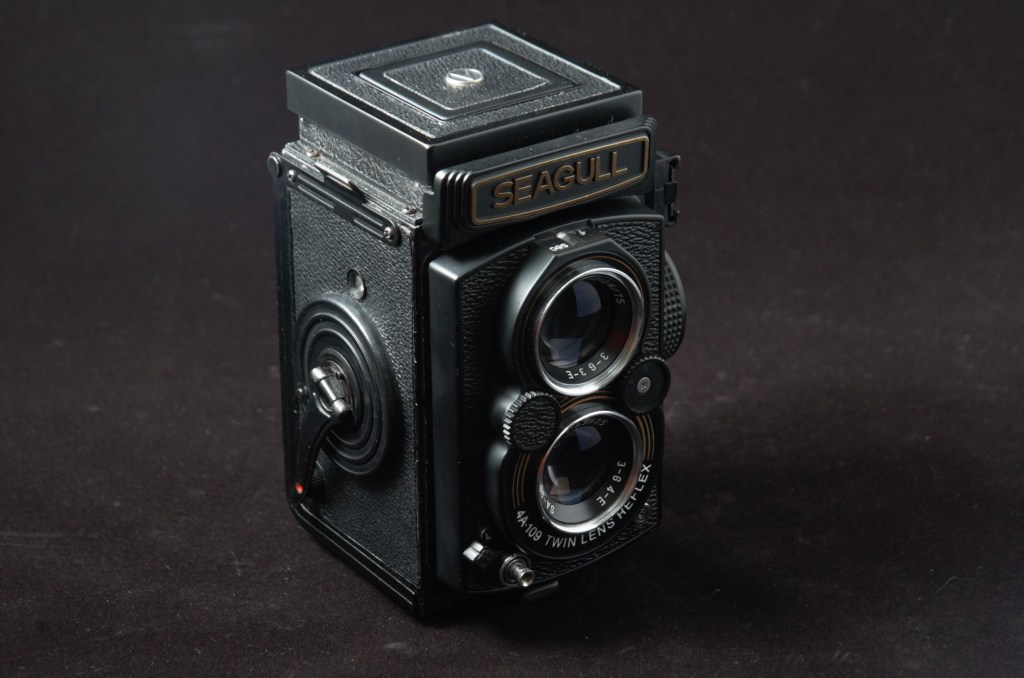
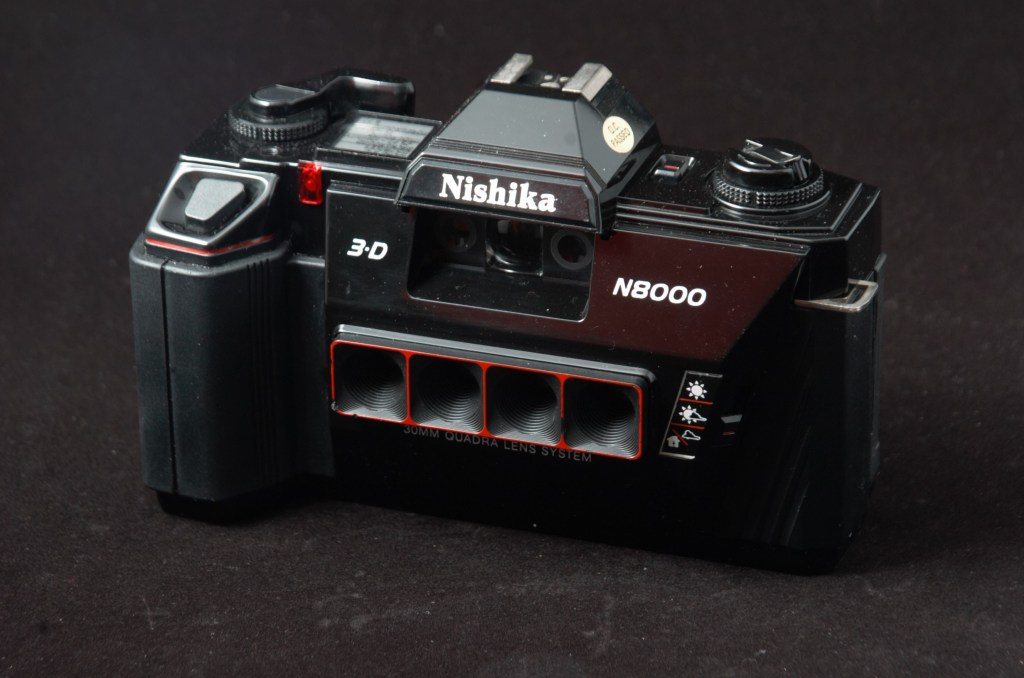
Well, junky to most people but interesting to others. They were a plasticky Russian Zenit 122 SLR with a 58mm f2 lens mounted on it, a Pentax ME super SLR with a SMC Pentax-M 50mm f2 lens on it, a Chinese Seagull 4A-109 TLR and finally a super cheesy plastic Nishika N8000 camera. Lucky for me the other person rummaging through the stuff on the table was not interested in these Russian, Chinese cameras. The only camera there with some quality was the old Pentax ME. The Nishika sounded Japanese but it was made in China and marketed by a company based in Nevada!

Why were these interesting to me?

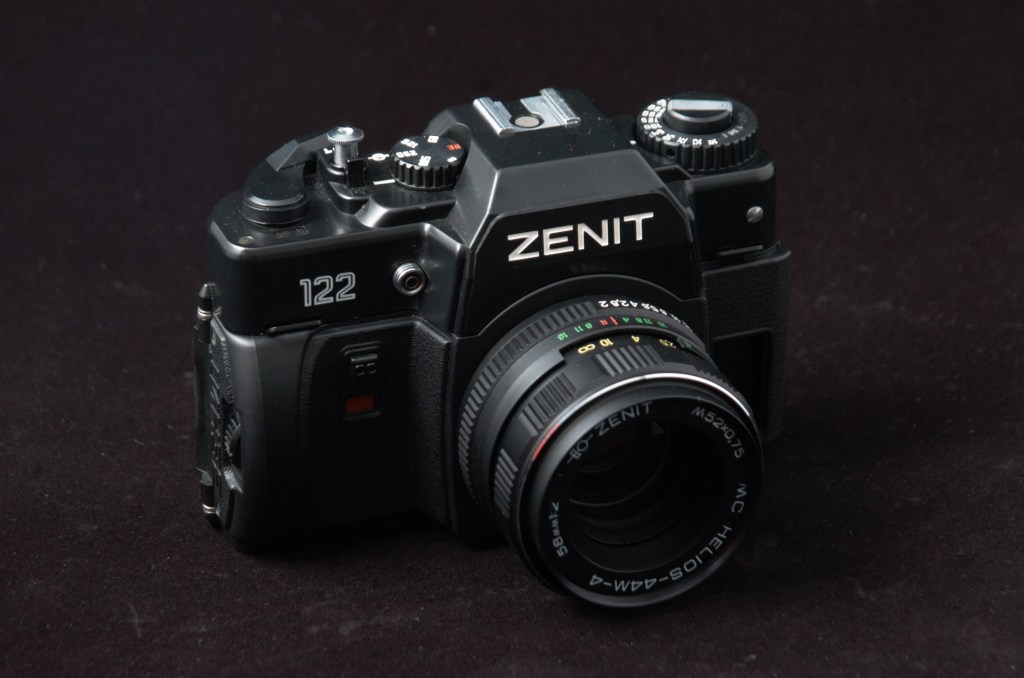
Let’s start with the Zenit 122. Really not a remarkable camera. Made mostly of brittle plastic, it will break the moment you drop it. Only 6 shutter speeds on the shutter dial: B, 1/30, 1/60, 1/125, 1/250 and, drum roll, a top speed of 1/500. At the bottom the words “Made in USSR” – the USSR was defunct since Dec 1991. However what made me pick this up was the lens. Yes, you guessed right, it was a Zenit Helios-44M-4 58mm f2 lens. This is a later version that was multi-coated (MC). Probably among one of the last to come out of production from the old Soviet Union – its serial number was 90xxxxxx. The first 2 numbers to my understanding denoted the year of manufacture. As noted in my previous blog, the Helios 58mm f2 lenses while not the most advanced of design and manufacture, had a most peculiar quirk that give the photos it took a swirly bokeh under the right conditions.

As for the Pentax ME super, it was to bundle the purchase to get a better price overall. Really didn’t need to have the camera but the price bundled up was too good to let go. Furthermore the camera and the SMC Pentax-M 50mm f2 lens were in good condition.

The Seagull TLR is trashed by many people in various chat groups, mostly comparing it to the Rollei and Yashica TLRs. I doubt a majority of these people have ever used a Seagull TLR. I had a Seagull 4A-103 TLR and it gave me pretty good quality 6×6 slide photos. At f8, it was pretty sharp edge to edge. The 4A-109 is the last 4A TLR model that the Shanghai based Seagull company was to make, as a consequence of declining sales from the digital revolution. Other than its collectible value, I will be sure to give this TLR a test run.

Finally, the Nishika. It is completely made of plastic except for the base. All the features like the pentaprism, powerwind handle, LCD screen and electronic hotshoe contacts are fake! Reminds me of toy cameras from the 80’s and 90’s. It also has a weird lens arrangement or lenses – four of them in fact. For most people this is junk. But for other people, including me, this is a unique quirky camera from the past. It is essentially a point and shoot camera with four plastic 30mm lenses. It has 3 apertures – indoors (f8), cloudy (f11) and sunny (f19). Only one shutter speed of 1/60 sec. No film ISO dial – you are advised to use ISO 100 or 200 film. But ISO 400 film could be used too, unofficially. The only control you have are the 3 apertures and a non-TTL flash can be attached for very low light shooting. The hotshoe is a hotshoe and nothing else. It doesn’t communicate with the camera. If the light is too low, the camera projects a big red dot in the viewfinder to tell you. But you can still take a photo despite this.

What the four lenses of the Nishika N8000 does is it takes 4 photos of the same scene at the same time from slightly different horizontal angles. It does this on 2 frames of 35mm film. So if you put in a 24 exposure roll of film, the Nishika will give you 12 “3-D” photos. When the company was still in existence, you could send your exposed roll of film to them and the company will produce lenticular 3-D image cards where you could view the “3-D” image as you tilt the card horizontally from side-to-side. Unfortunately the company went bankrupt and was investigated by US federal authorities for illegal marketing practices.

These days the Nishika still has a use for film enthusiasts. Taking the four images produced, one could superimpose them into 1 gif image and produce quirky moving 3-D images.

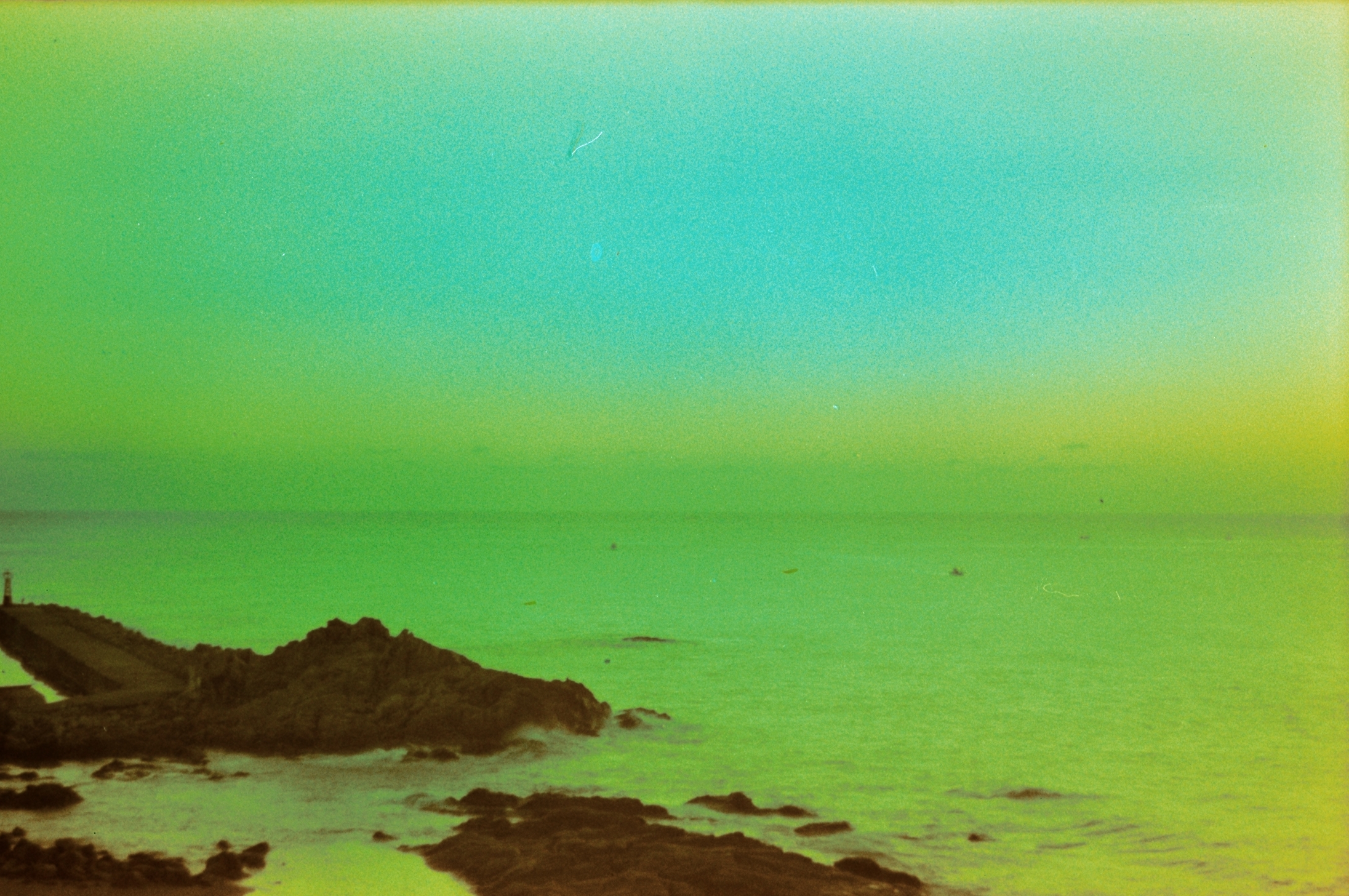
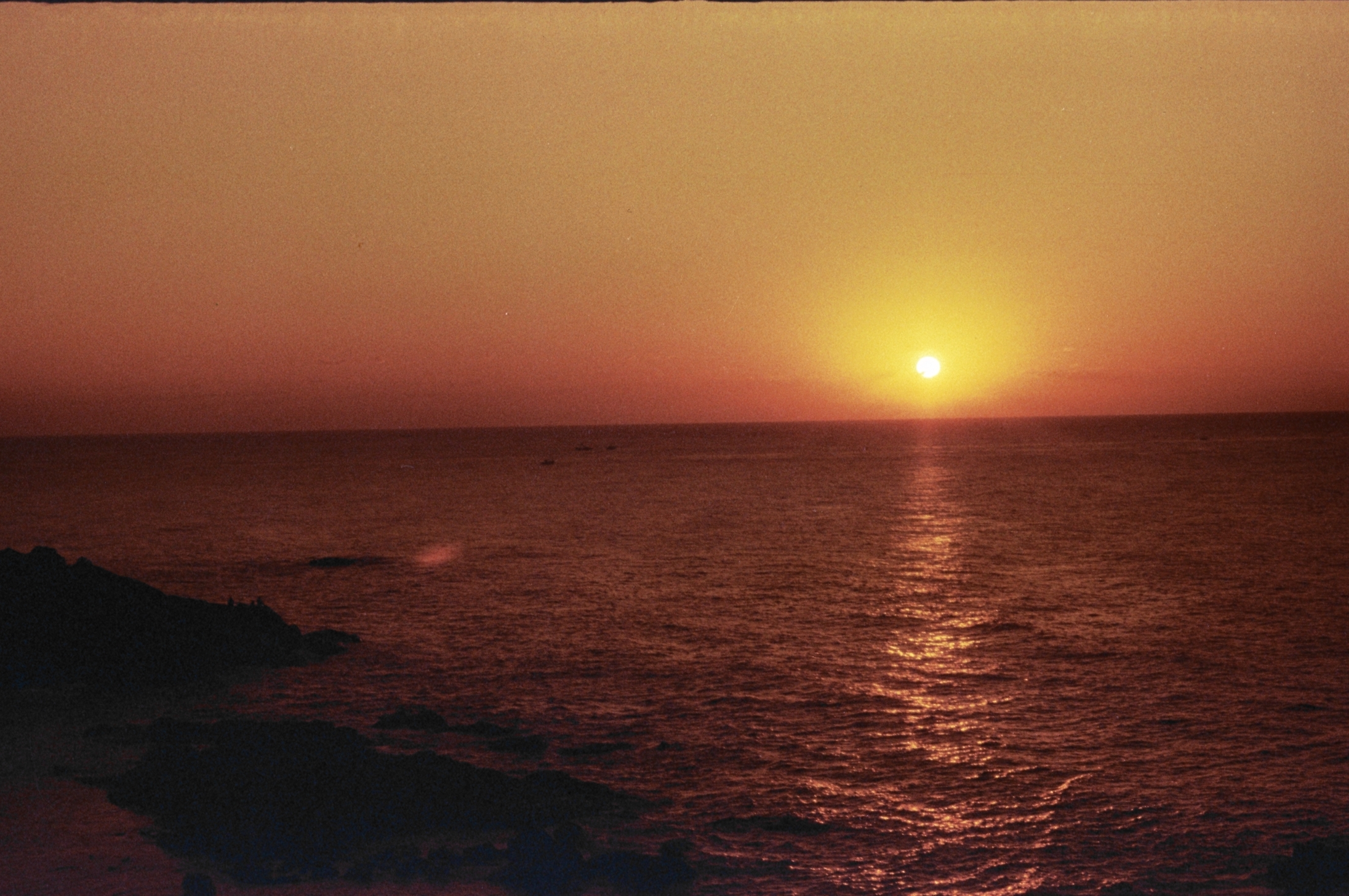
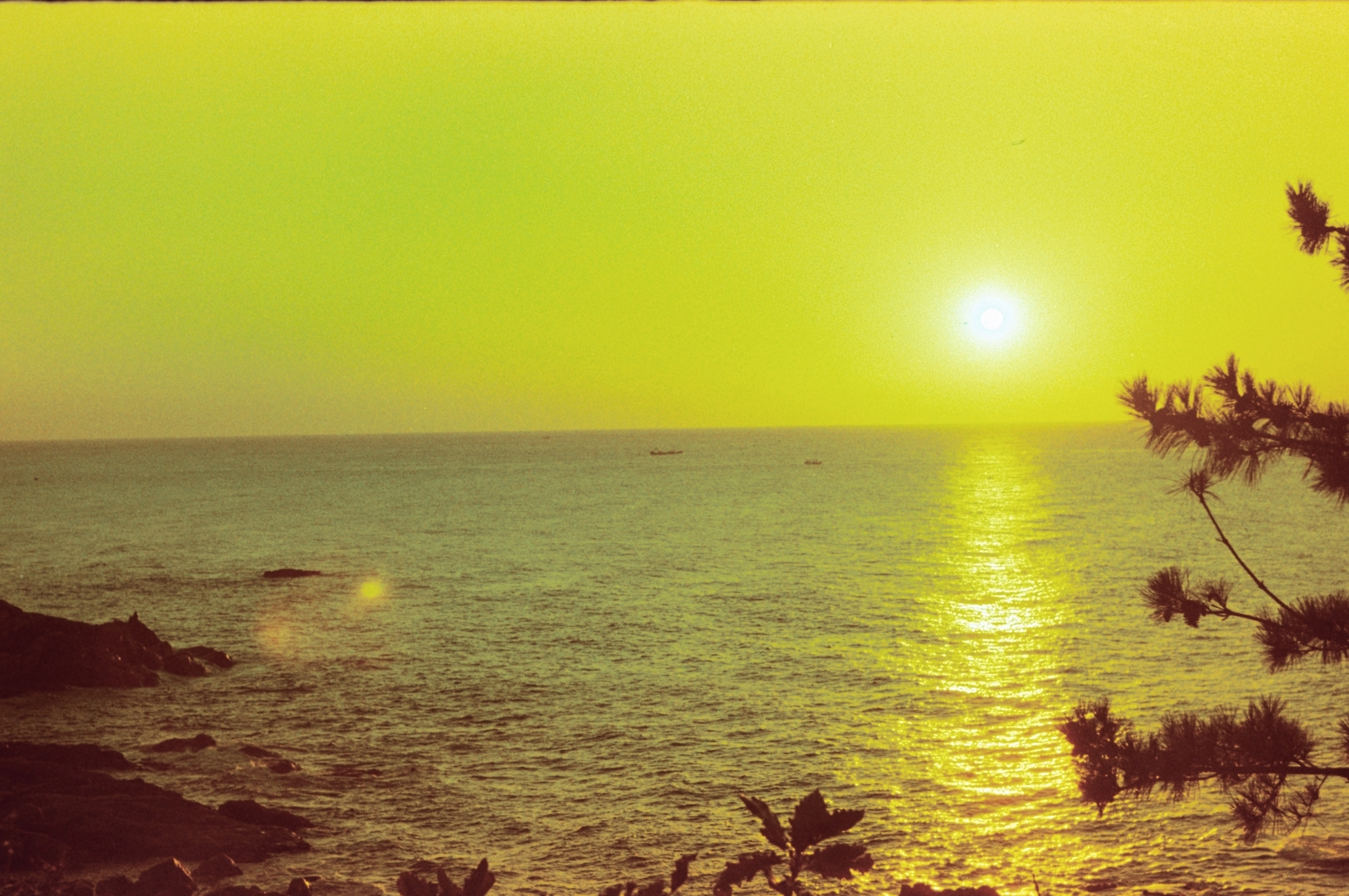
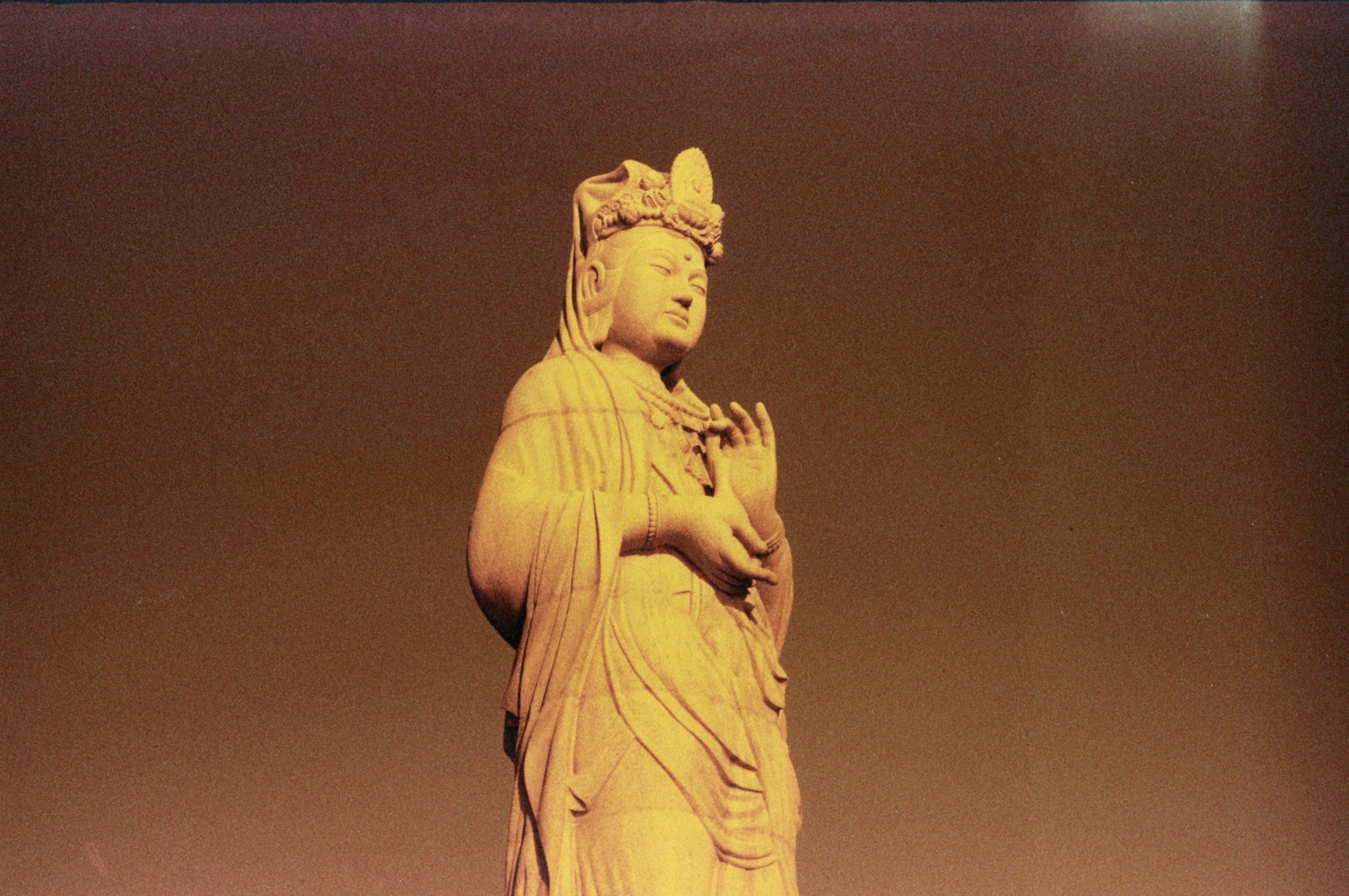
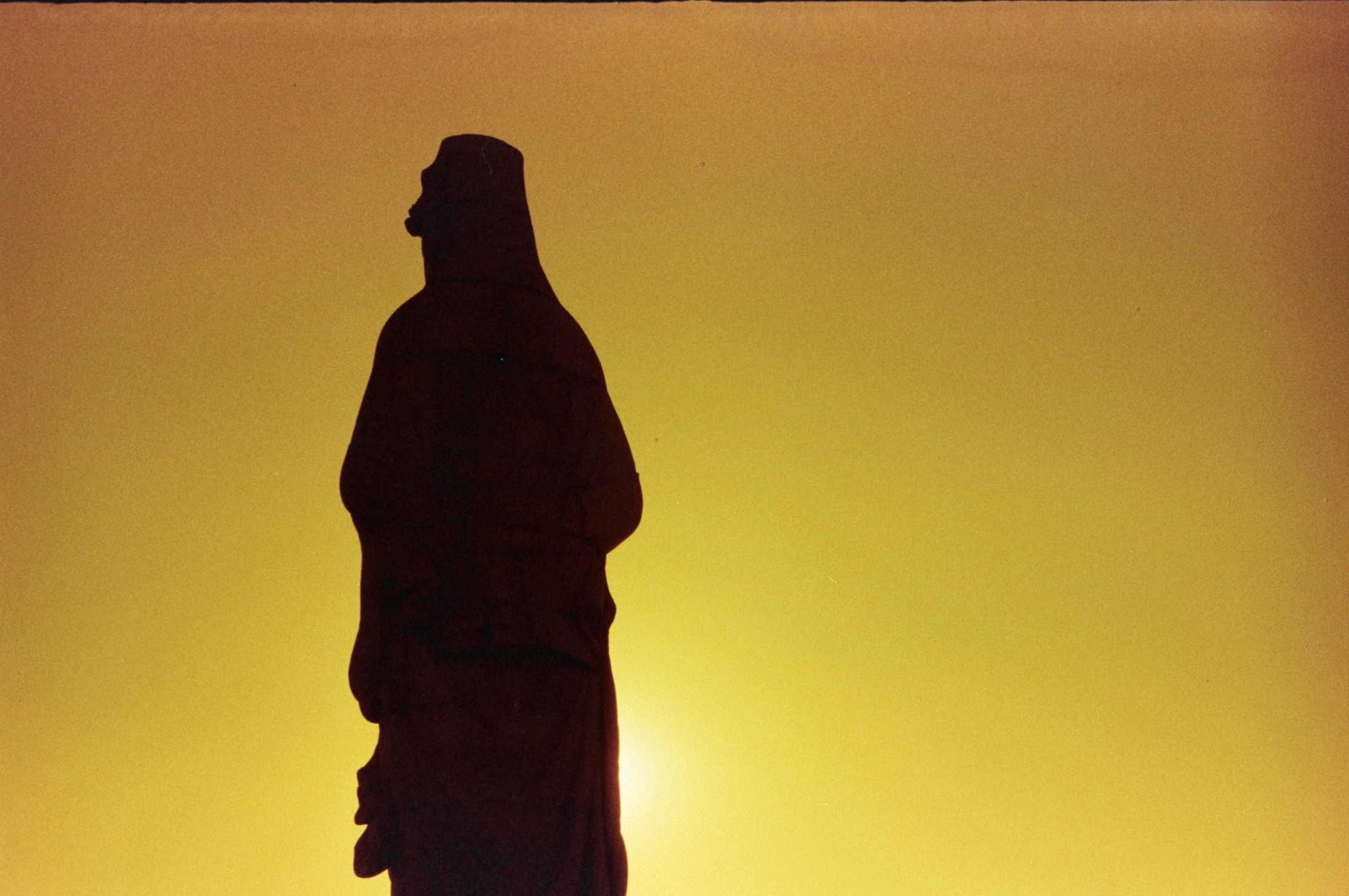
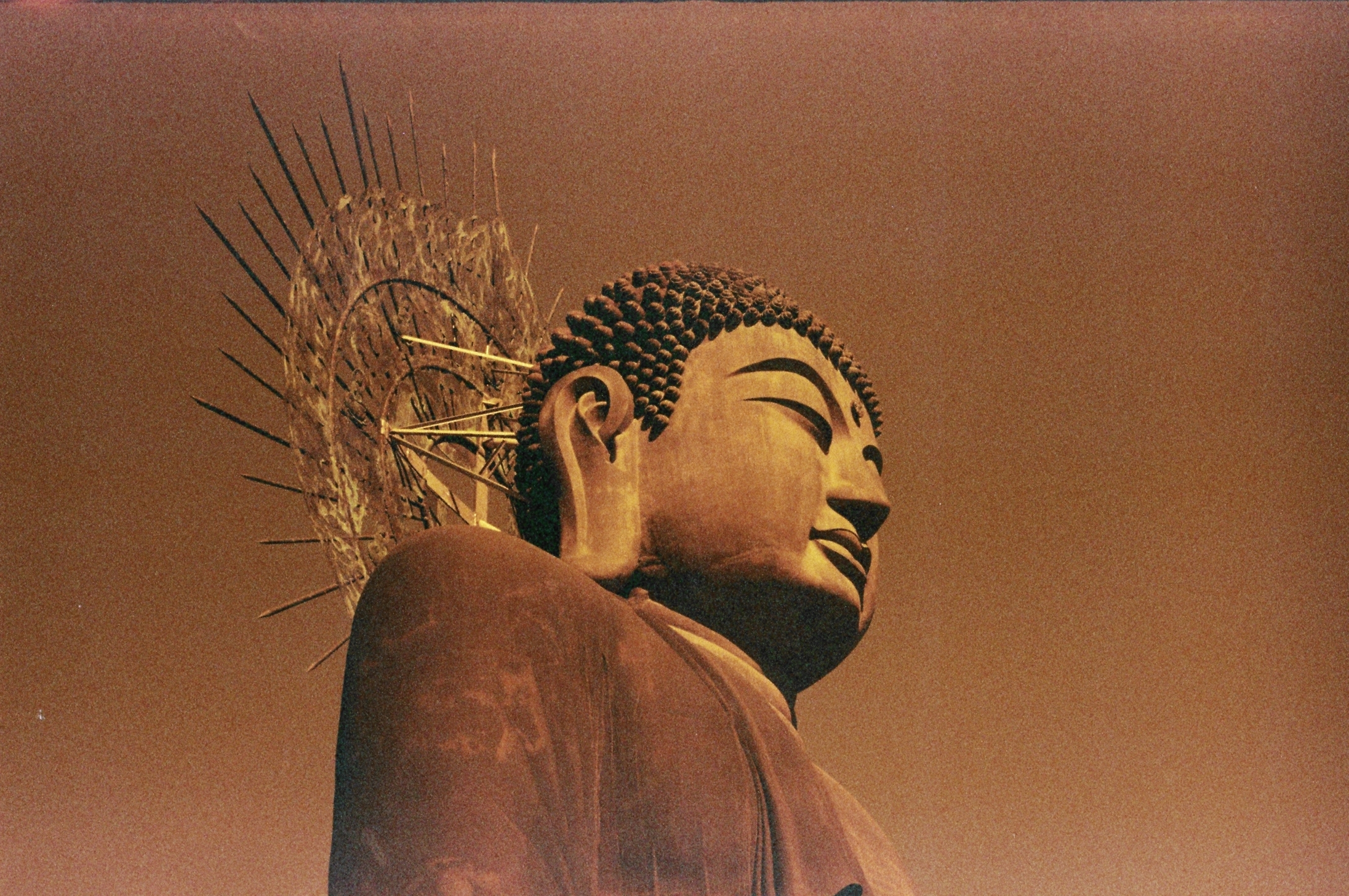
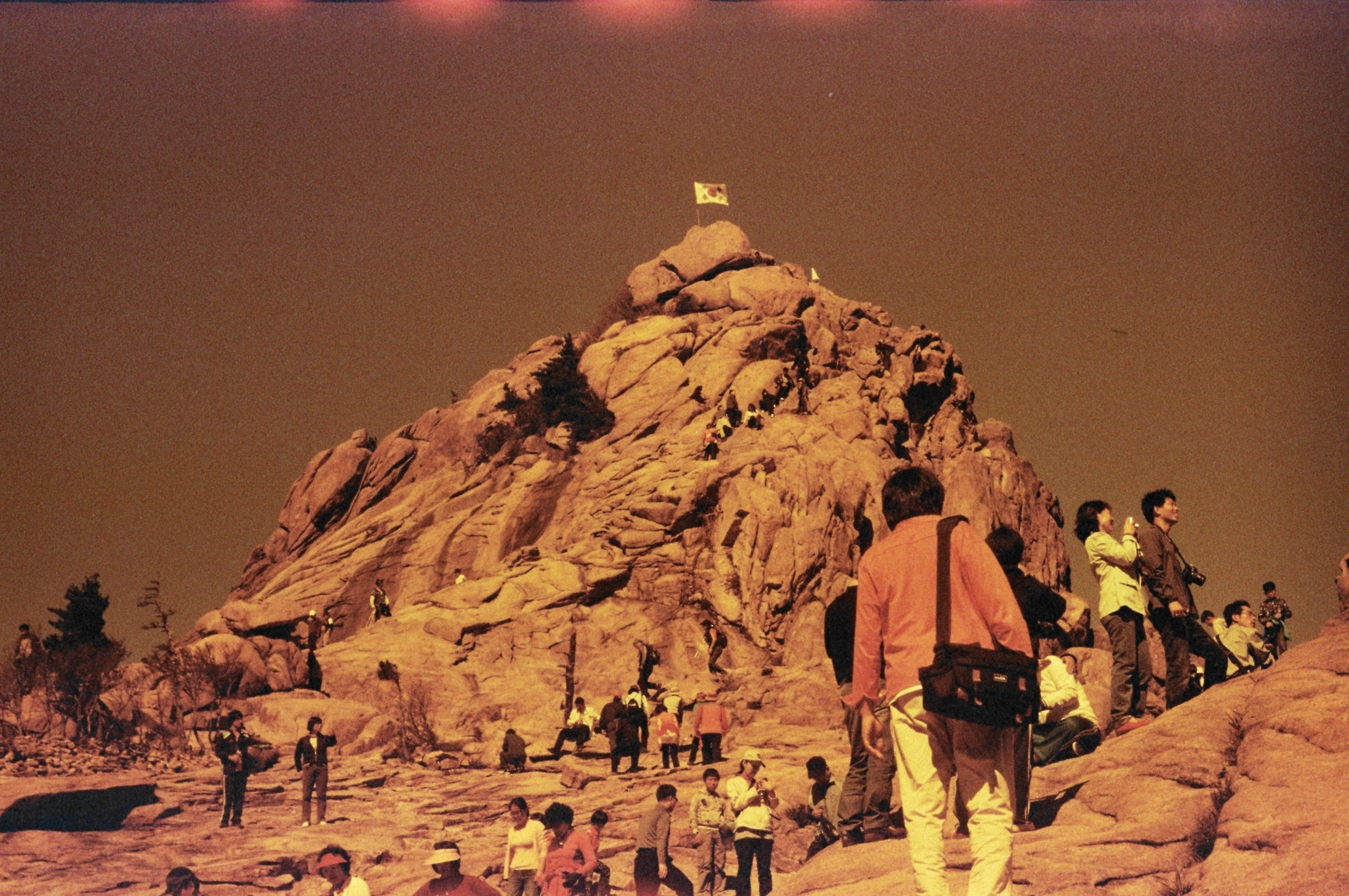
As a bonus to this bundled purchase, there was a roll of exposed Lomo-film in the Zenit. I exposed the last few frames of the undeveloped roll to sunlight when I opened the back thinking that the film chamber was empty. I don’t know how long it has been in there. After developing, it turns out these were photos of someone’s visit to the Naksansa temple in South Korea at dawn and early in the far east morning – with weird colors from the old film and me partially opening the back! Enjoy!

Yashica MG-1 Rangefinder

Went to the fleamarket for a second weekend in a row. Hot and humid today. It was already near boiling at 9am in the morning. Not much to see today, lots of knick-knacks but not anything interesting for me. There were some cameras but not anything that appealed to me. Mostly compact digitals, some Polaroids from the 80’s and 90’s and also a Yashica FX-3 SLR but the condition was bad. As with all Yashica FX-3’s and later Yashica SLRs, the fake leatherette flaked off with use over time and this one was no different. It had a Yashica 50mm lens attached to it. I was surprised when I picked it up, it was very light and felt plasticky. I was expecting it to be all metal and heavier. The seller wanted $25 for it, so I passed it off.

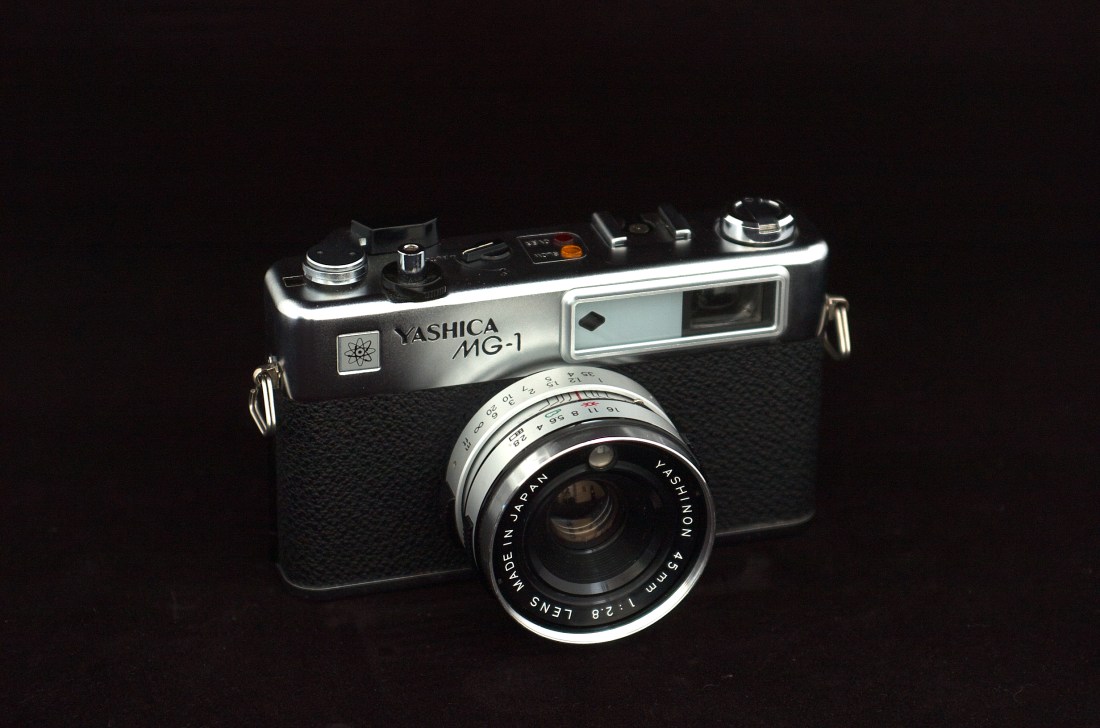
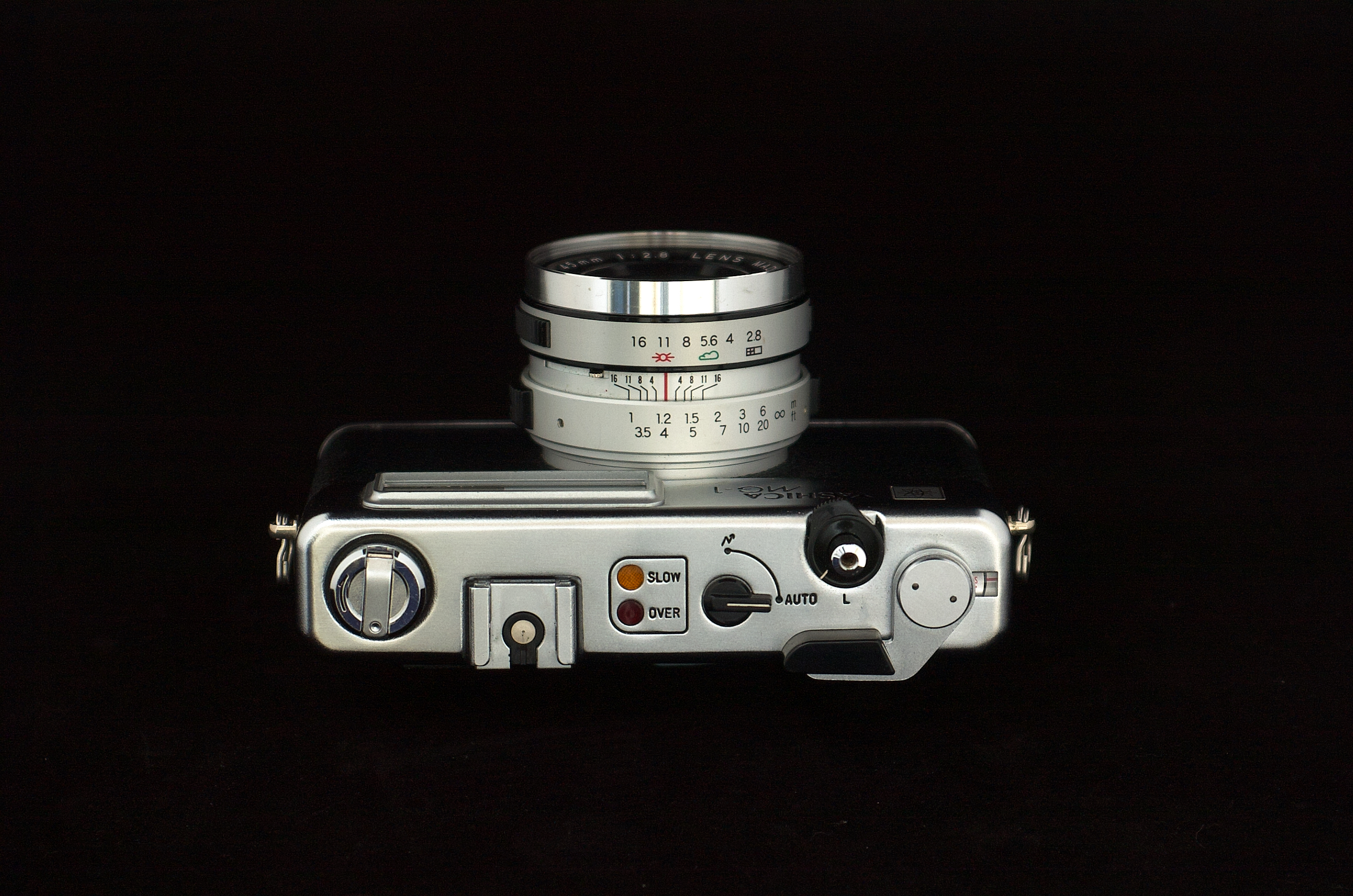
My black Yashica MG-1
(note that the black version does not have the “atom” logo)

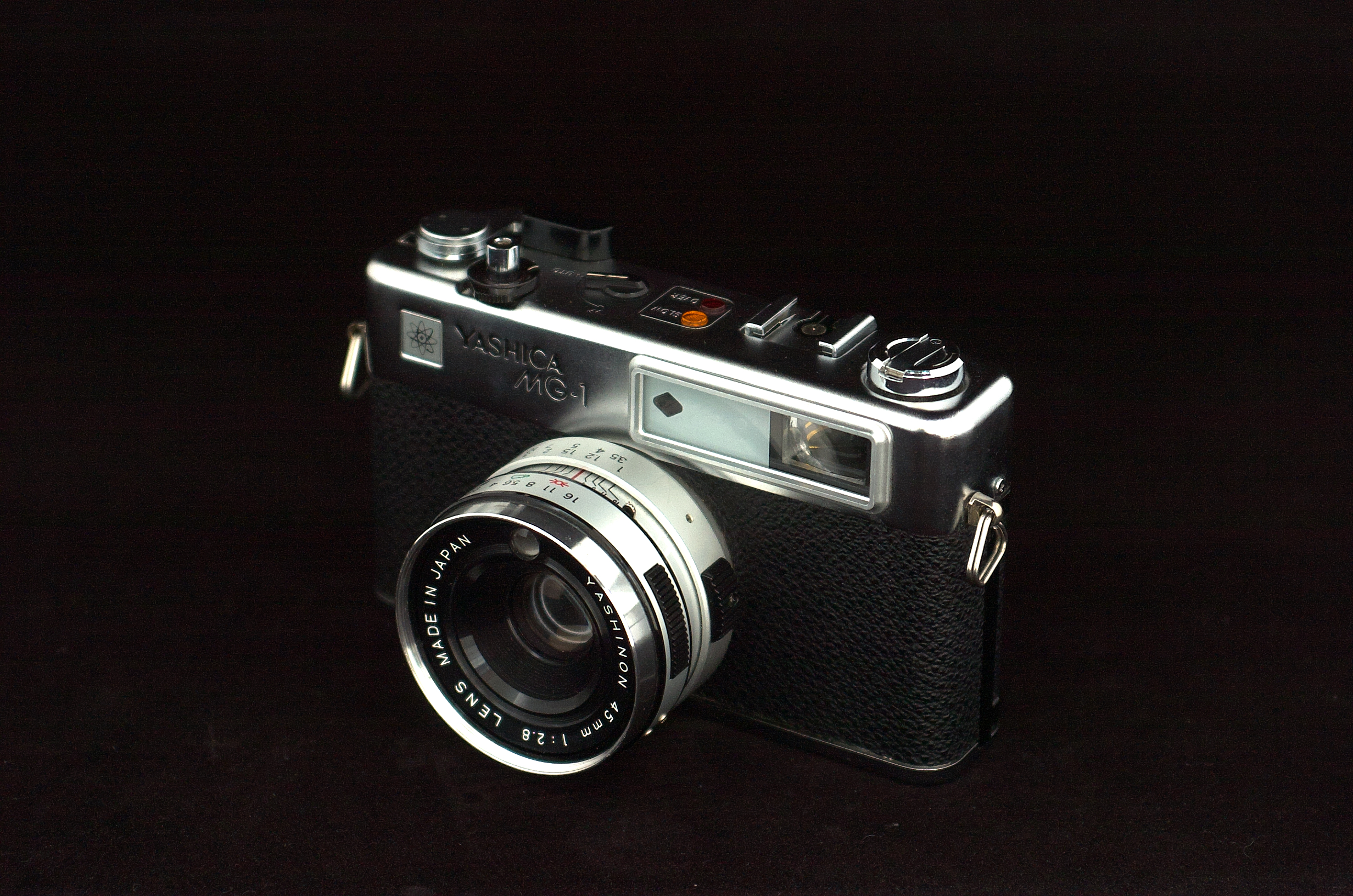
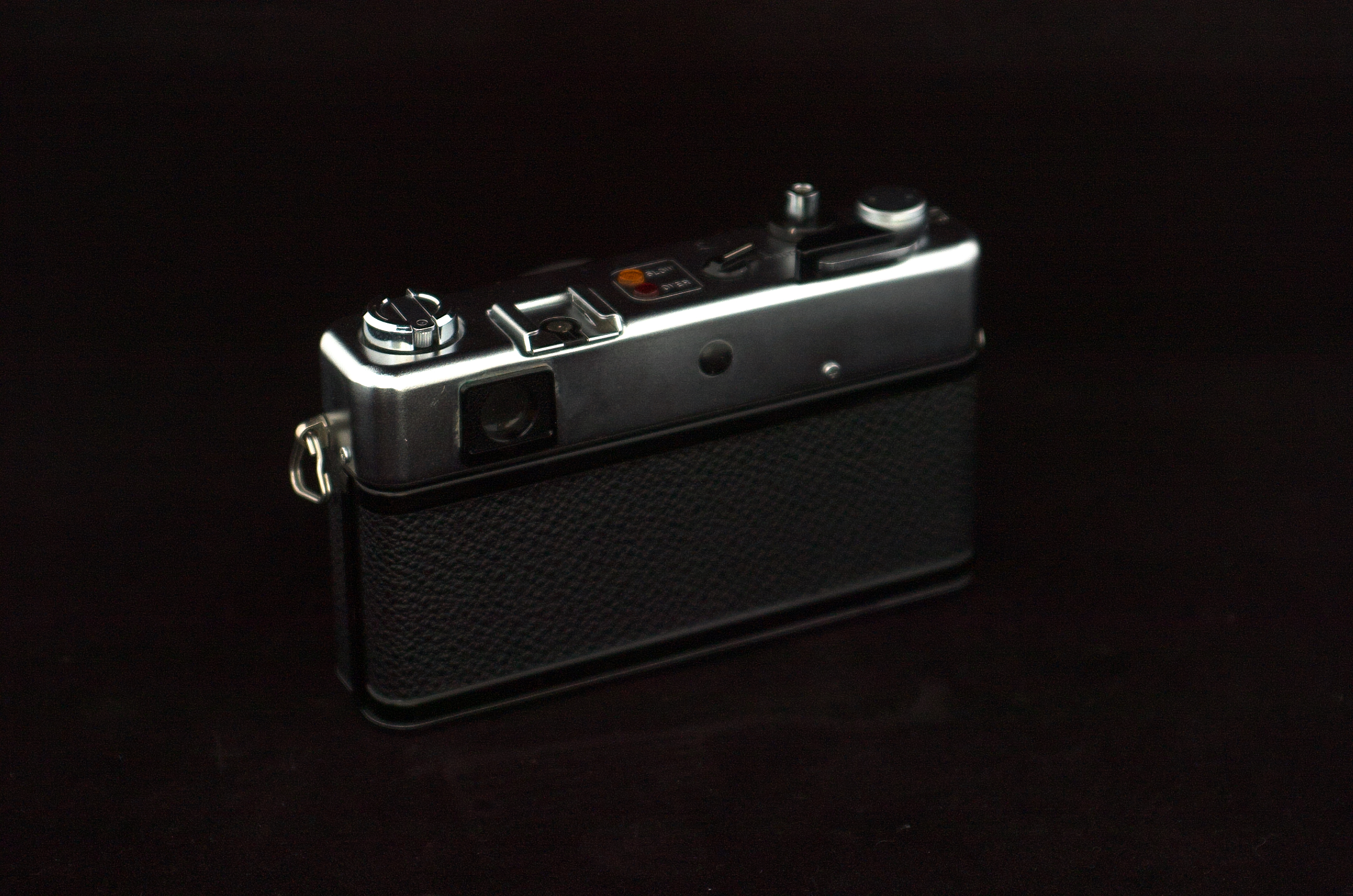
Walking further on I saw another Yashica. This was made earlier than the FX-3 and a rangefinder. Yashica rangefinders are excellent and available for cheap ever since the digital revolution. People were selling them off for AUD$15 to $20 in Australia a decade ago. Prices now have stabilized to around US$25 to $50 nowadays on eBay. This particular rangefinder was the Yashica MG-1 in chrome finish. As I already have an MG-1 (in black finish), I wasn’t planning on acquiring another one. “How much?”, I asked the seller. $5 was the answer. Without much further thought, I took out my wallet and handed her the $5.

Examining it more closely at home, this particular MG-1 is in excellent condition. It looked like it just came out from a camera shop from the 70’s. The chrome body is pristine and mint, the Yashinon 45mm f2.8 lens is super clear.

In the 70’s, the MG-1 operated with a 5.6V mercury battery. These are no longer available. When I pressed lightly on the shutter button, the orange and red exposure indicator lights flashed meaning that there was power supply to the camera. The MG-1 is an aperture-priority camera and the CdS light sensor on the lens barrel needs power to work. Opening the battery chamber, a working new looking Duracell 6V PX32A battery popped out – an extra bonus! Not sure when this battery was put in but apparently Duracell stopped making the PX32 batteries in Jan 2000. No worries, the Yashica Guy sells battery adaptors for the Yashica series of rangefinders.

The camera is missing the lens cap and currently a 57mm diameter Yashica lens cover/cap cost 3 times more than what I paid for the MG-1. So I’ll make do without a cover until such time one comes across for cheap!

Yashica-44LM TLR

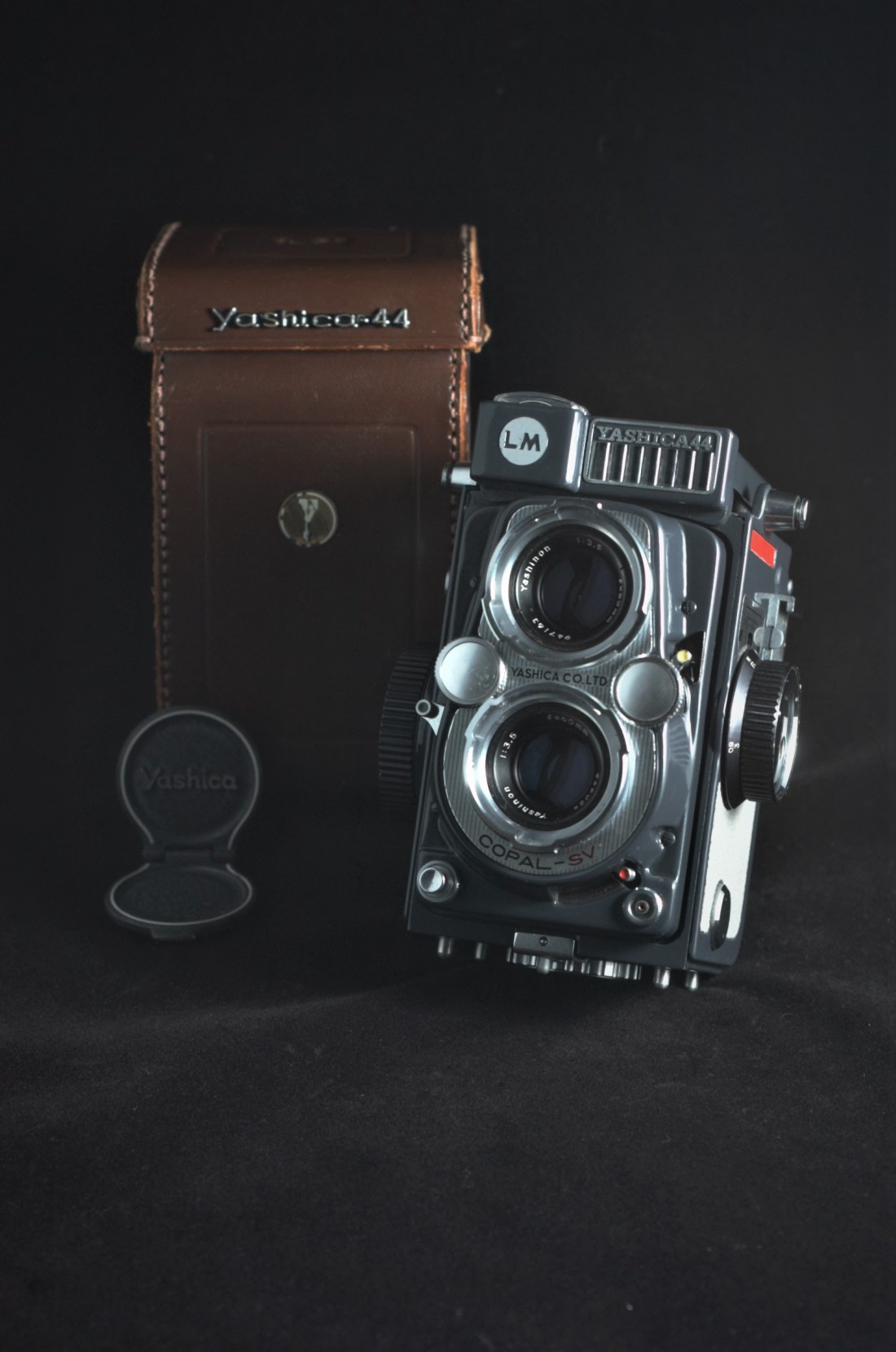
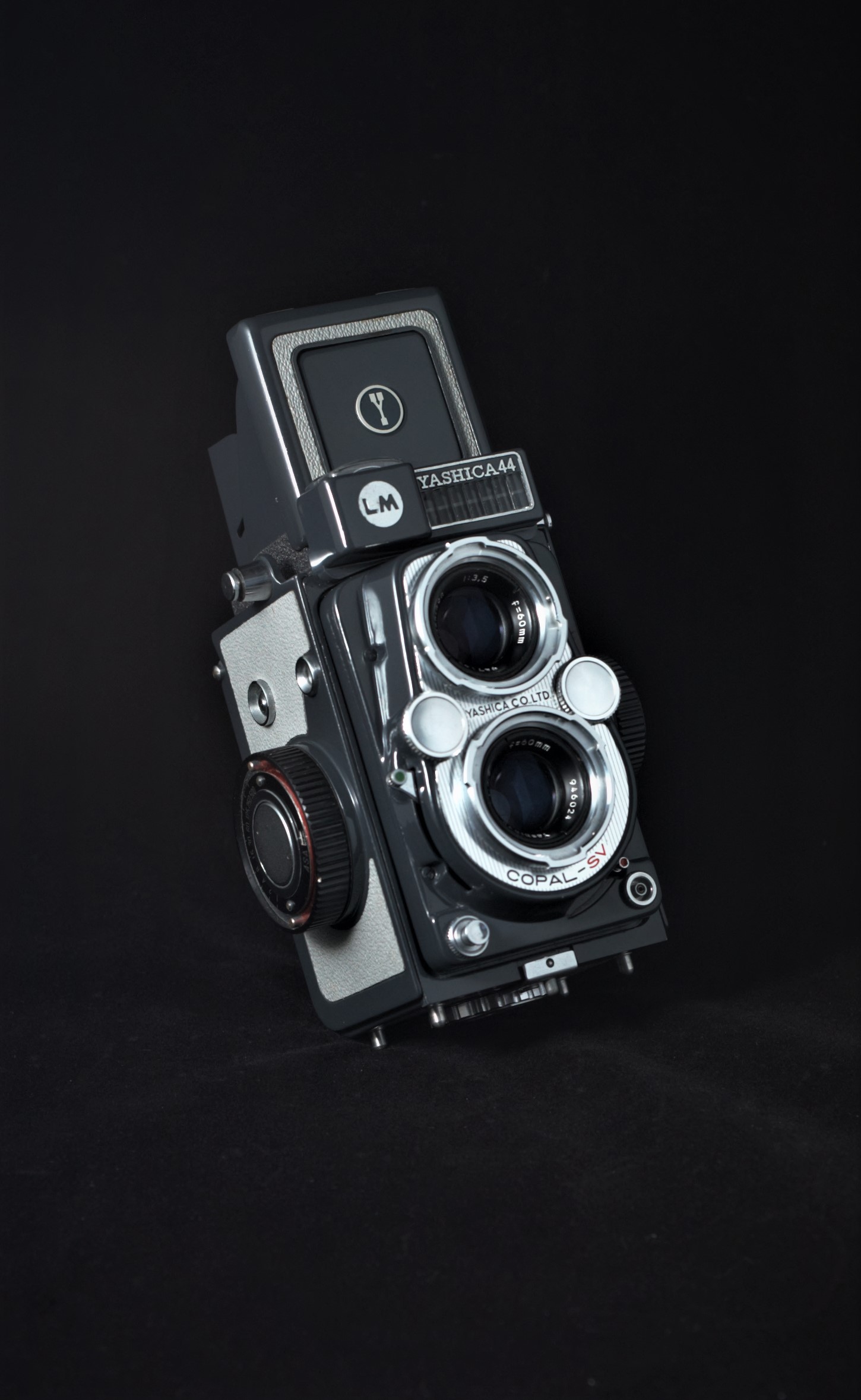
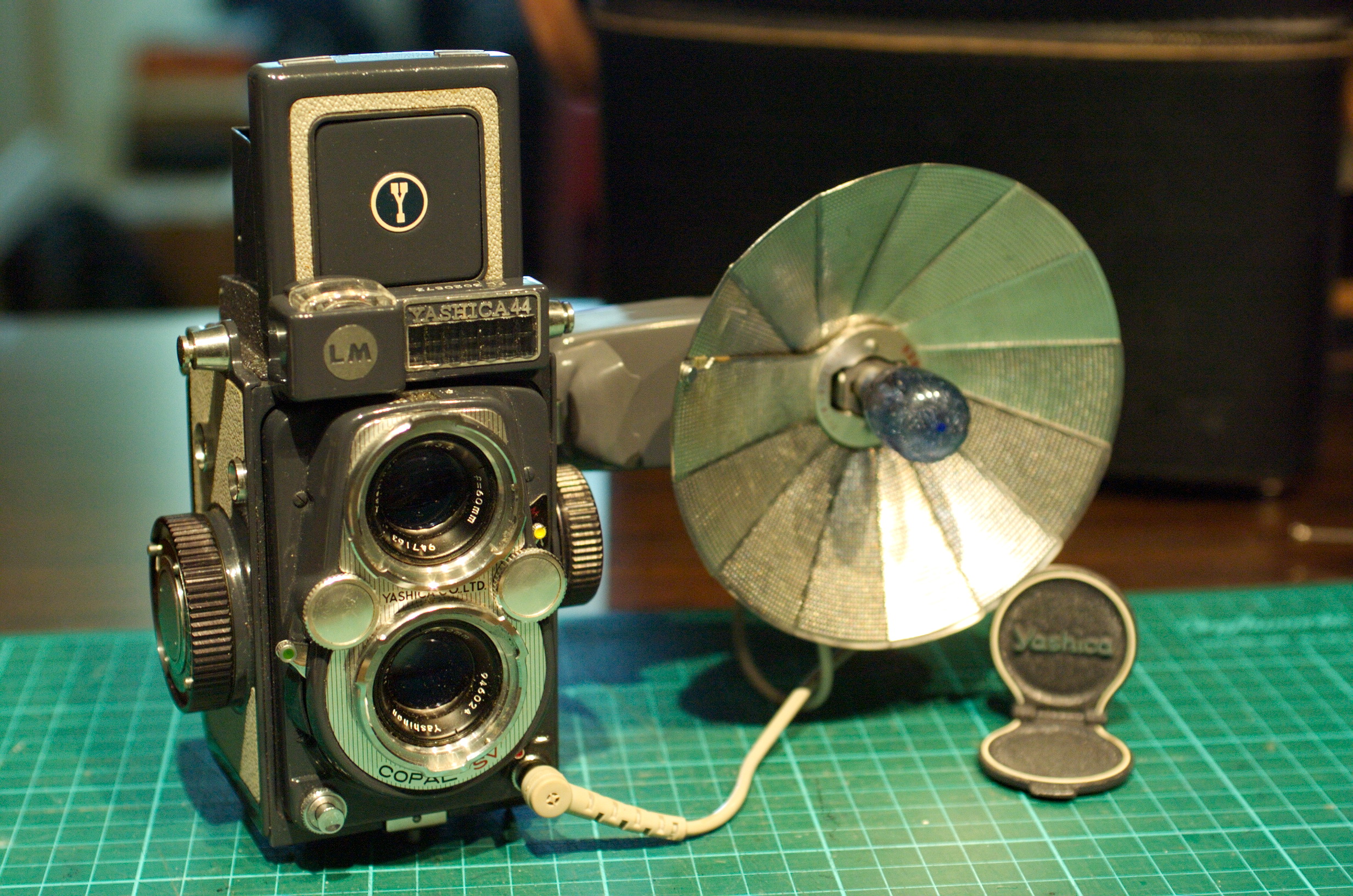
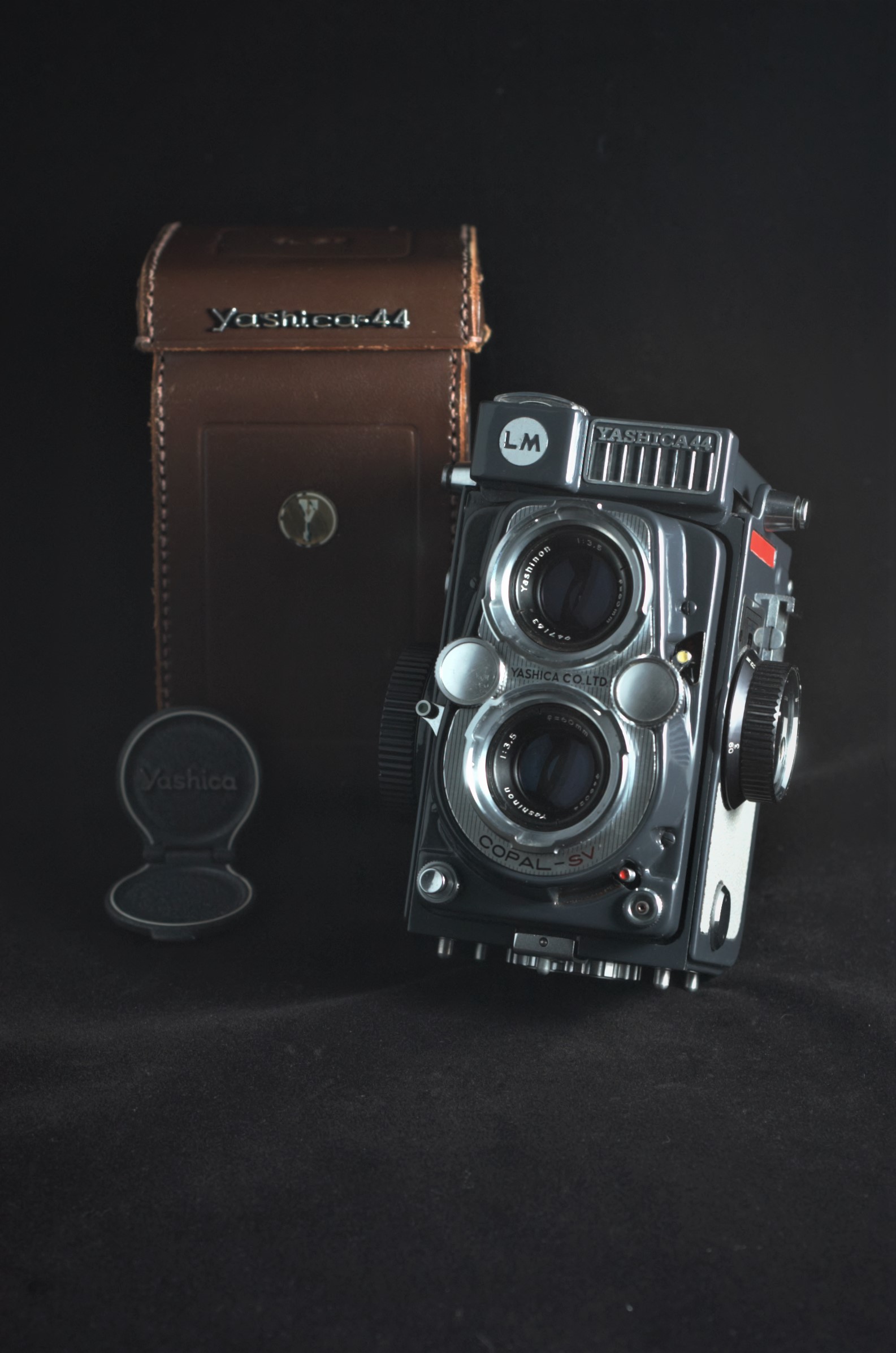
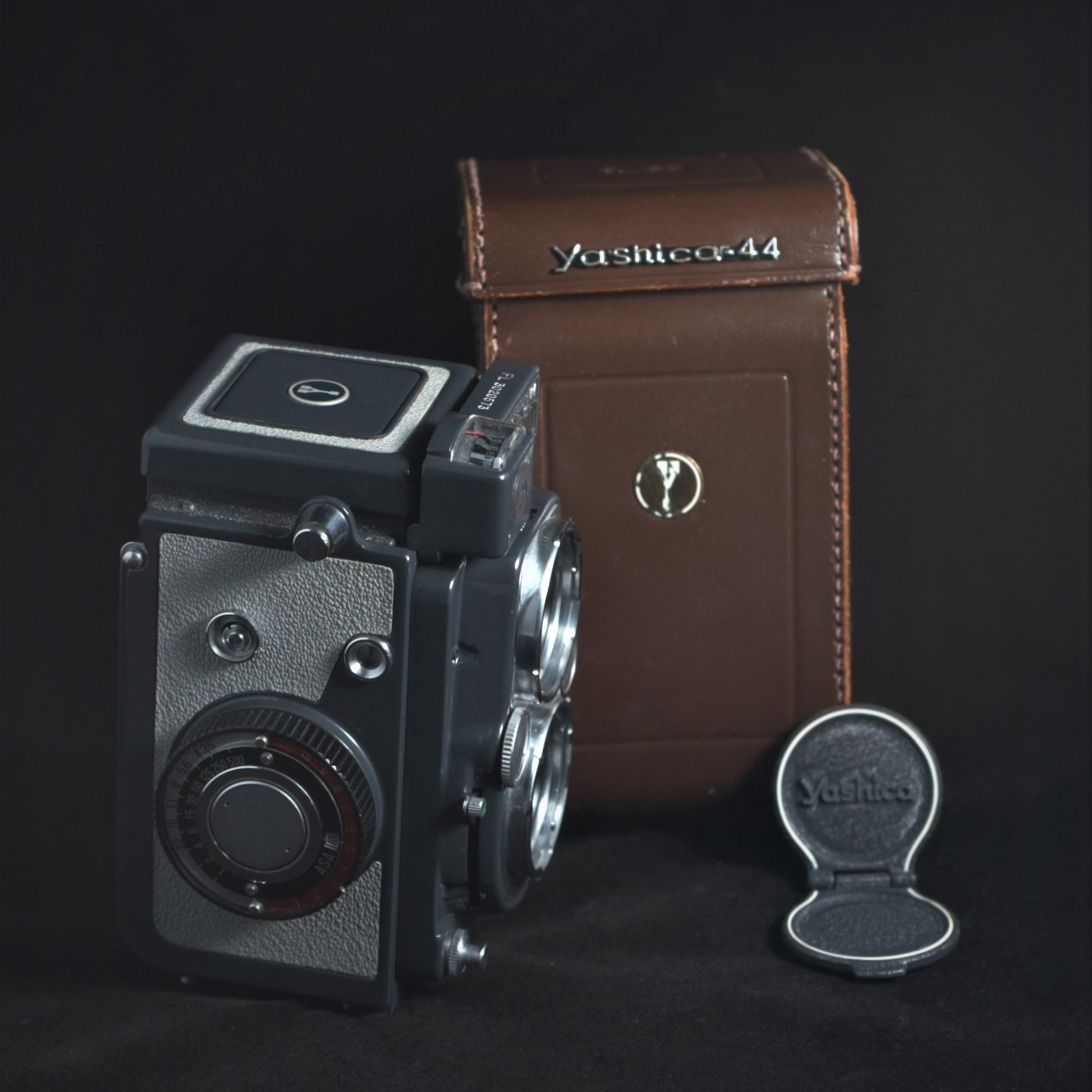
Yashica-44LM

Driving out on a Sunday morning to buy some bedding, the Waze navigational app took us to some back roads that my wife and I have never driven through before. Turning round a corner, we spotted a sign that said “Flea Market” pointing toward a field where some sellers have set up their wares on portable tables. We turned in to take a look as I always love bargains on interesting stuff at flea markets.

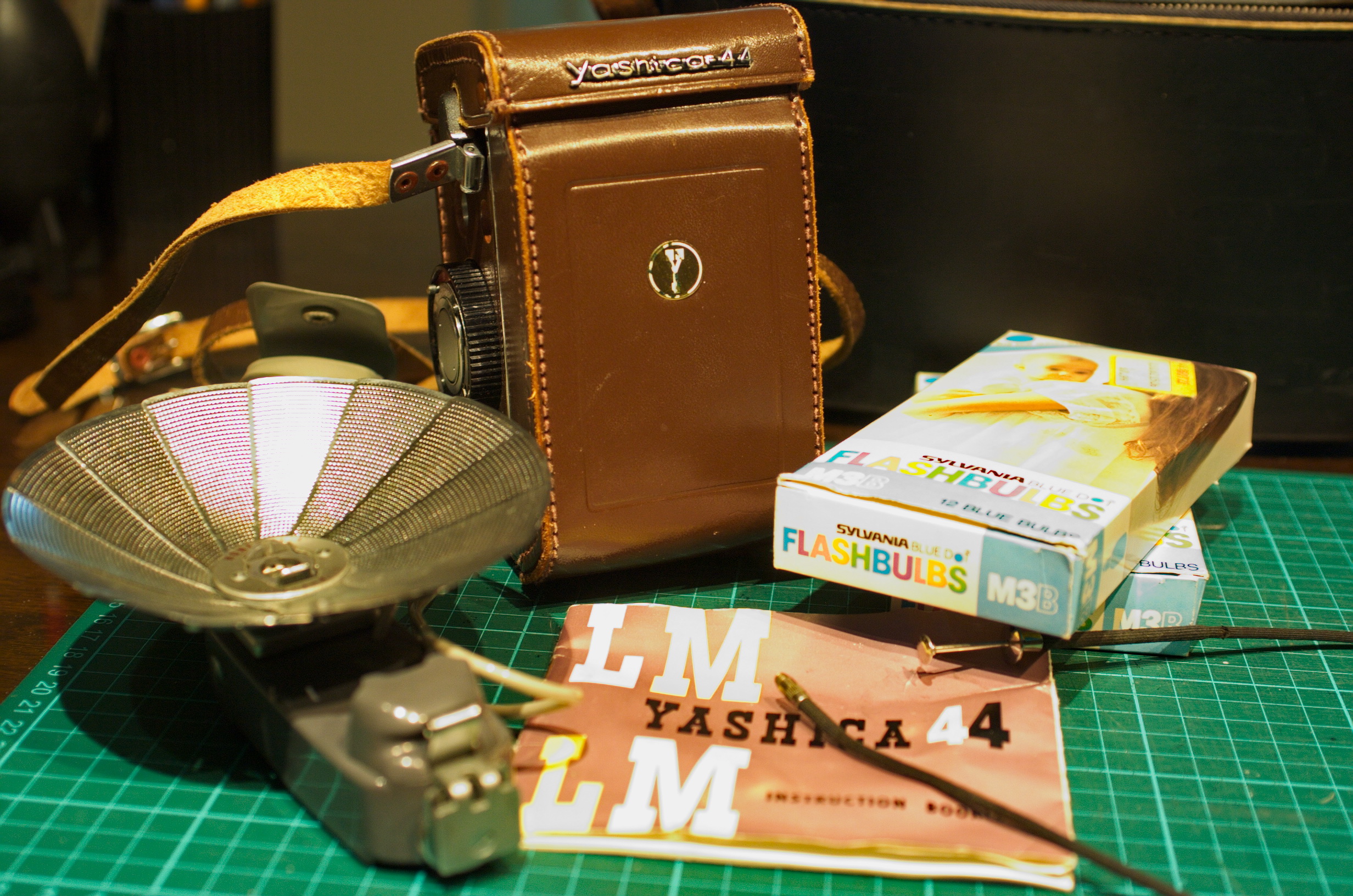
Keeping a look out for old cameras, I came across a seller who was selling mostly electronic stuff (speakers, amps etc). On one corner of her table was a collection of old cameras – chrome Minolta SRT101 with a non-Rokkor 50mm lens, chrome Pentax K1000 with a non-Takumar 30mm lens, Canon Rebel camera. $25 each. Nothing interesting I thought. Decided to dig through some of the old camera bags. First one I opened had what looked like a TLR (twin-lens reflex) in its brown leather case. It was a Yashica-44LM! There were other accessories in the bag:- 2 boxes of blue flash bulbs, a Honeywell flash where these flash bulbs attached, a mechanical cable release and the 44LM instruction booklet. “How much?”, I asked. The seller replied, “$25”. Sold! No bargaining.

The contents of the camera bag
The 44LM with flash and bulb attached

Not knowing much about Yashica-44’s, I looked it up back home. The Yashica-44, 44A, and 44LM are a series of small twin-lens reflex (TLR) cameras, designed to give 12 exposures of 4×4 cm on 127 rollfilm. (Later I realised I had the Yashica-44A back in Australia instead of the Yashica-Mat that I thought I had – the photo below, taken in 2011, exposed my lapse in memory)
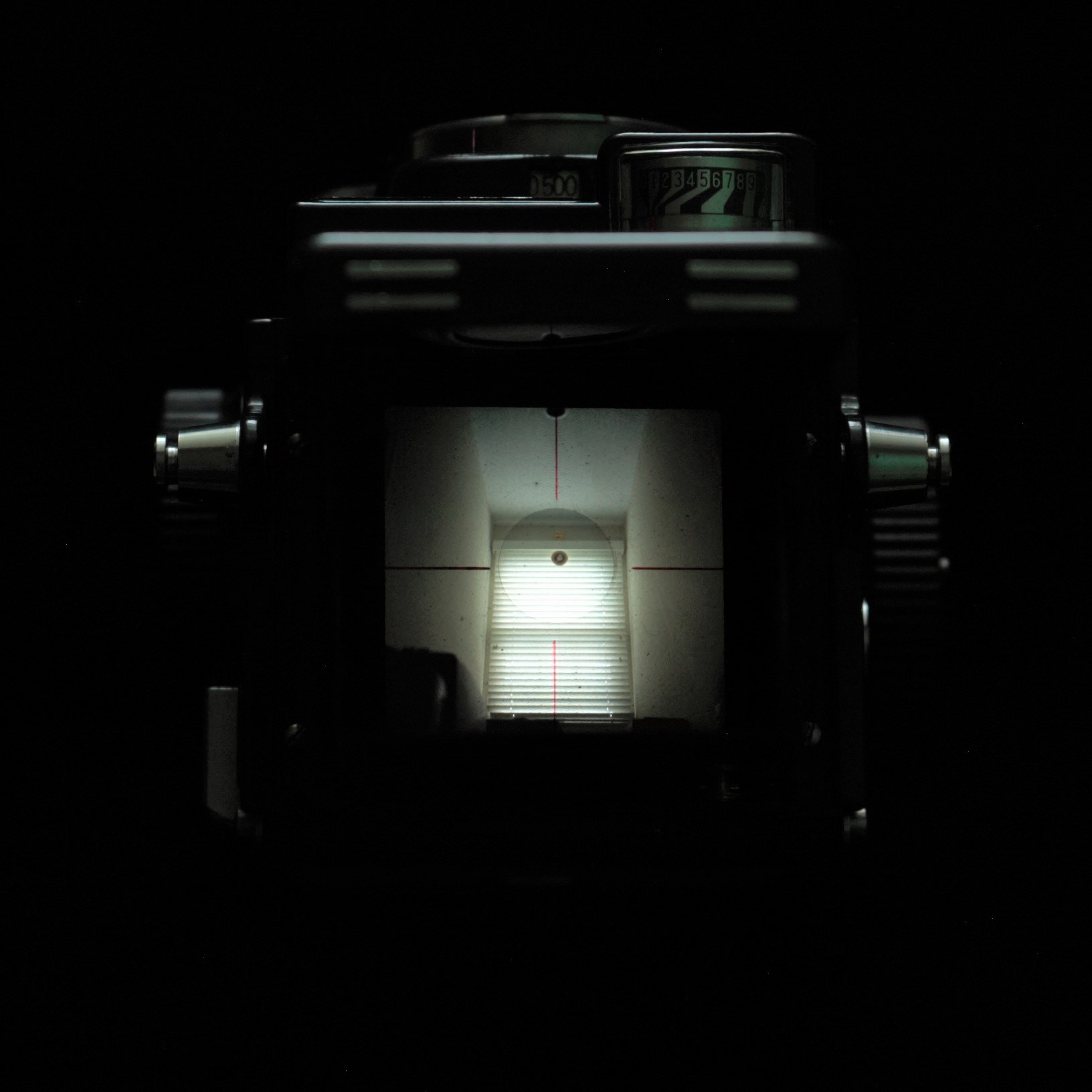
The Yashica-44A (right) next to the Seagull 4A-103 (left).
The Yashica-44A has a film advance knob instead of a lever crank and there are “teeth” extending down from the name plate. This distinguishes it from the Yashica-44.

This 44LM looked like it had been well-cared for or hardly been used. The paint work looked pristine. Both the Yashinon 60mm f3.5 lenses were crystal clear. All shutter speeds and apertures seem to work as they should. The Copal-SV shutter opened and closed smoothly. The only thing is – 127 rollfilm is hard to obtain today.

Luckily with some modifications, the Yashica-44 can take in 35mm film. Possibly a project for the future. In the meantime, enjoy the photos of the Yashica-44LM below.

Doing some research on converting Yashica-44 TLRs to fit 35mm film, I found that the modification involved a simple unscrewing and removal of the top roller in the film chamber. However all these examples were done on the Yashica-44 model and not the 44LM. Comparing the film chamber of the 44LM to pictures of that of the 44, it looked like there were more components in the 44LM film chamber. Furthermore this 44LM I acquired is in almost mint condition with the light meter still working! Plus it seemed that they also have collectible value on eBay, so modifications may not be a good idea.

I ditched the 35mm modification idea but instead sourced for 127 rollfilm. Searching again on the internet, I came across this site: https://filmphotographystore.com . They sell a great variety of photographic film including 127’s! I ordered the ReraPan 400 B&W and ReraChrome 100 Color Reversal film ($13.99 each) made in Japan by Kawauso-Shoten.

My only experience using TLRs is with the Seagull TLR pictured above. That was bought new in Singapore for SGD$120. For a cheap introduction to medium format photography, the Seagull 6×6 TLR was ideal! It surprisingly produced very, very sharp 6×6 photos – likely helped by me using a small aperture but still the photos below bear testament to its sharpness!

MacRitchie Reservoir, Singapore. Jul 2002
Seagull TLR, f8 1-15s, taken on Fuji Velvia50 120 color reversal rollfilm
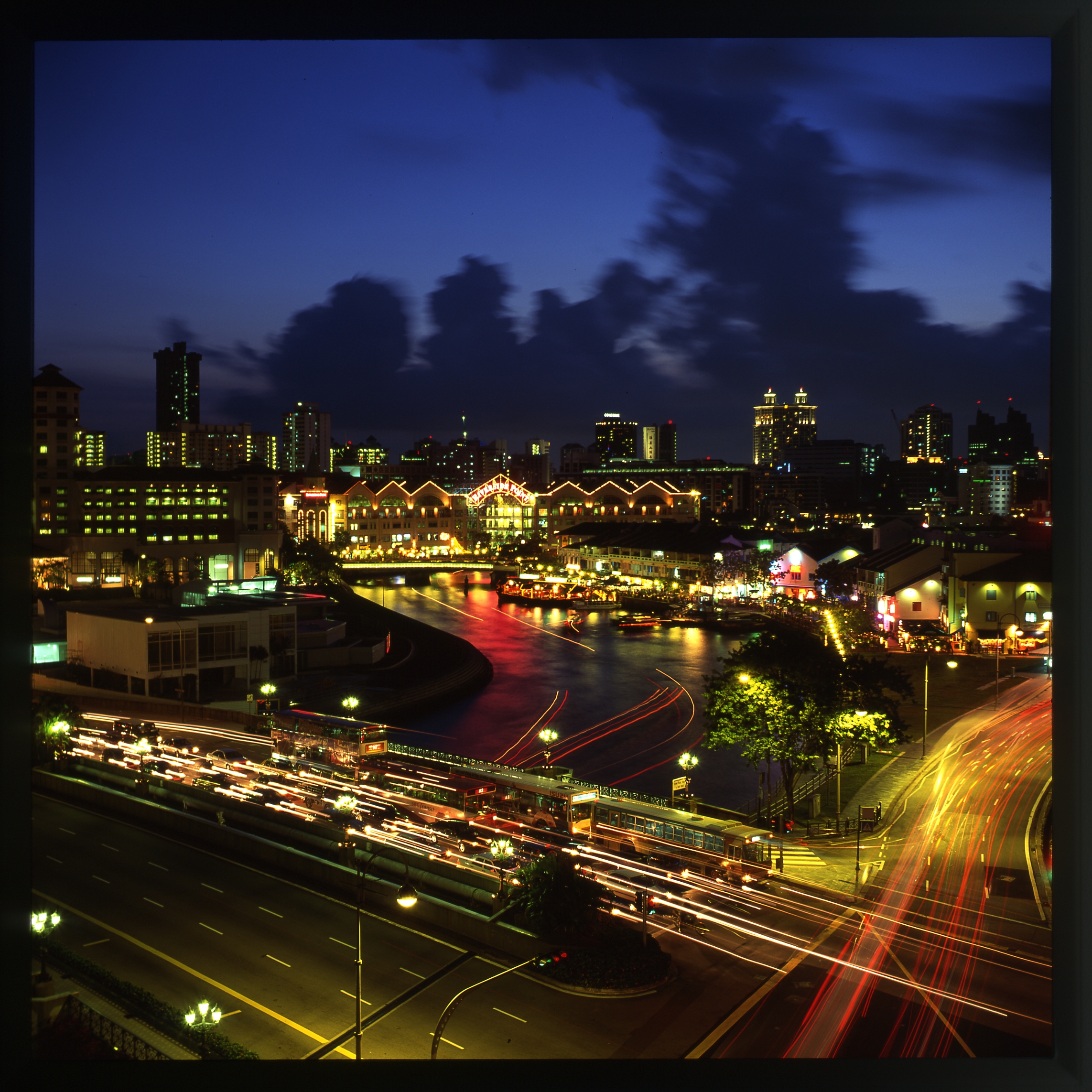
Clarke Quay, Singapore. Aug 2002
Seagull TLR, f11 20s, taken on Fuji Velvia50 120 color reversal rollfilm

With these pleasant memories from the Seagull, I look forward now to taking the Yashica-44LM TLR for a spin when those films arrive!

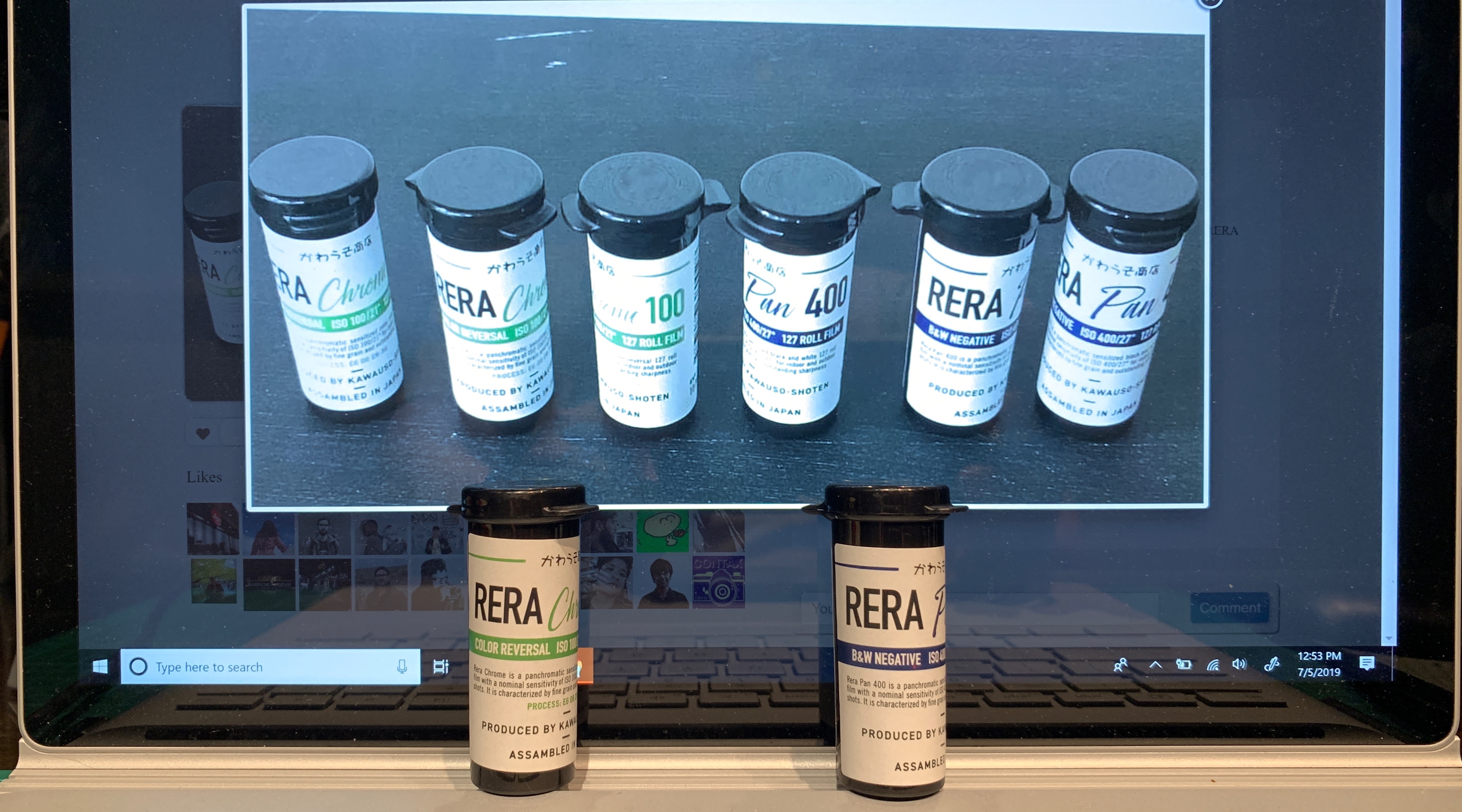
The RERA films arrived in the post today!

RERA Chrome 100 (left) & RERA B&W 400 (right)

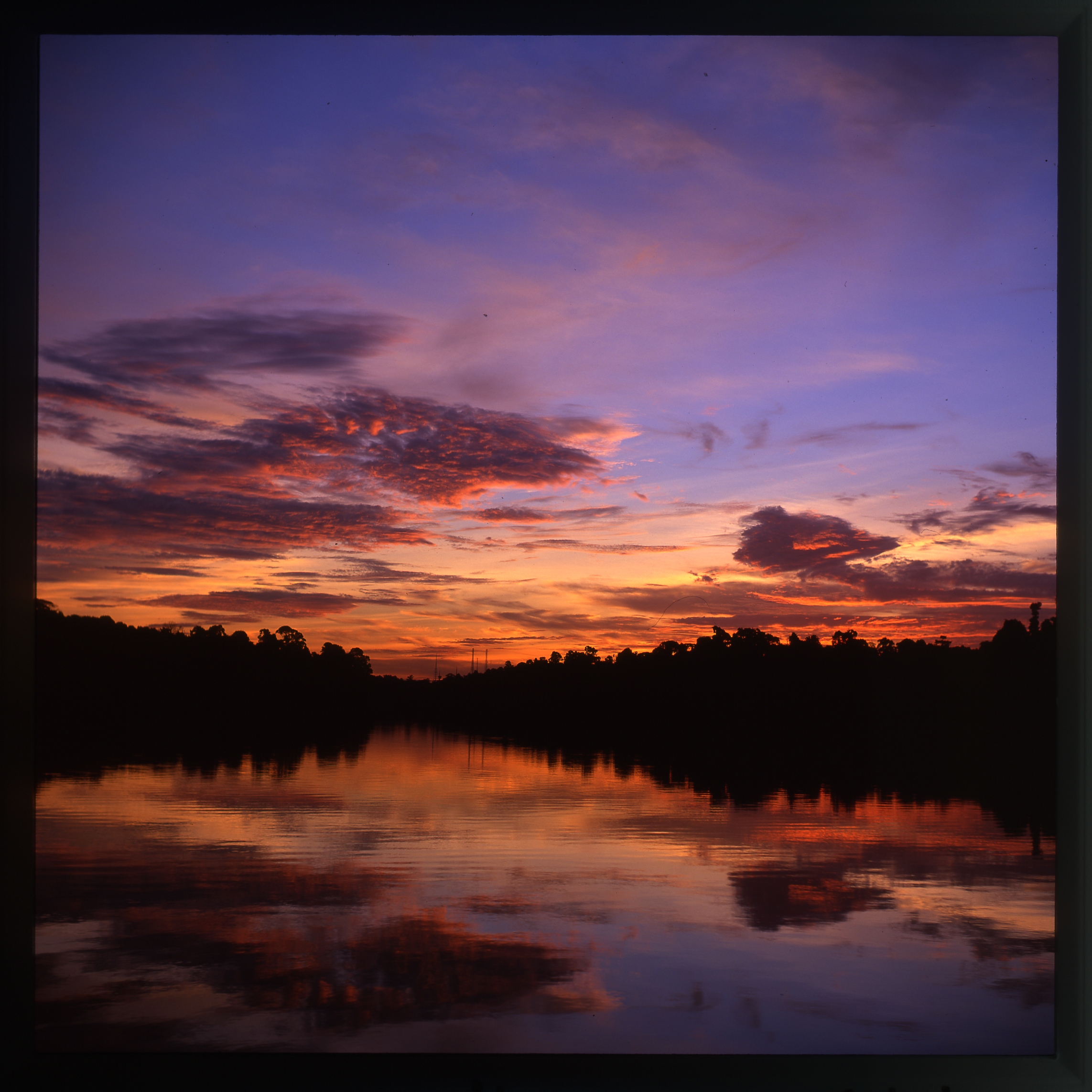
After some deliberation, decided to load in the Chrome first and head out later in the evening to take some shots!