Nikon F3 SLR

The Nikon F3. Step beyond the ordinary.
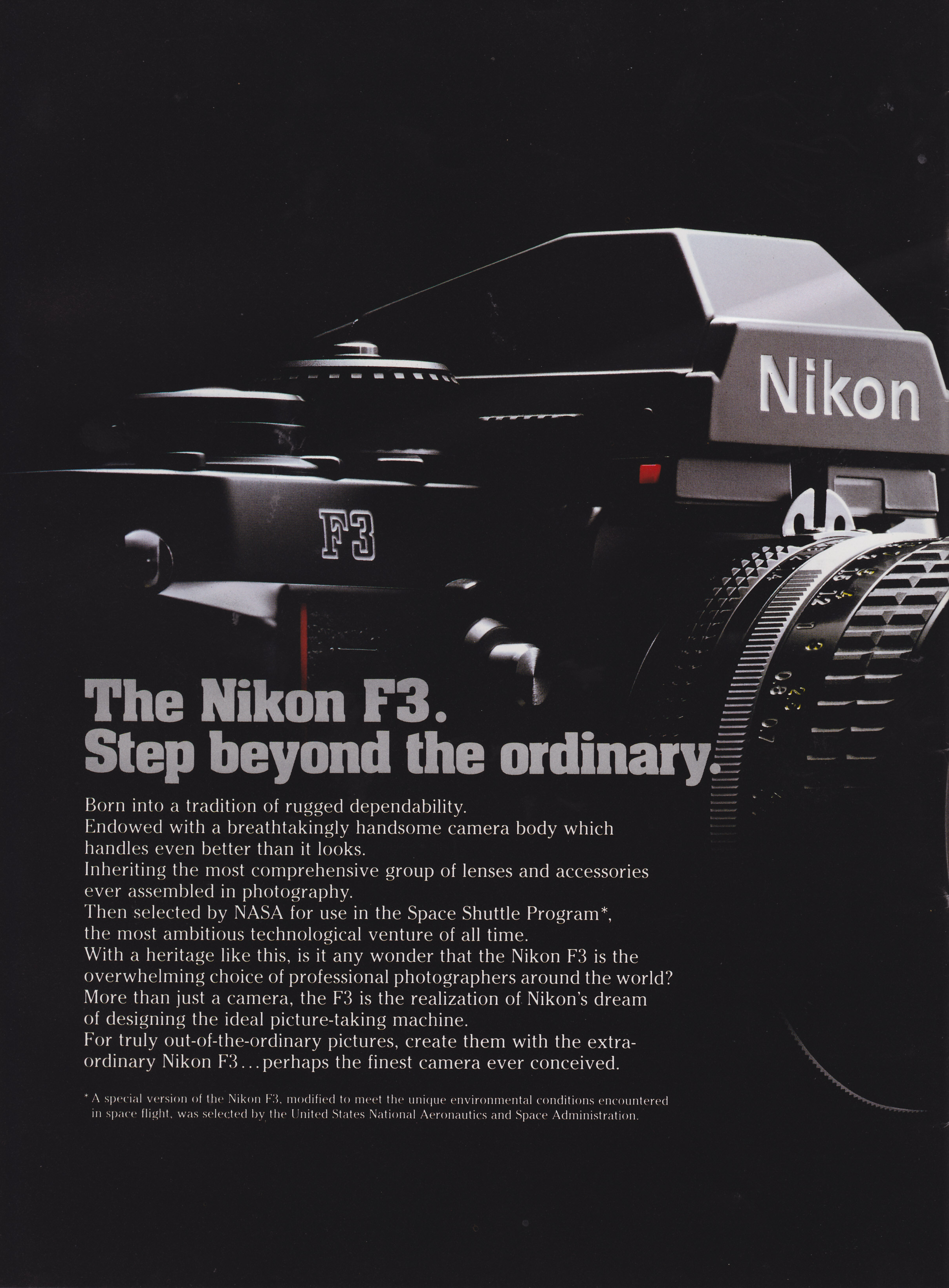
Inside cover of the Nikon F3 brochure of the 80’s

These words greeted you the moment you turned the cover page of the Nikon F3 advertising brochure of the 80’s. In the background you see a silhouette of a stylish black Nikon camera with the designation F3 and a glimpse of a red line. Almost like a sports car and yes, as everyone in the photo industry knows, it was designed by Giorgetto Giugiaro, a famous Italian car and industrial designer. Enough to make me drool! I had to get my hands on one.
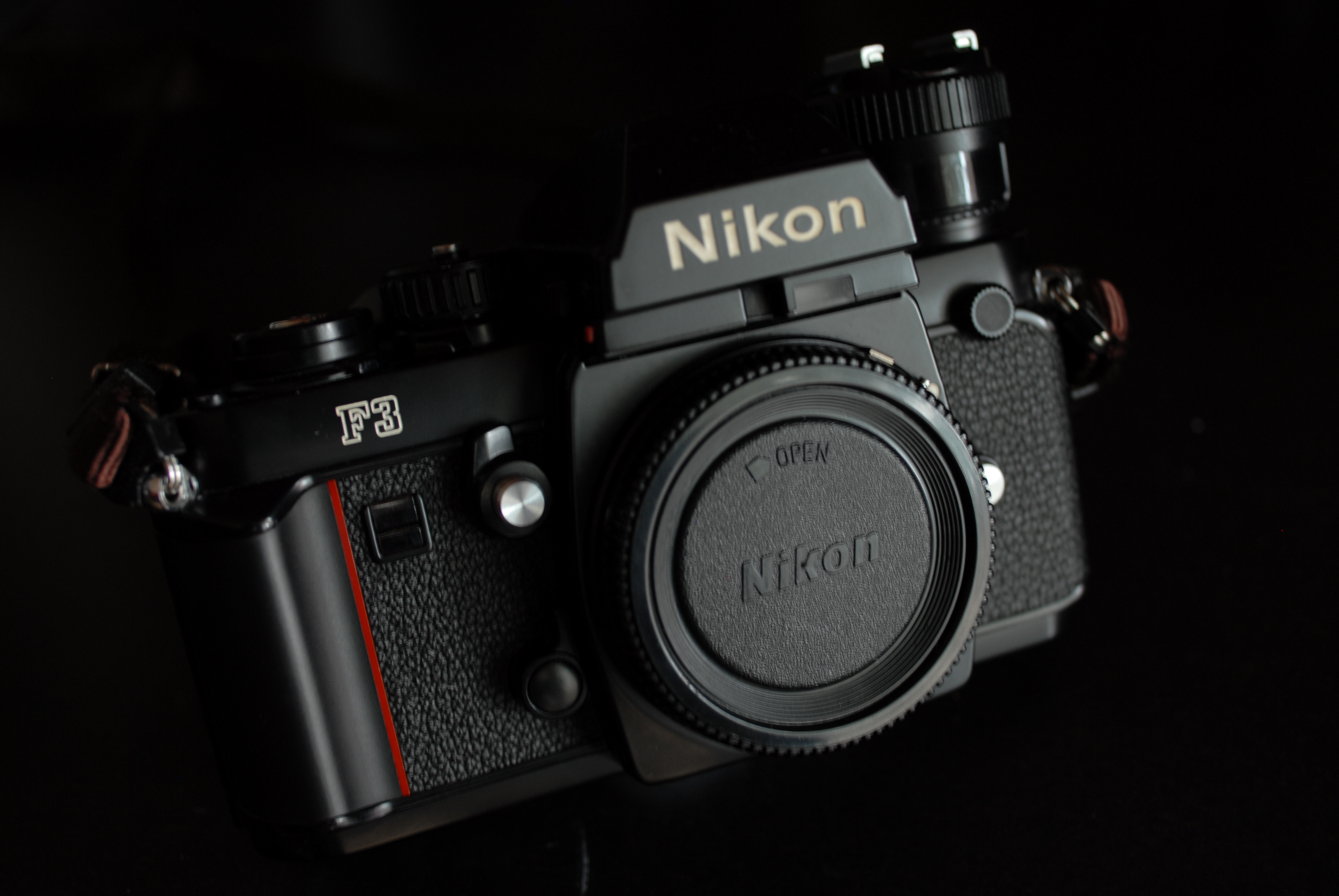
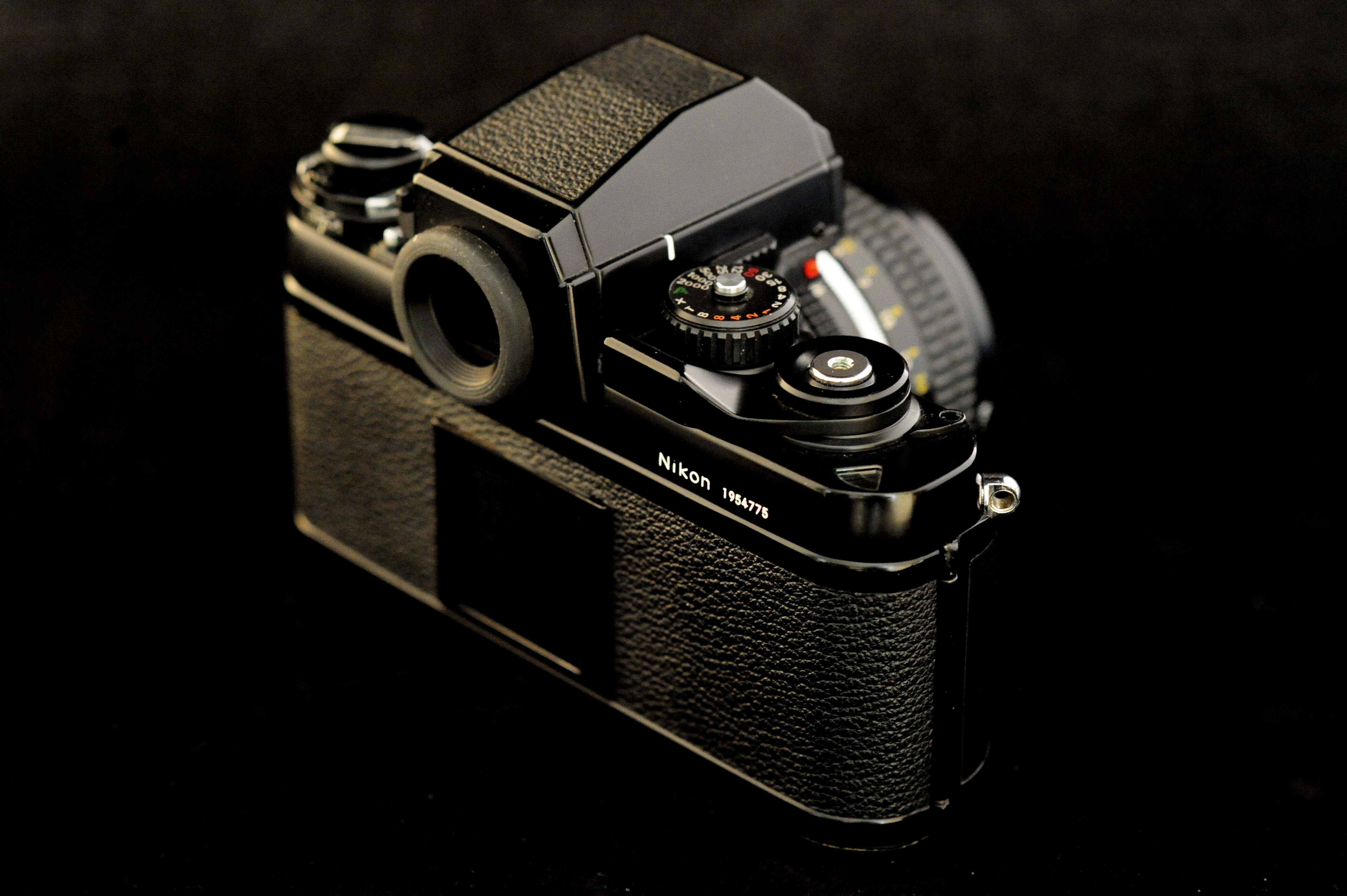
The Nikon F3 with a AS-4 flash coupler

In 1989, I bit the bullet and got one in the used market for A$799. It is a nice camera to hold and to operate. The moment you hold it, it becomes very evident that this is a quality pro-level camera. The film advance level is silky smooth. Even the shutter firing feels smooth. It had all the features for a pro-user. While it employed an electronic horizontal curtain shutter, there was the ability to fire the shutter mechanically at around 1/60th of a second when the batteries are dead or the camera is turned off. On the other hand, my first camera, the Yashica FX-103 Program, also with an electronic shutter, couldn’t fire if the batteries are dead. This was a difference between the pro-level F3 SLR and the consumer-level FX-103 SLR – the pros couldn’t afford to lose a shot because of dead batteries.

One drawback was the lack of a flash hot-shoe on the F3. To mount a flash, you had to use the dedicated Nikon AS-4 flash coupler mounted over the ISO dial of the camera. This made it cumbersome to access the ISO dial and rewind knob. The flash coupler had to be removed before rewinding the film.

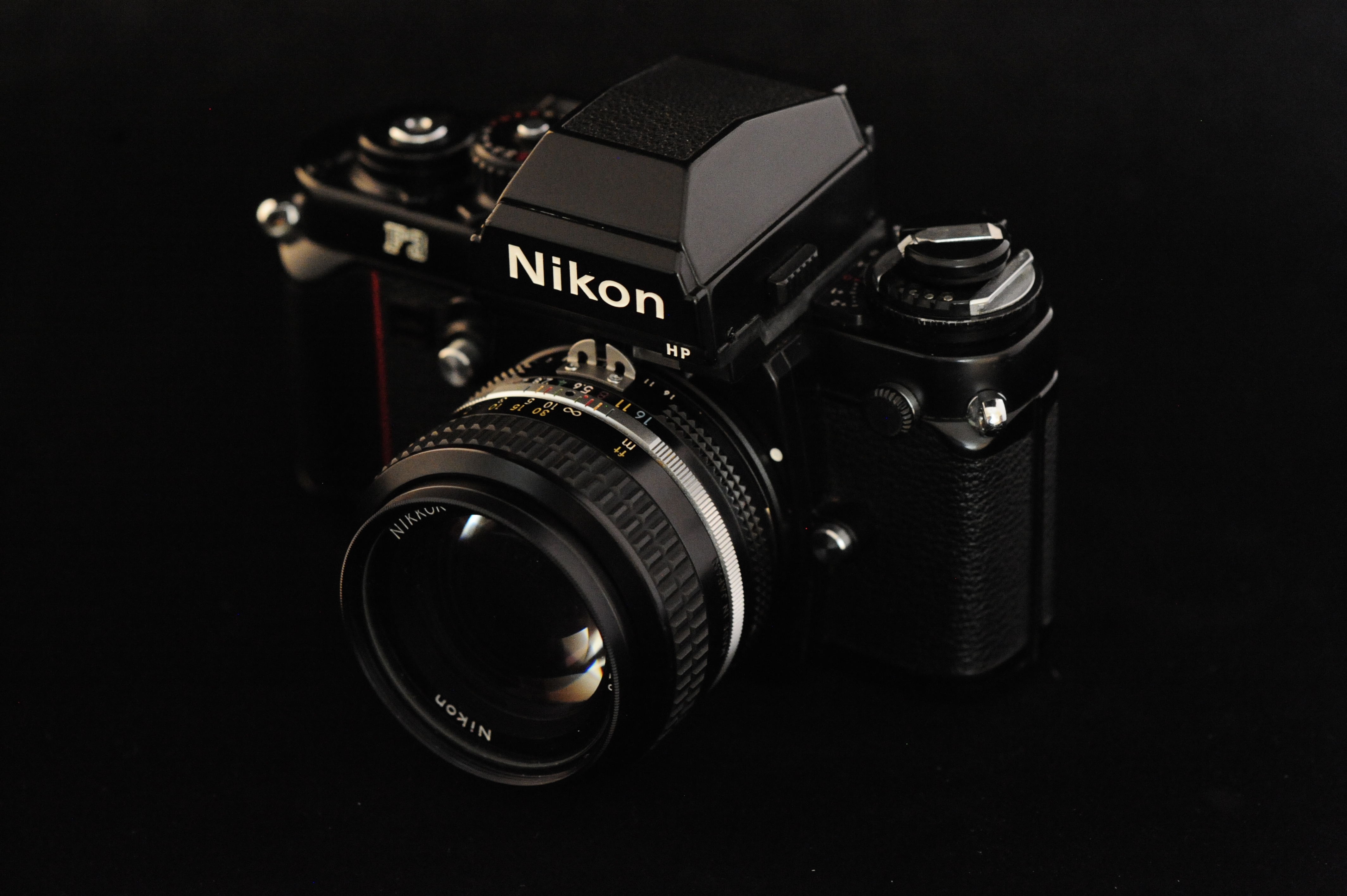
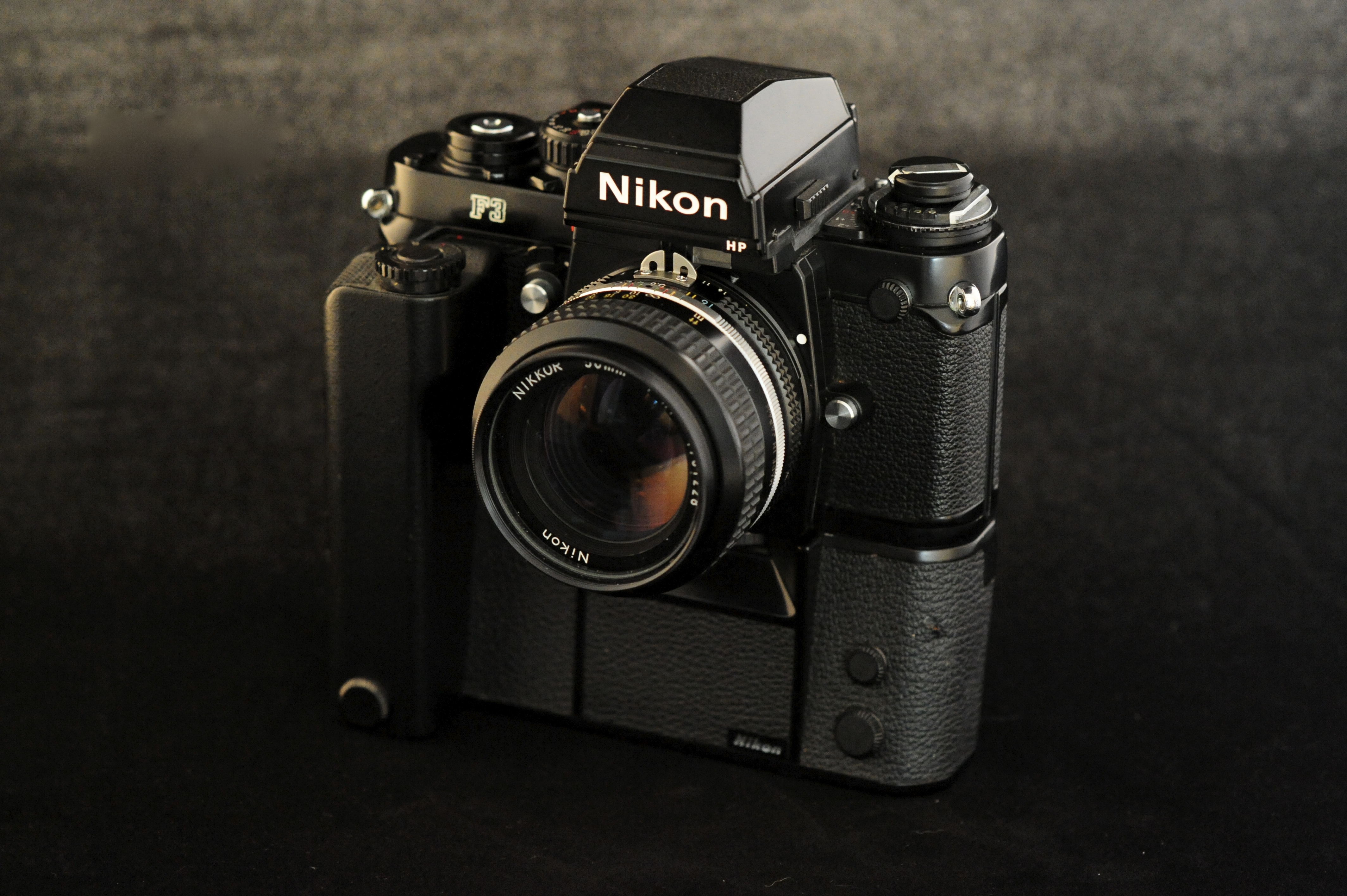
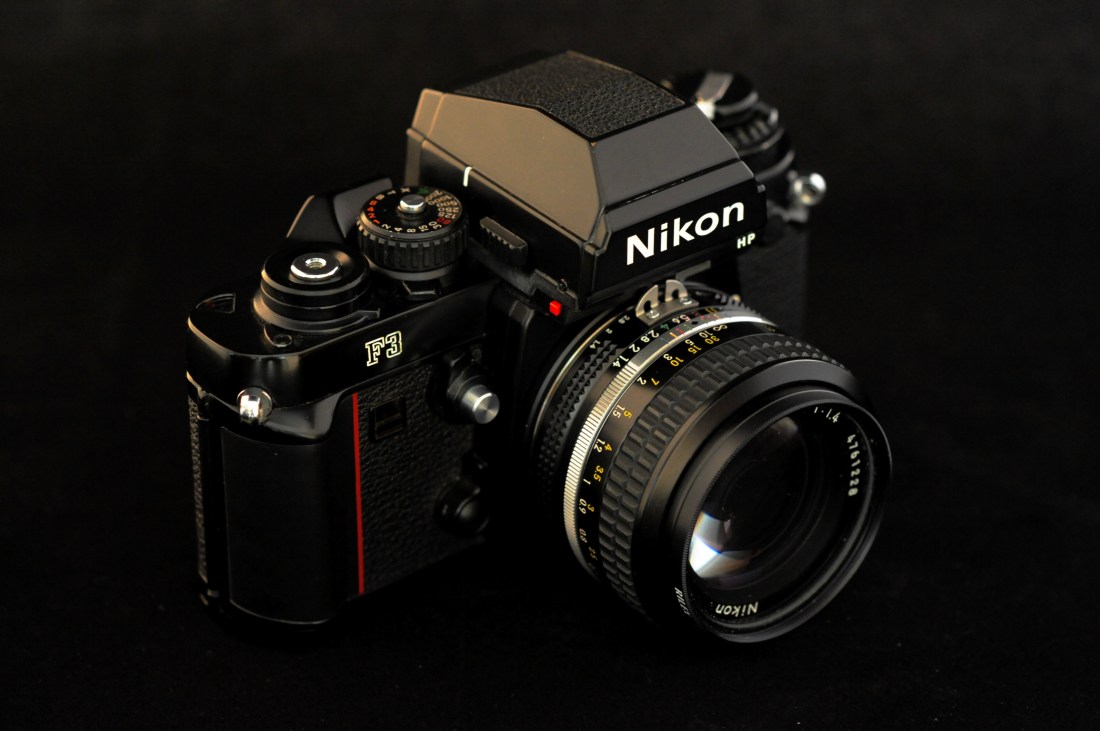
The Nikon F3HP with a Nikkor 50mm f1.4 AI lens

Built for professional photographers, the F3 is modular. The prism housing/viewfinder is easily detached from the body and interchangeable with any of the 5 available: DE-2, DE-3, DA-2, Dw-3, DW-4. The DE-3 is also known as the High-Eyepoint (HP) viewfinder.

Coupled with the Nikon MD-4 motordrive, the camera is capable of a 4 frames per second continuous mode which made it a favourite with sports photographers in the 80’s.
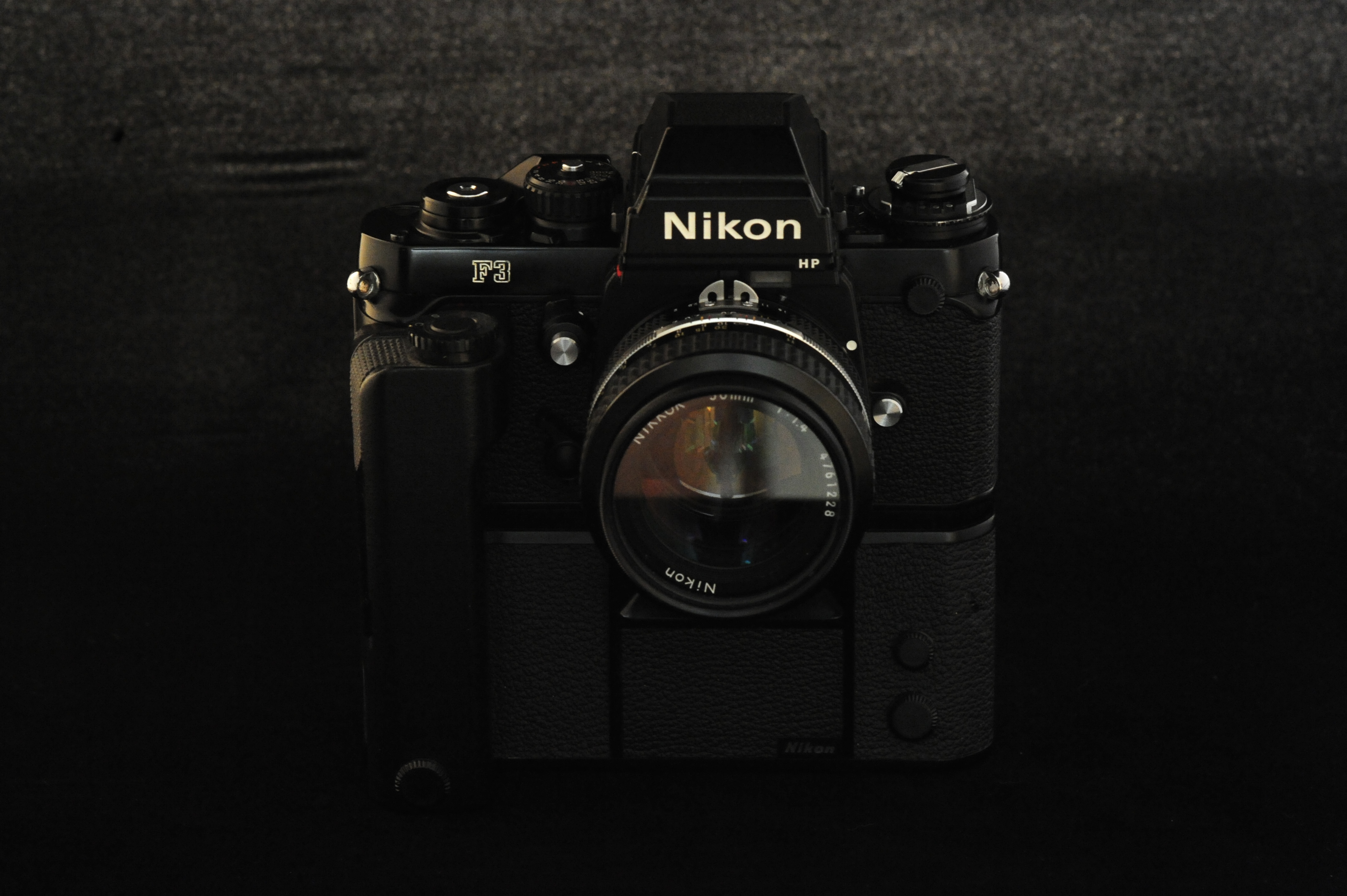
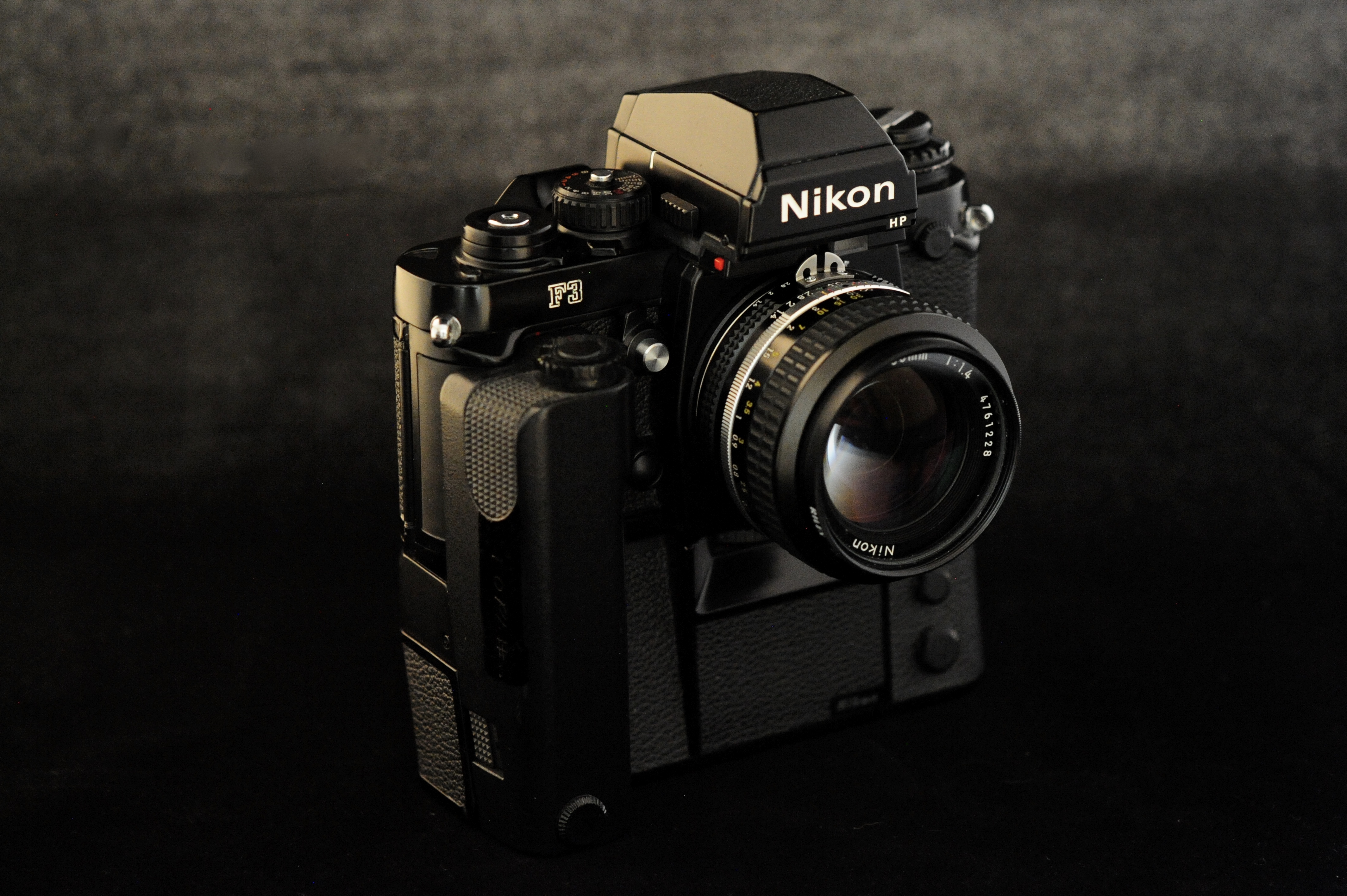
The F3 with the MD-4 Motordrive

In the era of quick digital photography and new digital cameras, the F3 is now more a curiosity for camera collectors or gear acquisition syndrome folks. For a camera that debuted in 1980 with a list price of $1.174.90 (with the Nikkor 50mm f/1.4), in 2019, one can purchase a F3 body for about $150 to $200 on eBay.

Sydney Harbour, Australia 1989 taken with a Nikon F3

Put a roll of film in an F3 and take a walk with it – it is still a tactile pleasure for me to crank the smooth film advance lever and press on the button to release the shutter of the F3. I’ve had great times and pictures with the F3.
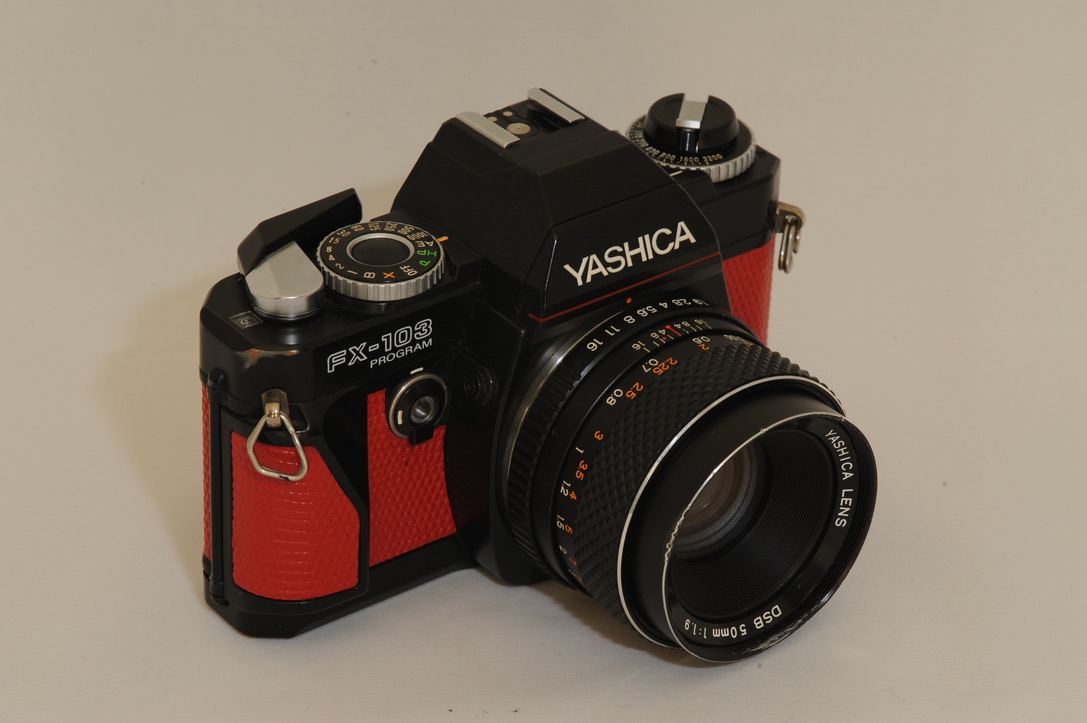
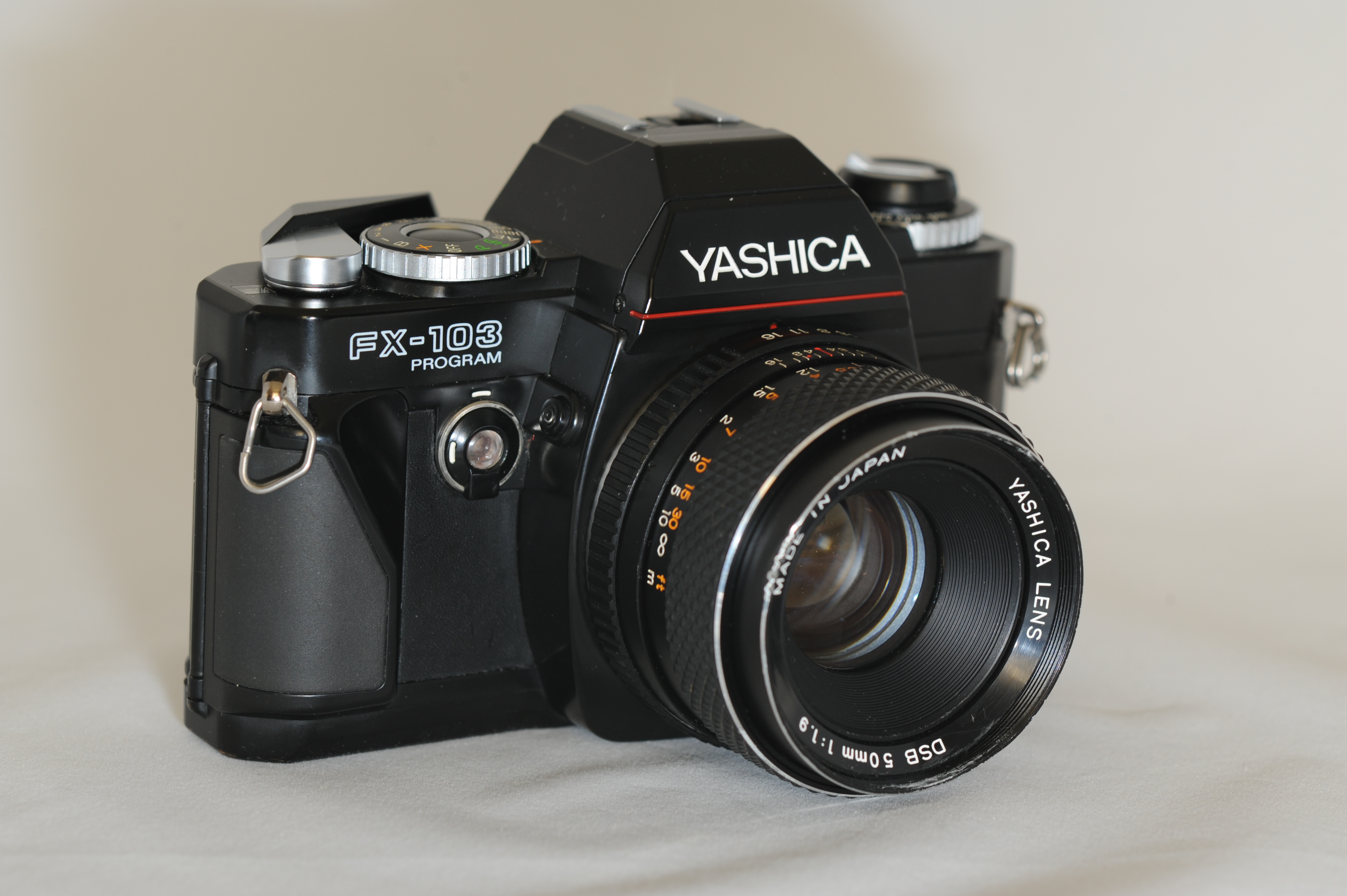
Yashica FX-103 Program SLR

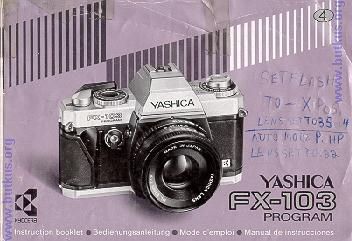
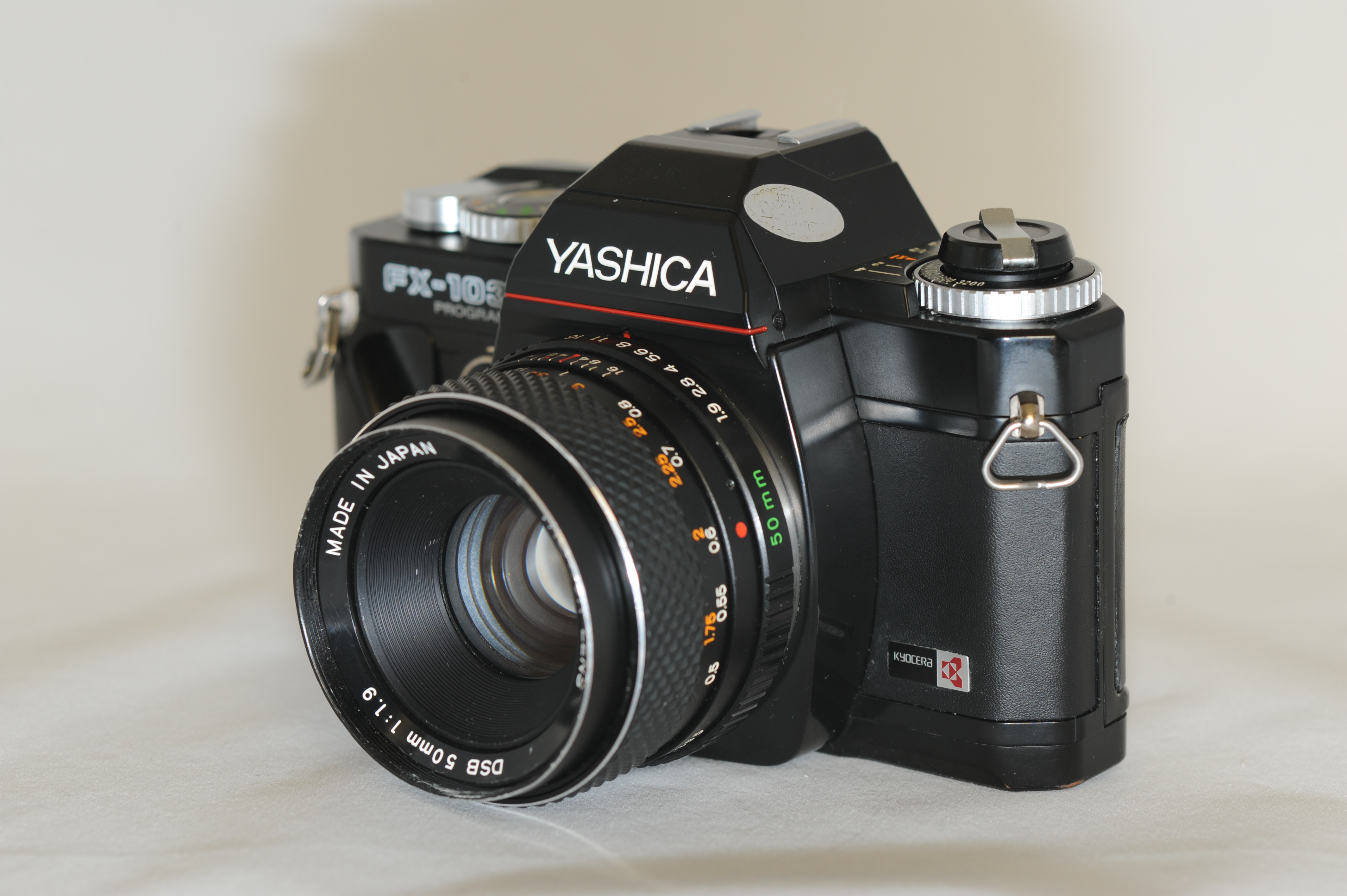
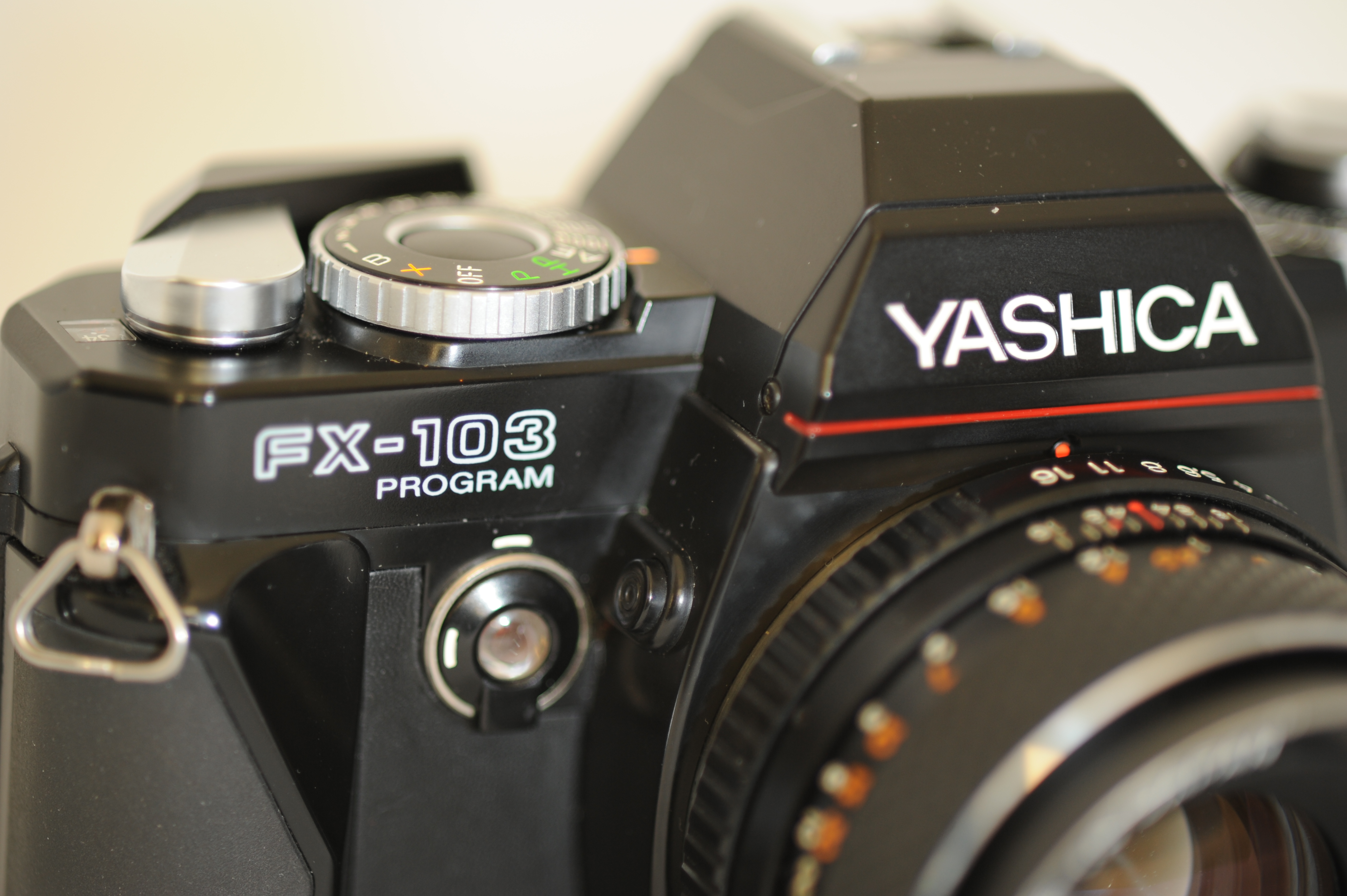
The Yashica FX-103 Program. This is my first ever camera.

It was a gift from my mother in 1988 for graduating university. She instructed my elder brother to purchase a camera and he purchased it from a camera shop in Malacca, Malaysia. I was ecstatic with the gift but I had no idea how it operated except to know that one needed to press the shutter button to take a photo.

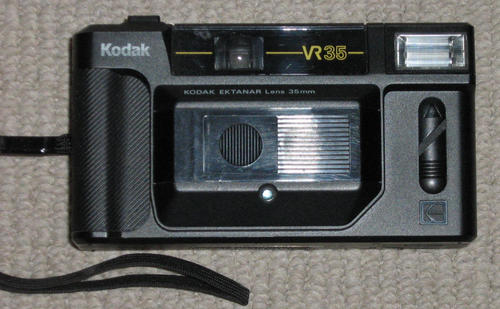
My only previous experience with cameras was with an idiot proof point and shoot Kodak VR35 camera which I used to take photos on a trip to the picturesque South Island of New Zealand! 😩

A plastic Kodak VR 35 idiot camera

Back to the Yashica FX-103 Program. It is a 35mm SLR camera from Kyocera. It was available in the mid 1980’s and was one of those new electronic SLR cameras that had an electromagnetic shutter with programmed exposure modes. The electronics required two LR44/SR44 batteries to operate. Obviously when the batteries died, the shutter would not operate and the mirror flips to mid-point and froze. Reading the manual, I learnt how to operate it and bought books and photo magazines to improve my photography with it. In a short period of time I reached a comfortable level of competence using it.

Kyocera badge on the FX-103

The camera was light and easy to hand-hold and carry. The grip on the camera had a groove in the front where you could comfortably rest your middle finger to grip the camera body with the index finger on the shutter. It came with the standard Yashica ML 50mm f1.9 lens.

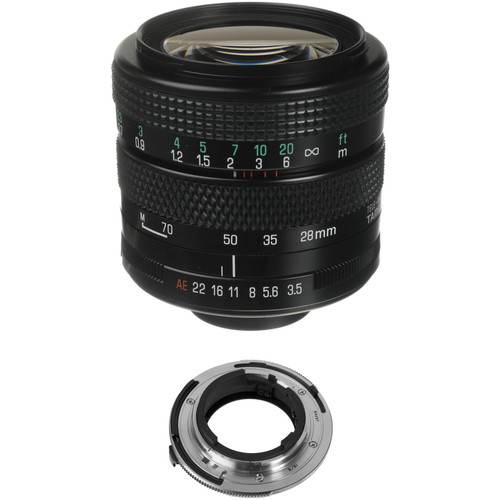
After several months and much reading, I felt I needed more focal lengths to expand the photographic point of view. At that time I was living in Sydney, Australia. George Street in the city was where the multitude of photography/camera shops were. I wanted wide and telephoto zooms ( I didn’t know better then). At Fletcher’s Fotographics, I was served by a lady salesperson who introduced me to the Tamron 28-70mm f/3.5-4.5 and 70-210mm f/3.8-4.0 Adaptall lenses. She told me that they could be used with any other brand of cameras just by changing the mount adapter. I was sold by the price – at A$285 each at that time – and the fact that I could use it in other brands of SLR cameras with the correct Adaptall adapter.

The Tamron 28-70mm f3.5/4.5 zoom lens with a Nikon adaptall adapter
Push-pull Tamron 70-210mm f3.8-4 zoom

The Yashica FX-103 and Tamron lenses served me well for about a year and a half before I was afflicted by the Gear Acquisition Syndrome, reading photo magazines that extolled the virtues of the Nikon system especially those of the FM2 and F3 cameras (those cameras in future blogs).

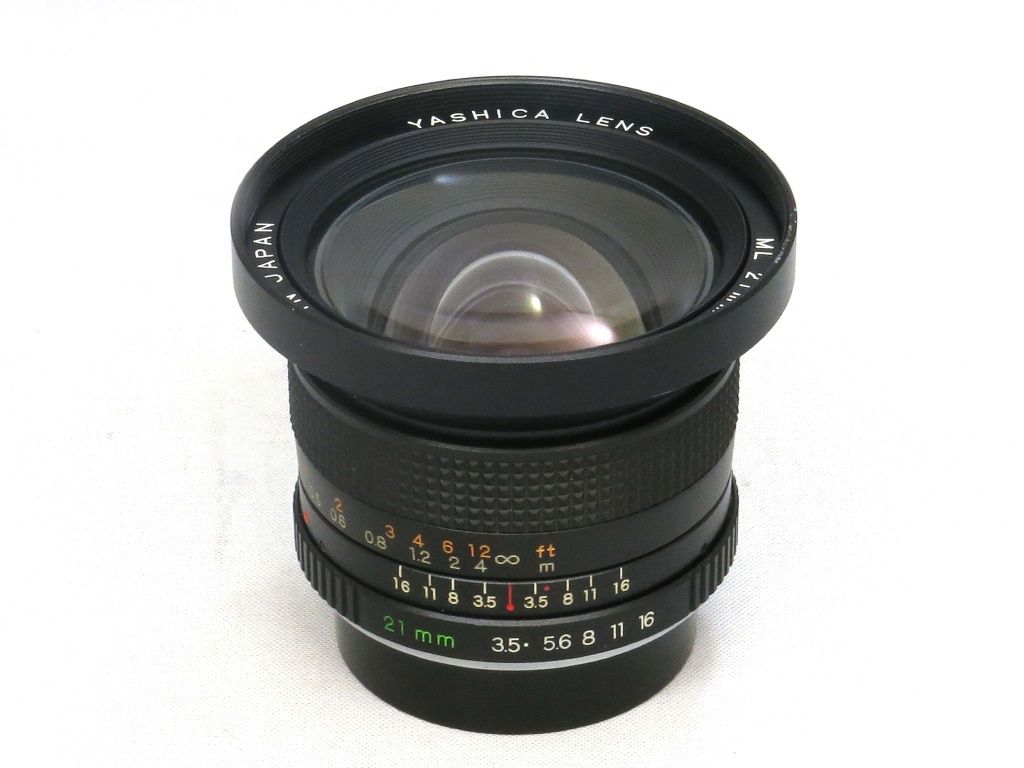
Eventually I sold the FX-103 along with a very nice Yashica ML 21mm f3.5 prime lens 😩 (which is now a sought after item because of its great optics and low distortion) that I had acquired in a used condition a few months after buying the Tamrons.

The Yashica ML 21mm f3.5 – a heavy well balanced prime lens
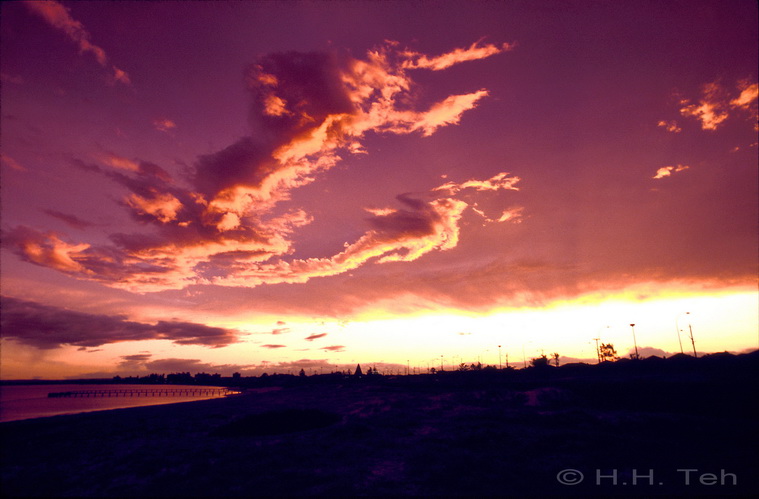
Botany Bay, Sydney 1988, taken with a Yashica ML 21mm f3.5 lens mounted on the Yashica FX-103 Program SLR

The Yashica FX-103 will always be my first SLR. A special camera for me but unfortunately I no longer have the original one. A couple of years back, I was able to purchase 2 of these for about $30 each.

These had flaky leatherette as was inevitable for these cameras since Yashica used a cheap felt material for the camera leatherettes.

The Yashica FX-103 with it’s old original flaky leatherette (front)
FX-103 leatherette in bad condition (back)

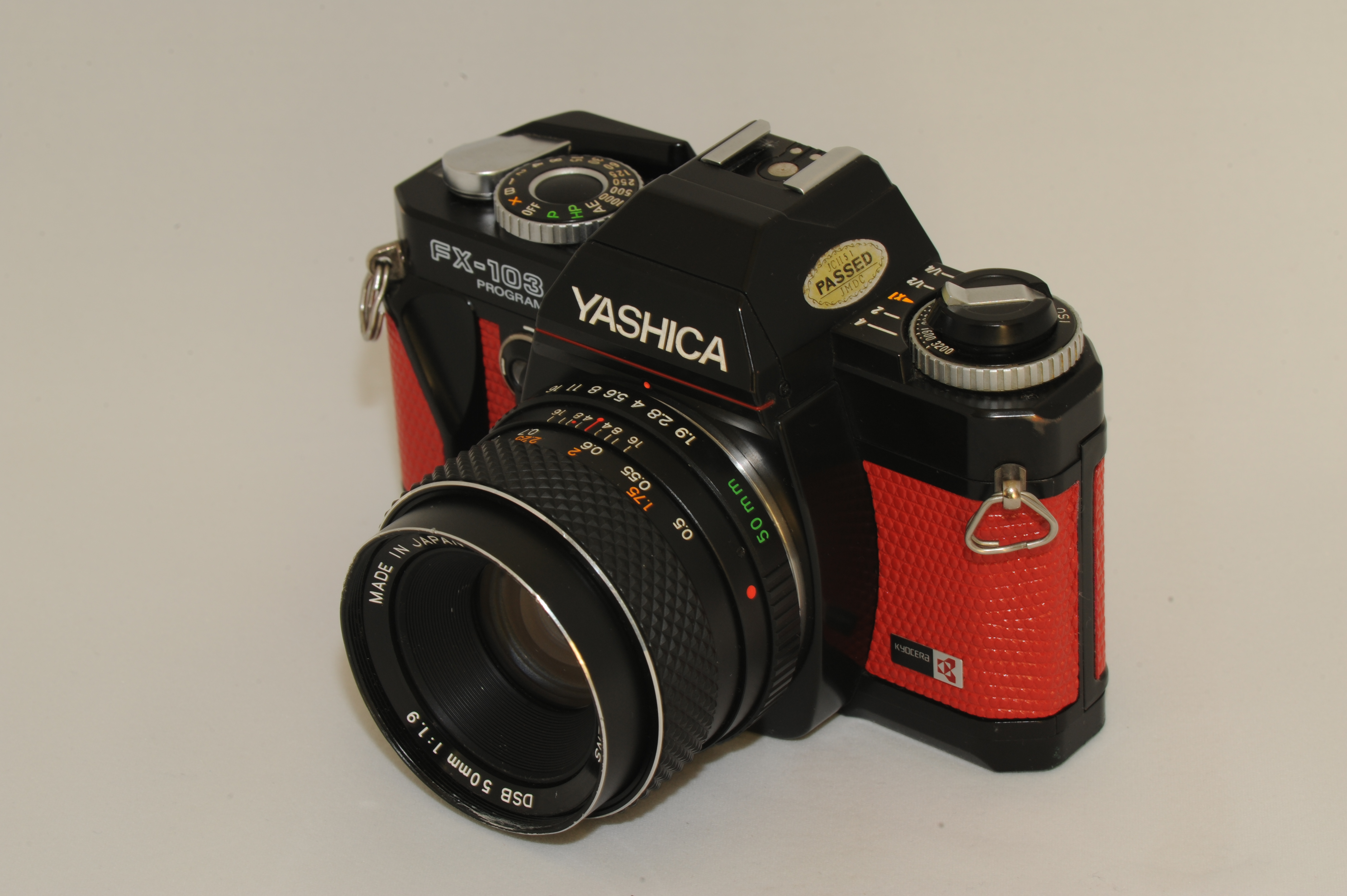
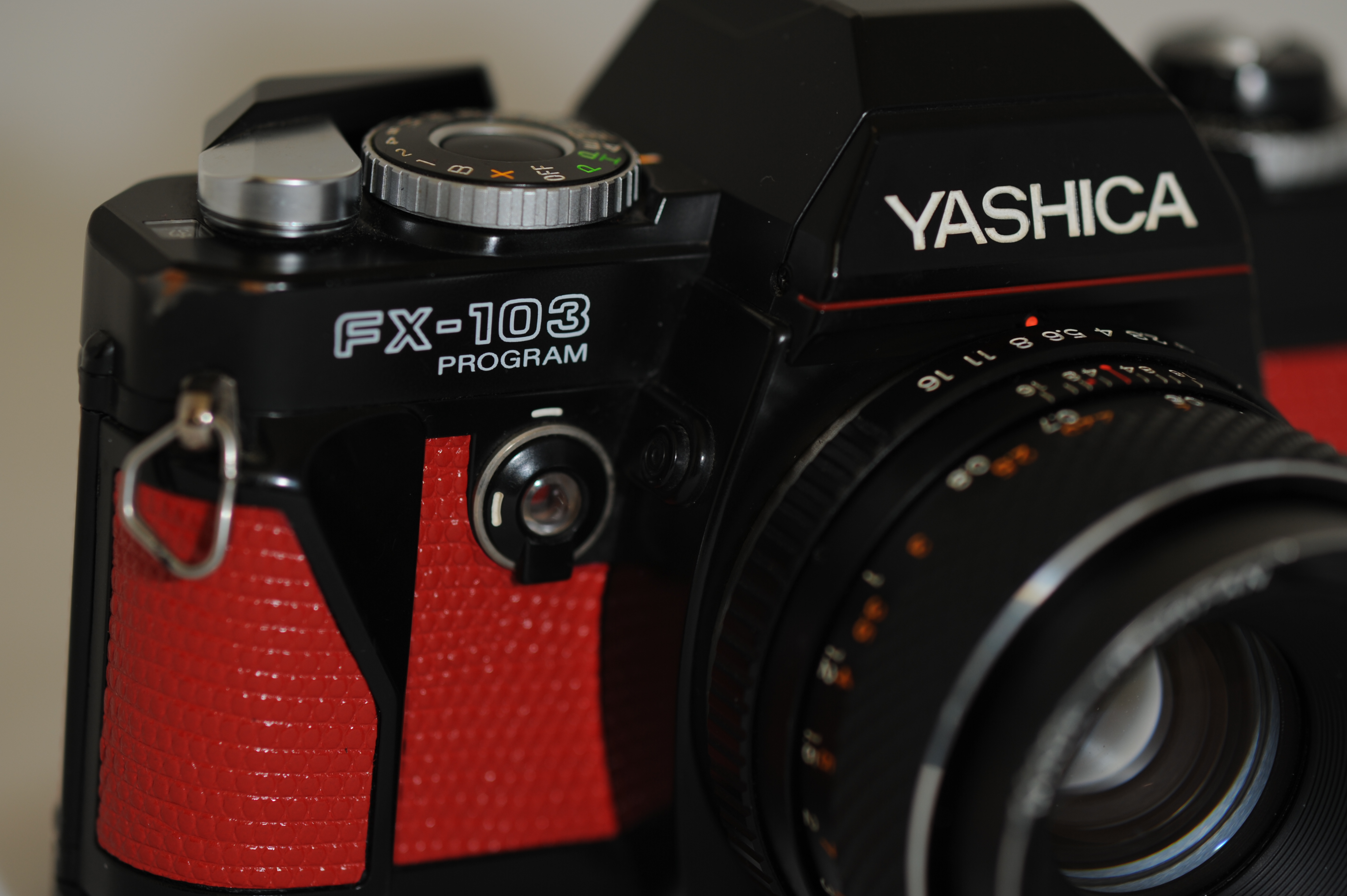
Recently, I refurbished the leatherette for both these Yashicas. Now they look great! I now have my first SLR back with new skins!
Leatherette purchased from Aki-Asahi Camera Coverings 😃

The FX-103 with a new black leatherette from Aki-Asahi.com
FX-103 with a nice faux red snake-skin leatherette