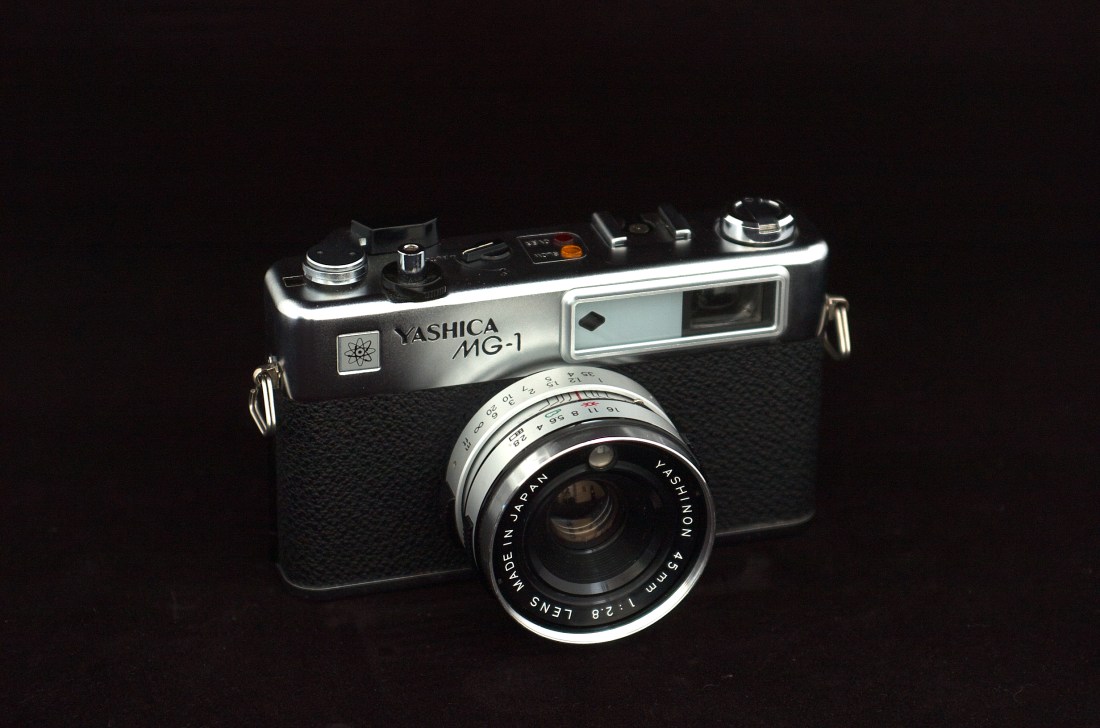
Yashica MG-1 Rangefinder

Went to the fleamarket for a second weekend in a row. Hot and humid today. It was already near boiling at 9am in the morning. Not much to see today, lots of knick-knacks but not anything interesting for me. There were some cameras but not anything that appealed to me. Mostly compact digitals, some Polaroids from the 80’s and 90’s and also a Yashica FX-3 SLR but the condition was bad. As with all Yashica FX-3’s and later Yashica SLRs, the fake leatherette flaked off with use over time and this one was no different. It had a Yashica 50mm lens attached to it. I was surprised when I picked it up, it was very light and felt plasticky. I was expecting it to be all metal and heavier. The seller wanted $25 for it, so I passed it off.

My black Yashica MG-1
(note that the black version does not have the “atom” logo)

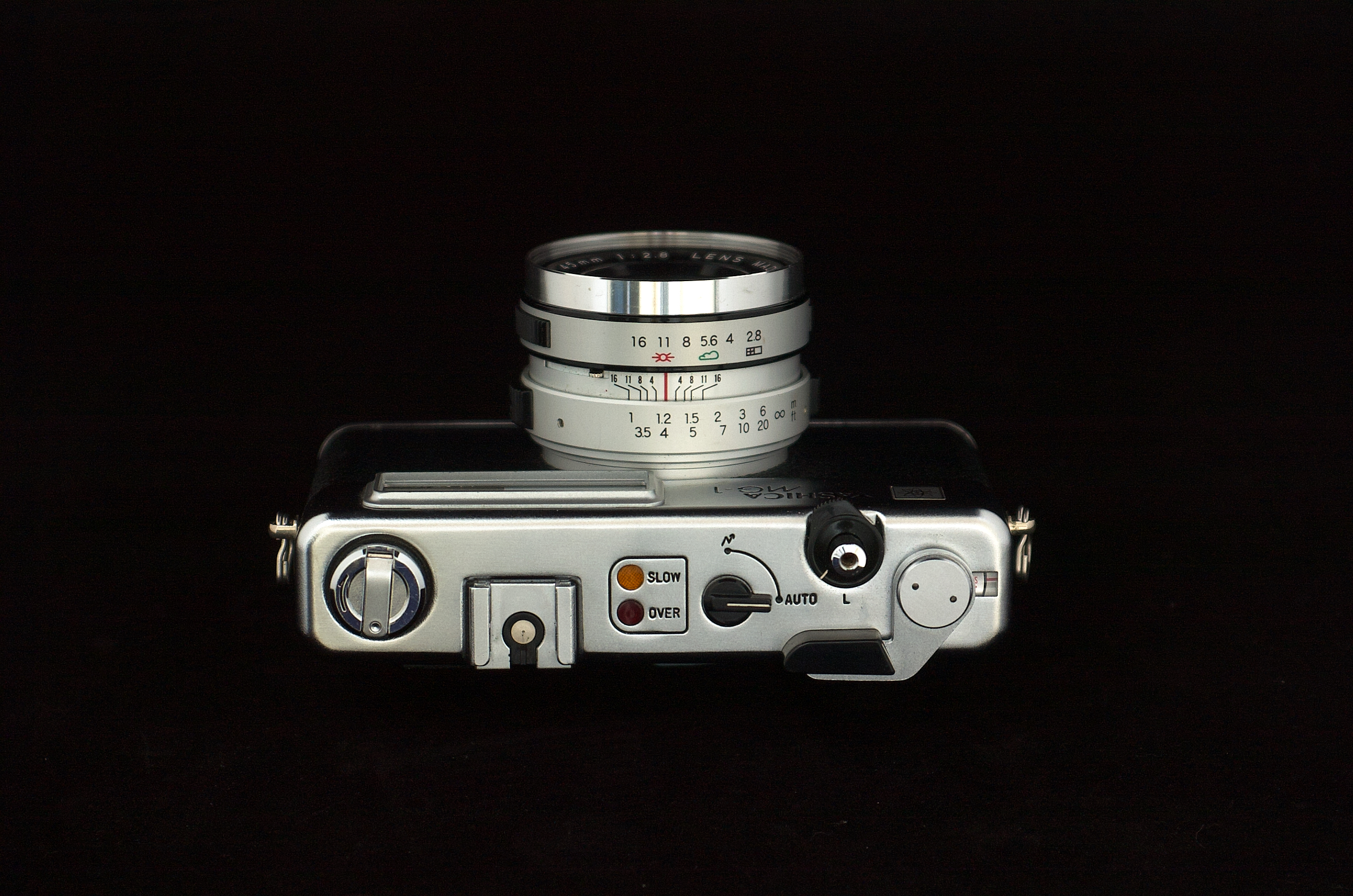
Walking further on I saw another Yashica. This was made earlier than the FX-3 and a rangefinder. Yashica rangefinders are excellent and available for cheap ever since the digital revolution. People were selling them off for AUD$15 to $20 in Australia a decade ago. Prices now have stabilized to around US$25 to $50 nowadays on eBay. This particular rangefinder was the Yashica MG-1 in chrome finish. As I already have an MG-1 (in black finish), I wasn’t planning on acquiring another one. “How much?”, I asked the seller. $5 was the answer. Without much further thought, I took out my wallet and handed her the $5.

Examining it more closely at home, this particular MG-1 is in excellent condition. It looked like it just came out from a camera shop from the 70’s. The chrome body is pristine and mint, the Yashinon 45mm f2.8 lens is super clear.

In the 70’s, the MG-1 operated with a 5.6V mercury battery. These are no longer available. When I pressed lightly on the shutter button, the orange and red exposure indicator lights flashed meaning that there was power supply to the camera. The MG-1 is an aperture-priority camera and the CdS light sensor on the lens barrel needs power to work. Opening the battery chamber, a working new looking Duracell 6V PX32A battery popped out – an extra bonus! Not sure when this battery was put in but apparently Duracell stopped making the PX32 batteries in Jan 2000. No worries, the Yashica Guy sells battery adaptors for the Yashica series of rangefinders.
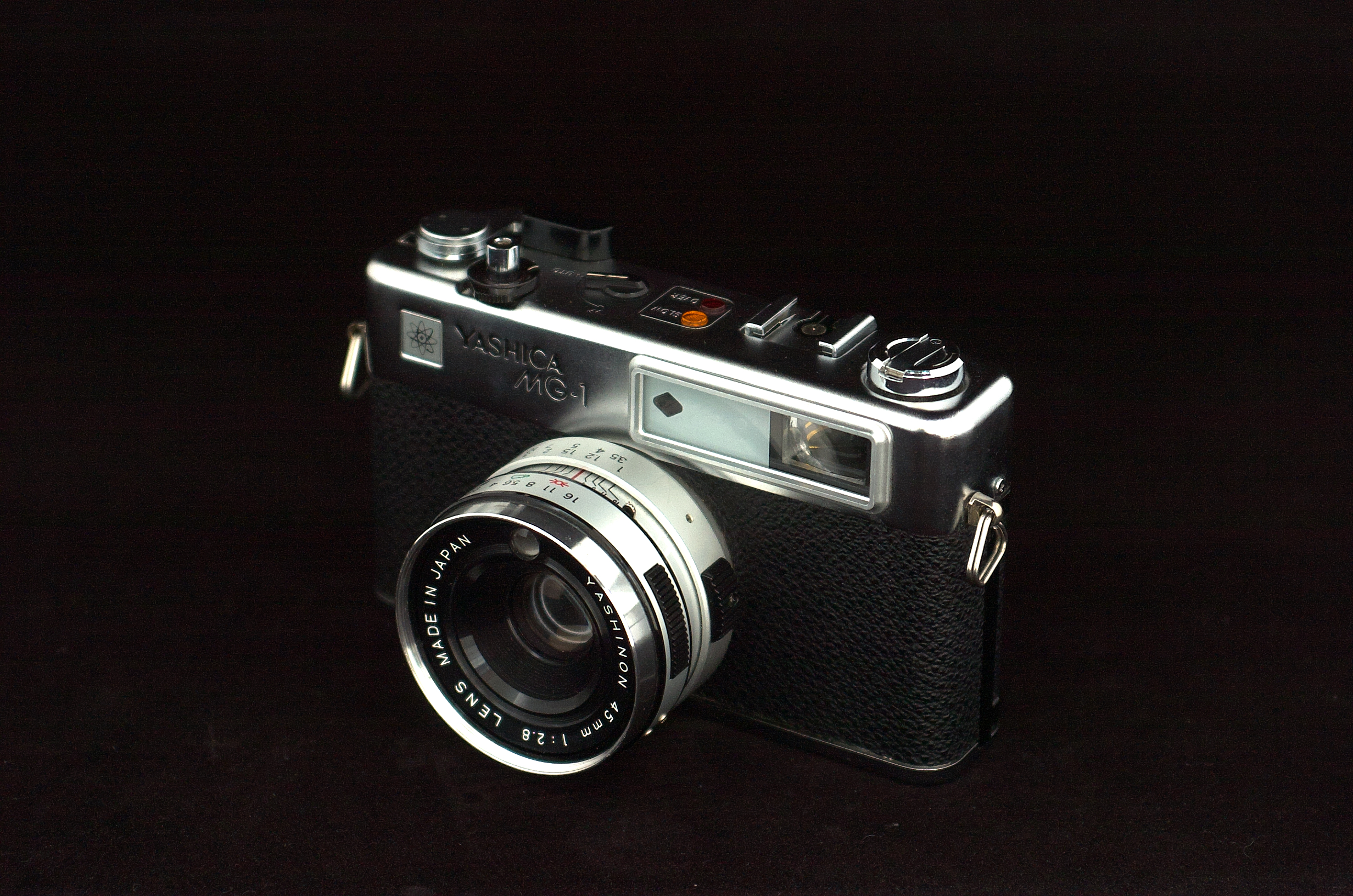
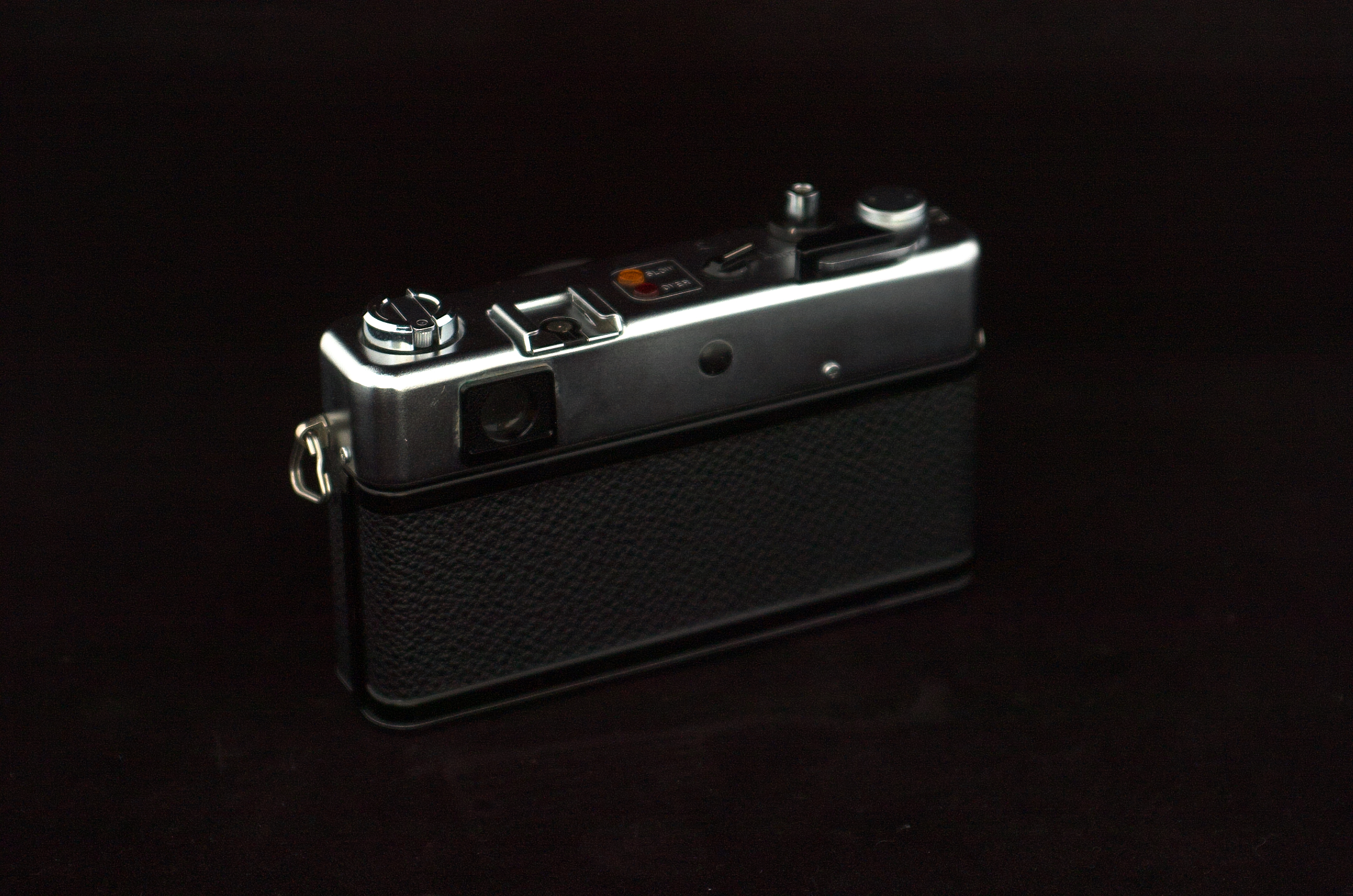
The camera is missing the lens cap and currently a 57mm diameter Yashica lens cover/cap cost 3 times more than what I paid for the MG-1. So I’ll make do without a cover until such time one comes across for cheap!
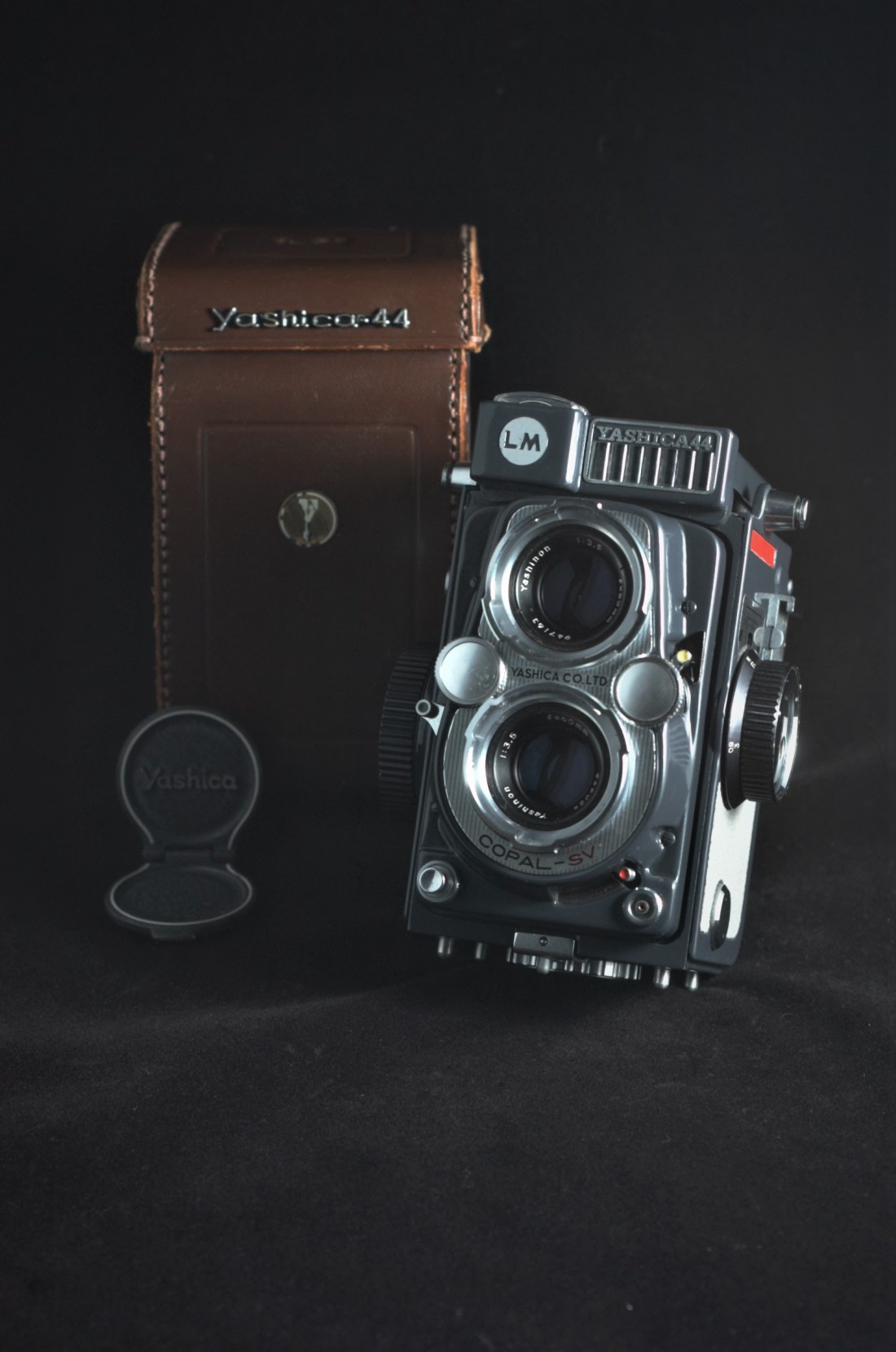
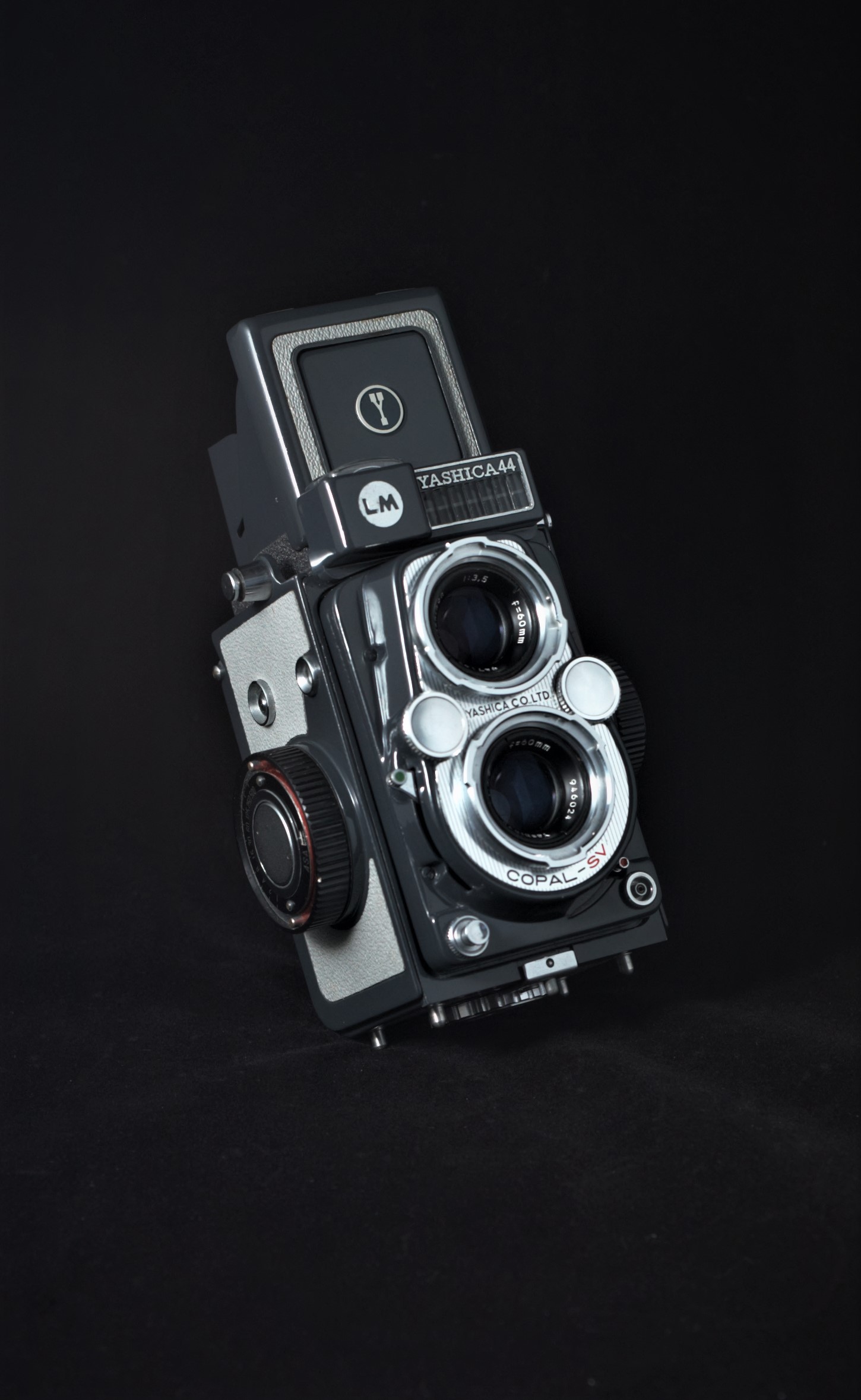
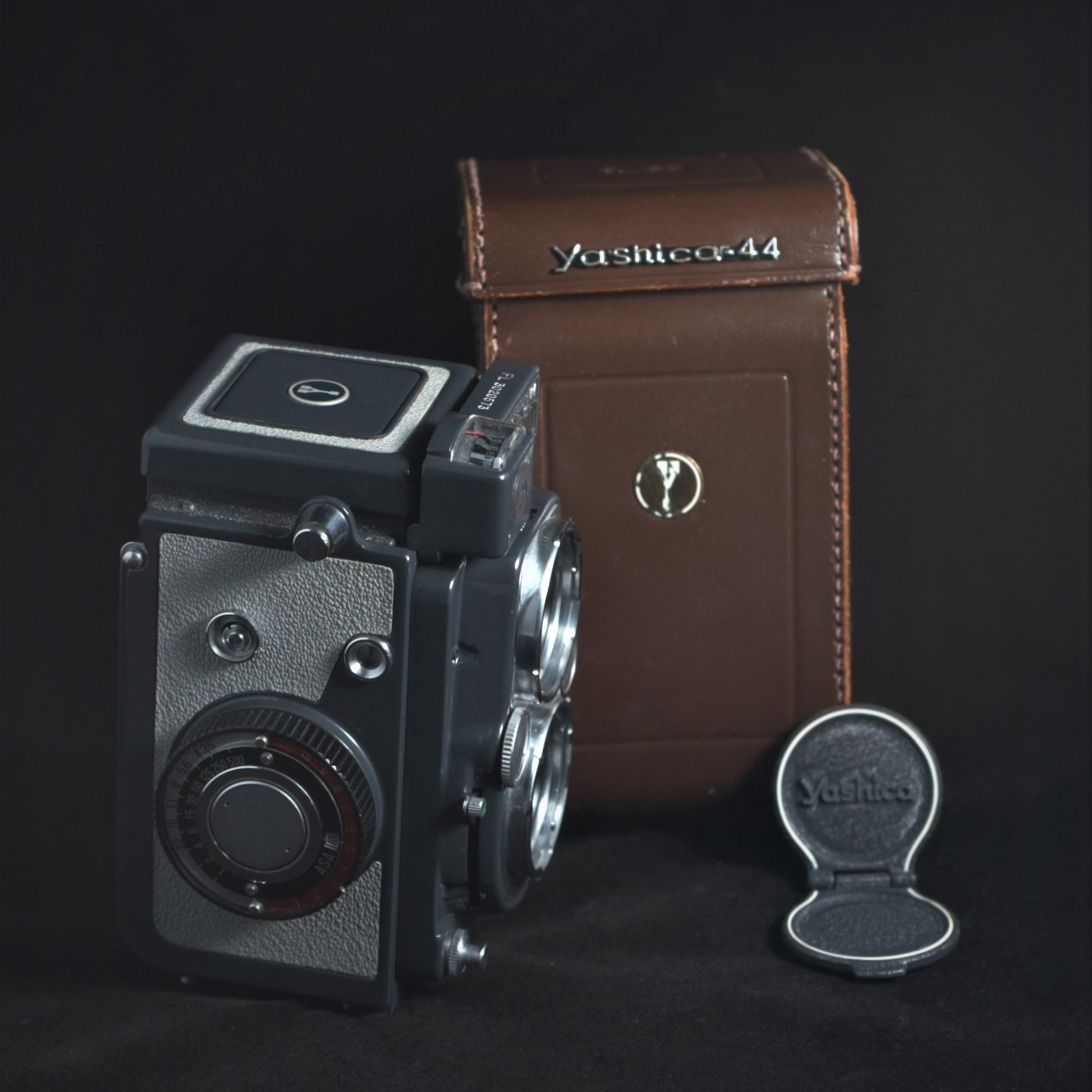
Yashica-44LM TLR

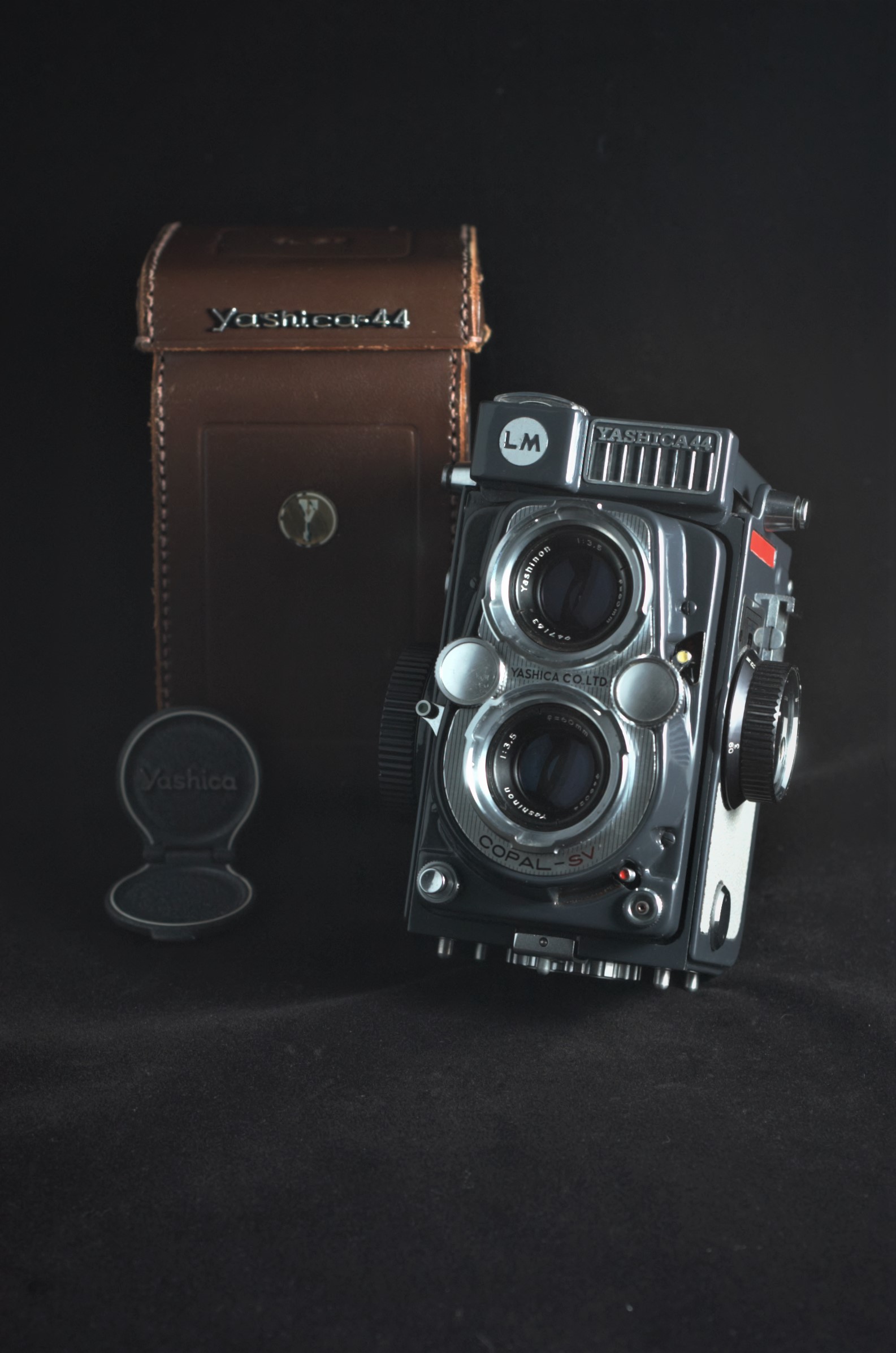
Yashica-44LM

Driving out on a Sunday morning to buy some bedding, the Waze navigational app took us to some back roads that my wife and I have never driven through before. Turning round a corner, we spotted a sign that said “Flea Market” pointing toward a field where some sellers have set up their wares on portable tables. We turned in to take a look as I always love bargains on interesting stuff at flea markets.

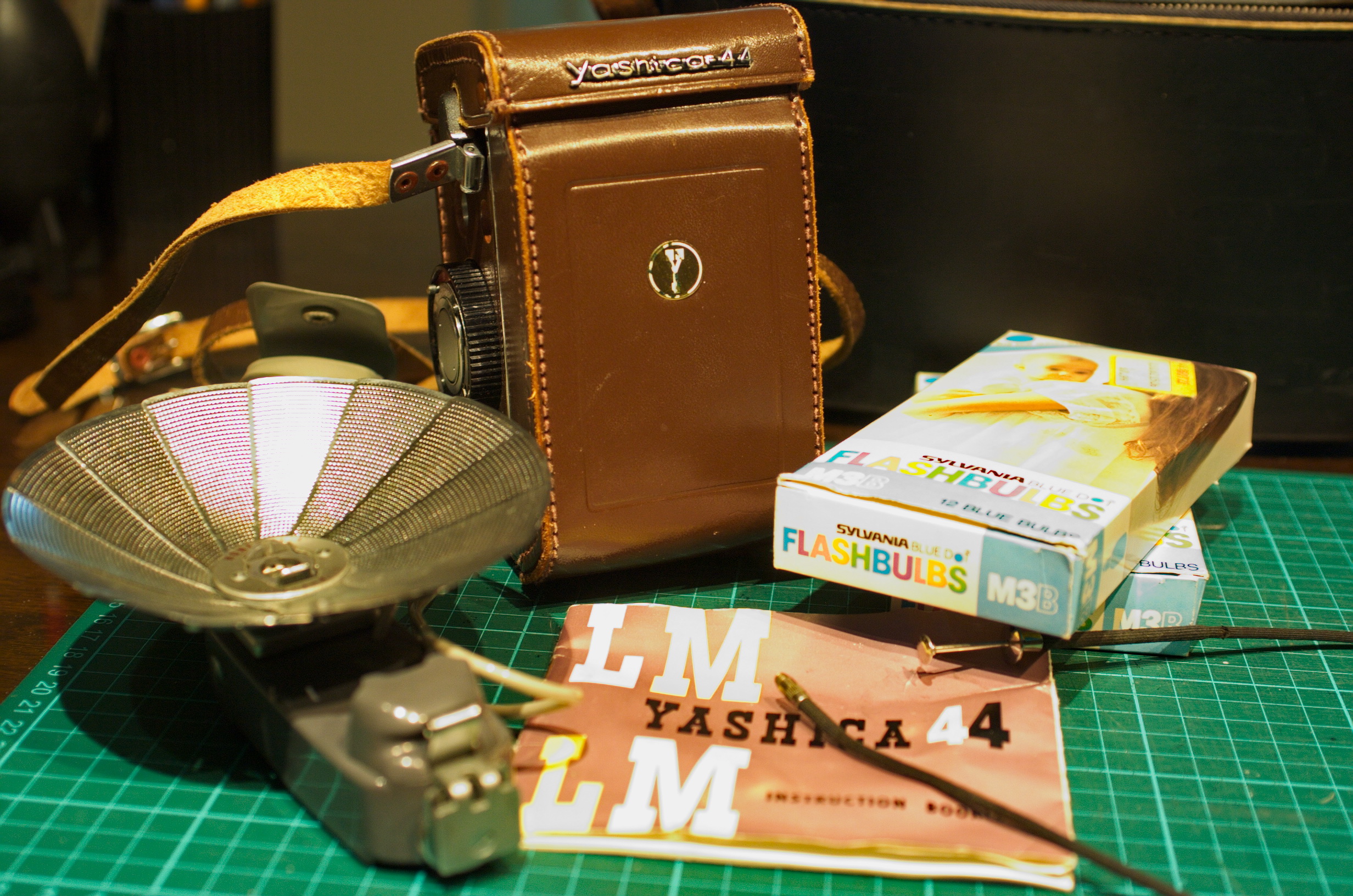
Keeping a look out for old cameras, I came across a seller who was selling mostly electronic stuff (speakers, amps etc). On one corner of her table was a collection of old cameras – chrome Minolta SRT101 with a non-Rokkor 50mm lens, chrome Pentax K1000 with a non-Takumar 30mm lens, Canon Rebel camera. $25 each. Nothing interesting I thought. Decided to dig through some of the old camera bags. First one I opened had what looked like a TLR (twin-lens reflex) in its brown leather case. It was a Yashica-44LM! There were other accessories in the bag:- 2 boxes of blue flash bulbs, a Honeywell flash where these flash bulbs attached, a mechanical cable release and the 44LM instruction booklet. “How much?”, I asked. The seller replied, “$25”. Sold! No bargaining.

The contents of the camera bag
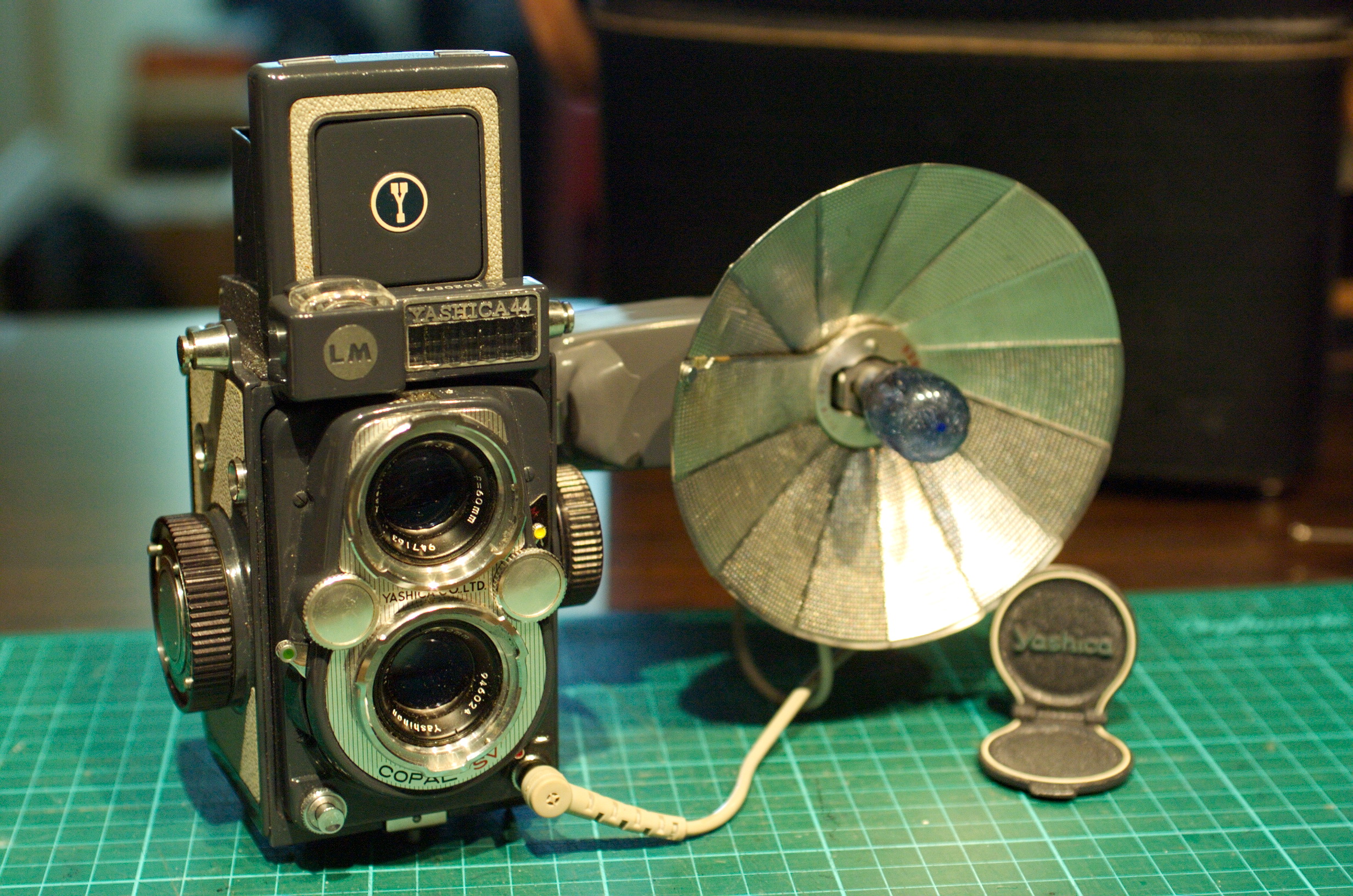
The 44LM with flash and bulb attached

Not knowing much about Yashica-44’s, I looked it up back home. The Yashica-44, 44A, and 44LM are a series of small twin-lens reflex (TLR) cameras, designed to give 12 exposures of 4×4 cm on 127 rollfilm. (Later I realised I had the Yashica-44A back in Australia instead of the Yashica-Mat that I thought I had – the photo below, taken in 2011, exposed my lapse in memory)

The Yashica-44A (right) next to the Seagull 4A-103 (left).
The Yashica-44A has a film advance knob instead of a lever crank and there are “teeth” extending down from the name plate. This distinguishes it from the Yashica-44.

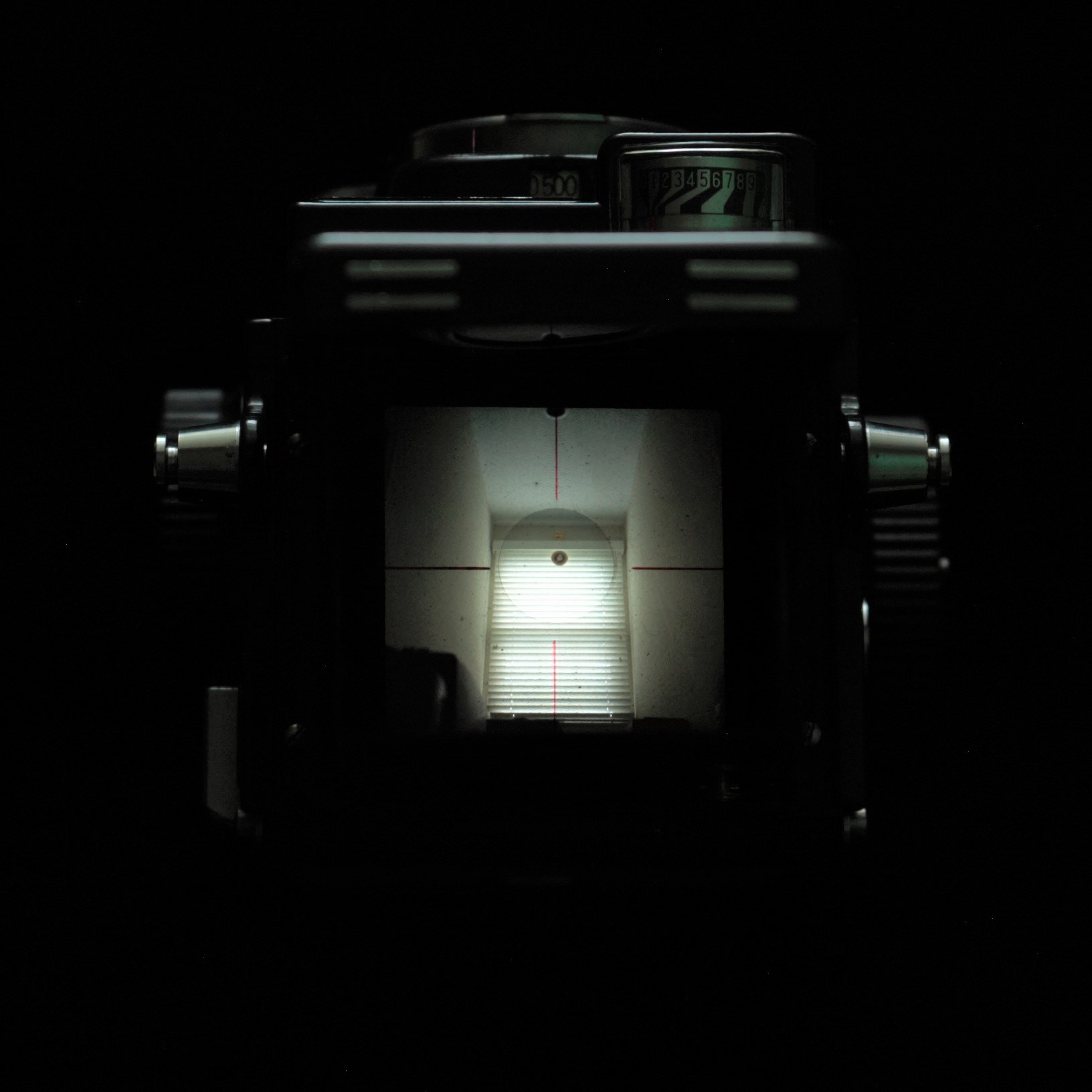
This 44LM looked like it had been well-cared for or hardly been used. The paint work looked pristine. Both the Yashinon 60mm f3.5 lenses were crystal clear. All shutter speeds and apertures seem to work as they should. The Copal-SV shutter opened and closed smoothly. The only thing is – 127 rollfilm is hard to obtain today.

Luckily with some modifications, the Yashica-44 can take in 35mm film. Possibly a project for the future. In the meantime, enjoy the photos of the Yashica-44LM below.

Doing some research on converting Yashica-44 TLRs to fit 35mm film, I found that the modification involved a simple unscrewing and removal of the top roller in the film chamber. However all these examples were done on the Yashica-44 model and not the 44LM. Comparing the film chamber of the 44LM to pictures of that of the 44, it looked like there were more components in the 44LM film chamber. Furthermore this 44LM I acquired is in almost mint condition with the light meter still working! Plus it seemed that they also have collectible value on eBay, so modifications may not be a good idea.

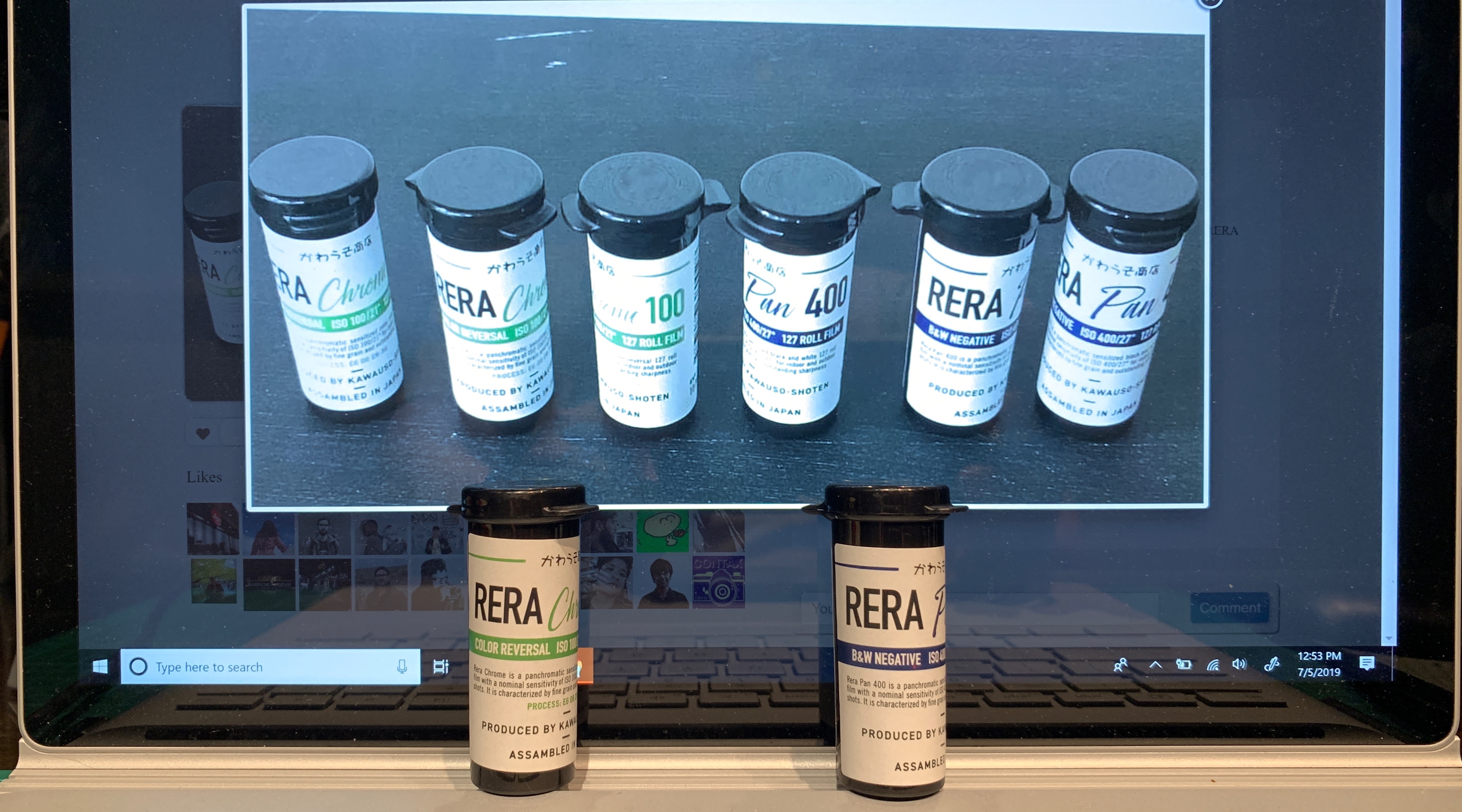
I ditched the 35mm modification idea but instead sourced for 127 rollfilm. Searching again on the internet, I came across this site: https://filmphotographystore.com . They sell a great variety of photographic film including 127’s! I ordered the ReraPan 400 B&W and ReraChrome 100 Color Reversal film ($13.99 each) made in Japan by Kawauso-Shoten.

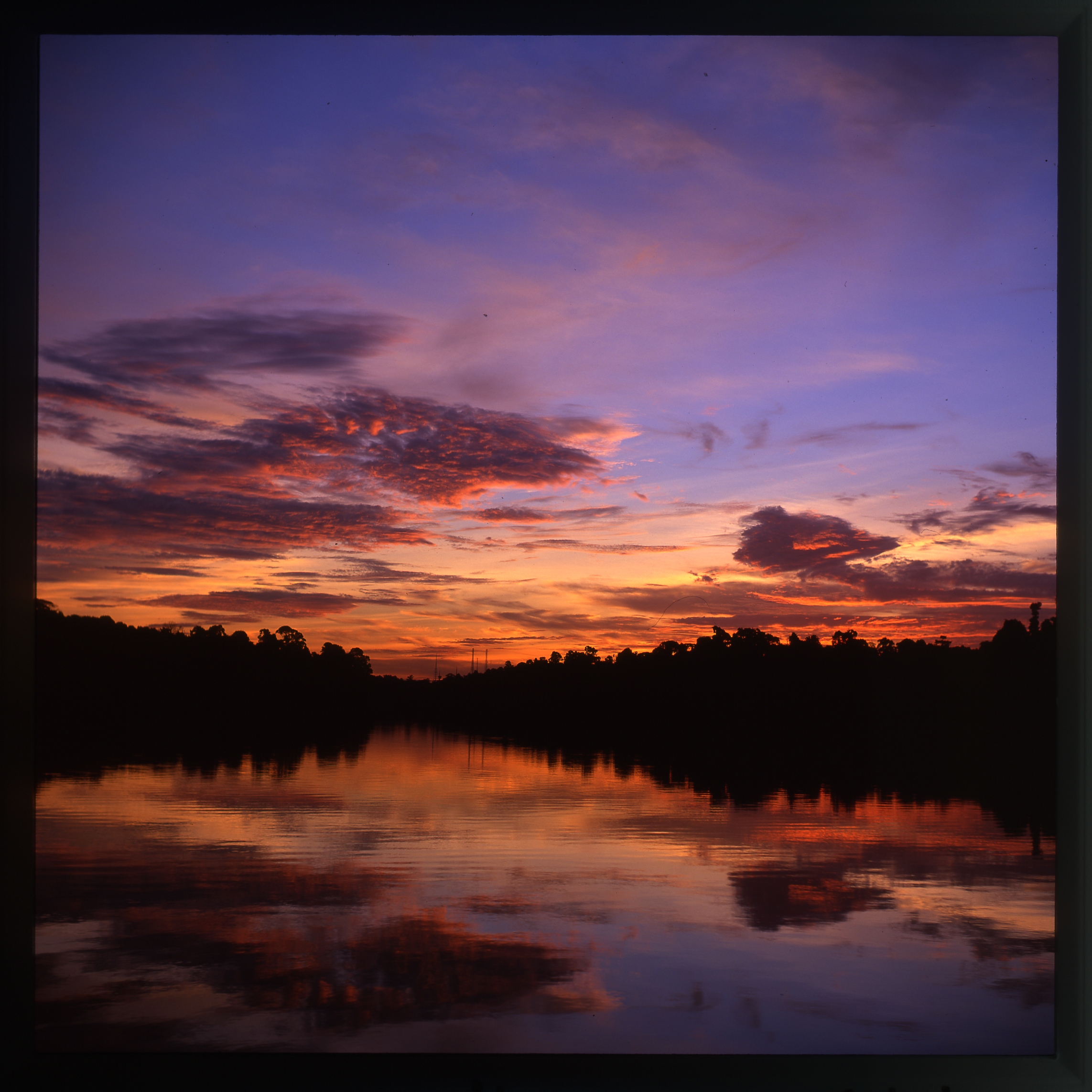
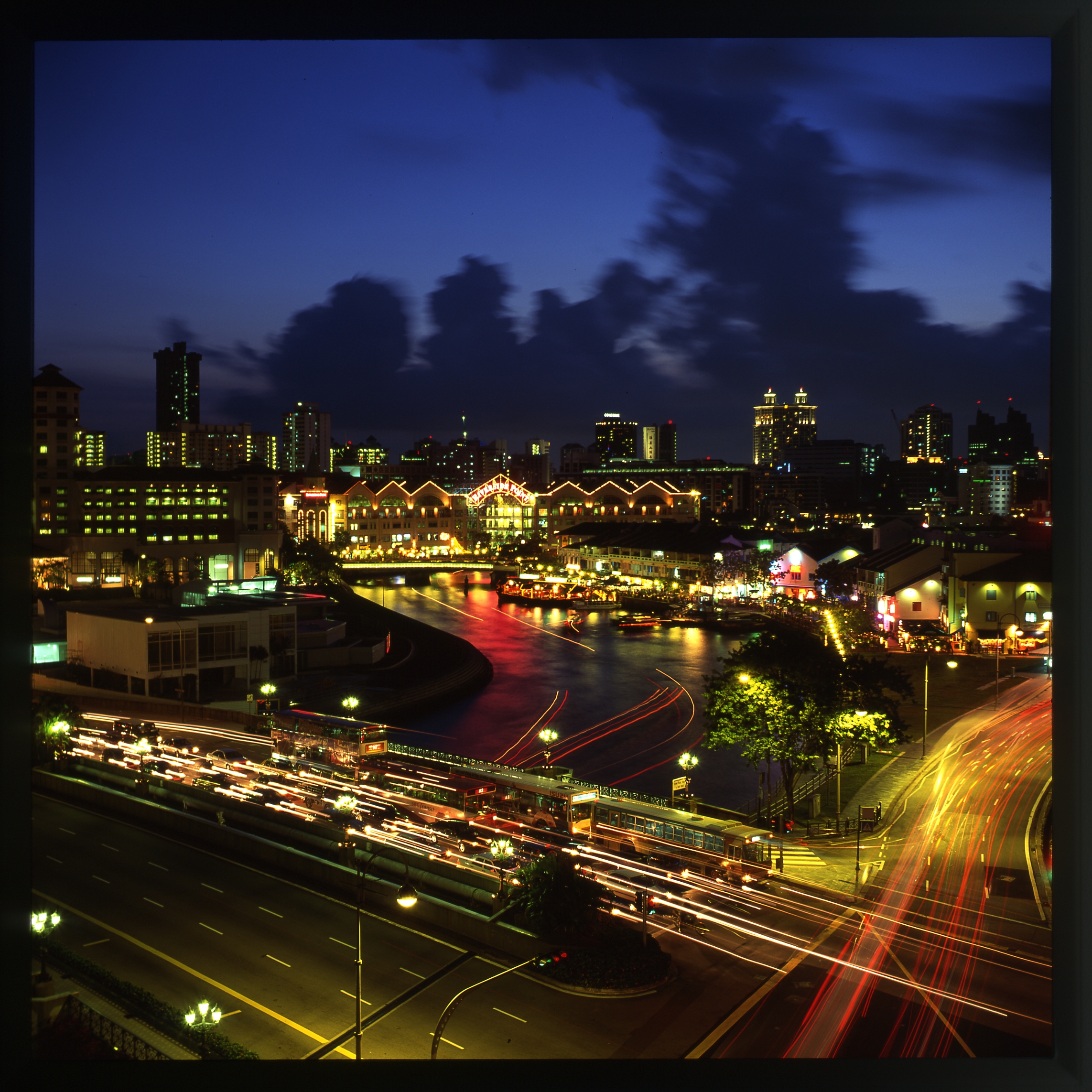
My only experience using TLRs is with the Seagull TLR pictured above. That was bought new in Singapore for SGD$120. For a cheap introduction to medium format photography, the Seagull 6×6 TLR was ideal! It surprisingly produced very, very sharp 6×6 photos – likely helped by me using a small aperture but still the photos below bear testament to its sharpness!

MacRitchie Reservoir, Singapore. Jul 2002
Seagull TLR, f8 1-15s, taken on Fuji Velvia50 120 color reversal rollfilm
Clarke Quay, Singapore. Aug 2002
Seagull TLR, f11 20s, taken on Fuji Velvia50 120 color reversal rollfilm

With these pleasant memories from the Seagull, I look forward now to taking the Yashica-44LM TLR for a spin when those films arrive!

The RERA films arrived in the post today!

RERA Chrome 100 (left) & RERA B&W 400 (right)

After some deliberation, decided to load in the Chrome first and head out later in the evening to take some shots!

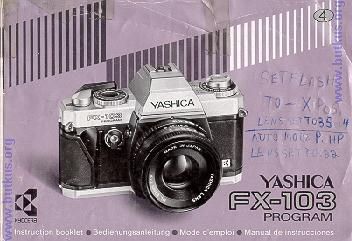
Yashica FX-103 Program SLR

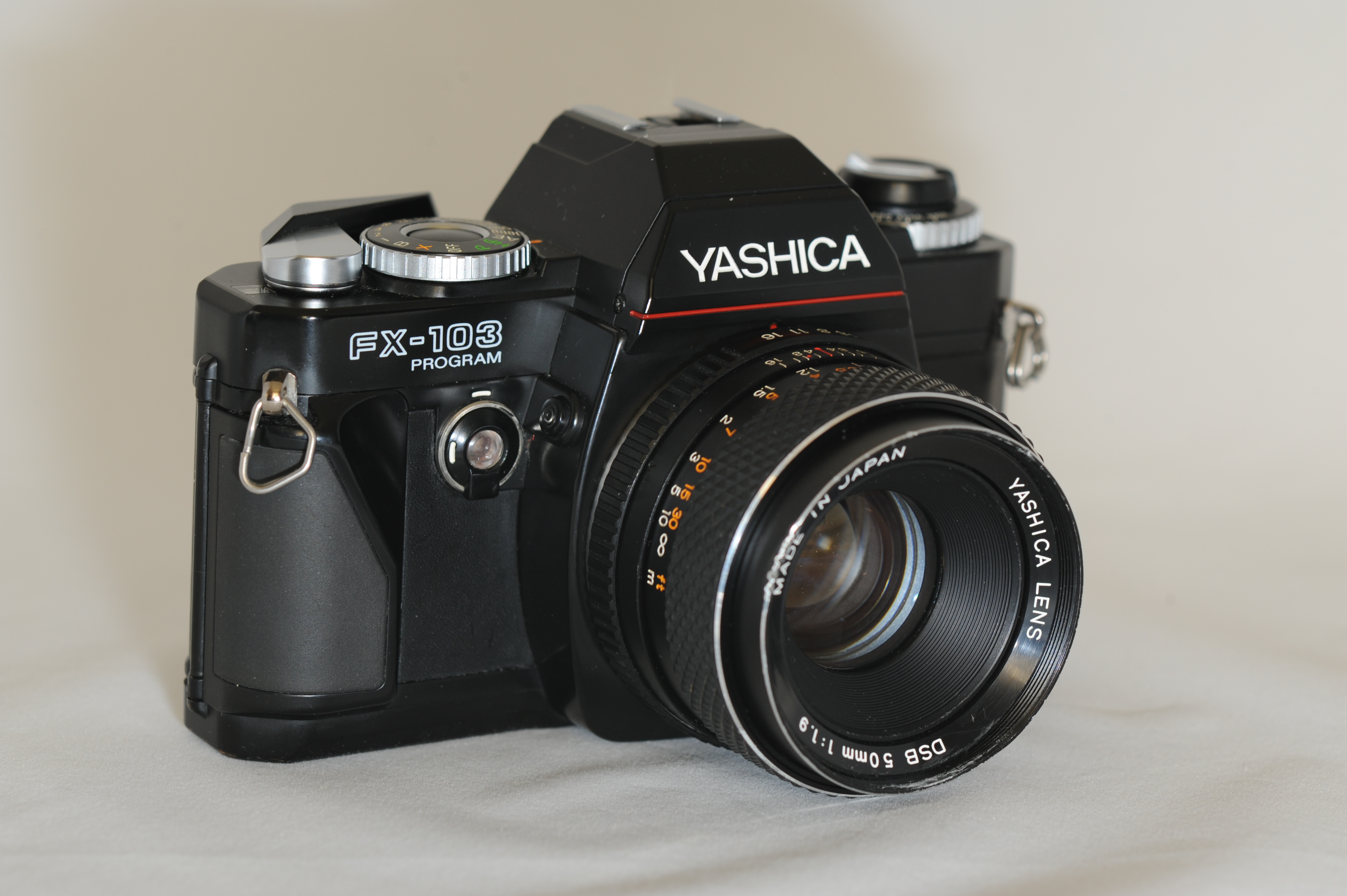
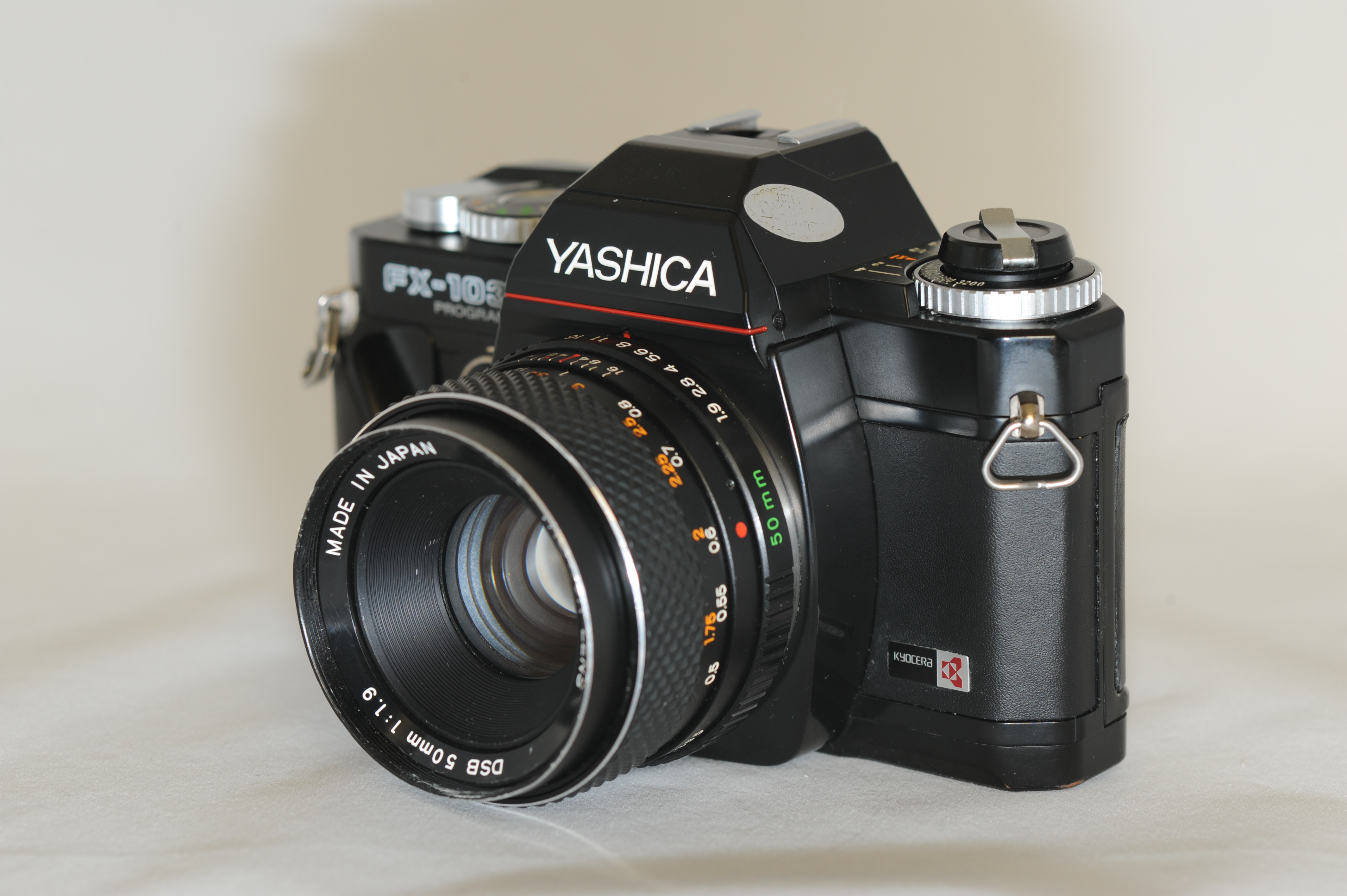
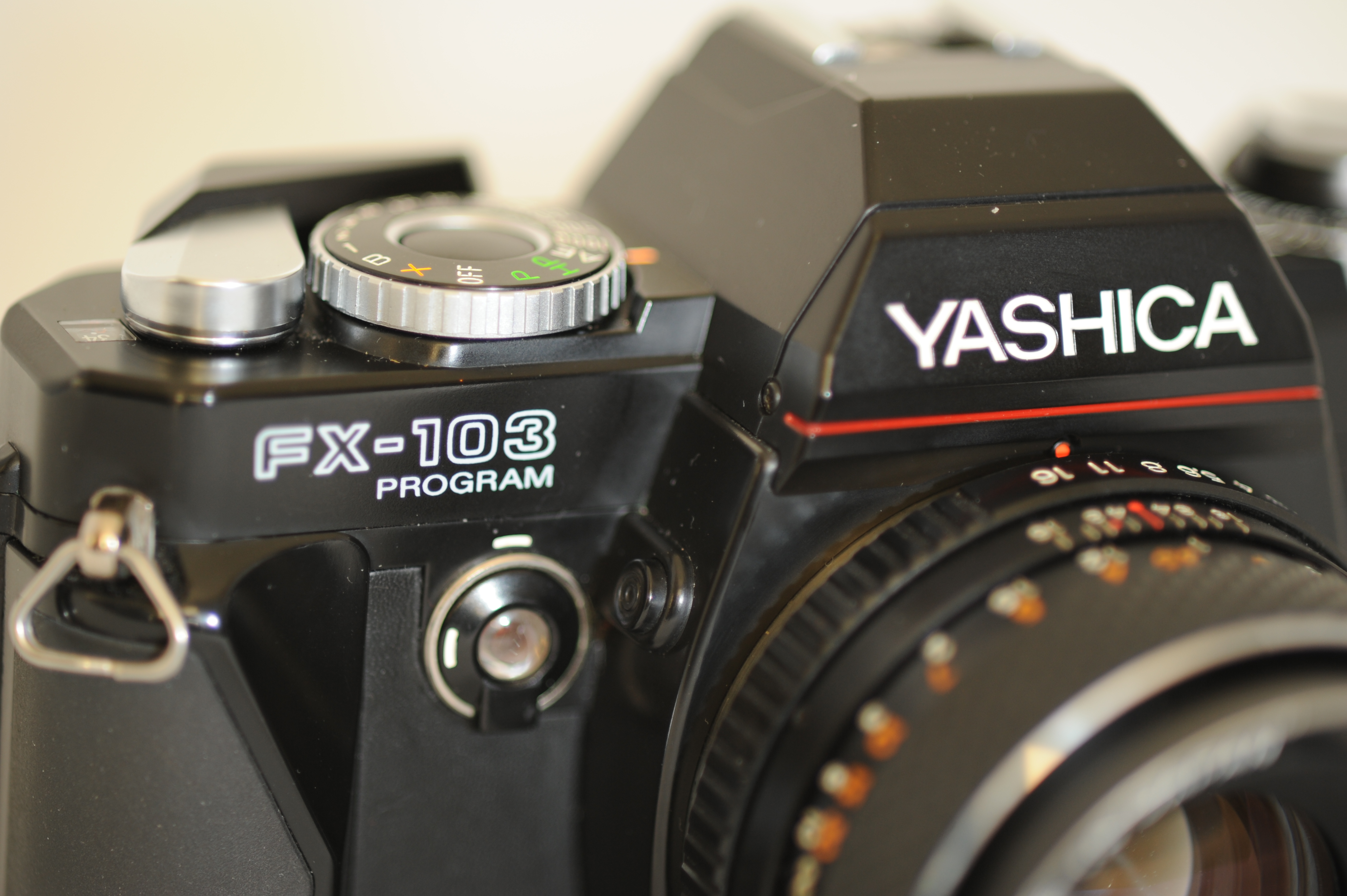
The Yashica FX-103 Program. This is my first ever camera.

It was a gift from my mother in 1988 for graduating university. She instructed my elder brother to purchase a camera and he purchased it from a camera shop in Malacca, Malaysia. I was ecstatic with the gift but I had no idea how it operated except to know that one needed to press the shutter button to take a photo.

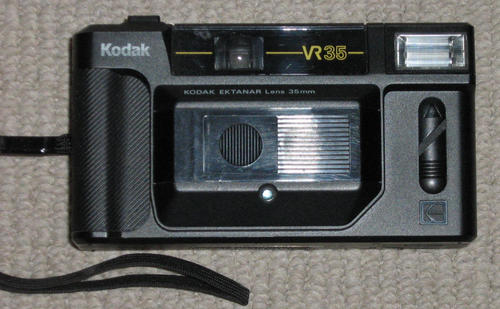
My only previous experience with cameras was with an idiot proof point and shoot Kodak VR35 camera which I used to take photos on a trip to the picturesque South Island of New Zealand! 😩

A plastic Kodak VR 35 idiot camera

Back to the Yashica FX-103 Program. It is a 35mm SLR camera from Kyocera. It was available in the mid 1980’s and was one of those new electronic SLR cameras that had an electromagnetic shutter with programmed exposure modes. The electronics required two LR44/SR44 batteries to operate. Obviously when the batteries died, the shutter would not operate and the mirror flips to mid-point and froze. Reading the manual, I learnt how to operate it and bought books and photo magazines to improve my photography with it. In a short period of time I reached a comfortable level of competence using it.

Kyocera badge on the FX-103

The camera was light and easy to hand-hold and carry. The grip on the camera had a groove in the front where you could comfortably rest your middle finger to grip the camera body with the index finger on the shutter. It came with the standard Yashica ML 50mm f1.9 lens.

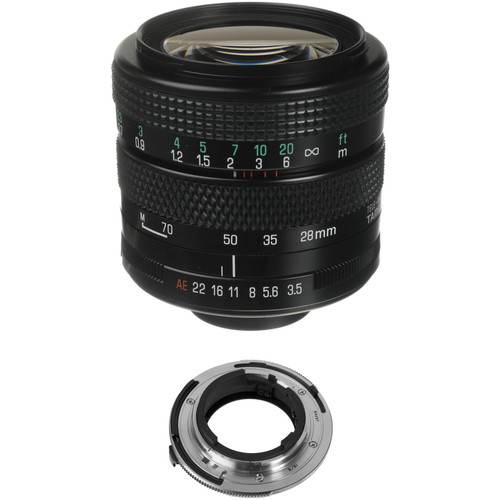
After several months and much reading, I felt I needed more focal lengths to expand the photographic point of view. At that time I was living in Sydney, Australia. George Street in the city was where the multitude of photography/camera shops were. I wanted wide and telephoto zooms ( I didn’t know better then). At Fletcher’s Fotographics, I was served by a lady salesperson who introduced me to the Tamron 28-70mm f/3.5-4.5 and 70-210mm f/3.8-4.0 Adaptall lenses. She told me that they could be used with any other brand of cameras just by changing the mount adapter. I was sold by the price – at A$285 each at that time – and the fact that I could use it in other brands of SLR cameras with the correct Adaptall adapter.

The Tamron 28-70mm f3.5/4.5 zoom lens with a Nikon adaptall adapter
Push-pull Tamron 70-210mm f3.8-4 zoom

The Yashica FX-103 and Tamron lenses served me well for about a year and a half before I was afflicted by the Gear Acquisition Syndrome, reading photo magazines that extolled the virtues of the Nikon system especially those of the FM2 and F3 cameras (those cameras in future blogs).

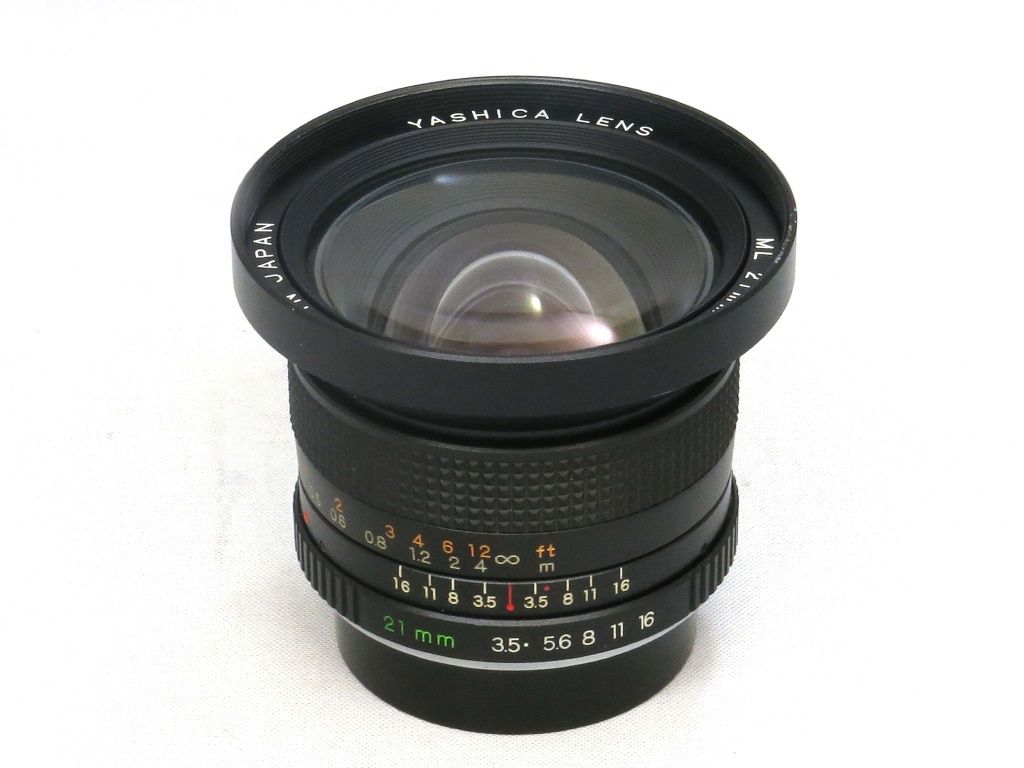
Eventually I sold the FX-103 along with a very nice Yashica ML 21mm f3.5 prime lens 😩 (which is now a sought after item because of its great optics and low distortion) that I had acquired in a used condition a few months after buying the Tamrons.

The Yashica ML 21mm f3.5 – a heavy well balanced prime lens
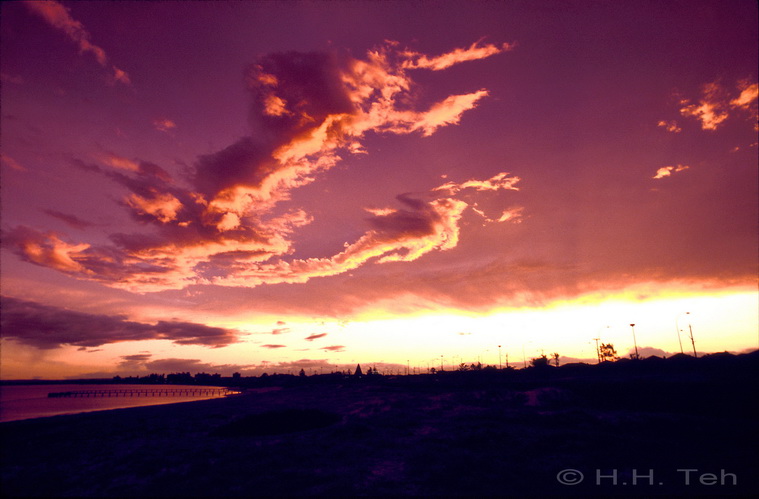
Botany Bay, Sydney 1988, taken with a Yashica ML 21mm f3.5 lens mounted on the Yashica FX-103 Program SLR

The Yashica FX-103 will always be my first SLR. A special camera for me but unfortunately I no longer have the original one. A couple of years back, I was able to purchase 2 of these for about $30 each.

These had flaky leatherette as was inevitable for these cameras since Yashica used a cheap felt material for the camera leatherettes.

The Yashica FX-103 with it’s old original flaky leatherette (front)
FX-103 leatherette in bad condition (back)

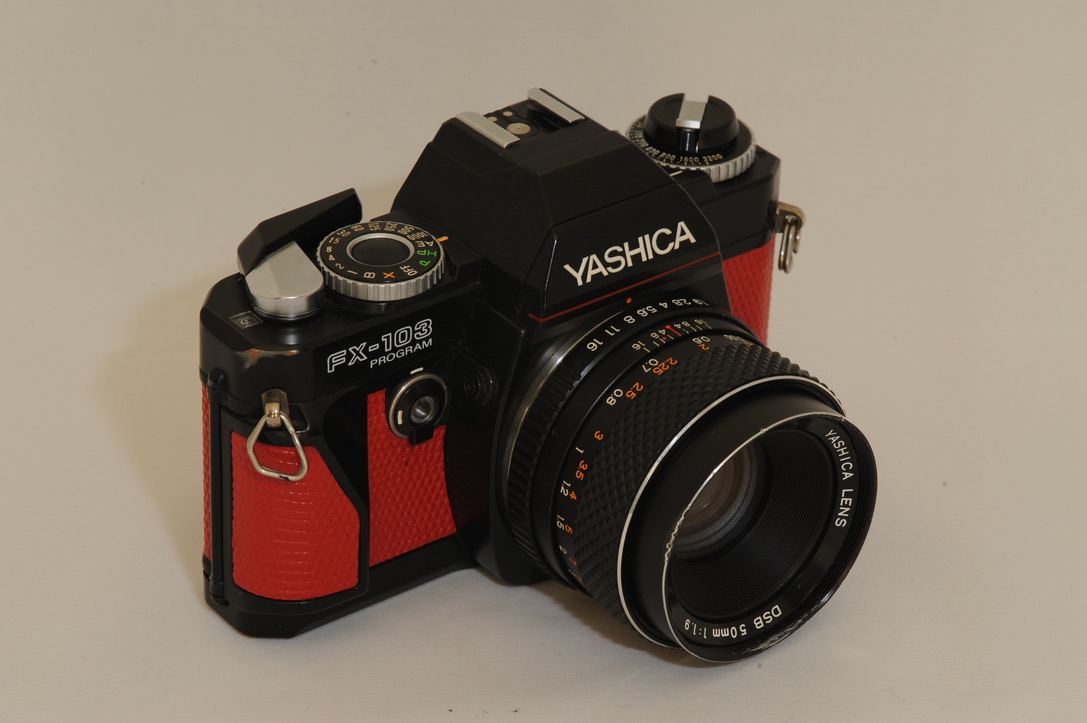
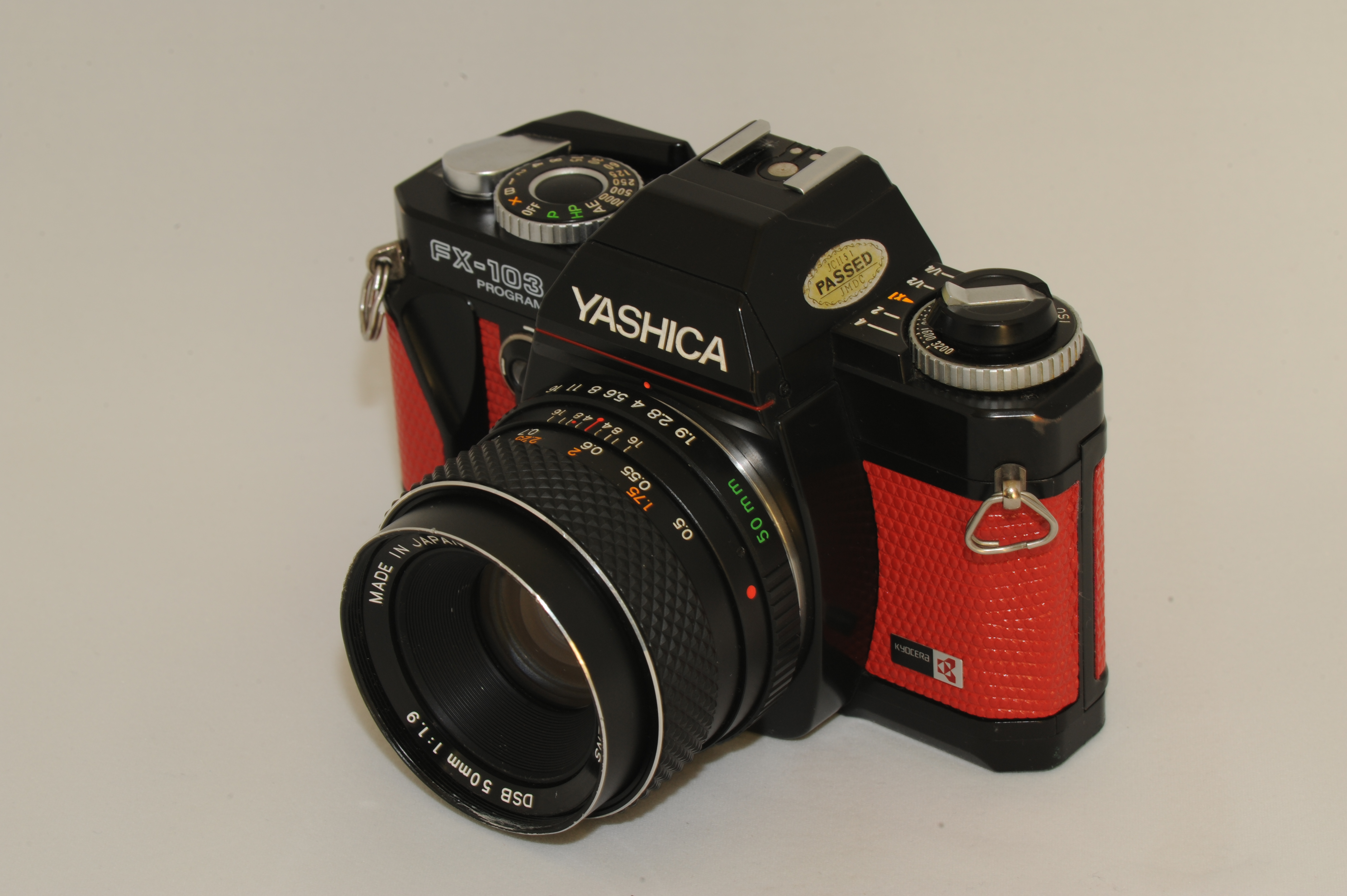
Recently, I refurbished the leatherette for both these Yashicas. Now they look great! I now have my first SLR back with new skins!
Leatherette purchased from Aki-Asahi Camera Coverings 😃

The FX-103 with a new black leatherette from Aki-Asahi.com
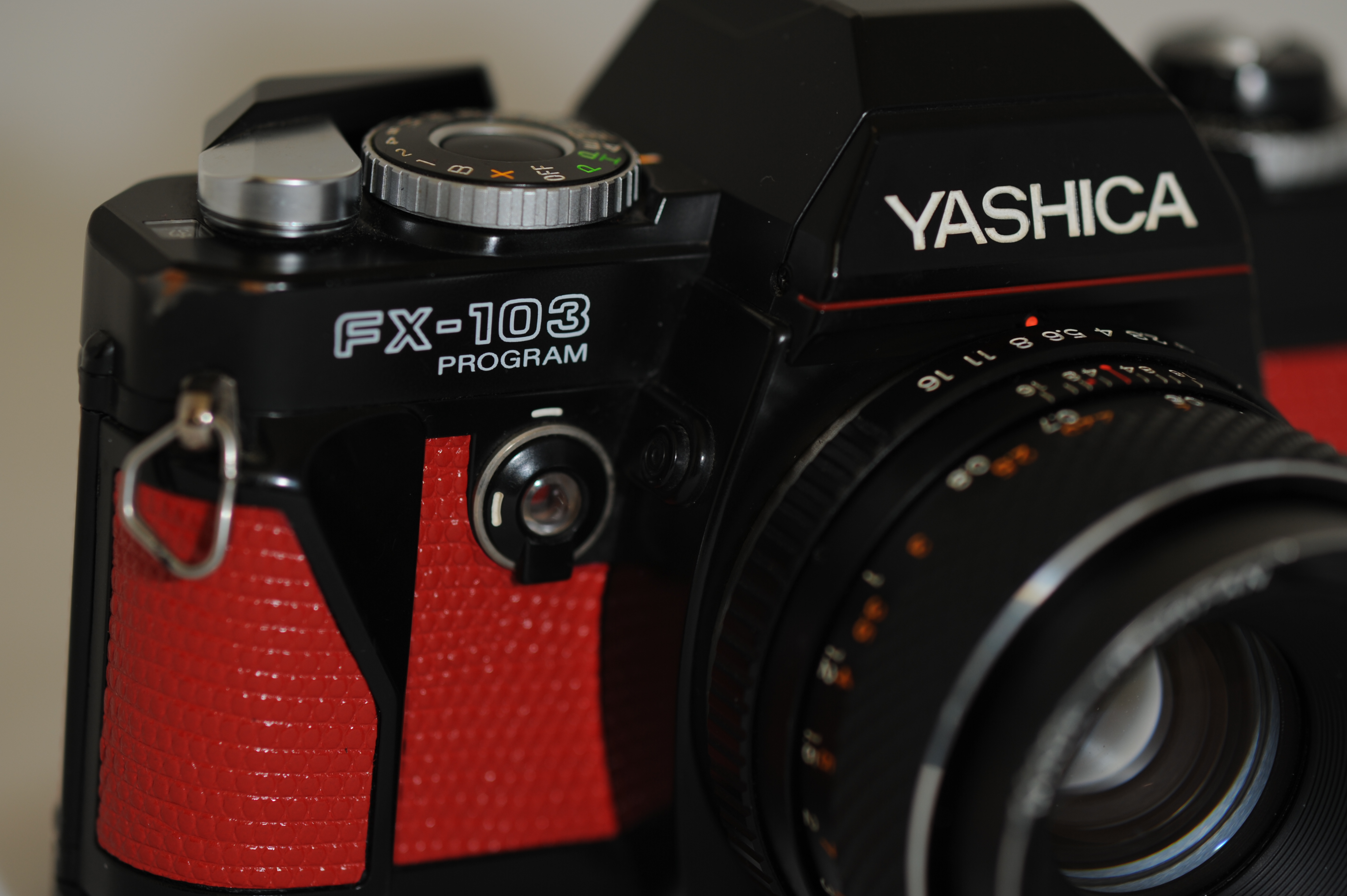
FX-103 with a nice faux red snake-skin leatherette