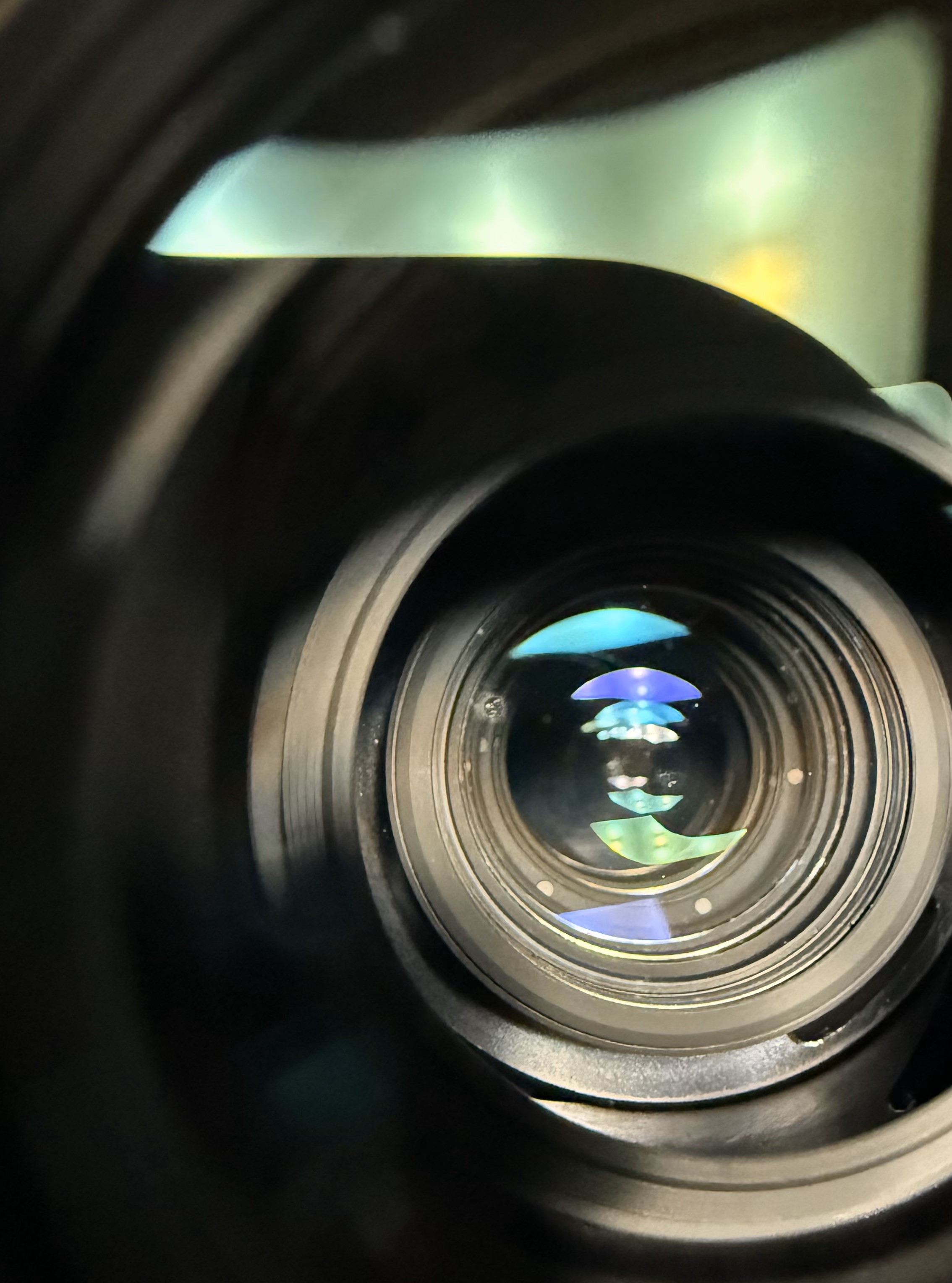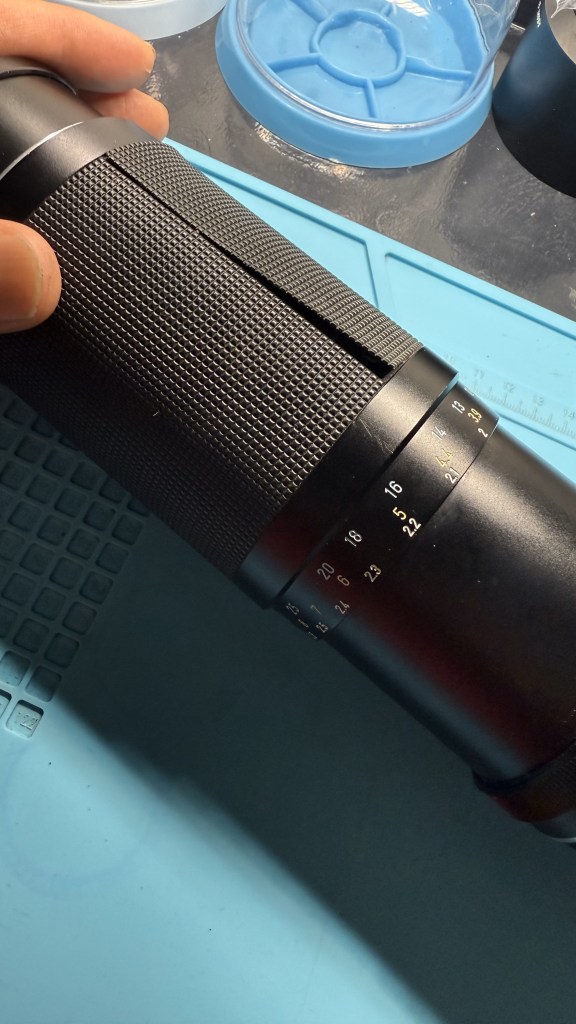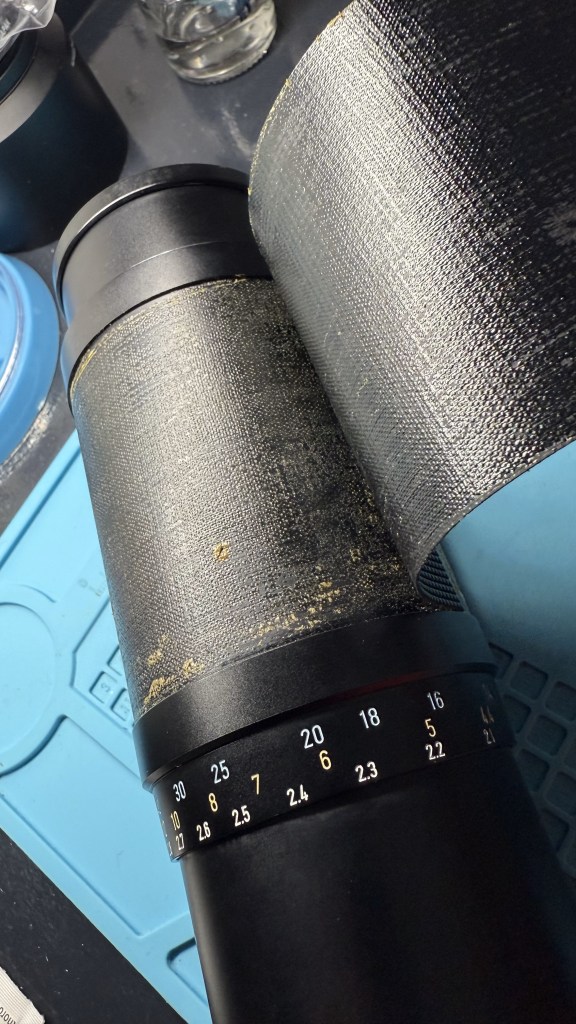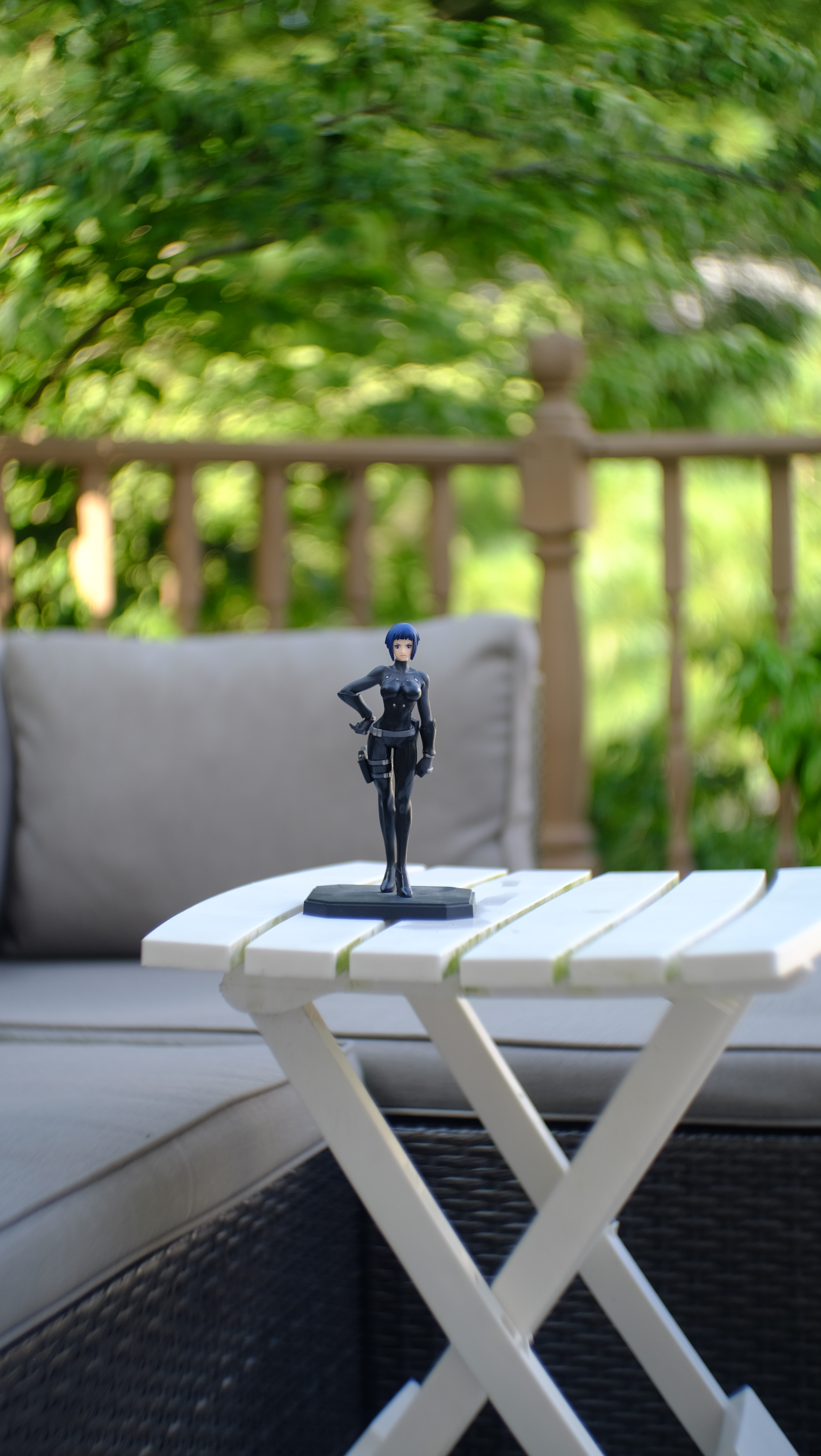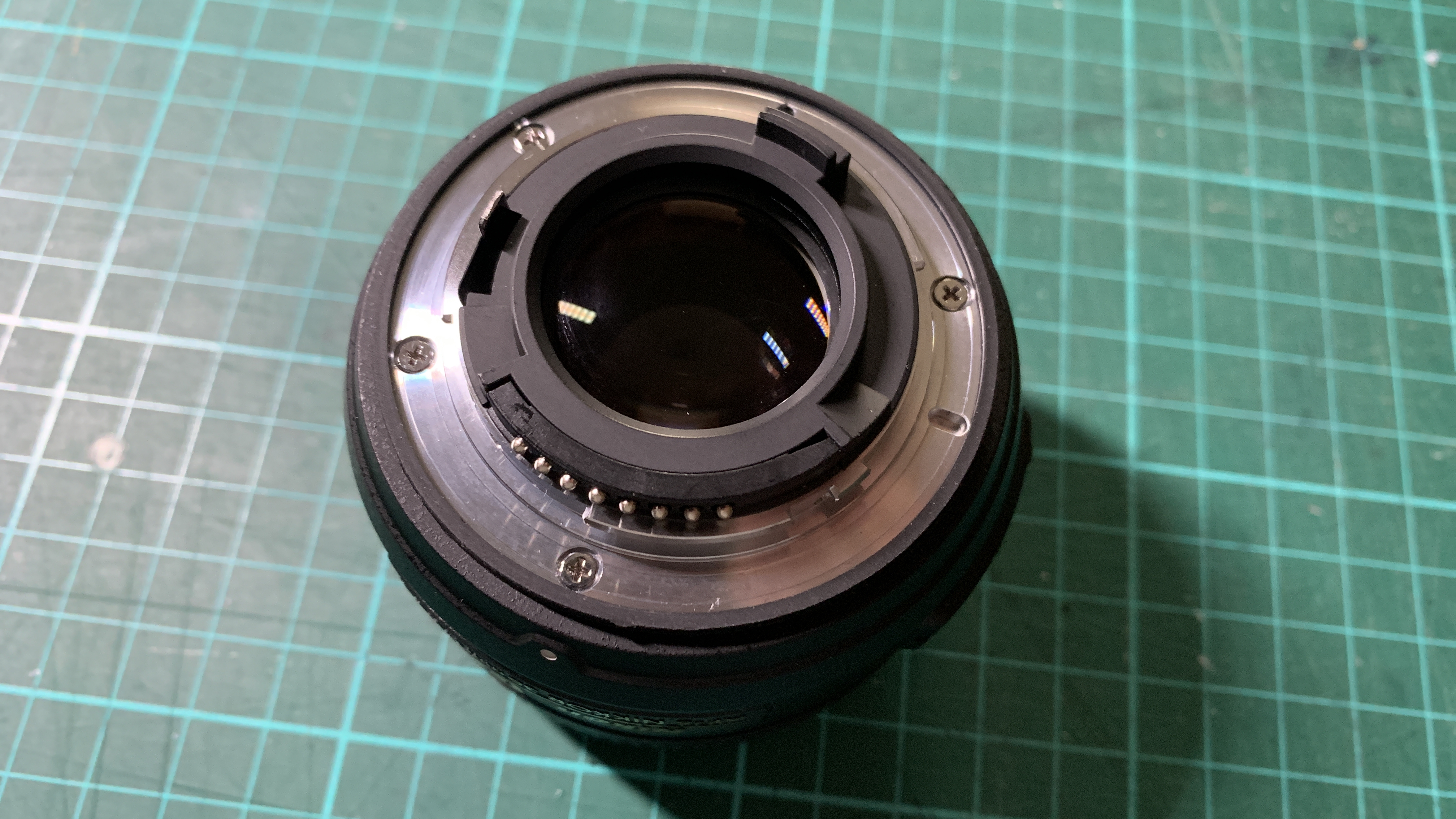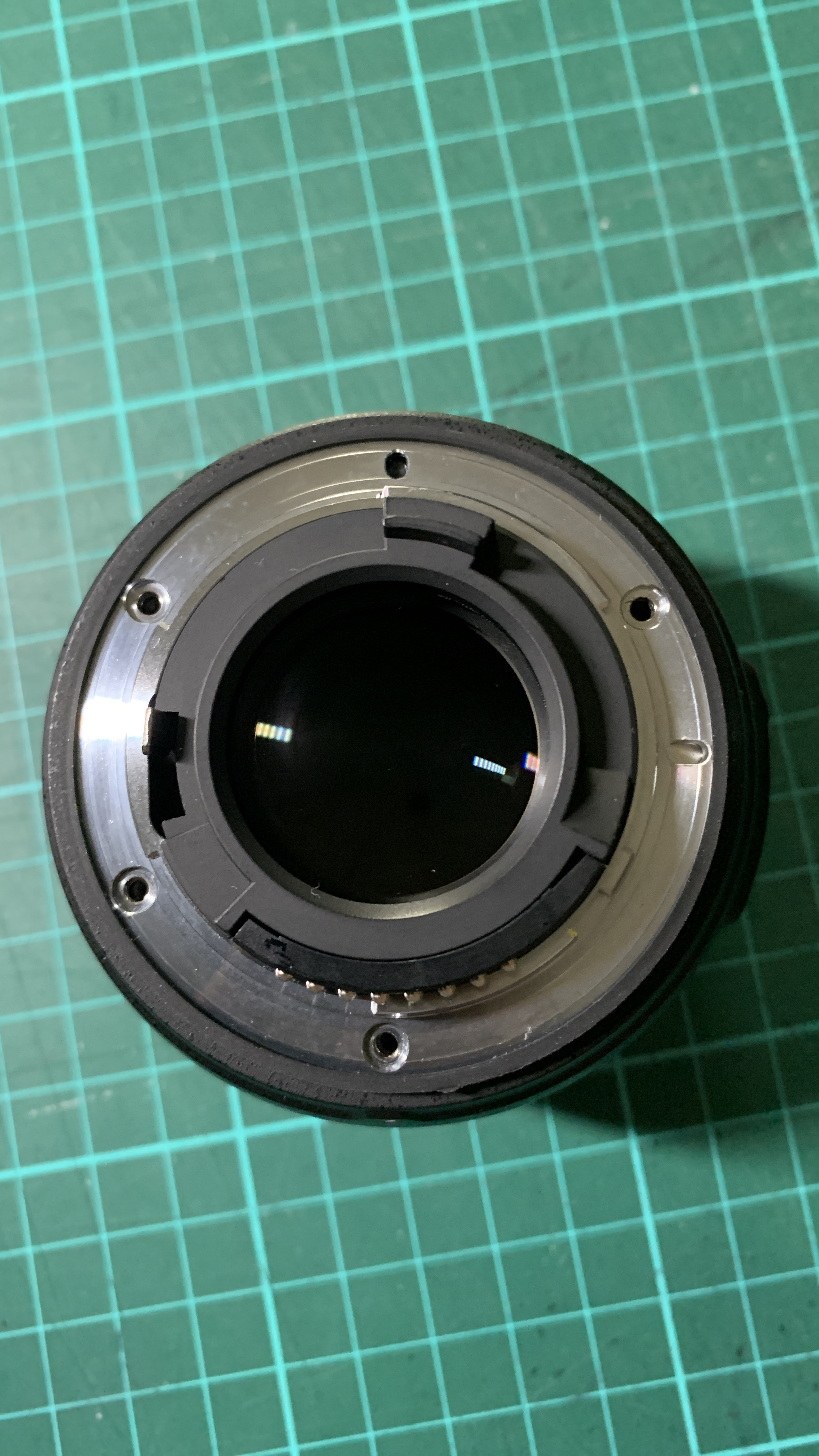
Disassembling the Asahi Takumar 135mm f3.5 (Pre-set v.1) Lens

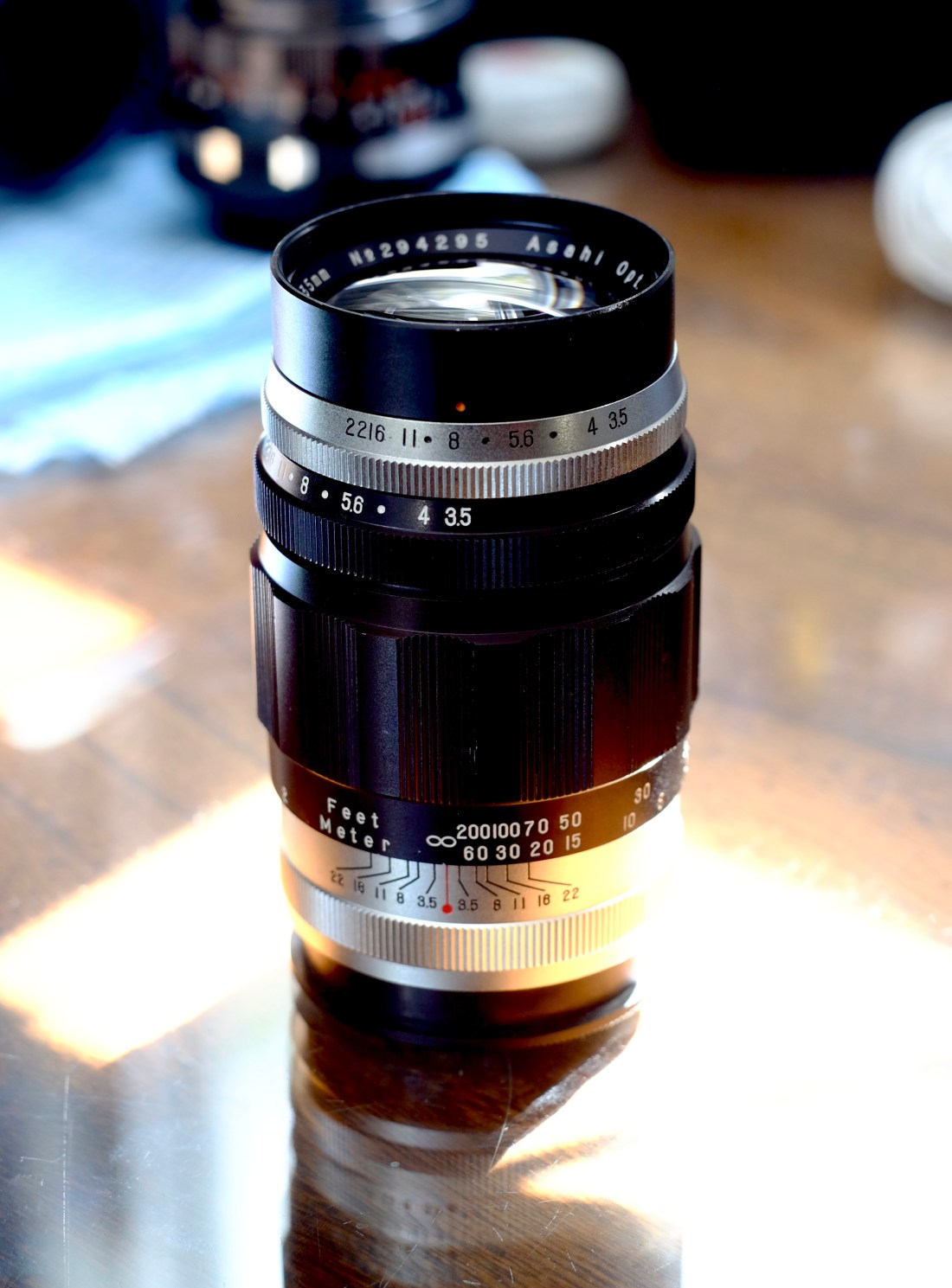
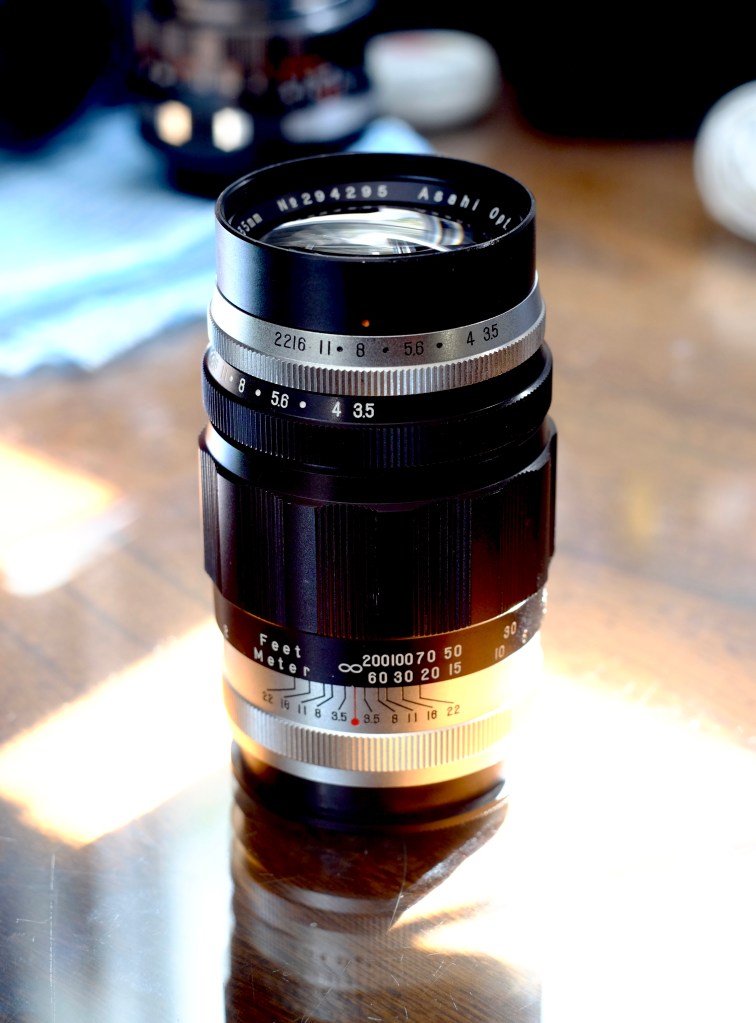
I picked up a near-mint vintage Asahi (Pentax) 135mm f/3.5 version 1 lens from Lucky Home (LH) Cameras, tucked away in the Miami Bayside Bangpu area of Bangkok. The place is a treasure trove of old and vintage Japanese cameras and lenses—though the pricing seems to depend entirely on the day you visit. When I dropped by on a Thursday, they were advertising a 70% discount across the board. Whether that’s a genuine deal or just a clever marketing ploy, I couldn’t resist. The lens was in beautiful condition, and at that price, it felt like a steal.
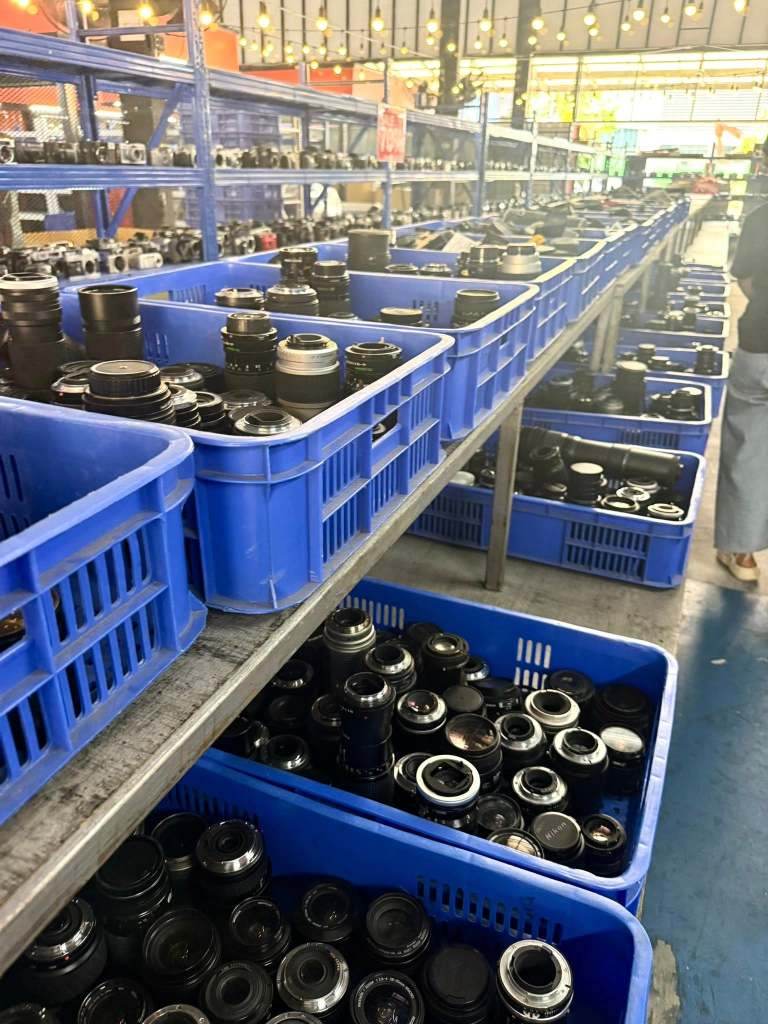
I snagged this Takumar lens for just 600 Thai Baht after the discount—roughly USD 18. A total steal, if you ask me. For a 65-year-old piece of glass, it was in surprisingly good shape: nearly mint, with only a hint of fungus and a slightly stiff focus ring. I scoured the internet hoping to find a disassembly guide, but came up empty-handed.

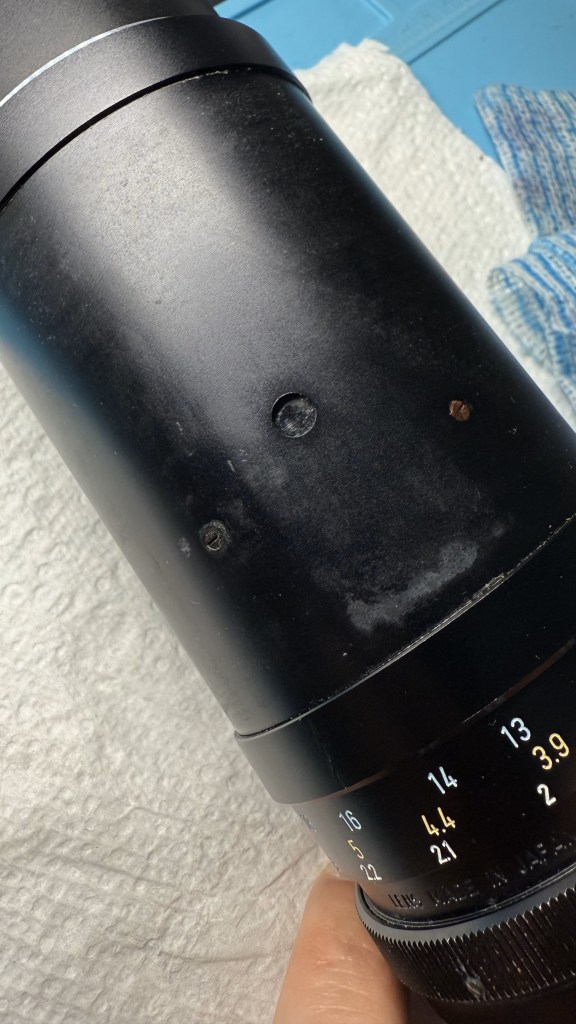
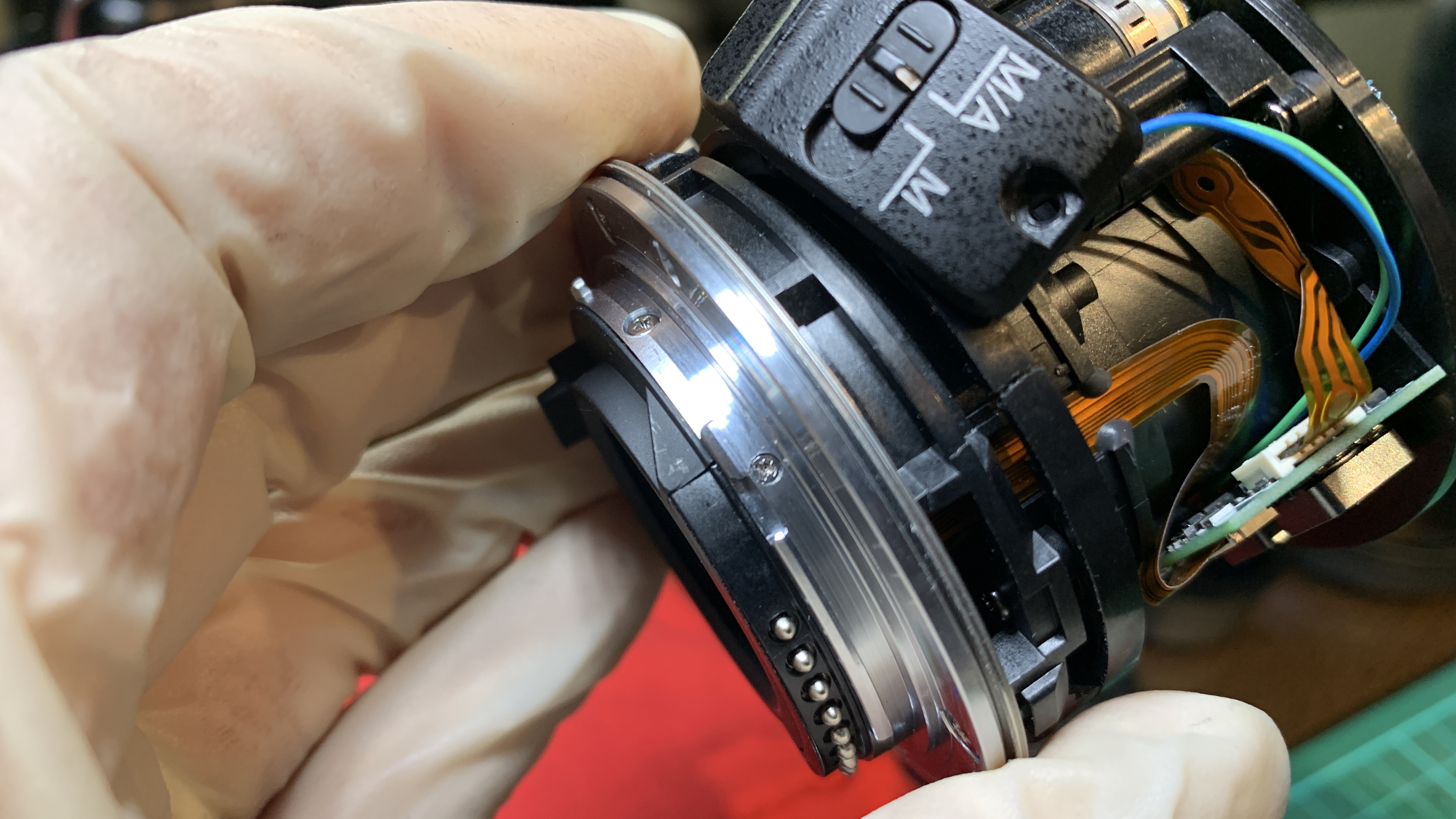
The build quality is impressive—classic Takumar craftsmanship. No visible screws anywhere on the barrel, save for three tucked away at the rear mount. It’s the kind of lens that feels like it was engineered to last generations.
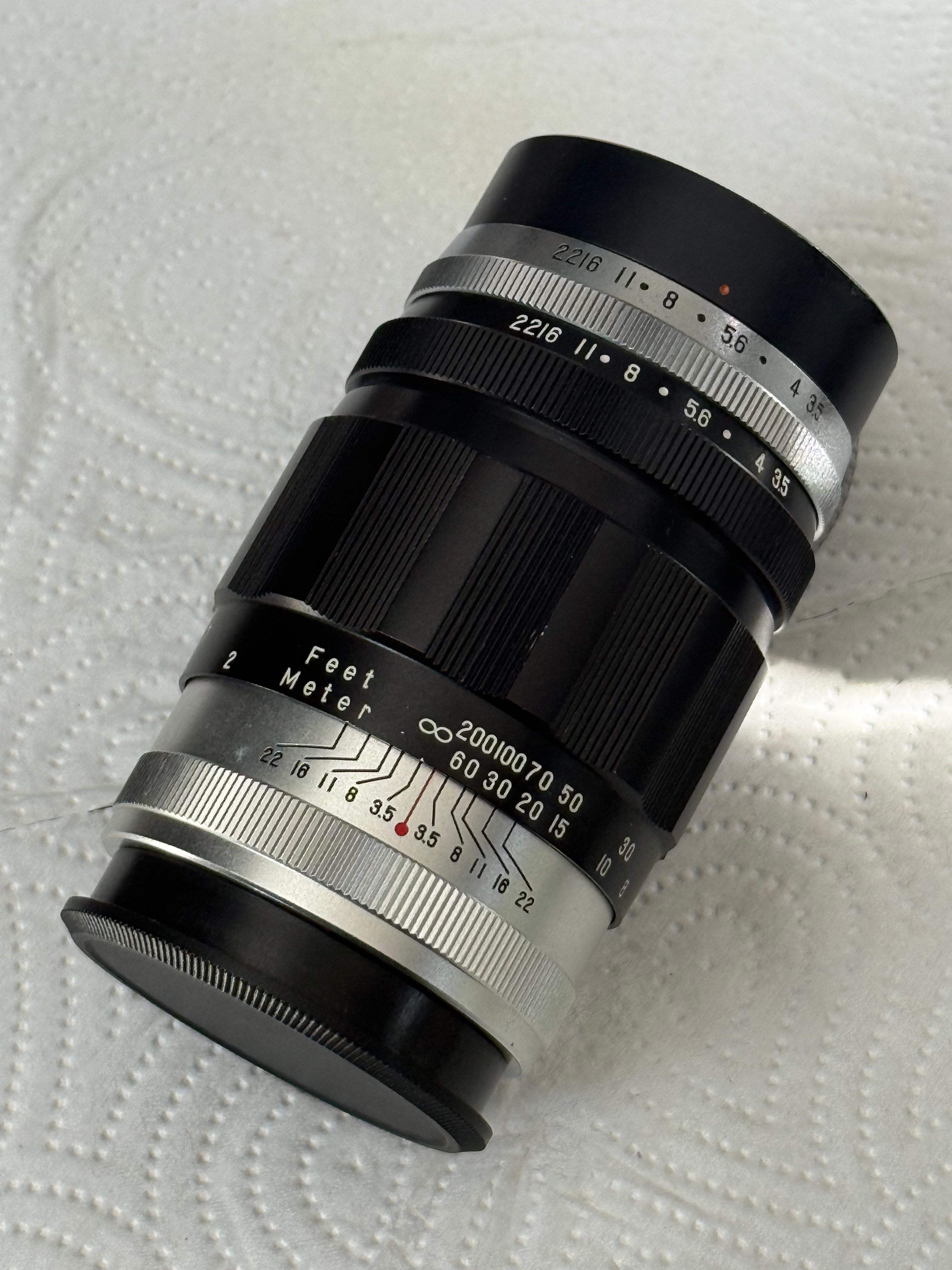
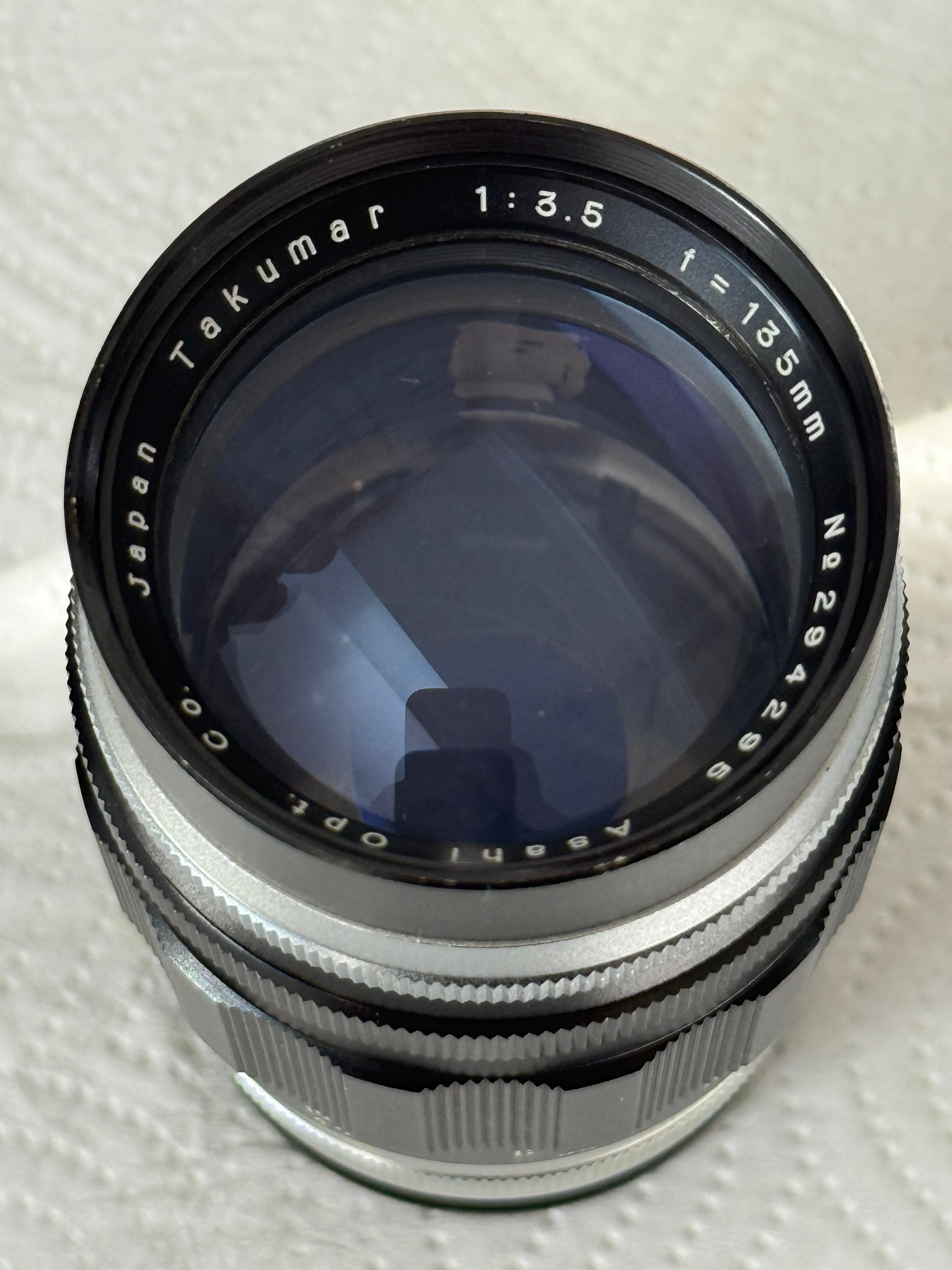
Removing the front elements is straightforward—just unscrew the entire front element group.
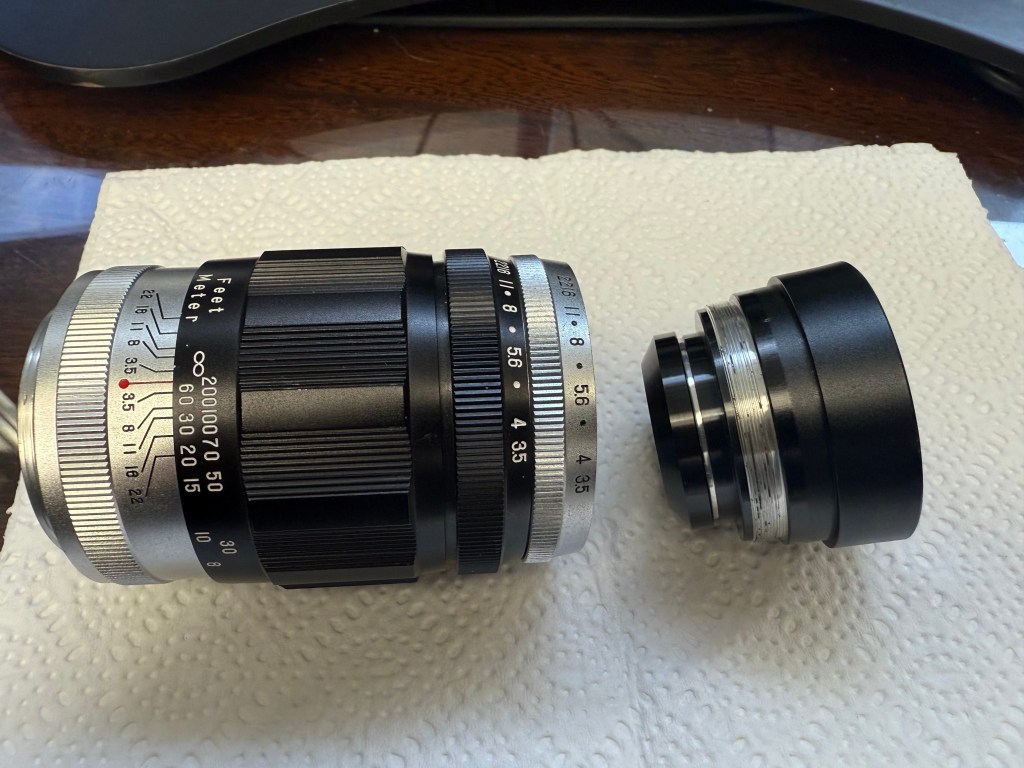
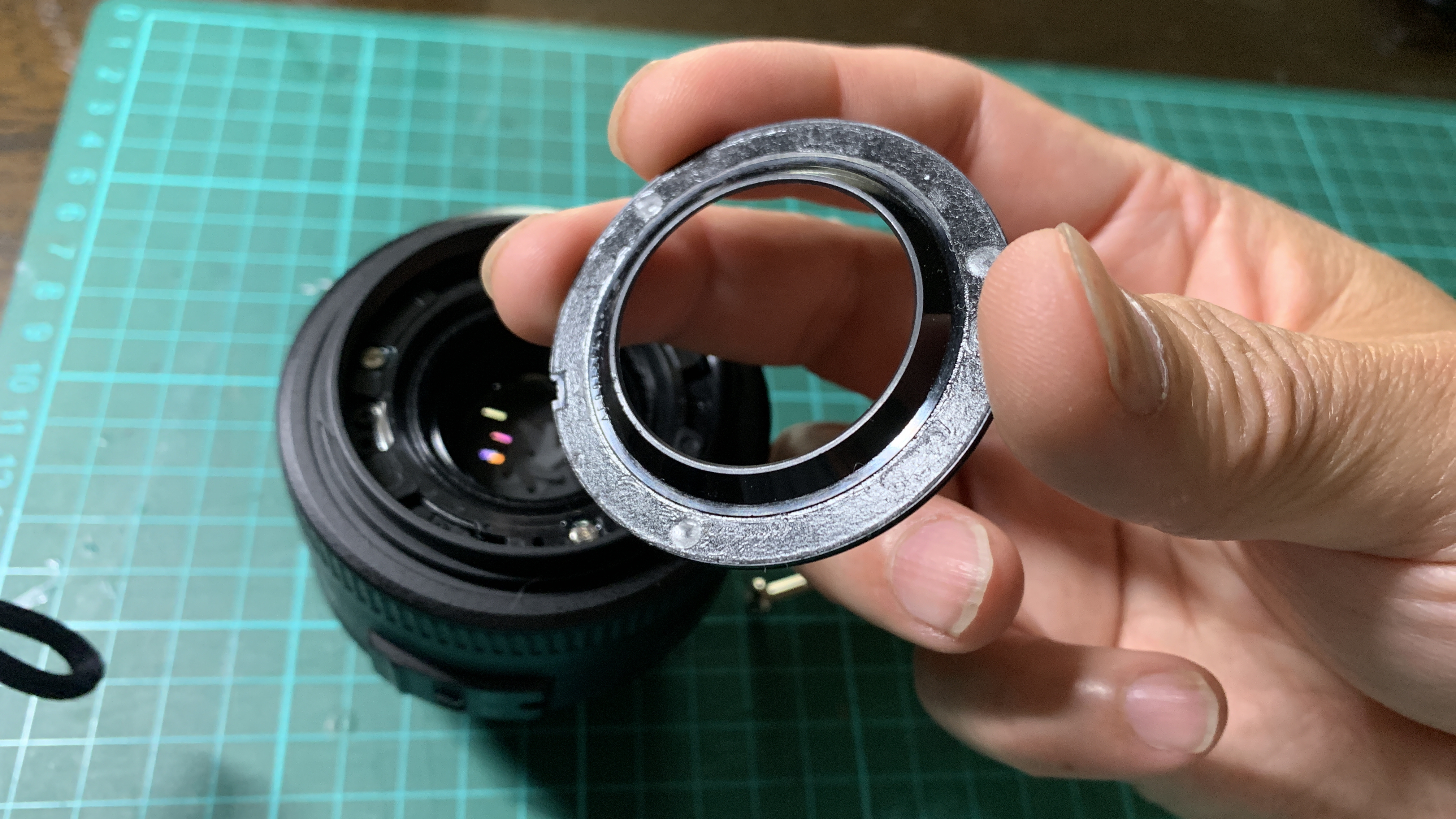
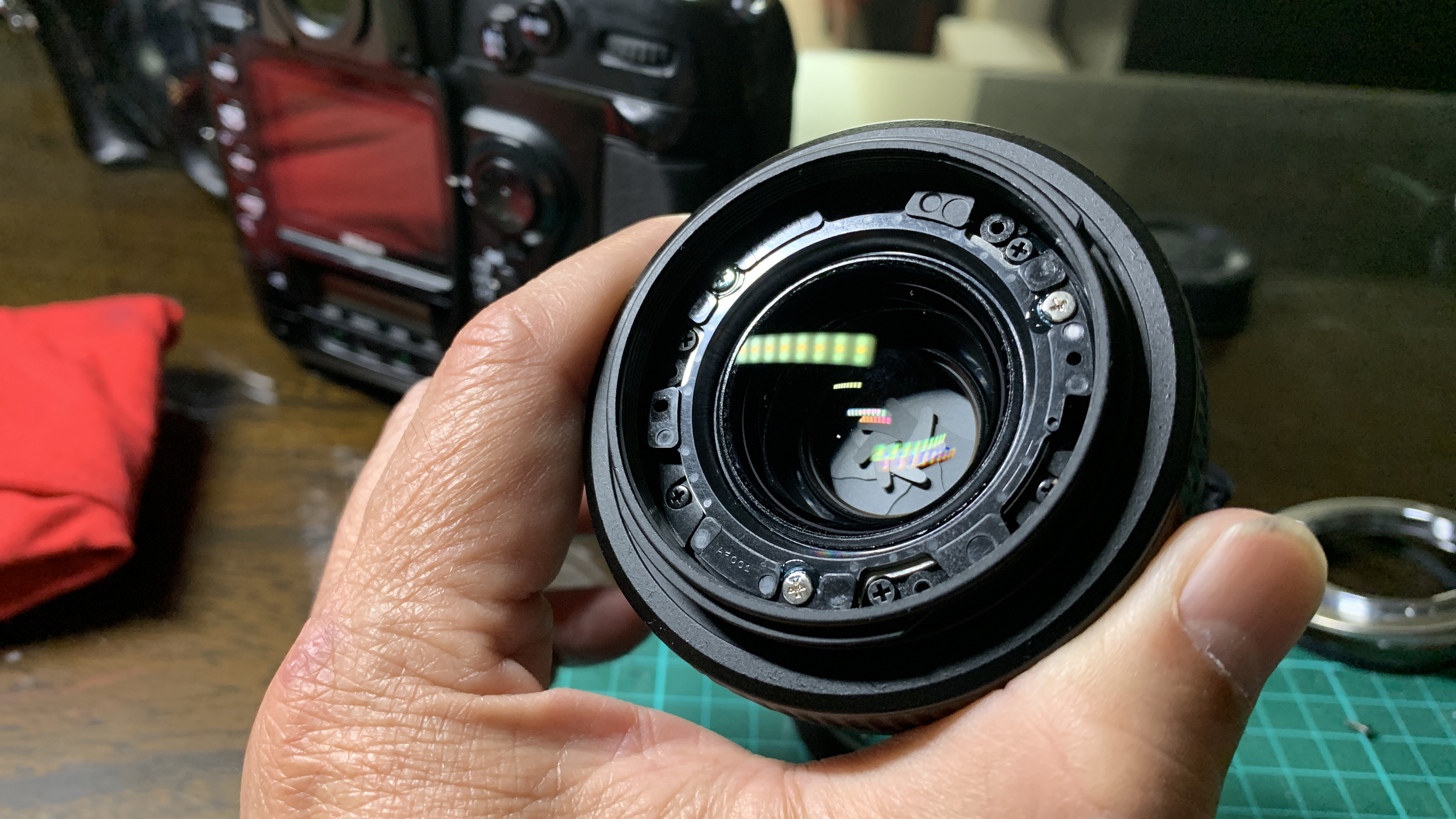
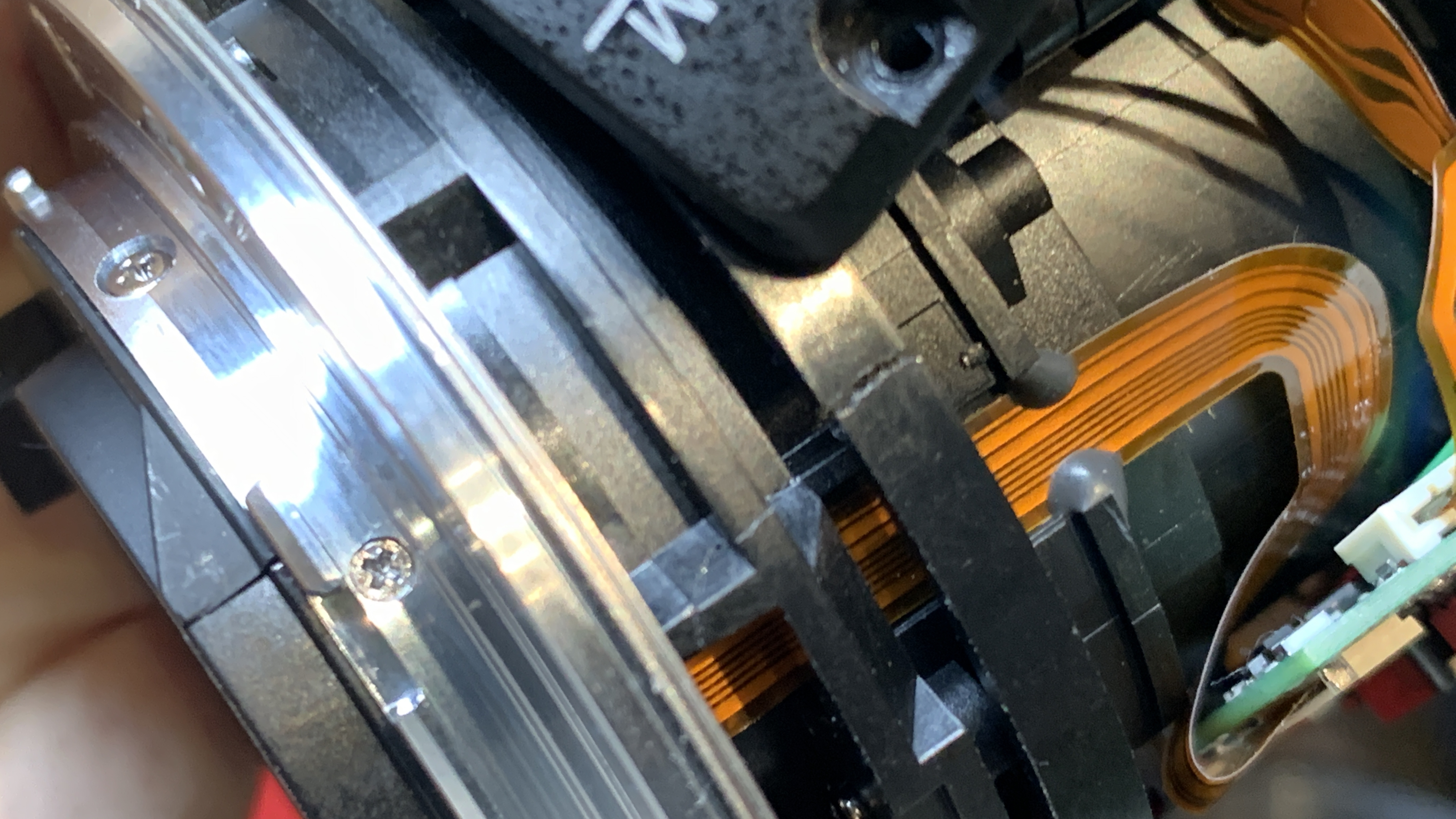
Next, detach the rear lens mount assembly by unscrewing the three visible screws located around the rear section. Once removed, the entire mount should lift off cleanly, giving you access to the internal components.
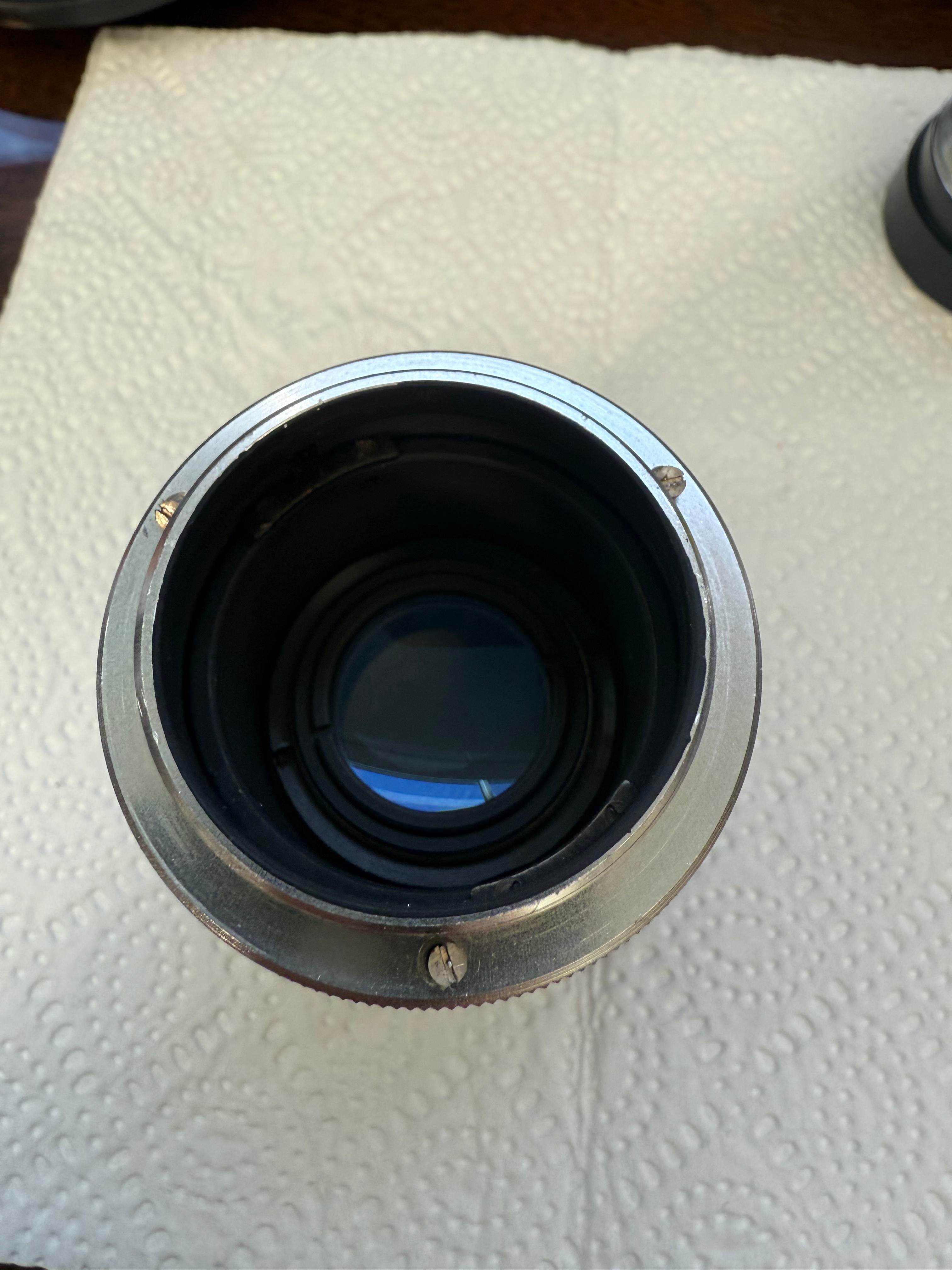
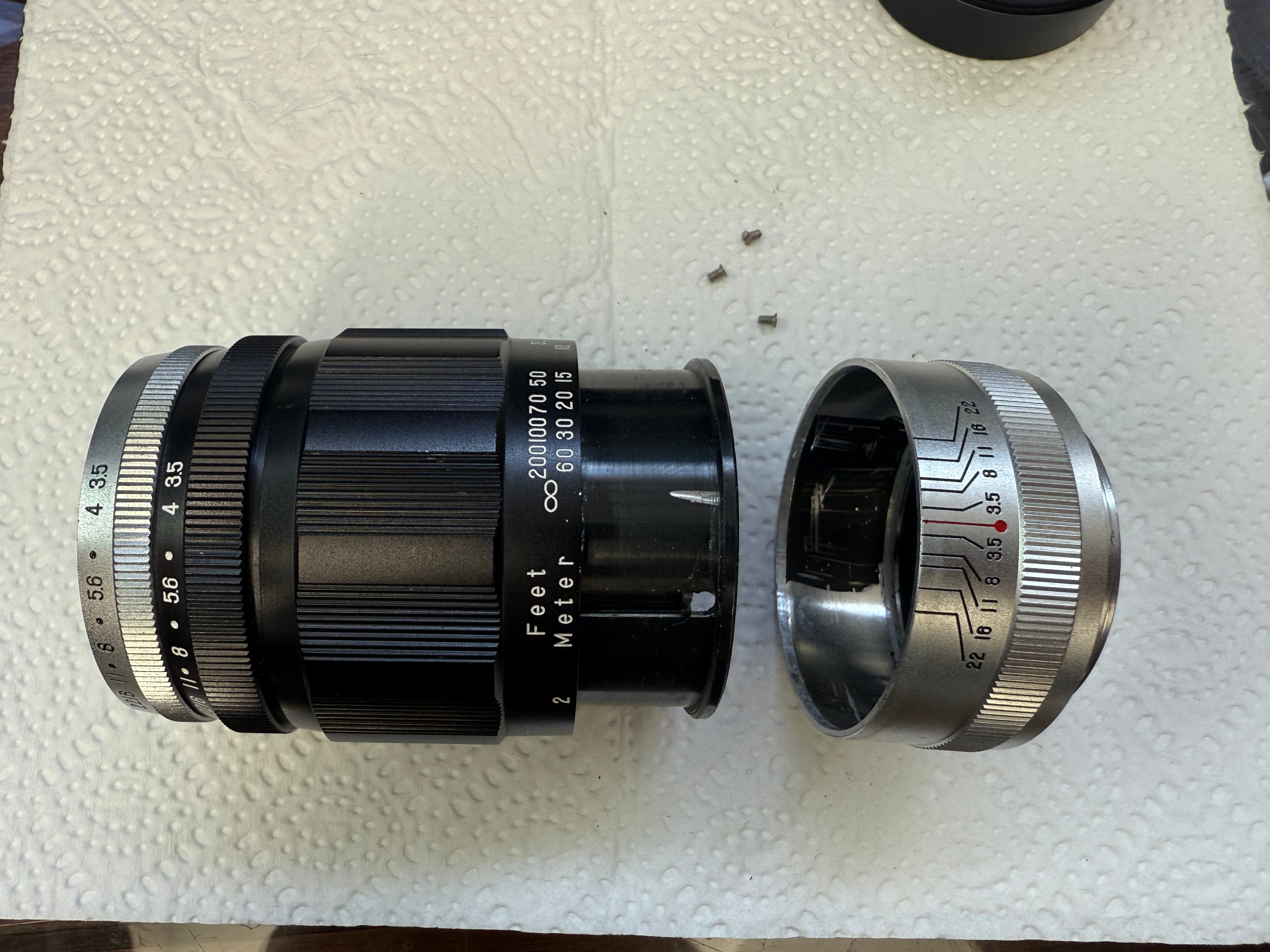
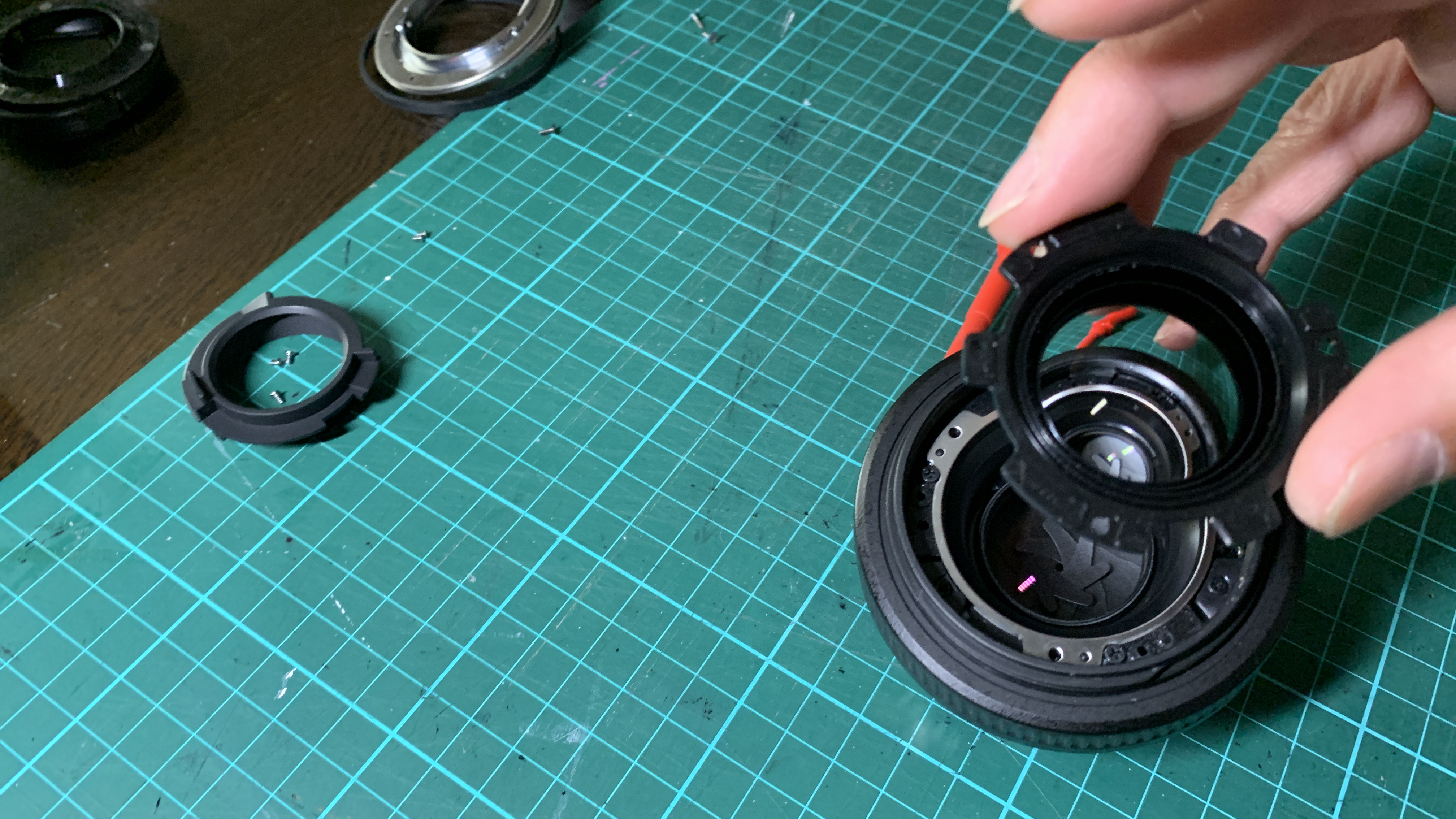
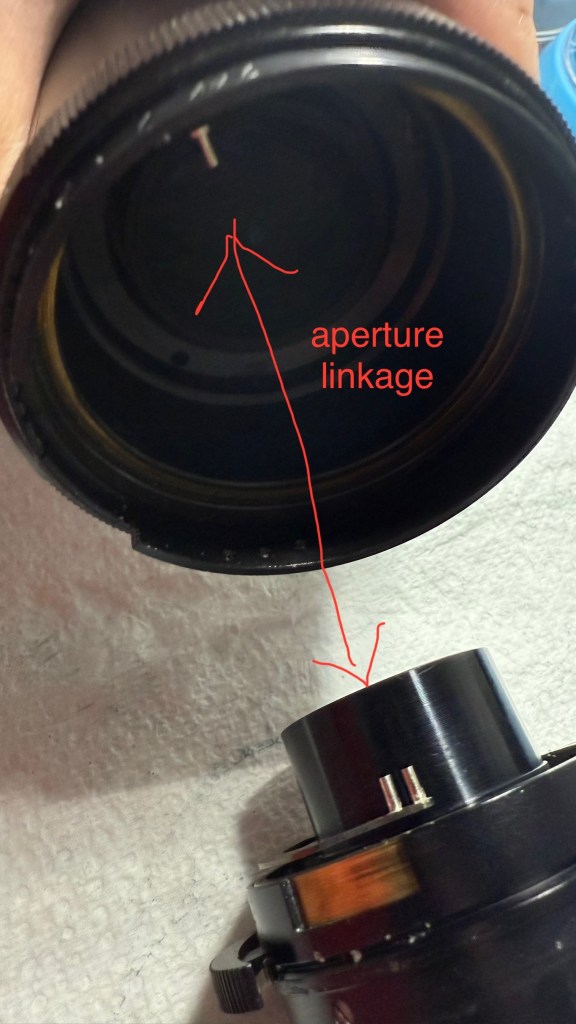
To remove the front pre-set aperture assembly, you’ll need to unscrew the two helicoid guide pins now visible from the rear. These guides secure the focusing mechanism and must be taken out to allow the aperture assembly to rotate out free. I chose not to remove the rear lens elements, as they were already clean and in excellent condition.
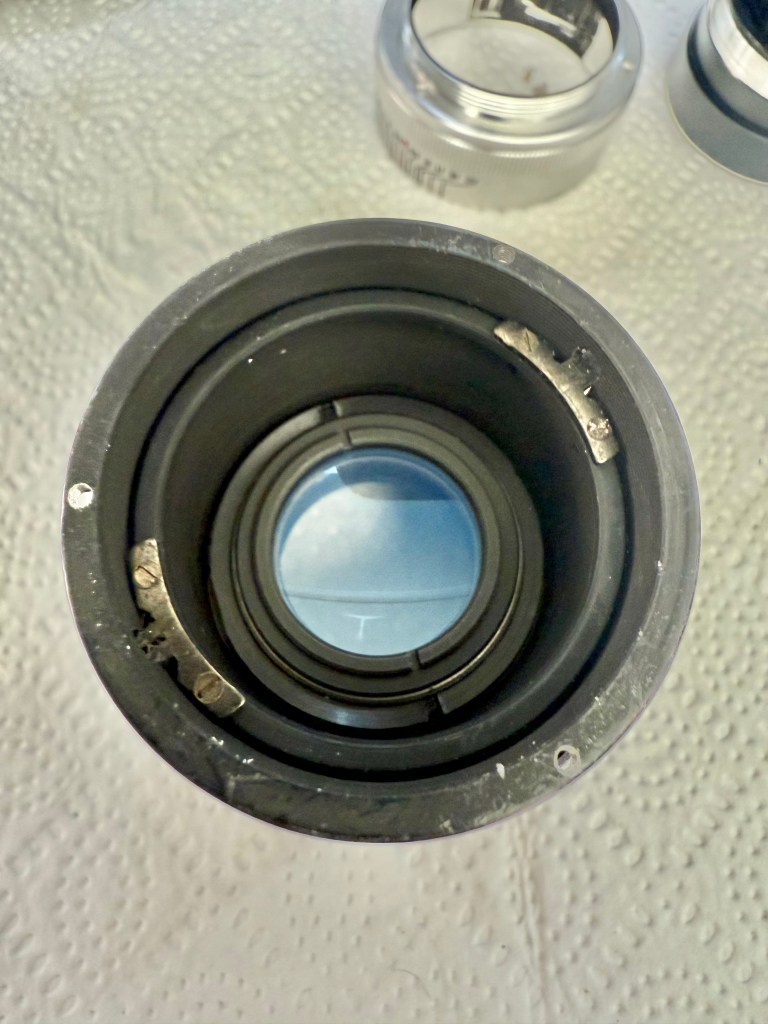
Before removing the helicoid guides, I carefully marked their positions to preserve infinity focus. I rotated the focus ring to the infinity setting, then scratched two faint reference lines where the tops of the guides aligned. These marks will serve as crucial alignment cues during reassembly, helping ensure the lens maintains proper focus calibration.
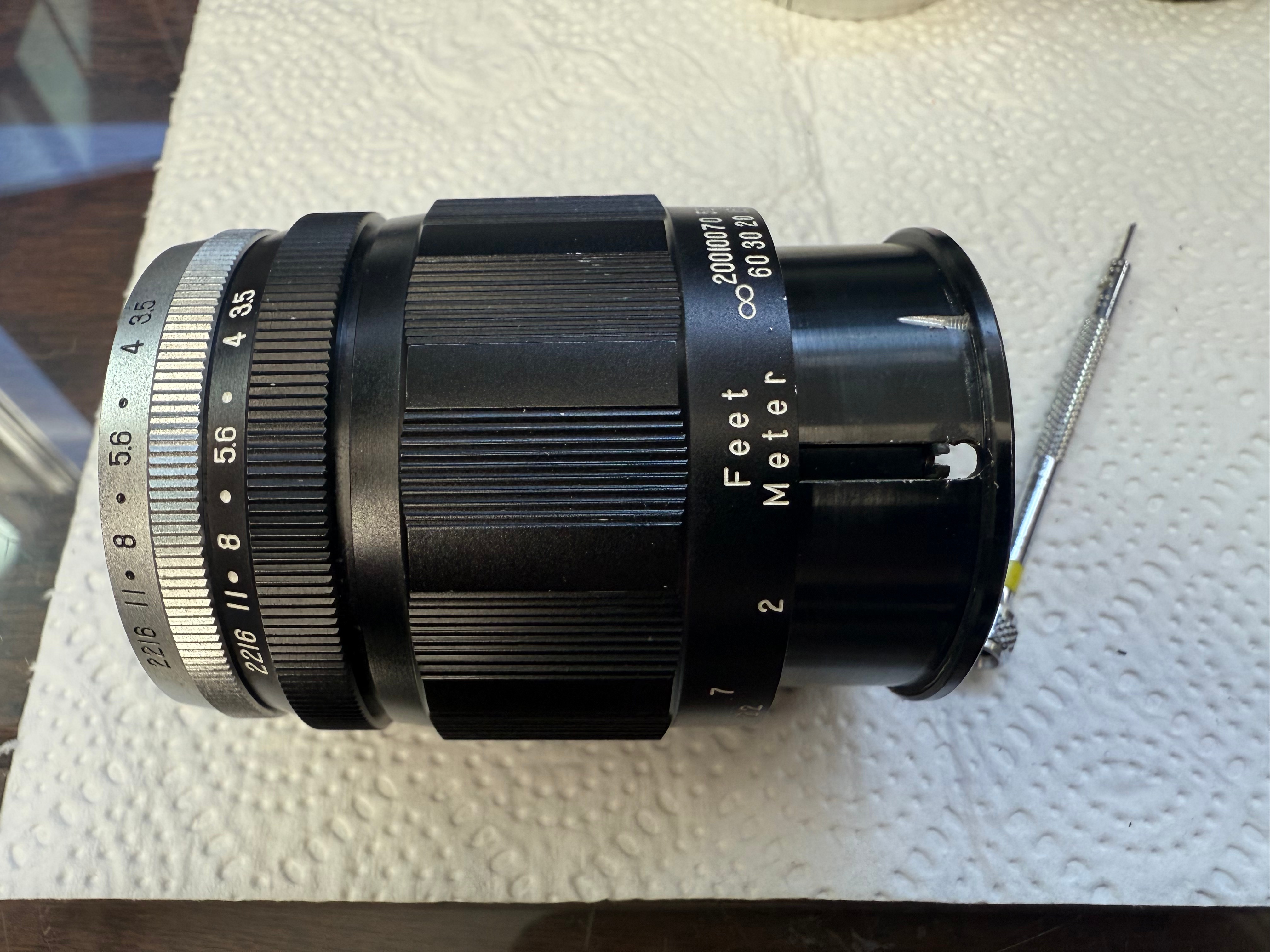
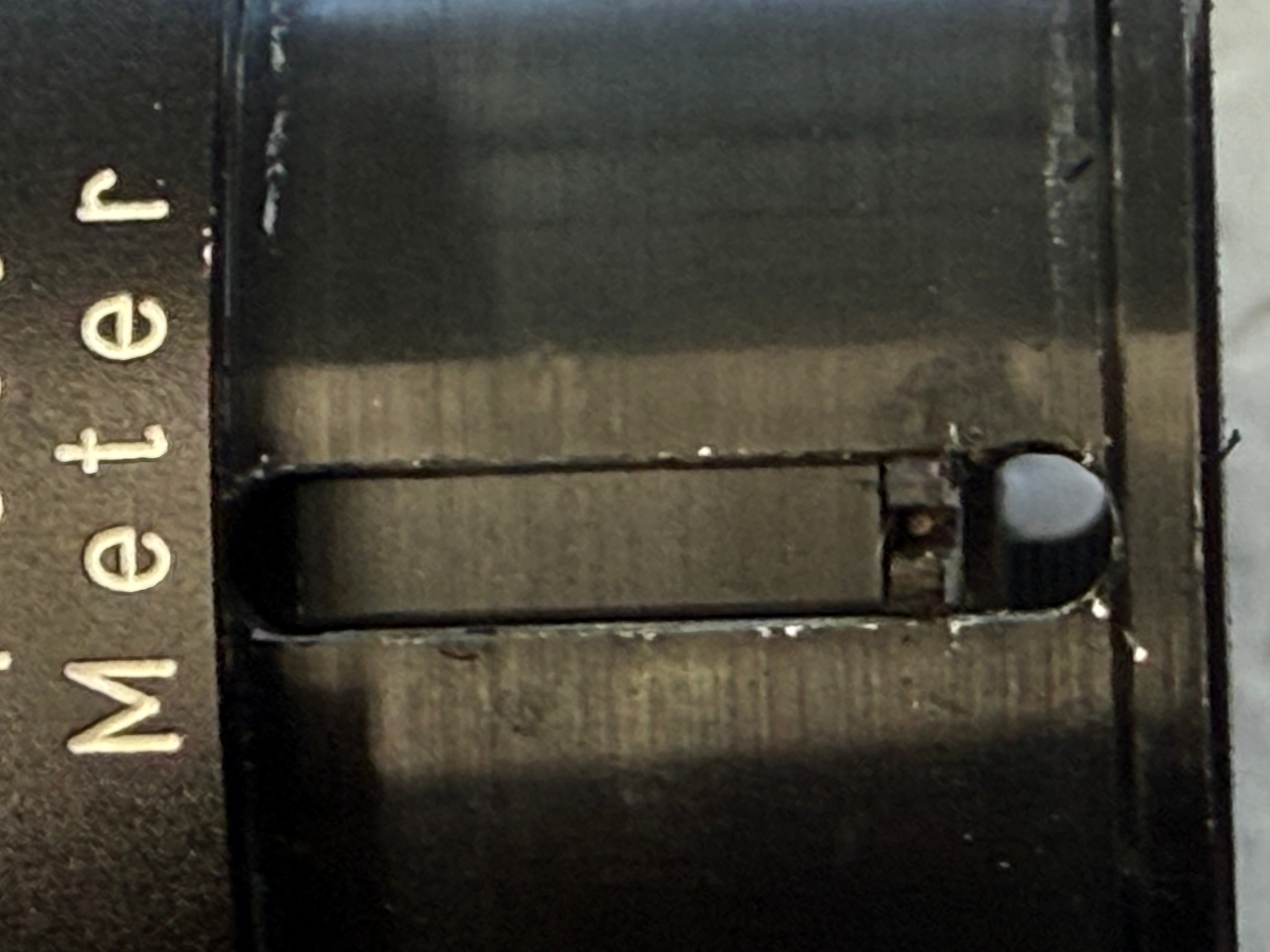
When removing the helicoid guides, make sure to note which guide fits into which groove. Each guide is slightly different, though the reason behind this design choice isn’t immediately clear. It might have been for fine-tuning focus alignment or simply a quirk of the manufacturing process. Either way, keeping track of their original positions is essential for smooth reassembly and accurate focusing.
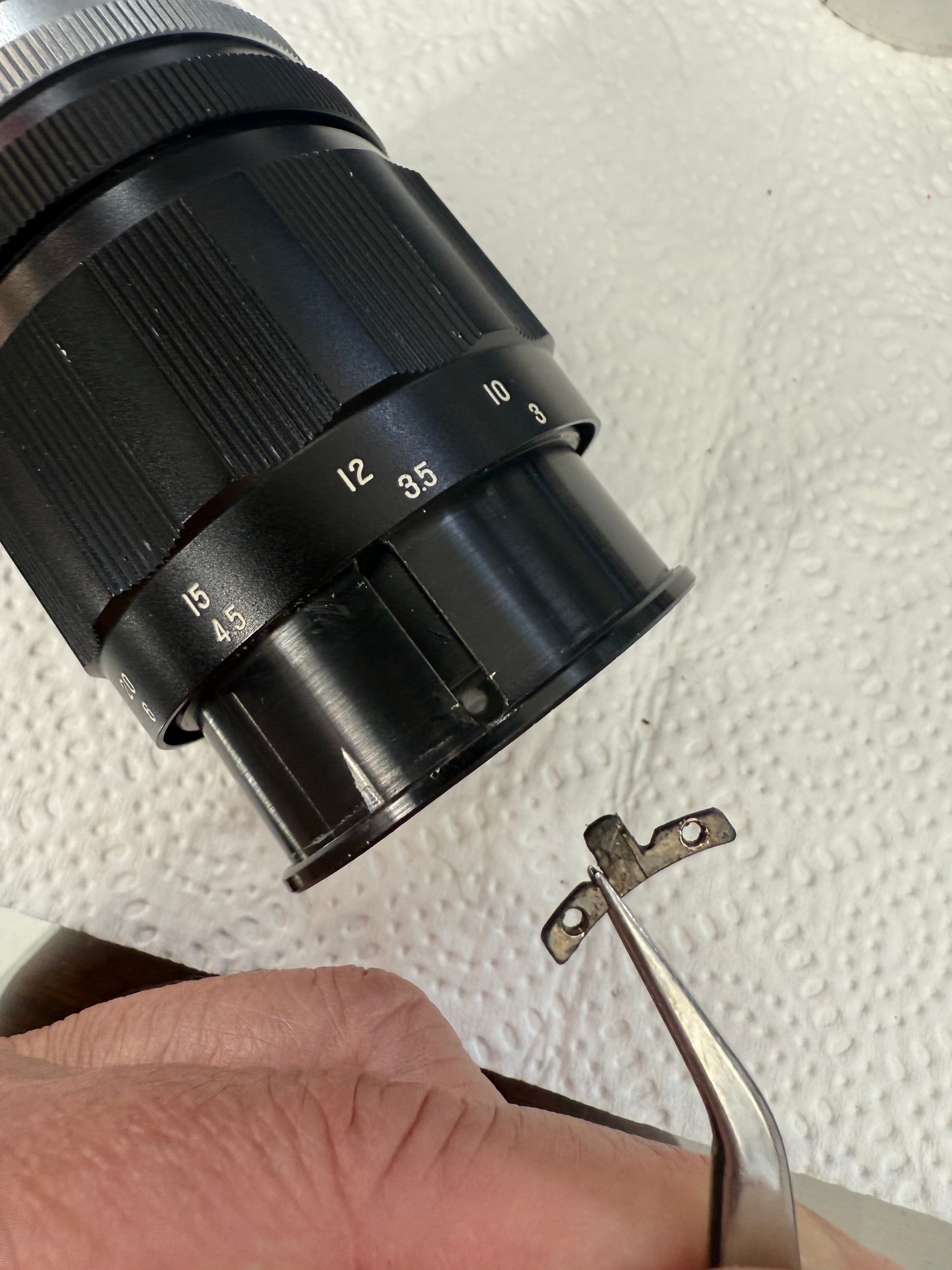
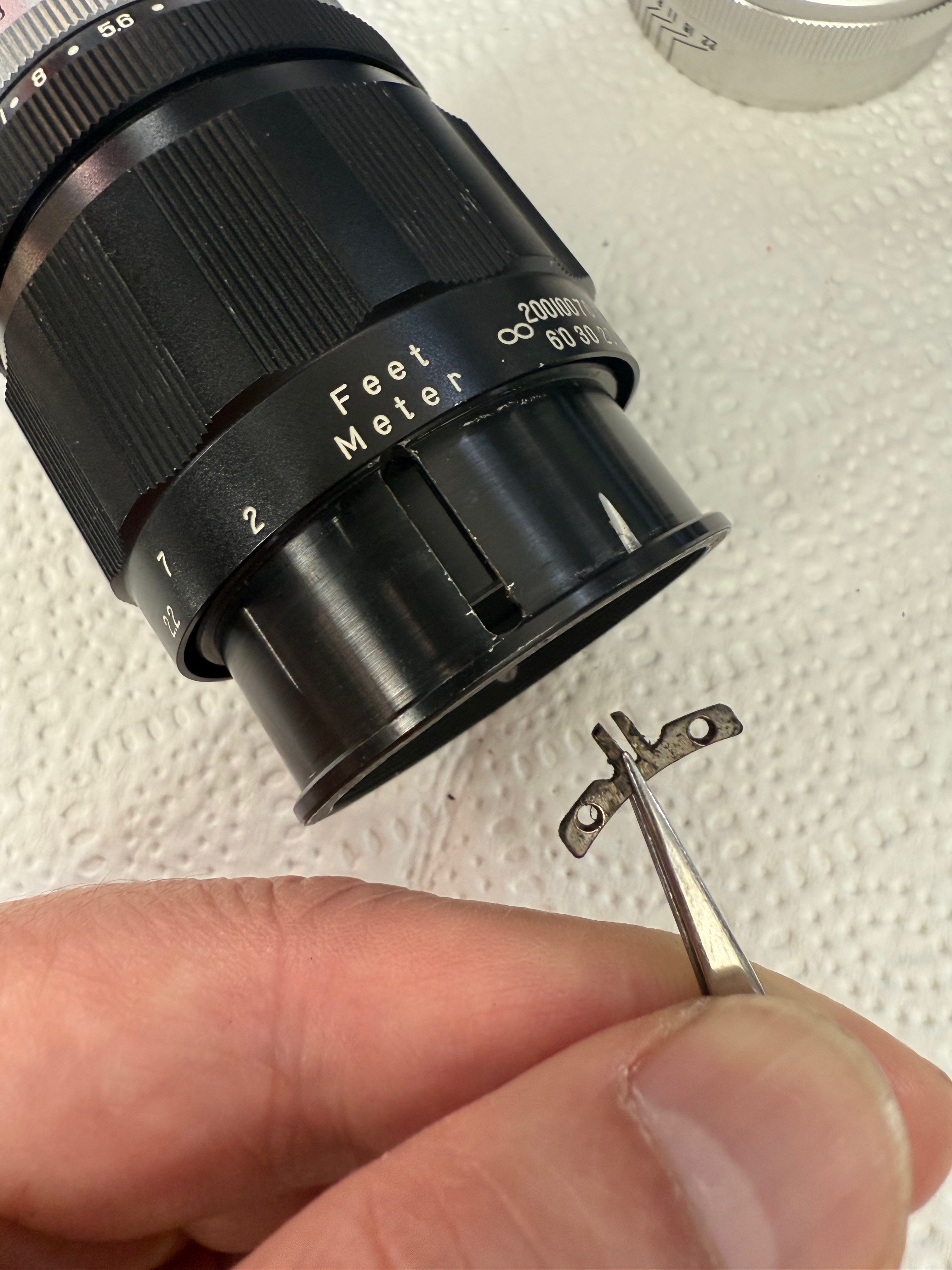
Finally, the aperture housing can be separated from the focusing mechanism. However, before you disengage the helicoids, it’s absolutely critical to mark the exact point of separation. A small scratch or reference line will ensure you maintain the correct orientation during reassembly. Without this, you risk misaligning the helicoids—since they can thread together in multiple configurations, but only one will restore proper focus calibration. Skip this step, and you’re in for a frustrating reassembly process.
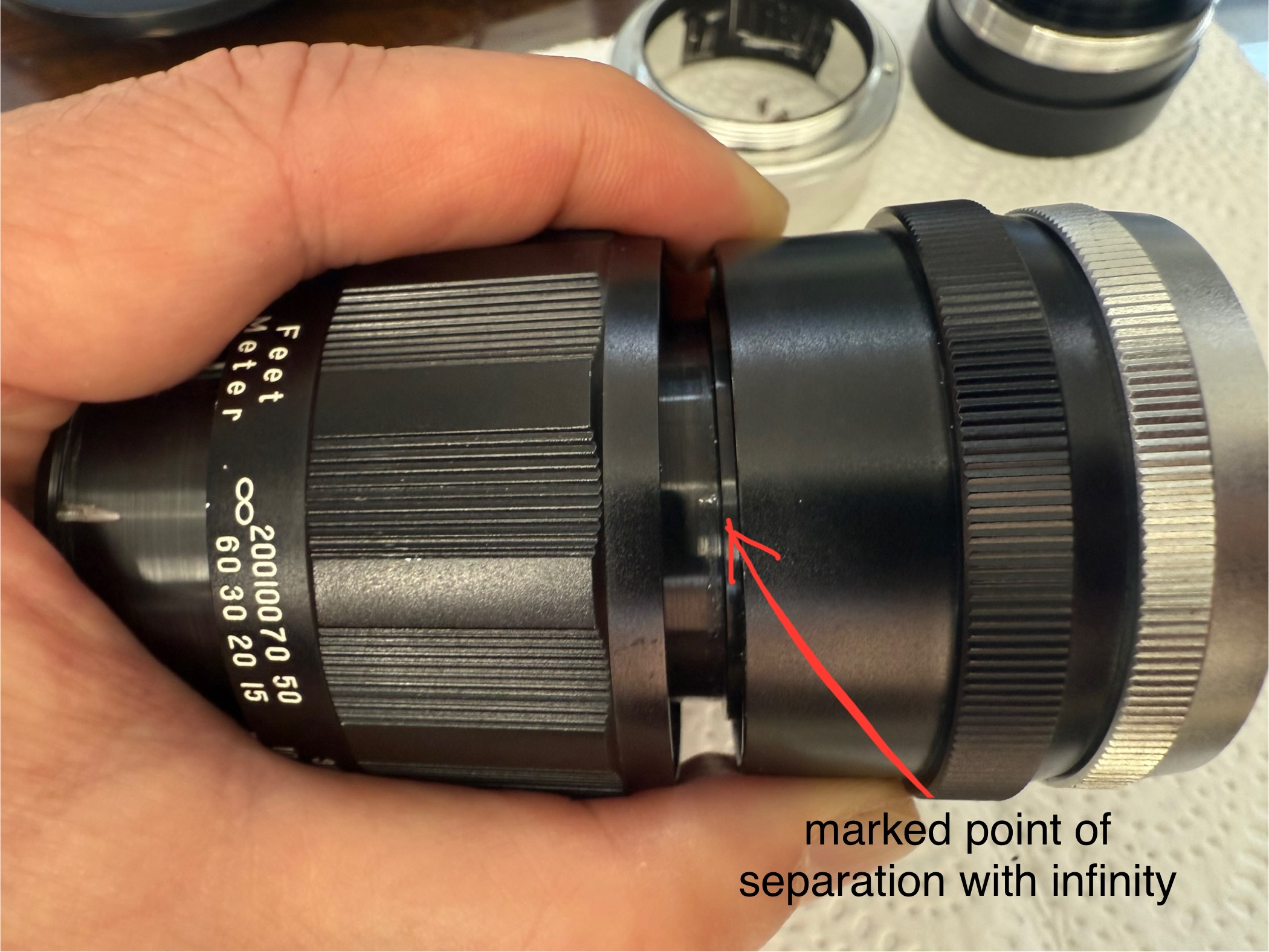
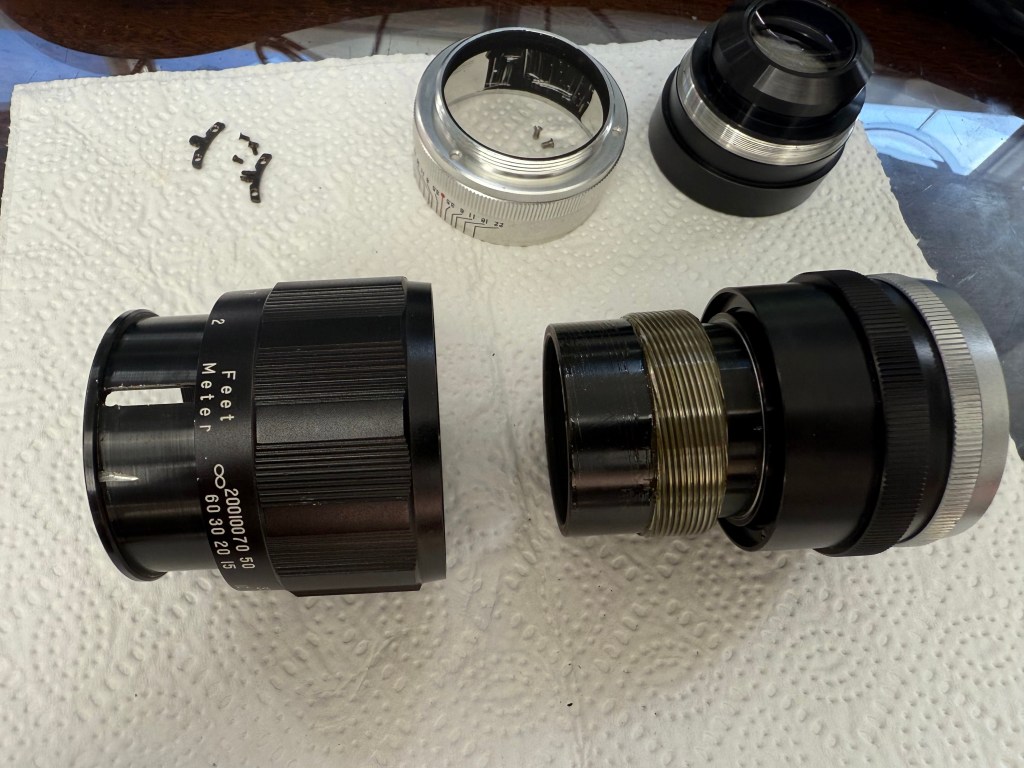
Next, you can remove the distance scale ring. It’s secured by five screws positioned on the inner side of the ring. Pay special attention to the middle screw—it’s longer than the others and also functions as the mechanical stop for infinity focus. Before removing it, make sure to note its exact position when the distance scale is set to infinity. This reference will be crucial for restoring accurate focus during reassembly.
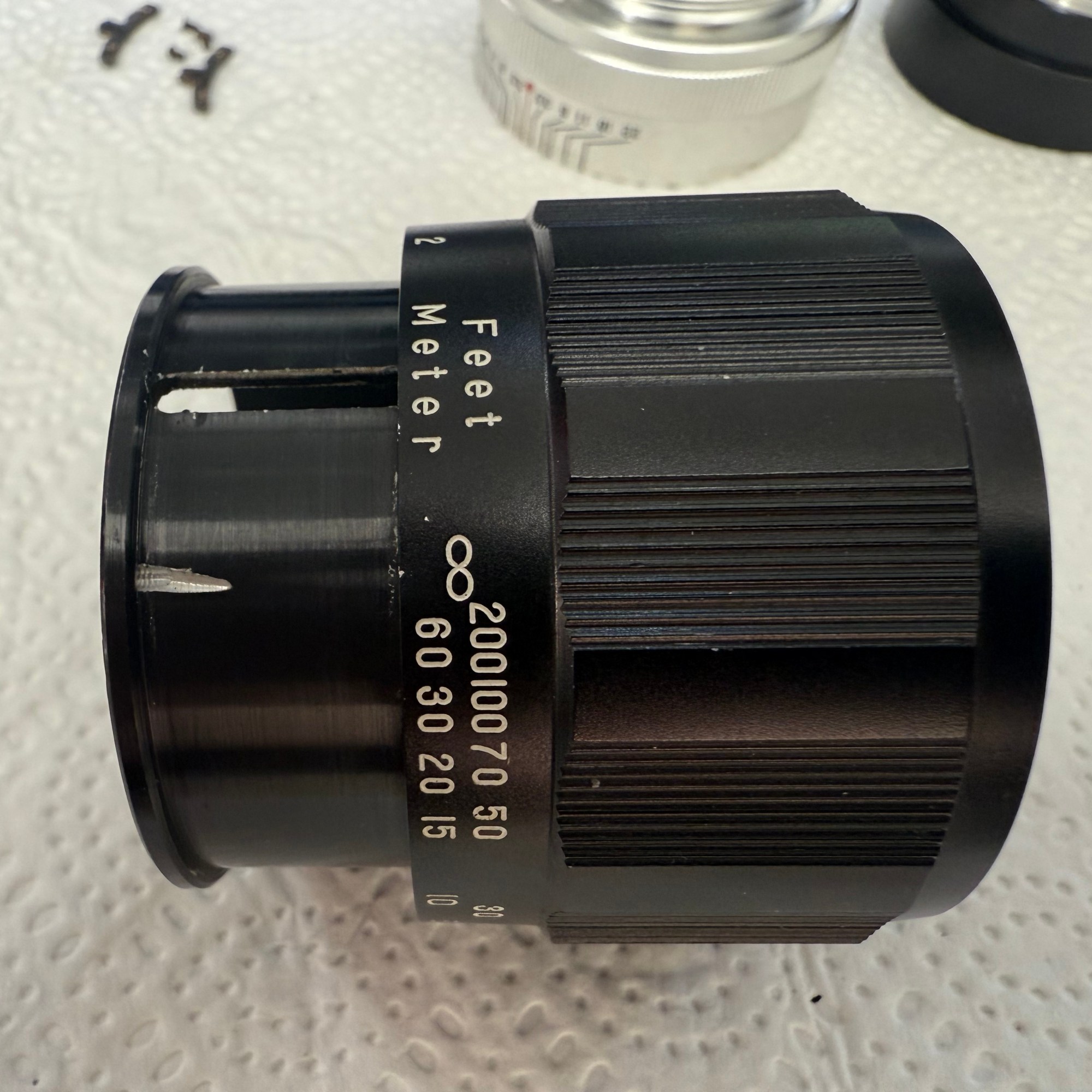
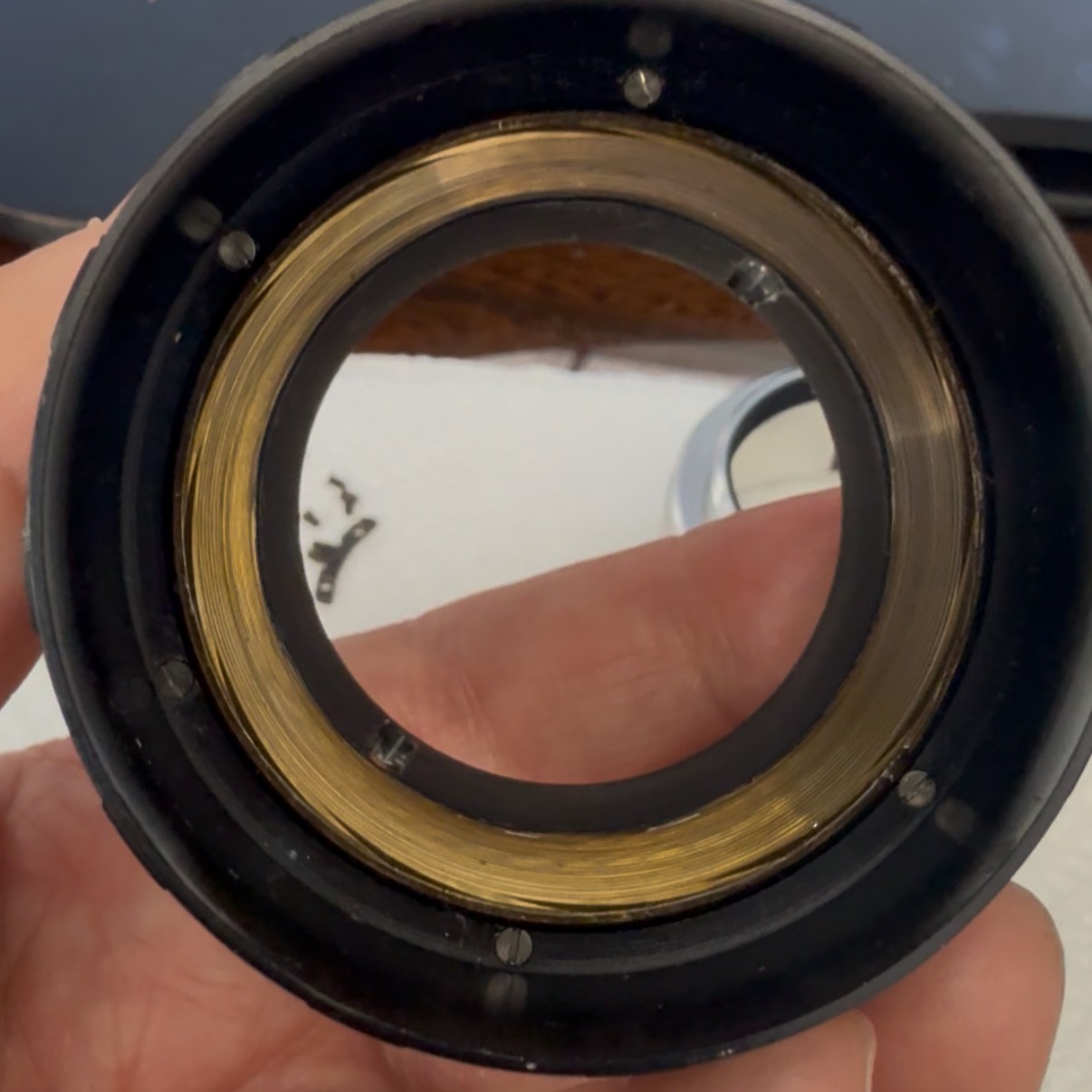
Once the distance scale ring is removed, the orientation of the screws becomes clearly visible. At this stage, you’ll also notice a sixth screw—the near-focus stop screw—revealed after the focusing ring is taken off. It’s important to carefully note its position relative to the infinity stop screw, as both play a crucial role in defining the lens’s focusing range. Marking or photographing their alignment before disassembly can save a lot of guesswork during reassembly and help maintain accurate focus calibration.
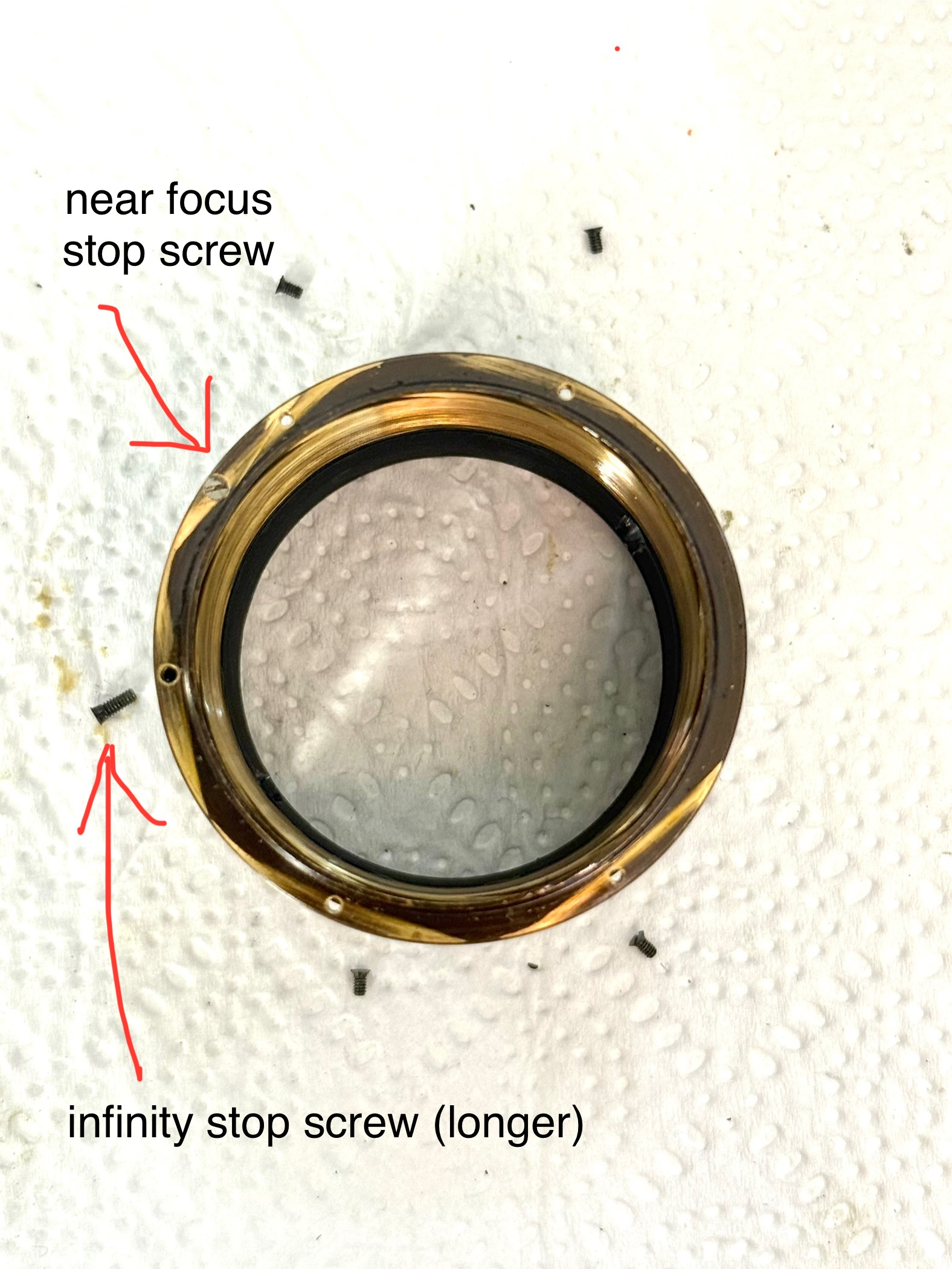
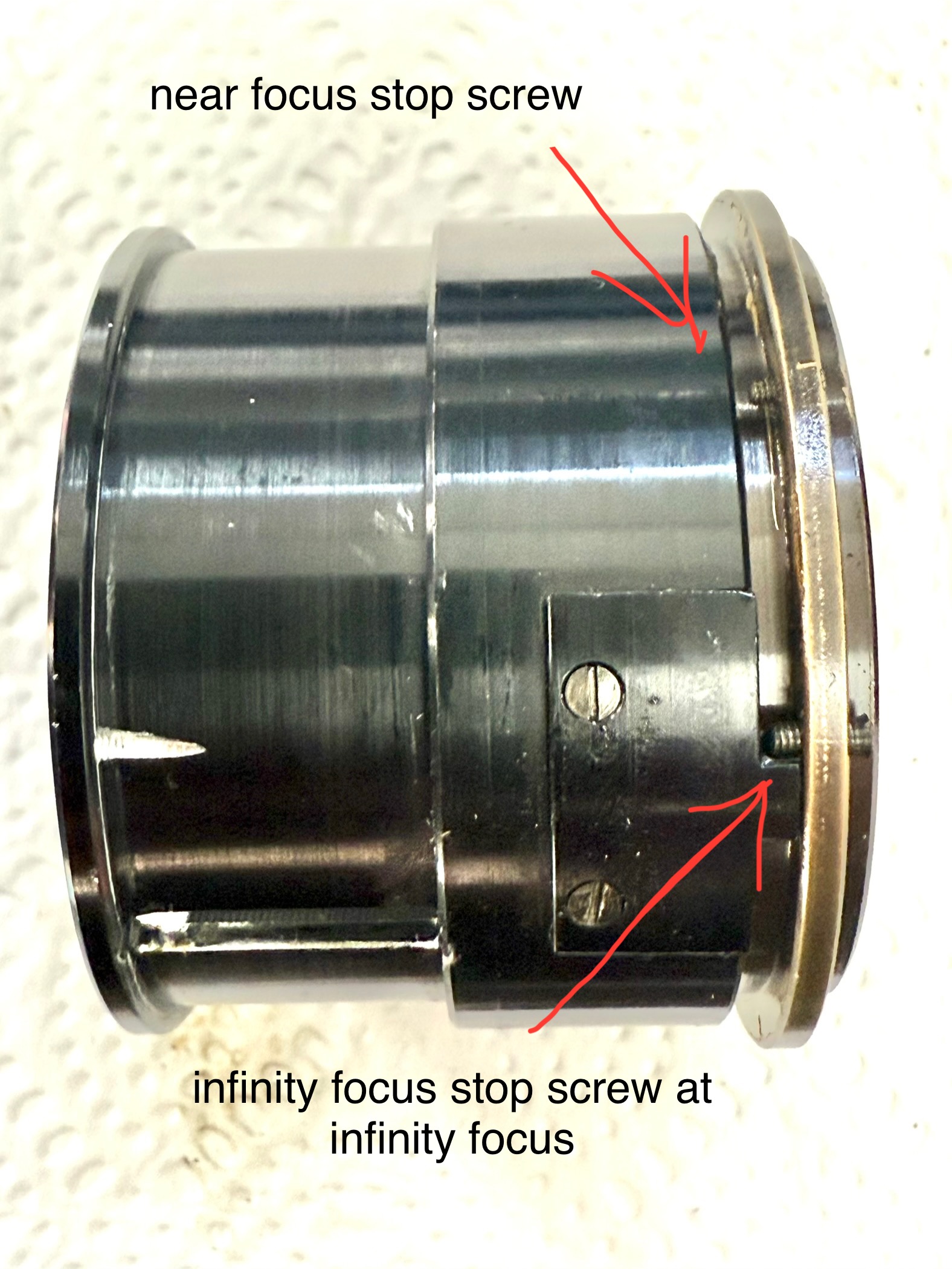
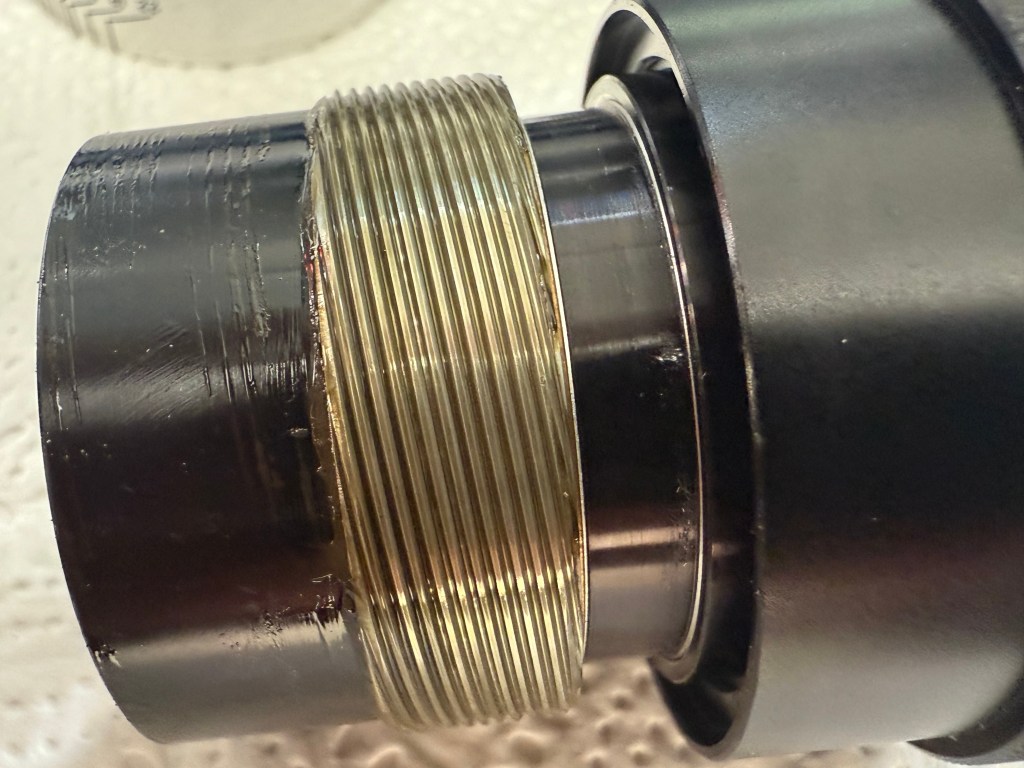
Remove the near focusing stop screw and the brass helicoid ring can be rotated out.
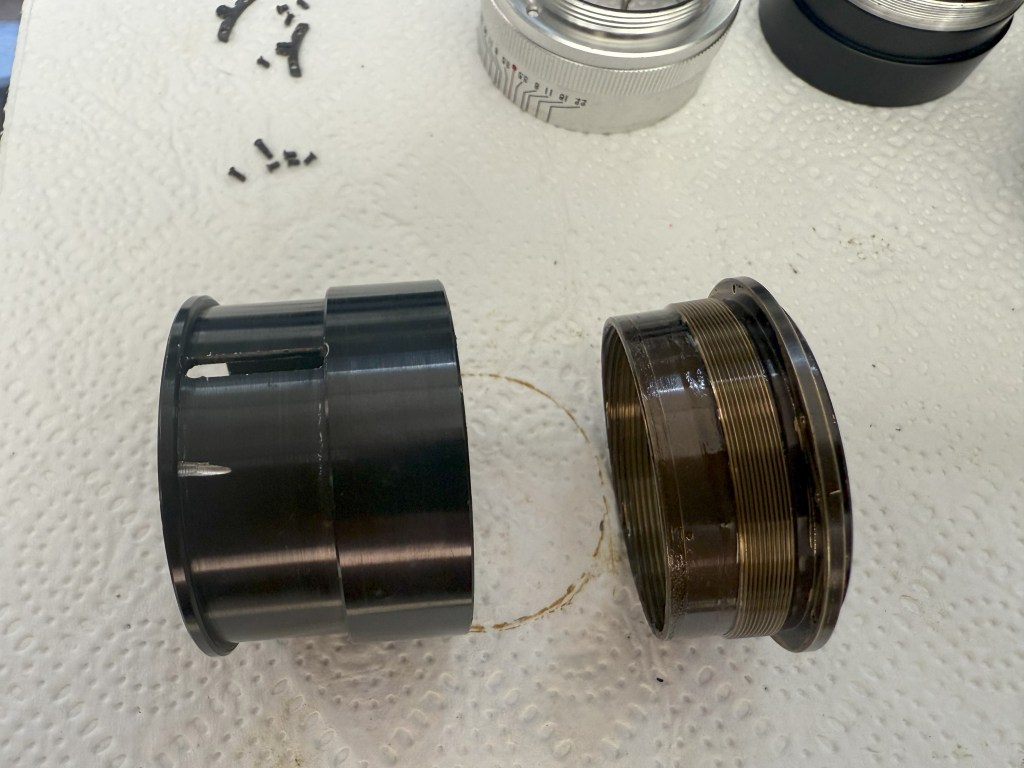
After thoroughly cleaning and relubricating the helicoids, reassembly was smooth and uneventful. Everything clicked back into place with satisfying precision—no surprises, no fuss.

Thanks for reading, and I hope this walkthrough helps fellow vintage lens enthusiasts breathe new life into their classic gear!
A Forgotten Roll of Film and a Koala Named Brian in Changmai

🐨
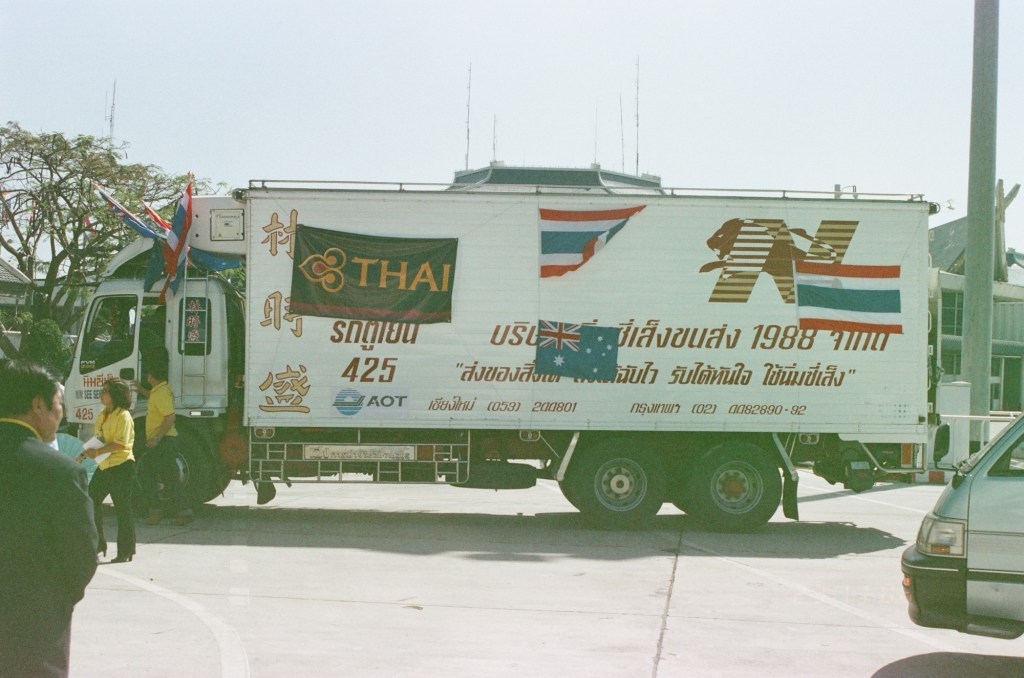
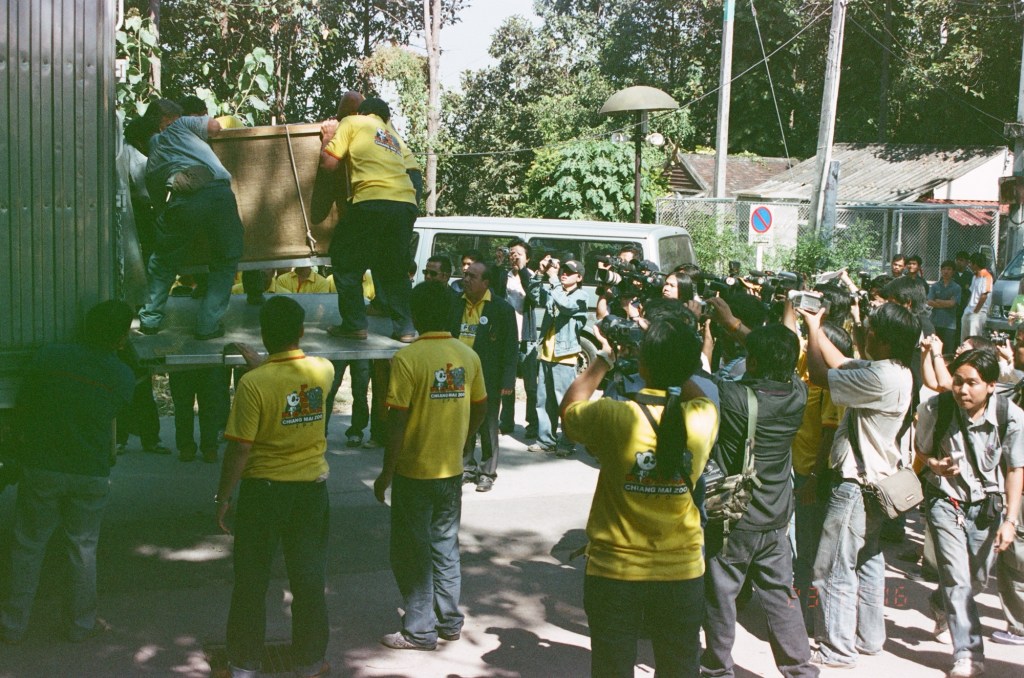
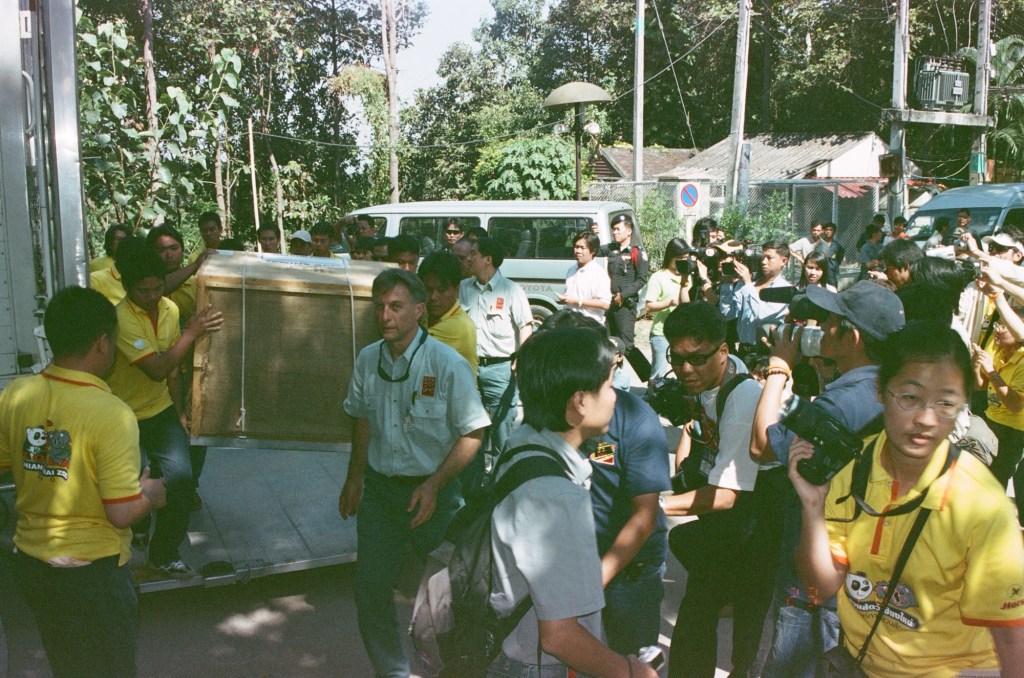
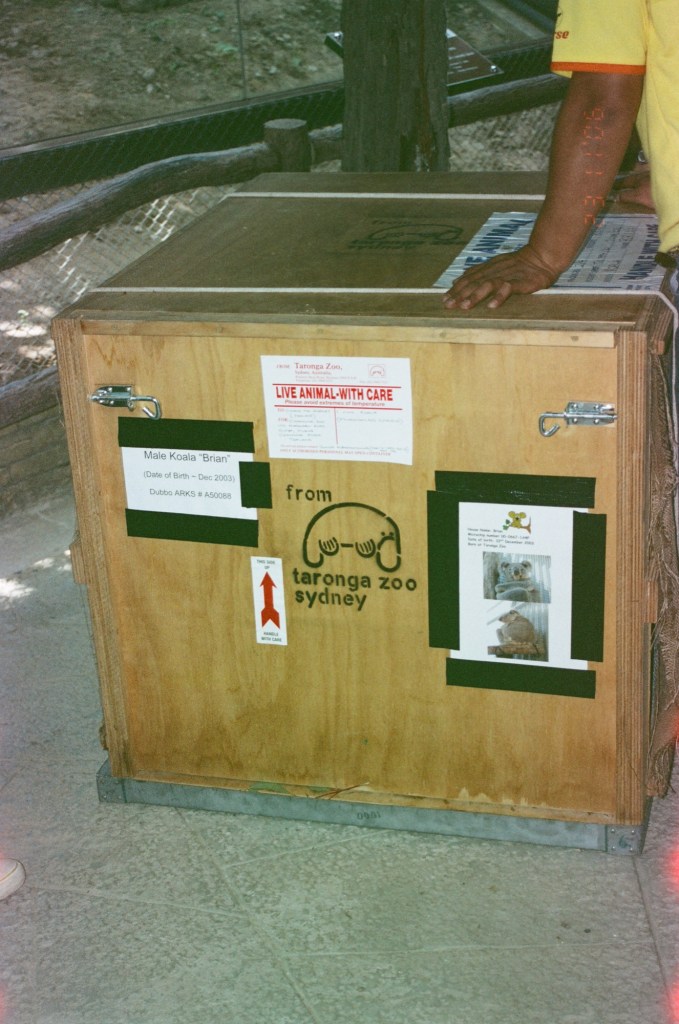
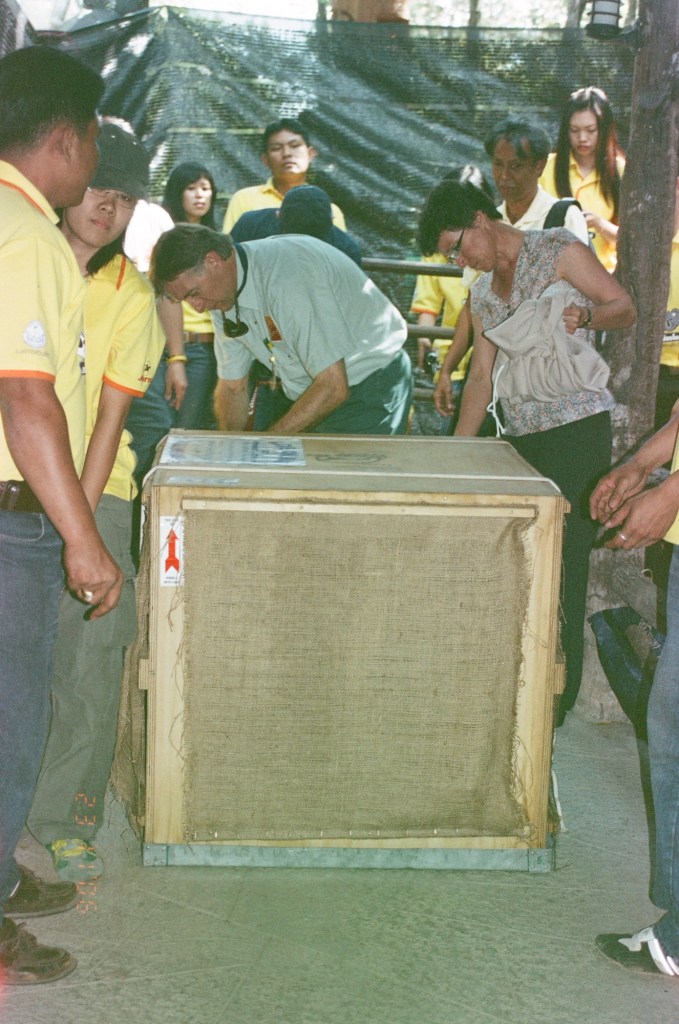
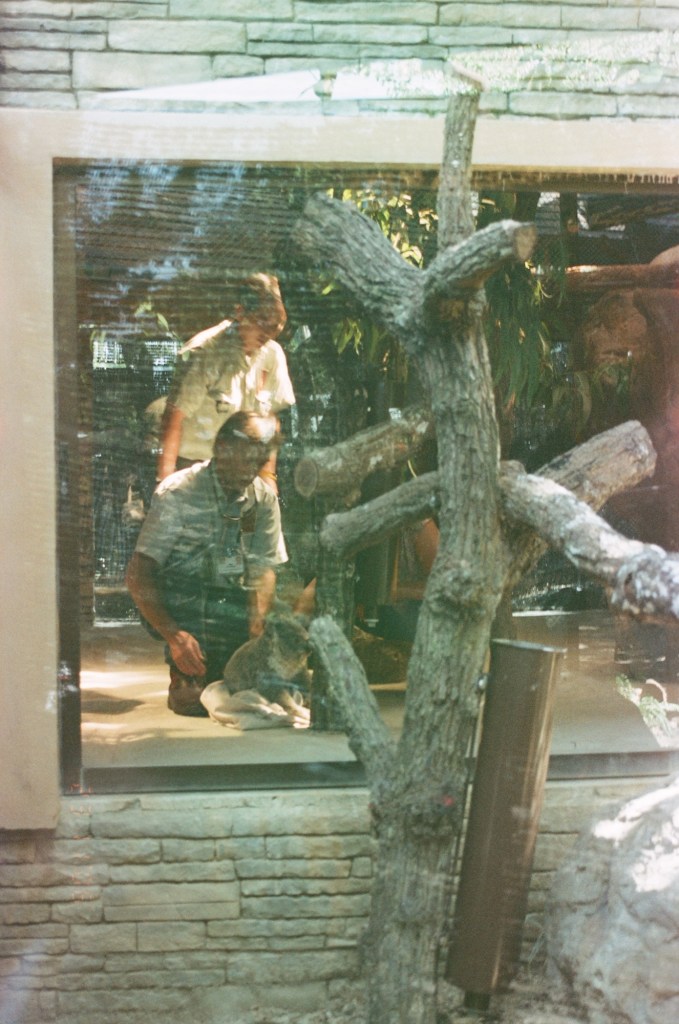
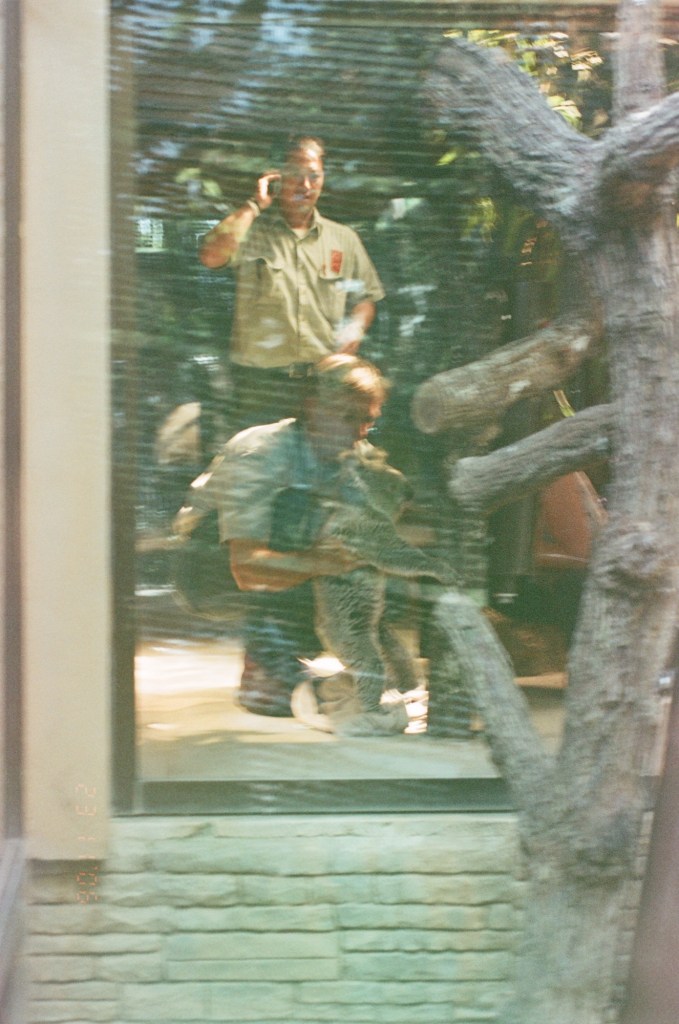
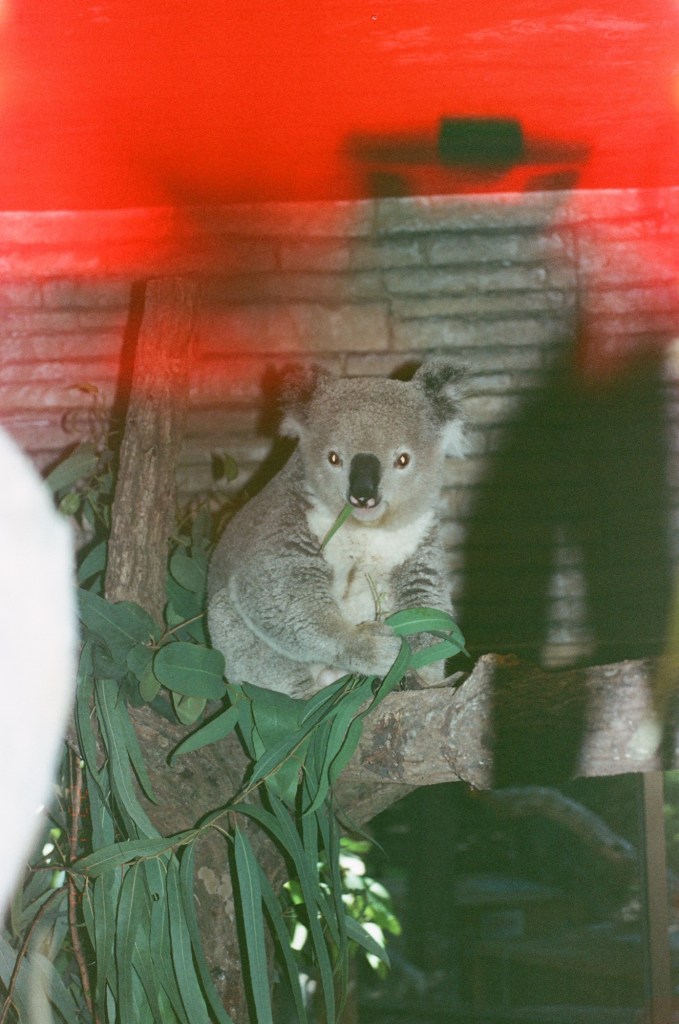
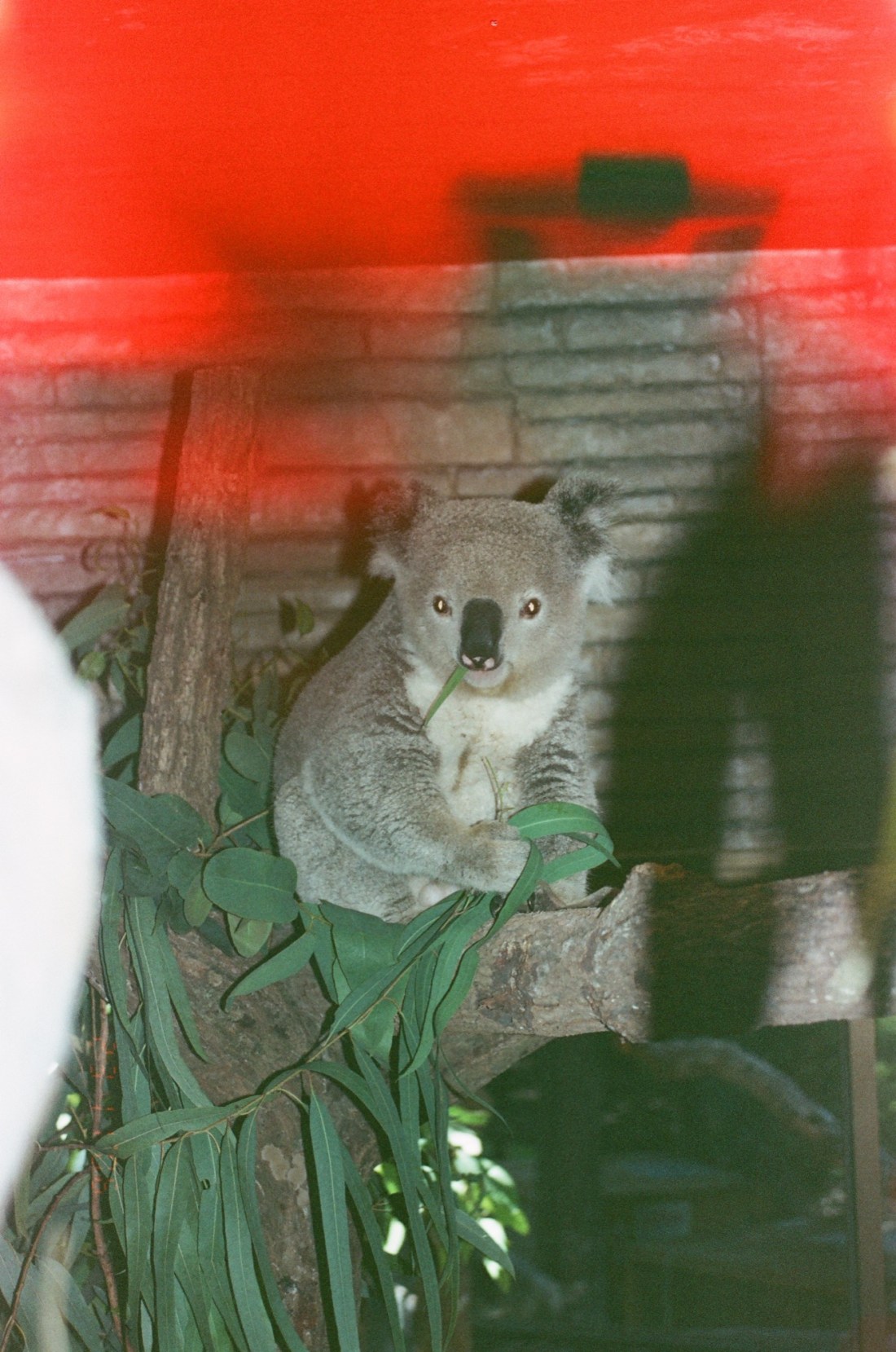
While developing a roll of film I found in one of the vintage cameras I’d purchased, I stumbled upon a fascinating piece of history. The photos revealed a koala named Brian from Sydney’s Taronga Zoo arriving in Thailand, surrounded by media and public excitement. The film was date-stamped 23rd November 2006.

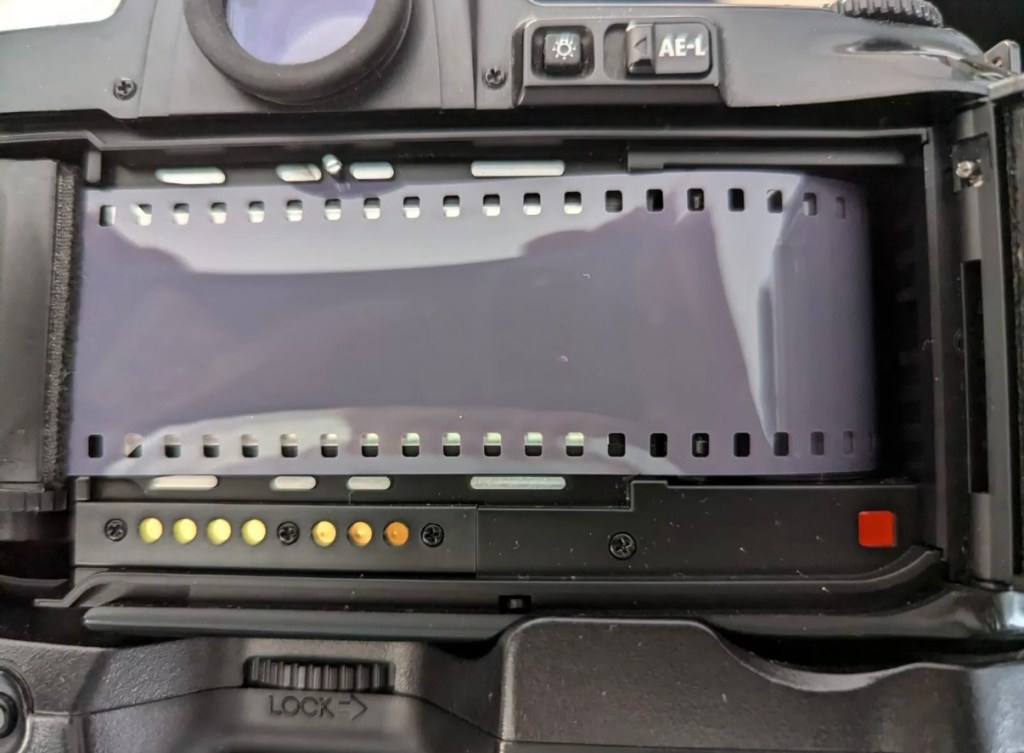
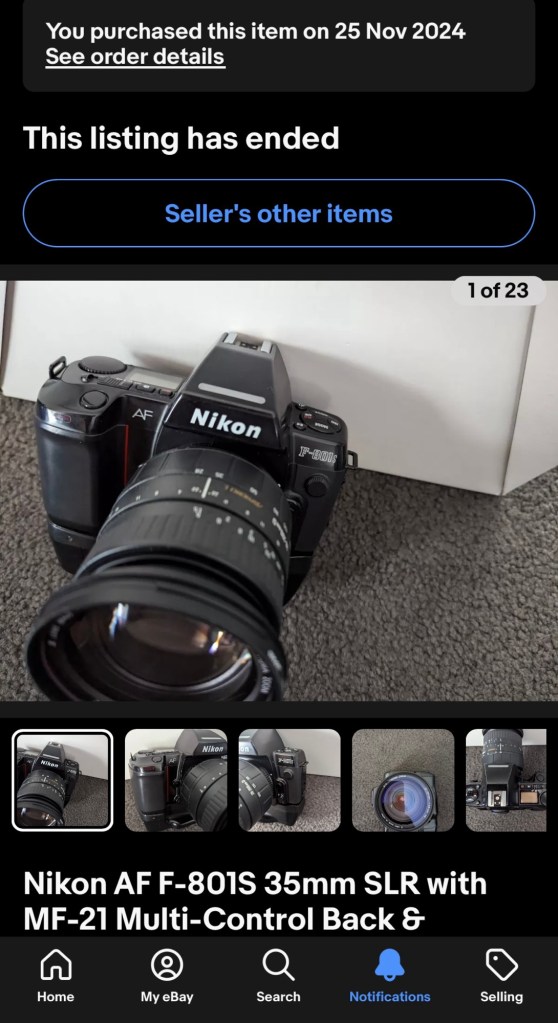
Although I couldn’t recall exactly which camera the film came from, my eBay purchase history—and the date on the photos—suggest it likely came from a Nikon 801s SLR with an MF-21 multi-control back, which I bought on 25th November 2024. One of the eBay listing photos even showed the camera with its back open and a partially exposed roll of film inside. Only 20 frames had images; the rest were blank.

Curious about the koala story, I did a quick Google search and confirmed that in November 2006, Sydney’s Taronga Zoo sent four adult koalas to Chiang Mai Zoo in Thailand.

The koalas’ arrival generated significant media buzz and local excitement.

These were the first koalas ever brought to the country. The group included two males—Brian and Fuller, aged 3 and 4—and two females, Coco and Simpson, both 3 years old. They came from Taronga Zoo and the Western Plains Zoo, accompanied by Australian zoological officials to help them adjust and to train Thai zookeepers.

According to Chiang Mai Zoo’s veterinarian, Dr. Somchai, the koalas were understandably a bit unsettled at first, but quickly began eating again—a reassuring sign. To protect them from stress, the zoo initially restricted public access. After two weeks, select visitors were allowed to see them, provided they remained quiet and kept their distance.

The zoo invested around 3 million baht (approximately USD $82,000) to build an air-conditioned enclosure complete with eucalyptus trees for the koalas.

It’s a bit sad to think that the person who took these photos nearly two decades ago never got to see them developed. In today’s world, where most photos are taken on smartphones, it feels special to be able to share these never-before-seen images of a unique moment in zoological history between Australia and Thailand.

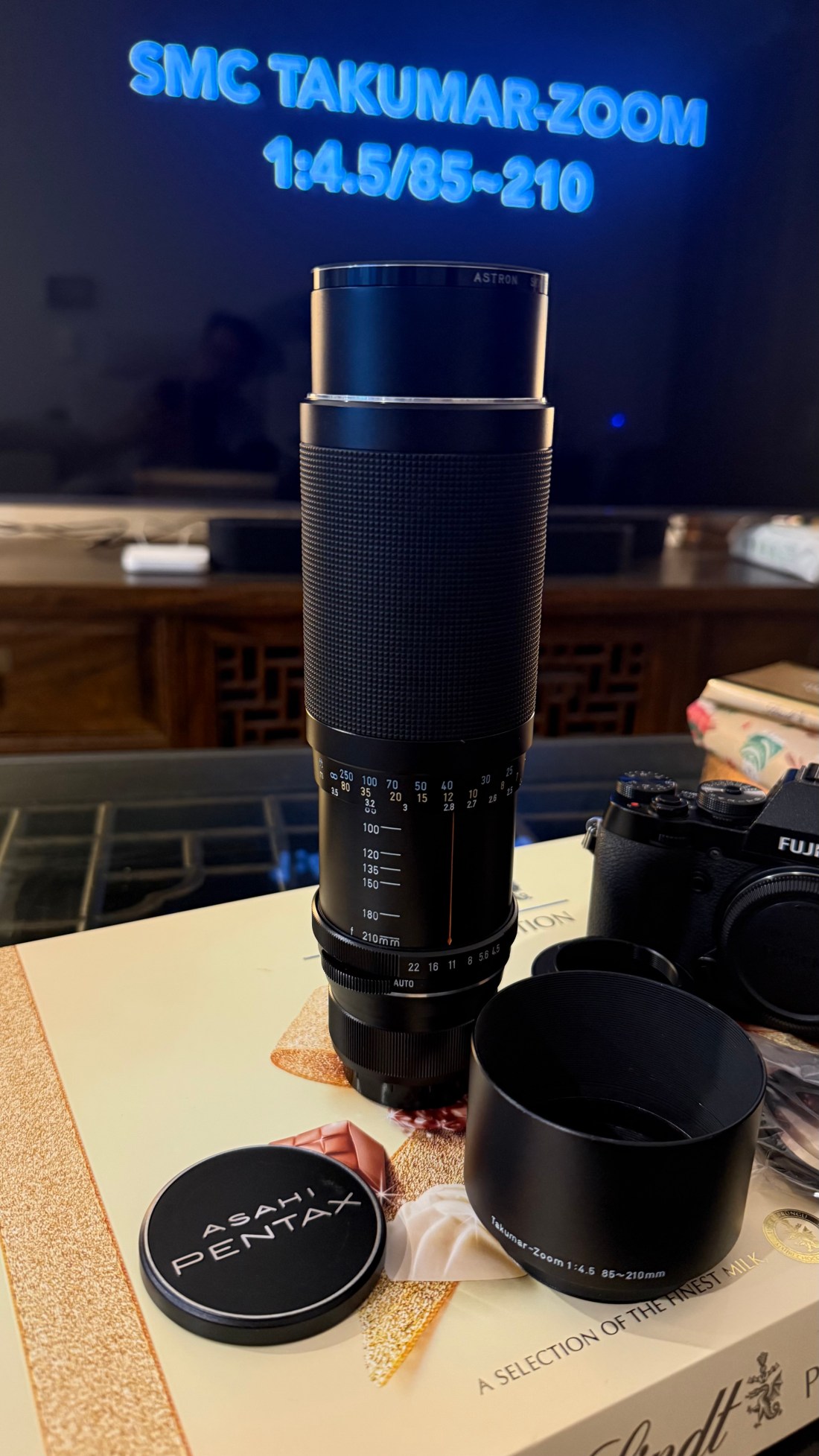
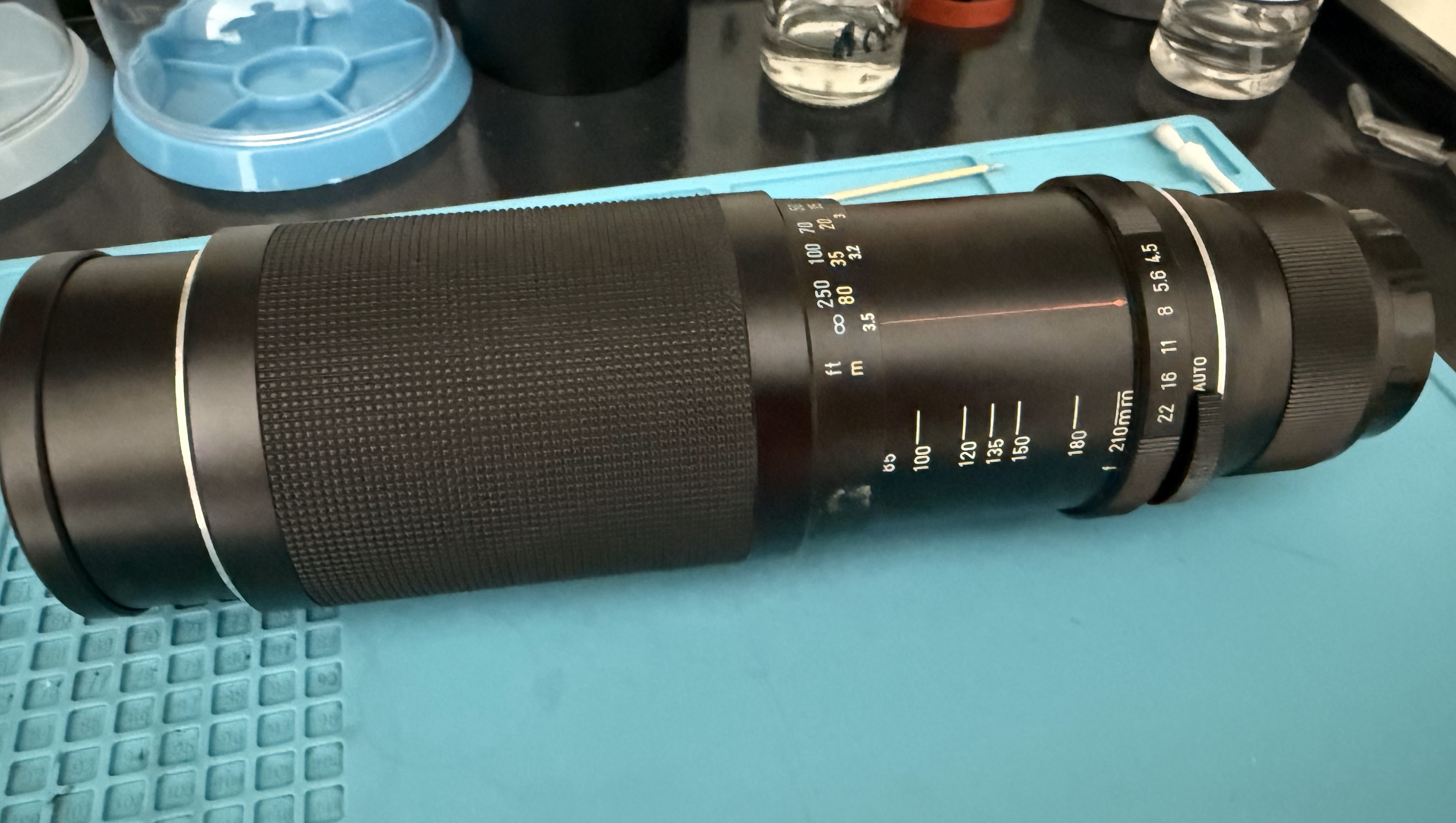
Disassembling and Cleaning the Pentax Takumar 85–210mm Zoom Lens

I picked up the Pentax Super-Multi-Coated Takumar 85–210mm f/4.5 zoom lens as part of a lot sale at a local antiques market. To my surprise, it was in pristine condition—barely a mark on it, as if it had spent most of its life tucked away rather than in use. The offer was too good to pass up, and the inclusion of this classic M42-mount lens felt like an unexpected bonus.

On closer inspection, though, I noticed a faint trace of fungus inside the lens elements. It wasn’t extensive and didn’t seem to affect image quality, but my inner perfectionist couldn’t let it slide. So, with a bit of free time over the holiday break, I decided to take on the challenge: disassemble the lens and give its optics a proper clean.

The only post I found online about disassembling this lens was a blog in Japanese. Thankfully, Google translated the webpage for me, although the instructions could use some improvement, especially regarding marking the lens for easy reassembly. Despite a few challenges during the disassembly process, I persevered, and after two tries, I finally managed to align the distance scale with the correct focus distances upon reassembly. This blog is here to help others with the same lens who wish to service it, sharing my journey and tips for a smoother experience!
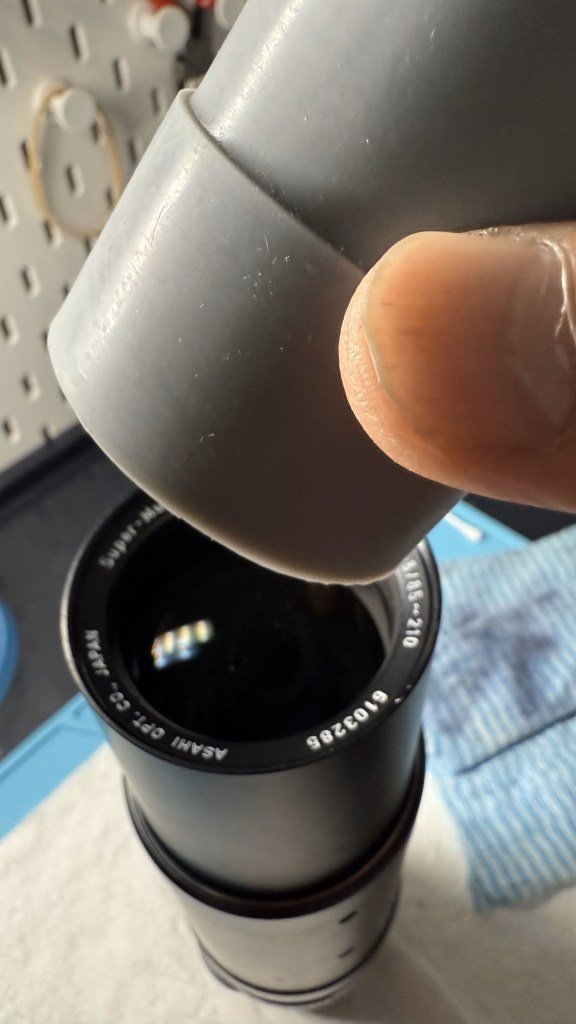
To dis-assemble, first remove the rubber lens zoom/focusing grip which is glued on the barrel. Be careful to use a blunt tool that doesn’t scratch the lens. Remove the residual glue for later re-gluing.

Set the lens at infinity focus, zoom at 210mm and aperture at f4.5. These will be your settings for re-assembly.

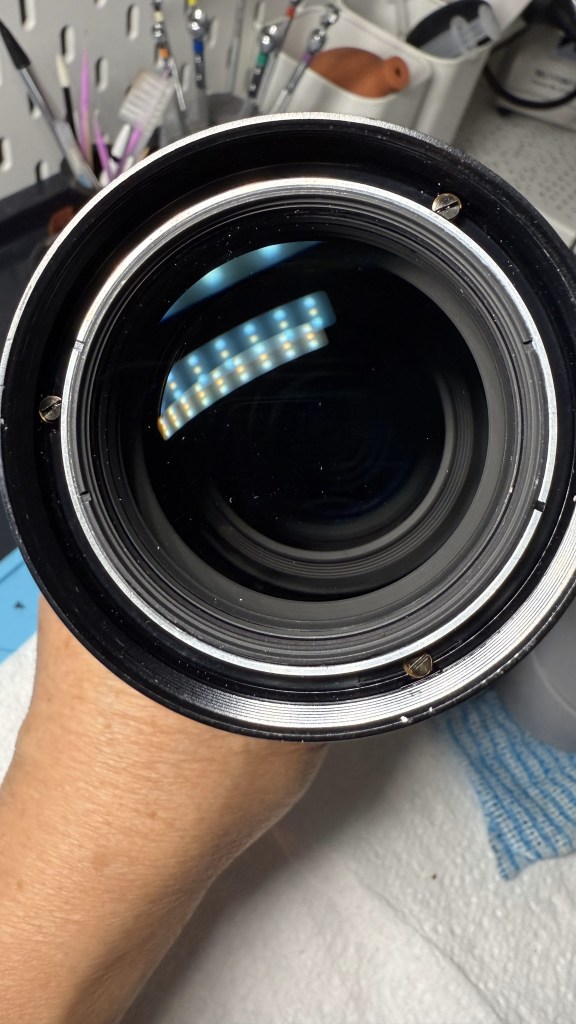
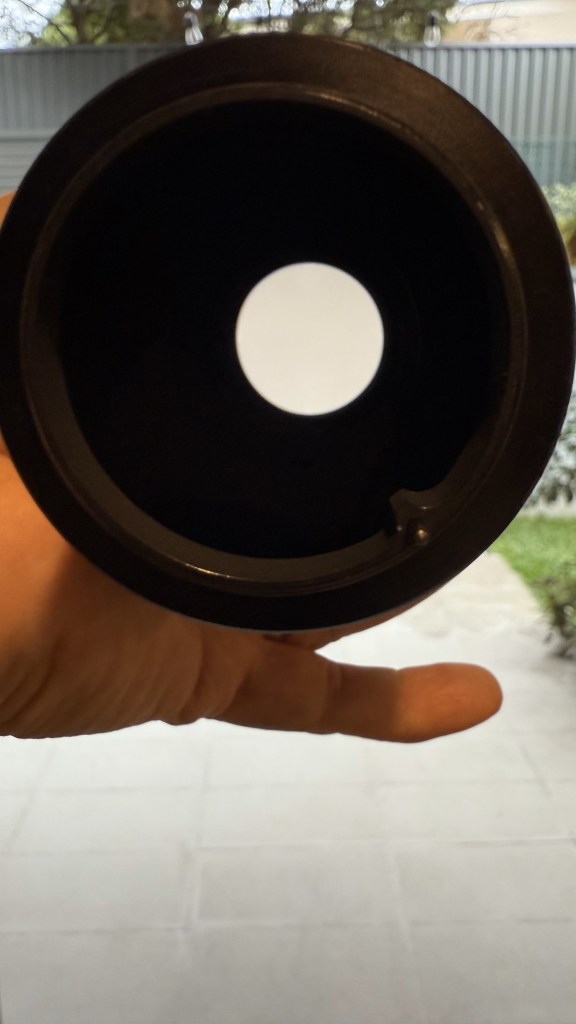
Once the lens is set at infinity, remove the lens name ring using a rubber grip tool to twist it anticlockwise out. Once this is removed, you can see 3 screws inside securing the front lens elements to the zoom/focusing barrel. These screws have a brass washer each. Remove those too. You will later use these screws to secure infinity focus with the front lens element group during re-assembly.

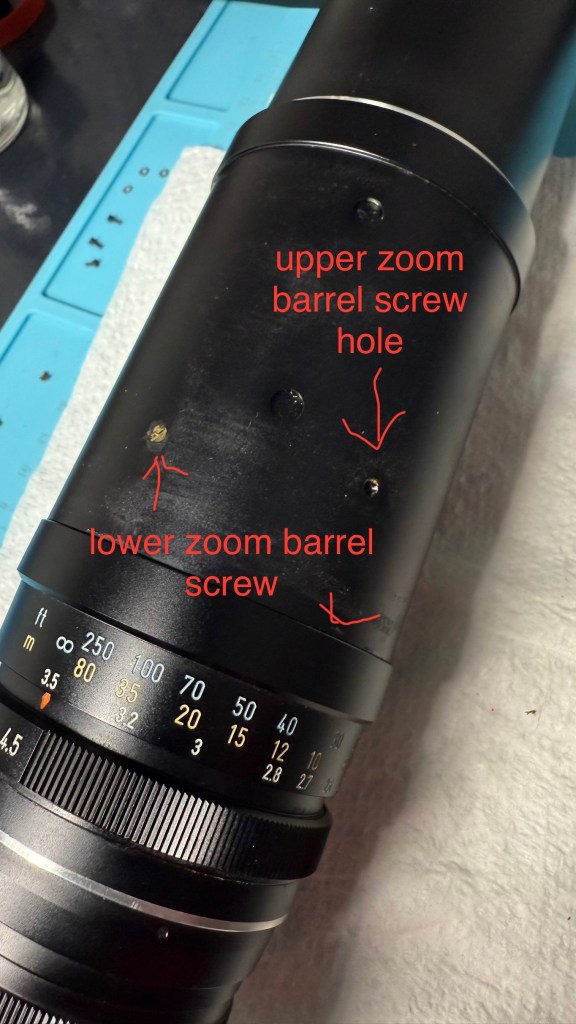
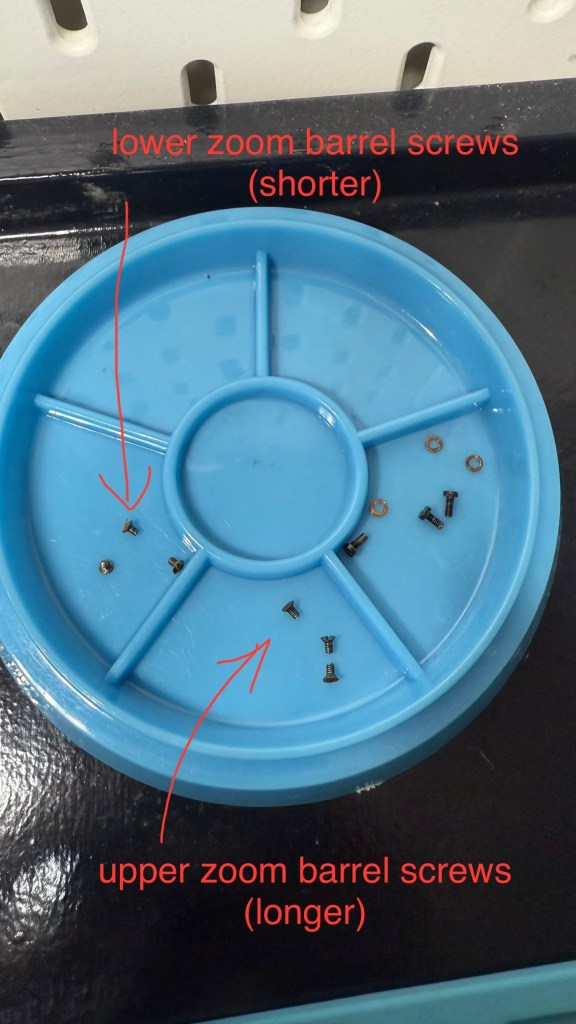
Turning your attention back to the zoom/focusing barrel again, you’ll notice 6 screws, one set of 3 closer to the front of the lens at an upper level and another set of 3 closer to the base of the lens at a lower level. First remove the 3 upper level screws. Keep them aside together, they are longer than the lower level screws. Once you have removed the 3 upper level screws, you can remove the barrel around the front lens elements by slowly pulling on it and turning the barrel at the same time. The front barrel will come out once the focusing stop screw comes free through a groove in the inner zoom tube. How the barrel with the focusing stop screw is reinserted during reassembly will determine if you are able to have a full throw of the focusing barrel or a limited throw as there are 2 grooves in the inner zoom tube to insert the focusing stop screw through. Only inserting through the correct groove will give the full throw for focusing.

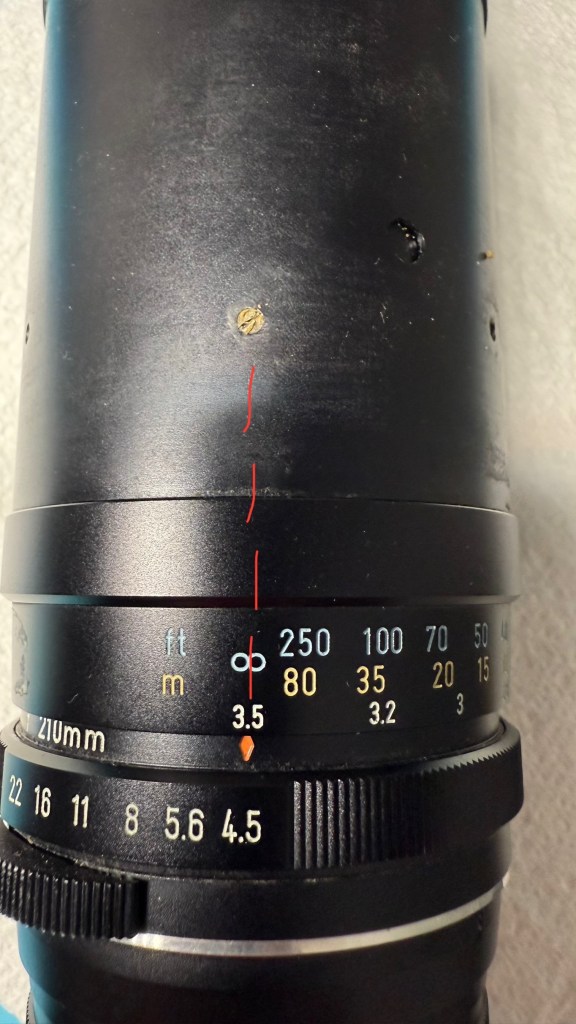
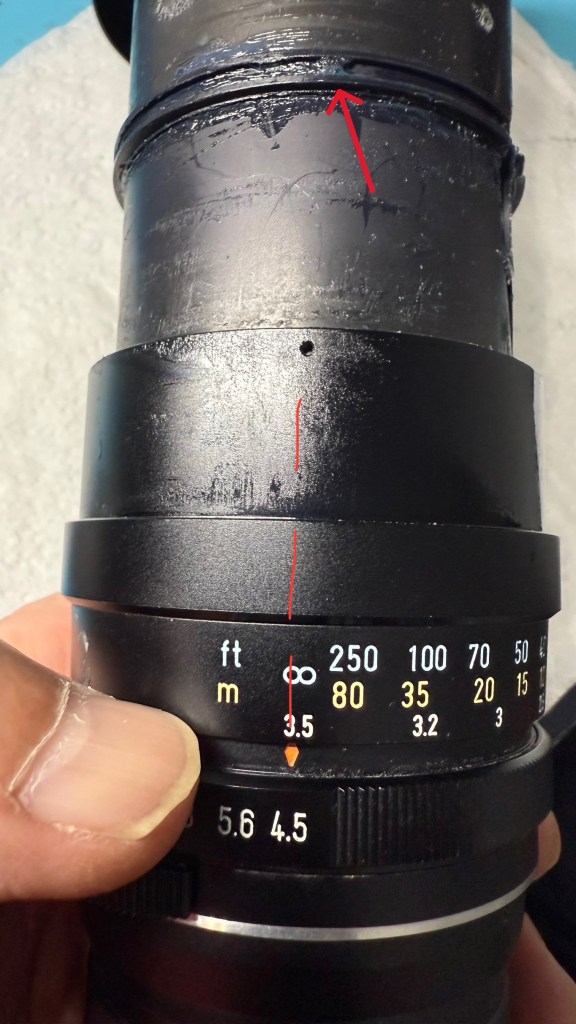
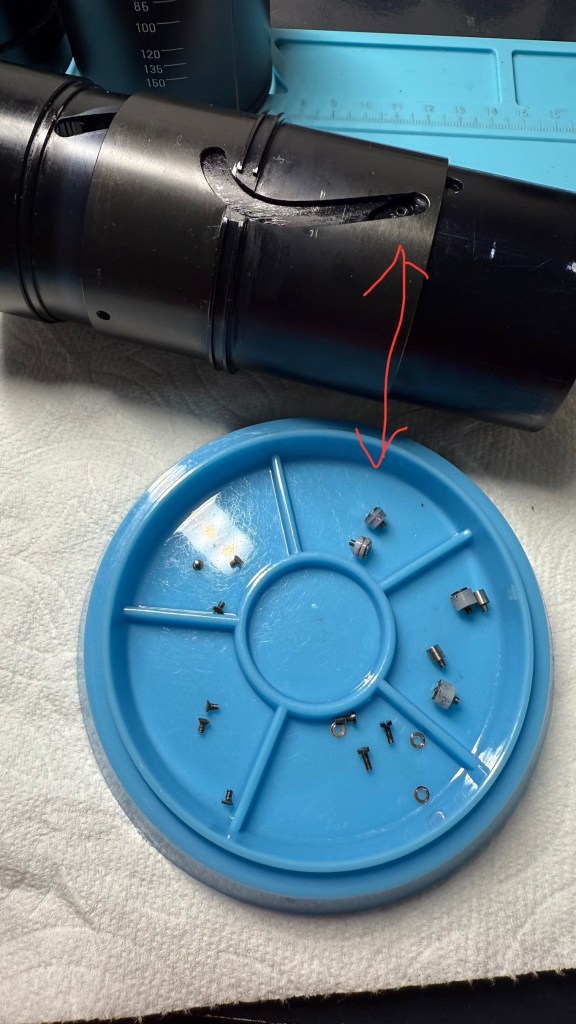
Once you remove the 3 lower zoom barrel screws, you will be able to separate the focusing distance scale barrel from the zoom/focusing barrel. At this stage you will be able to slide upwards and out the zoom/focusing barrel, revealing the inner zoom mechanism tubes (which are greased). To best work with the inner tubes, it is best to remove the grease and regrease later. Note the alignment of the focusing stop on the tube (red arrow) with the infinity mark. The stop should be aligned with infinity, otherwise you won’t be able to be able to get the distance scale aligned properly on re-assembly. I did not notice the focusing stop during initial dis-assembly because it was obscured by grease as in the picture on the left.

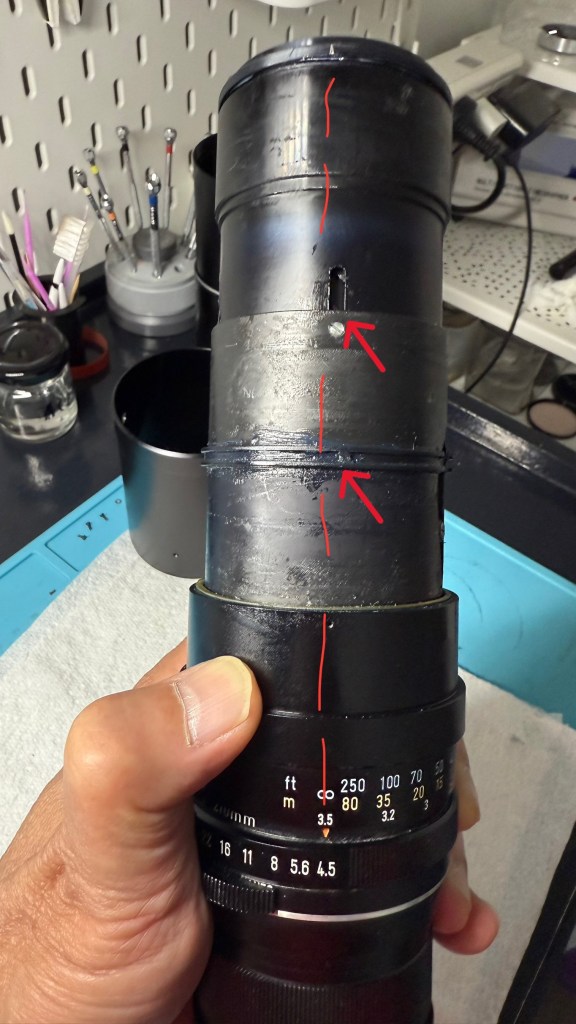
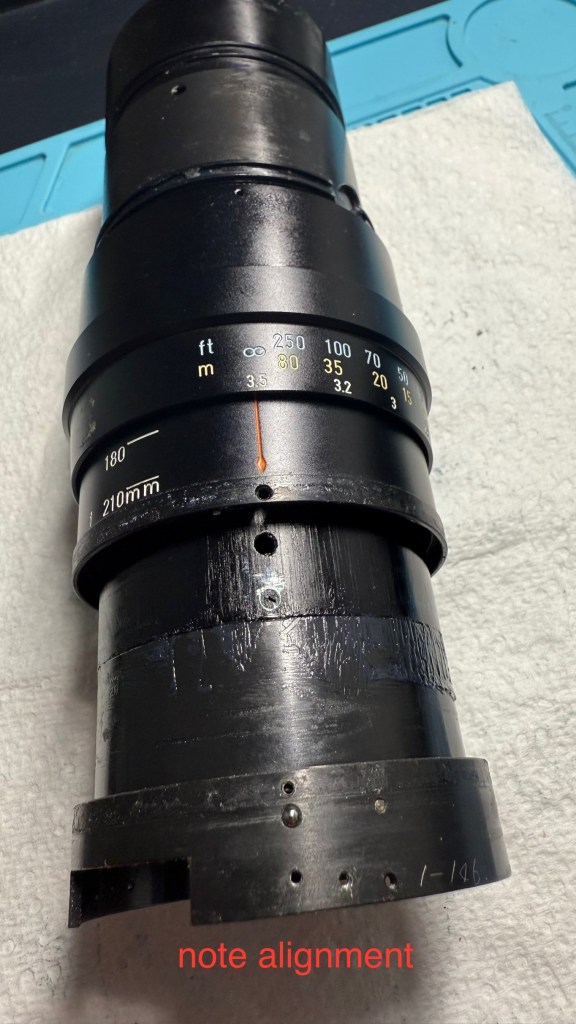
Note the alignment of the markings. This is the alignment for focus at infinity, zoom at 210mm and aperture at f4.5. Mark the position of the front element which was set for infinity focus. Note that the focus stop should be aligned. If it is not aligned, you won’t be able to get the distance scale correctly aligned properly once re-assembled. My mistake which I do not wish happen to anyone else.

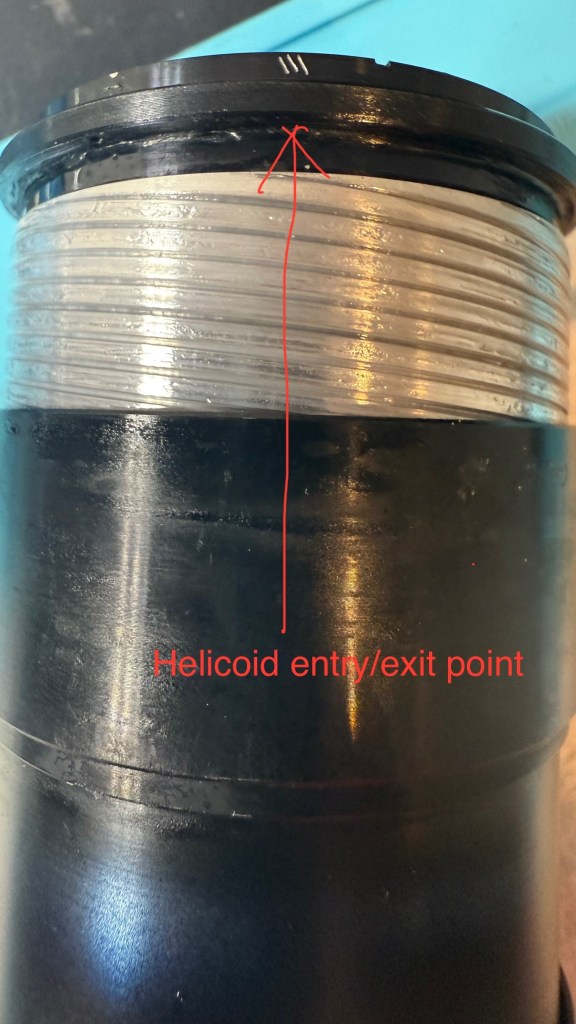
At this stage you can remove the front lens element helicoid by twisting clockwise. Mark the point of separation from barrel. In my case, the Pentax factory had already marked it with 3 linear scratches. Much angst at reassembly if you forget to do this.

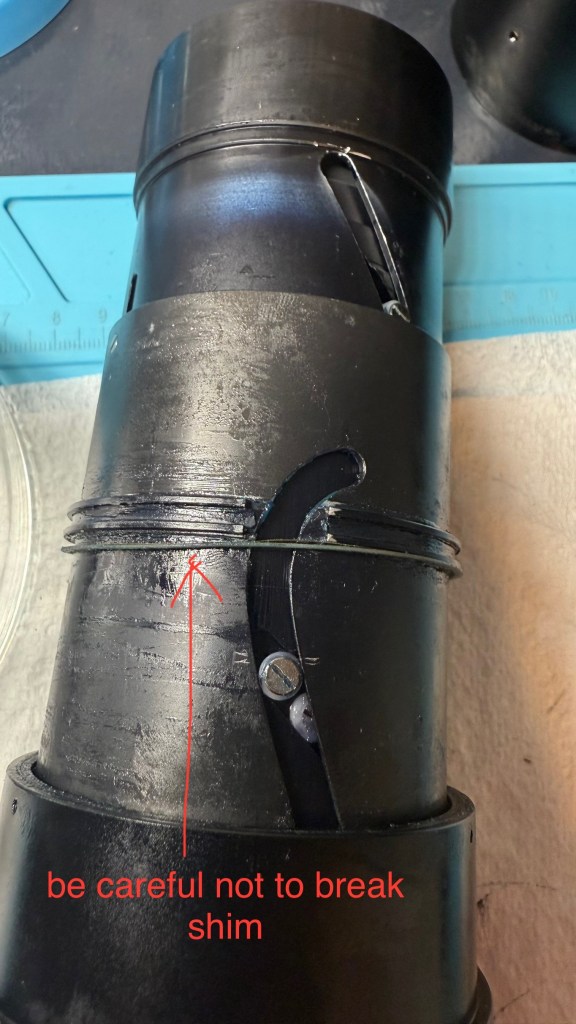
Also note the 2 shims (one brass and one plastic) on the distance scale barrel. These are easily deformed or broken.

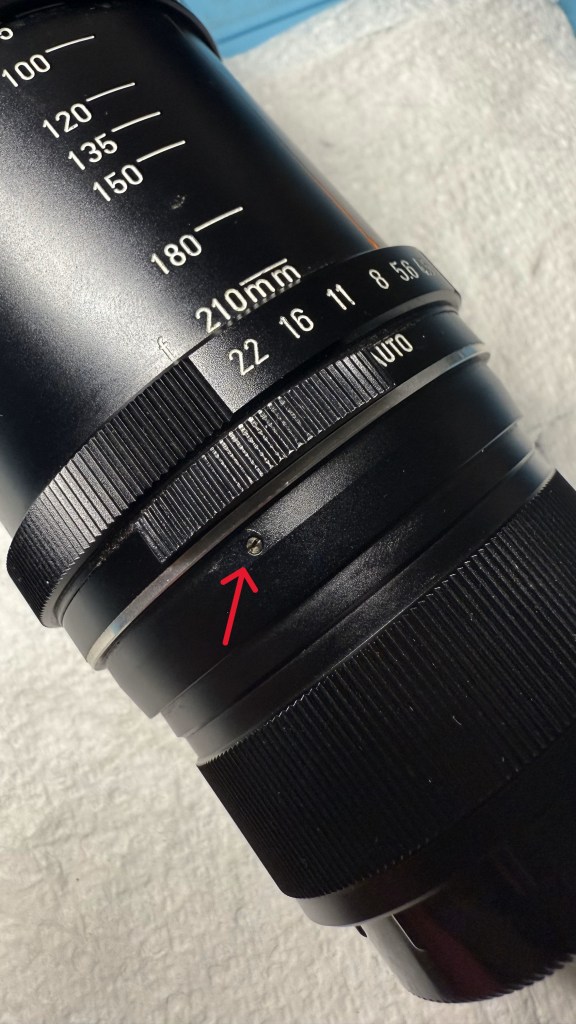
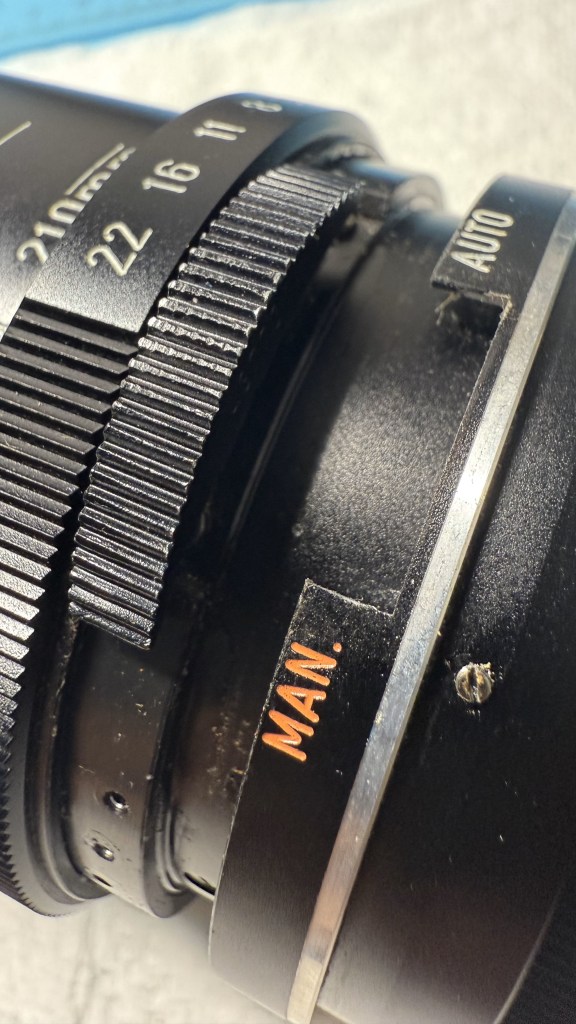
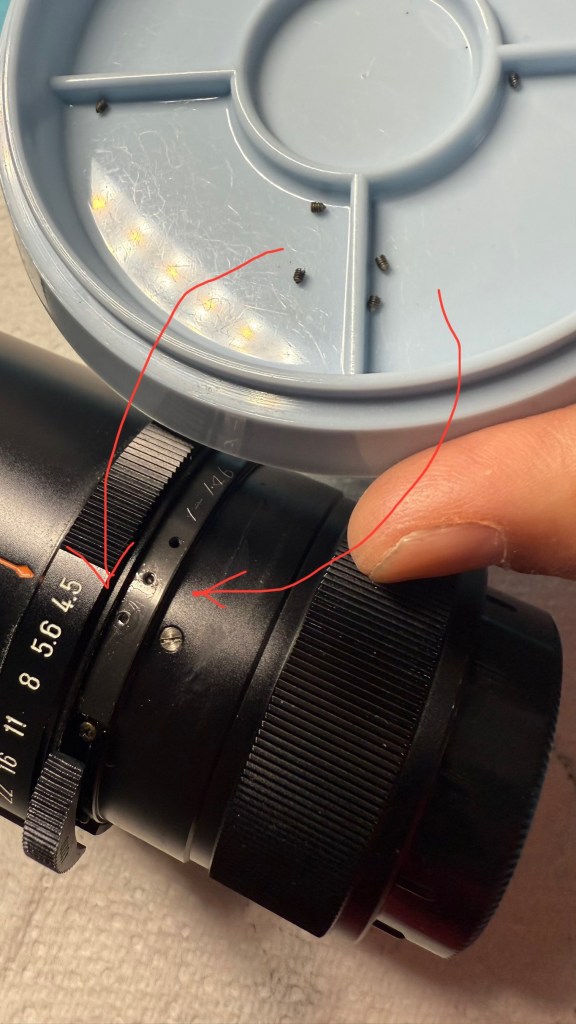
Once the front lens element is removed, you can turn your attention to the rear of the lens. Loosen the 3 holding screws for the aperture manual/auto indicator ring and remove the ring.

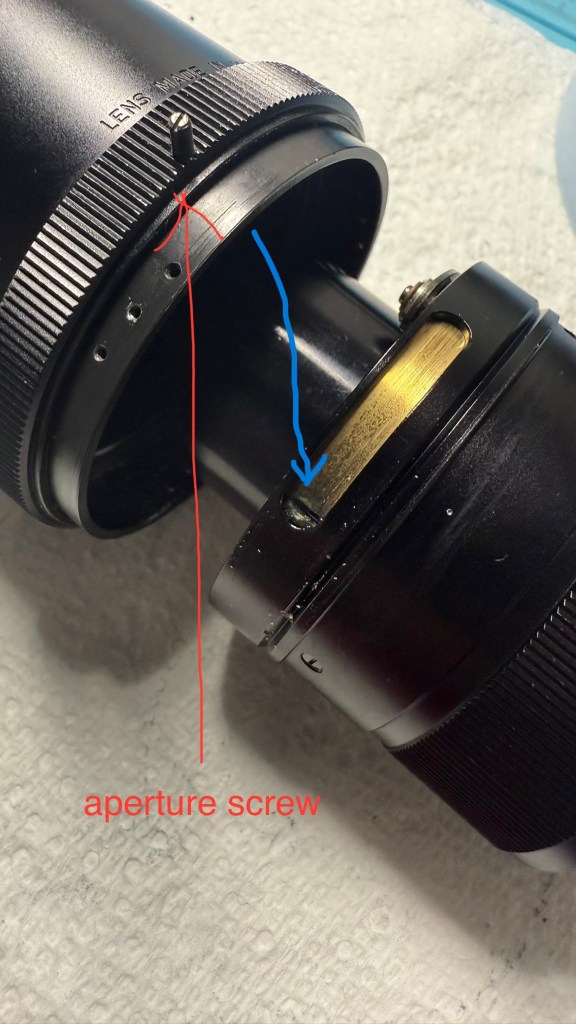
Next remove the six screws (in 2 sets) holding the aperture setting mechanism barrel. Note that the screws are slightly different in lengths. I separated them out accordingly. Also remove the aperture screw before you can separate out the aperture setting mechanism barrel.

Note that the aperture screw should fit into the groove in the brass section (blue arrow). This will turn the aperture mechanism to set the aperture. Note how the aperture prongs link up with each other to work the aperture blades located in the rear element lens group.

When re-assembling, turning the aperture screw in too deeply will cause the aperture setting ring to be too tight. So, turn to the correct depth to ensure smooth aperture ring rotation and set the screw with some lacquer.

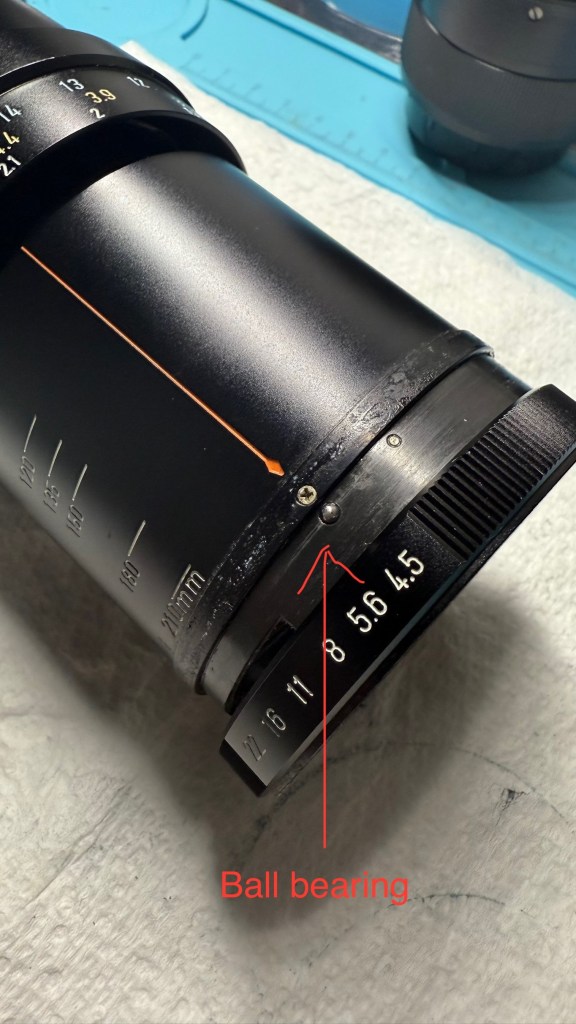
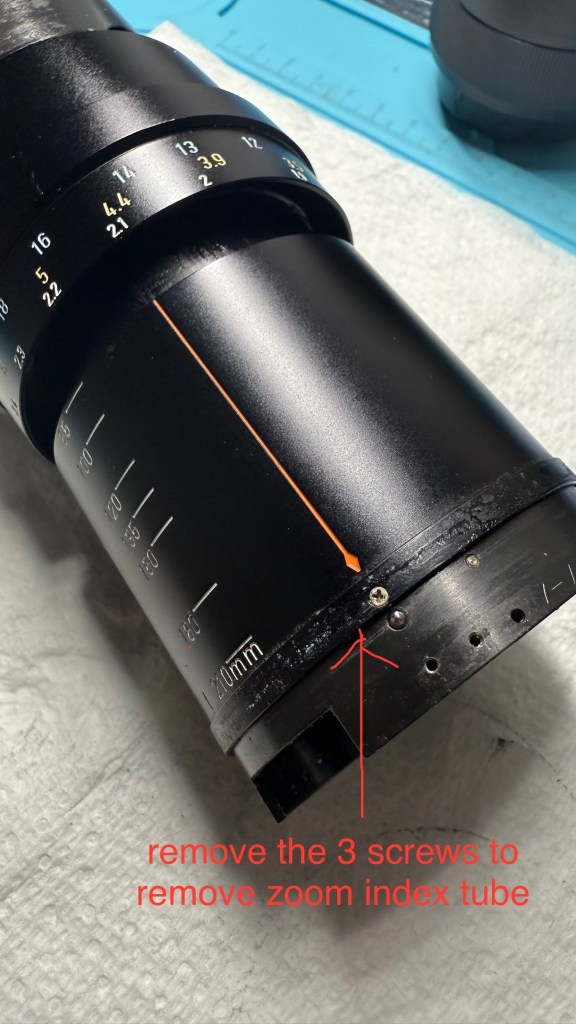
Next slowly ease out the aperture ring, making sure that the ball bearing does not fly into space. Remove the 3 screws to free the zoom index tube.

After moving the zoom index tube up, you will see another set of 3 screws which hold the rear element lens group and aperture housing in place. Note the alignment as you remove the rear element lens housing.

After the rear and front lens elements are removed, all the external lens tubes can be removed and you are left with the zoom mechanism tubes and zoom lens elements. Remove all the screws holding the zoom lens elements to separate out the pieces, taking care to note the lens orientation, where all the screws fit and how the tubes are aligned. This is where I made my mistake when re-assembling, as I secured the outer tube 180 degrees wrongly and the focusing stop screws were not aligned properly causing misalignment with the distance scale toward the end of re-assembly.

Re-assembly is just putting everything together methodically and carefully in reverse order, taking time to check alignment at each step.

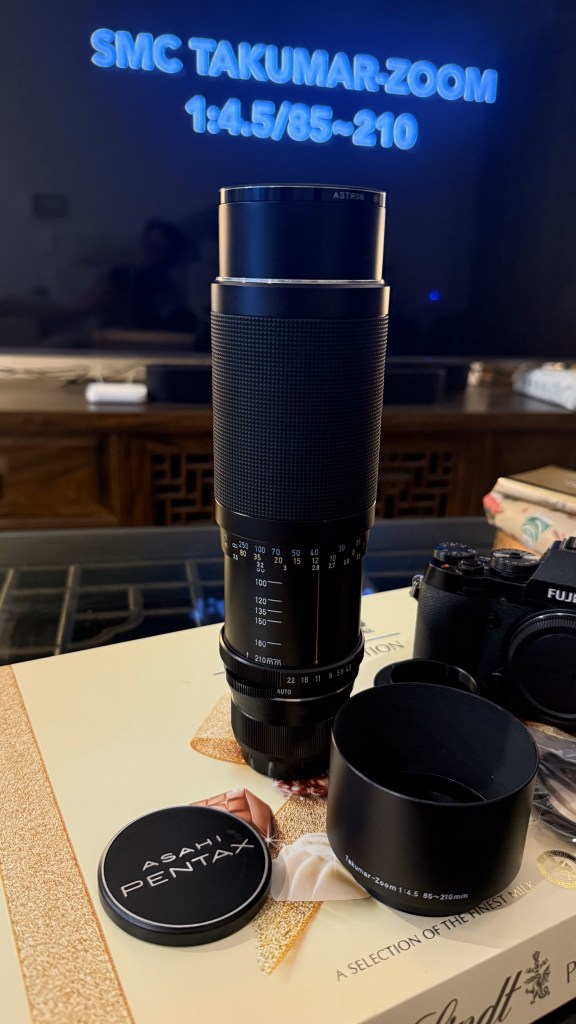
The Pentax Super-Multi-Coated Takumar all nice and clean. This one came with its original case, lens hood, close-up filter, lens cap and rear cap. A good collector’s item.

Thanks for visiting.

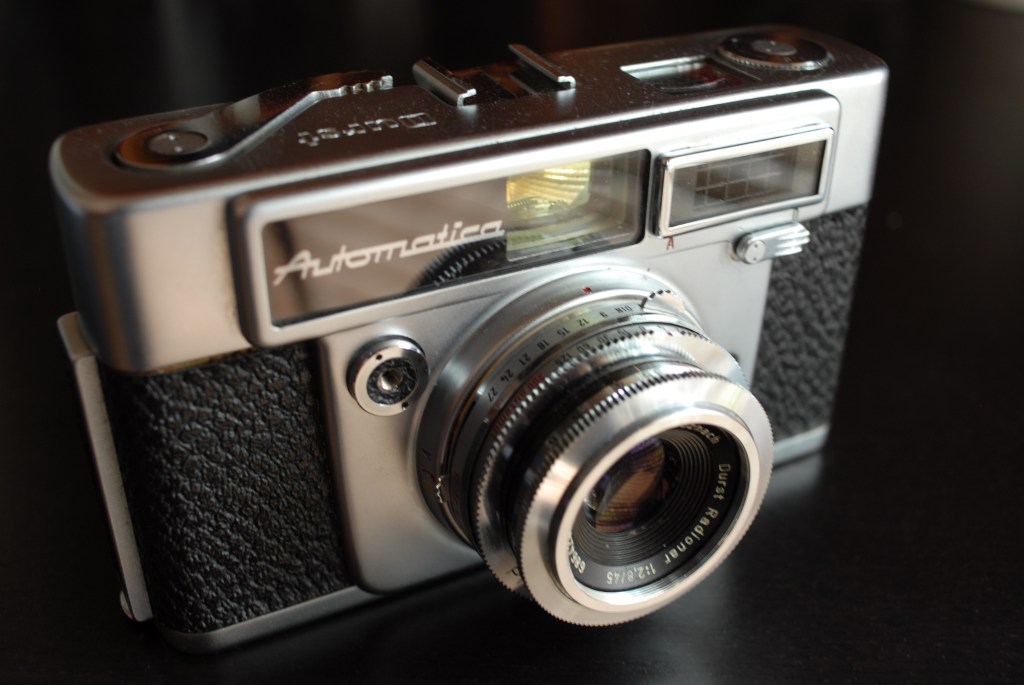
Photos from the Durst Automatica in 2023

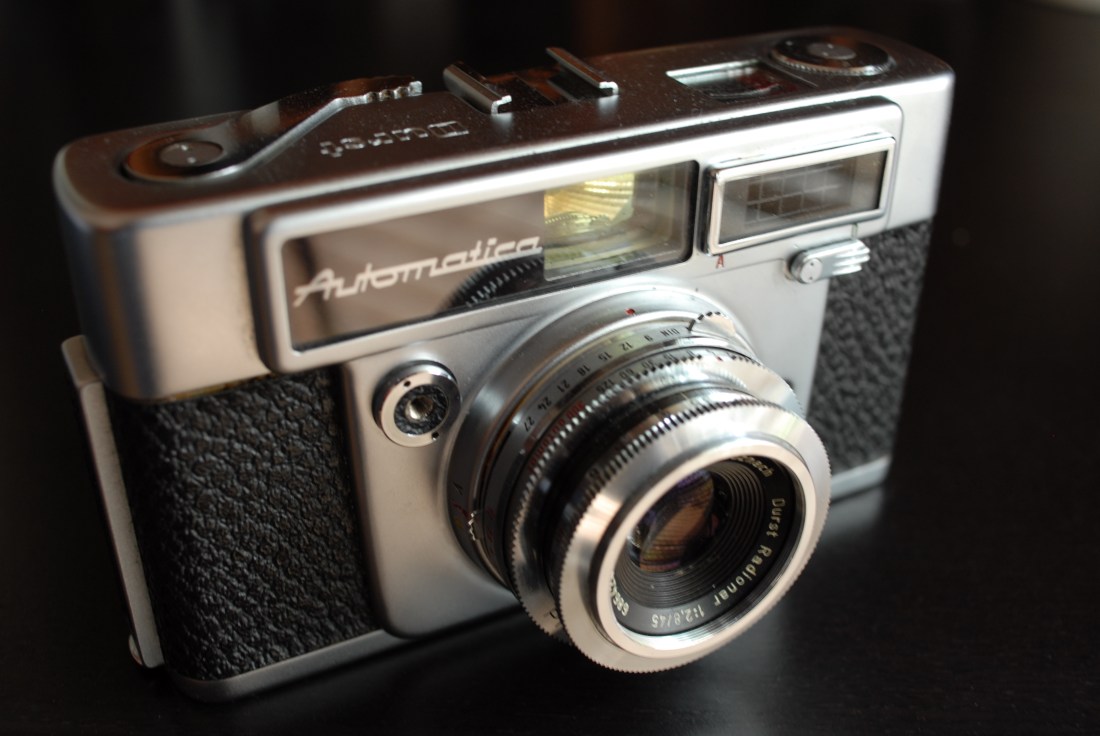
Much has been said about the Durst Automatica camera. When I bought mine at a flea market in 2008 I thought it was an unusual brand rangefinder. I knew Durst made copiers but not cameras. Later I found out it was in fact a viewfinder camera. It had no rangefinder built in. You had to guess the subject distance and use the distance scale or use zone focusing.

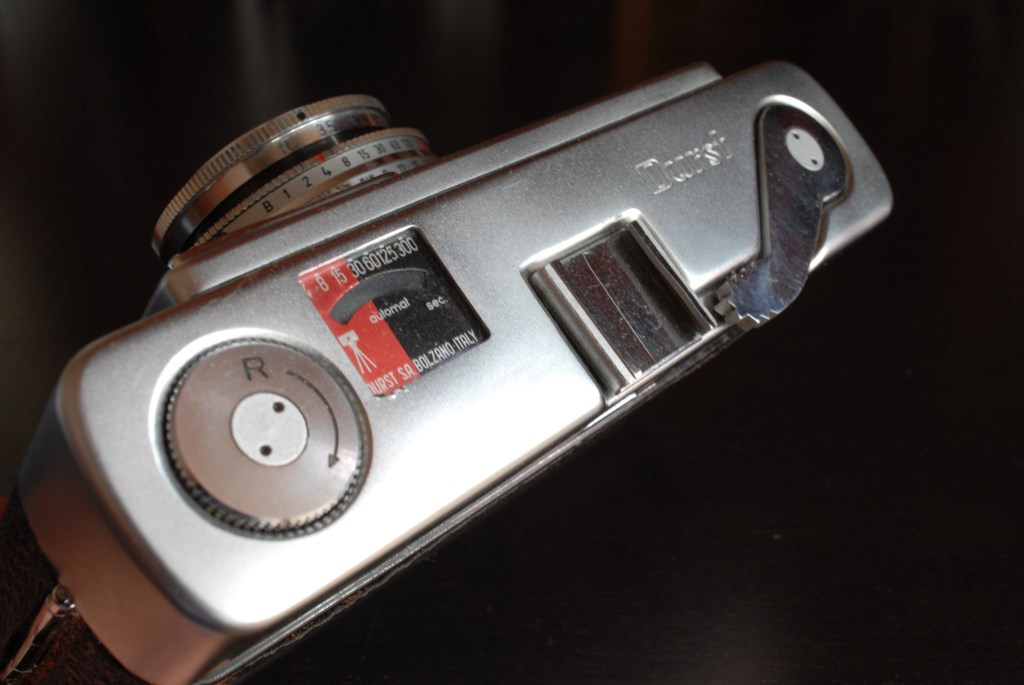
But it was a such a cool camera from the 1960’s. Nice design by the Italian makers. The advance lever sat flushed with the top plate of the camera giving the top plate a clean flat top. During the film advance motion, the lever moves up above the top plate to enable it to rotate fully to advance to film. The film rewind knob on the other side of the top plate also sat flushed and pops up when a button at the bottom plate is pressed to release it.

The shutter release button sits in the front plate and is driven by a pneumatic mechanism which gives it a slightly different feel and sound from other mechanical shutter release mechanisms.

Mine came stored in its original case and was in very good condition. I have never used it before to take photos until now in 2023. The Prontor-SVS leaf shutter seems to fire at the correct speeds except for the slower speeds 1/2 and 1 sec where it seems a bit more sticky.

By the way the camera has a very unusual aperture priority system (probably one of the first aperture priority systems in the world). The f-stop used for aperture priority mode is dependent on the ISO of the film that you use. For example, if you use an ISO 400 film, the only f-stop you can use for aperture priority is f22, f16 with ISO 200, f11 with ISO 100 and so on. This is because both the aperture priority ISO setting and aperture priority f-stops are on the same ring of the lens. Turning the ring to set the ISO of the film used for aperture priority mode will set the f-stop at the same time.

The aperture priority AE is set by turning the lever in the front of the camera from O to A (in red) and setting the shutter speed at its max 1/300s (also in red). Once aperture priority mode is set, the camera will automatically choose the shutter speed using the built in selenium light meter. If you wish to use manual exposure by manually turning the f-stop and shutter speed rings on the lens, you simply just set the lever from A to O.

Loaded up with expired Walgreens ISO 100 colour film, I set out to the Eastern suburbs of Sydney, Australia on a fine winter’s day to test run the Durst Automatica. Is the selenium meter still working? I don’t know but since it has been kept in its original leather case, I am keeping my fingers crossed!

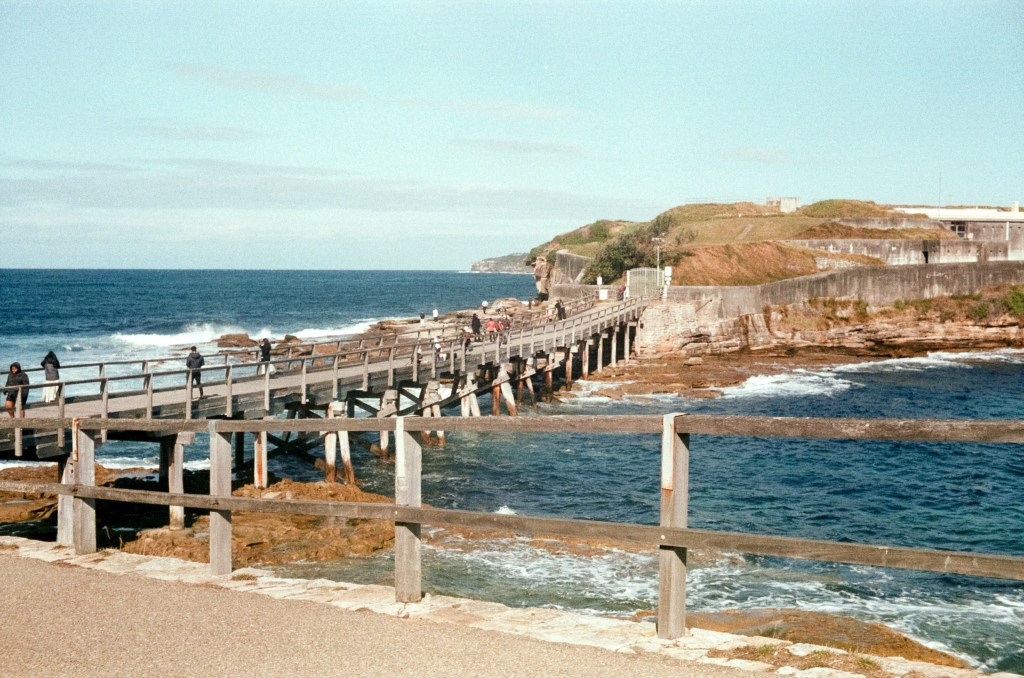
I drove all the way to the southern-most tip of the Eastern suburbs to La Perouse and parked at the Bear Island Fort parking area. This is where they filmed the end action scene of Mission Impossible II. Setting the camera on AE mode, I shot everything on f11 (ISO 100). I guessed as it was a bright sunny day, shooting at f11 would be safe even if the selenium meter wasn’t working.

This camera was built with zone focussing in mind. The focus ring had a click stop at 10 ft which was the average distance for group pictures. So I either left the focus ring at 10 ft or focused to near infinity as needed. You know that you are at 10 ft focus distance without looking because of the click stop. At f11, most subjects in my photos were in focus. I was pleased with the sharpness of the Schneider-Kreuznach Radionar 45mm f/2.8 lens on the Automatica.

Bear Island Fort bridge where Tom Cruise chased after the baddies on his motorbike

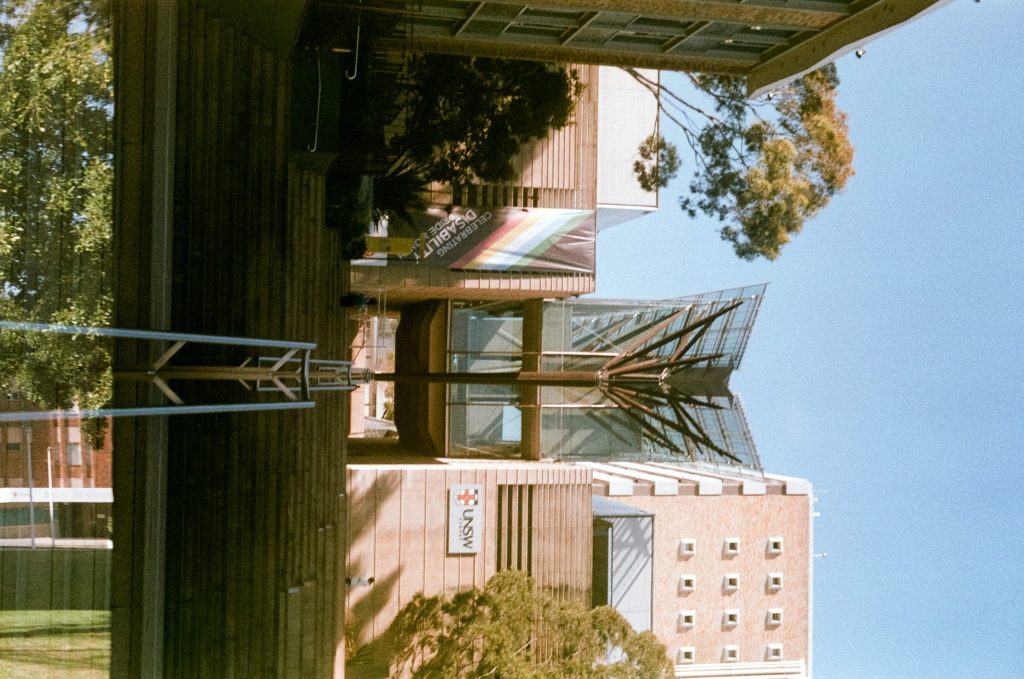
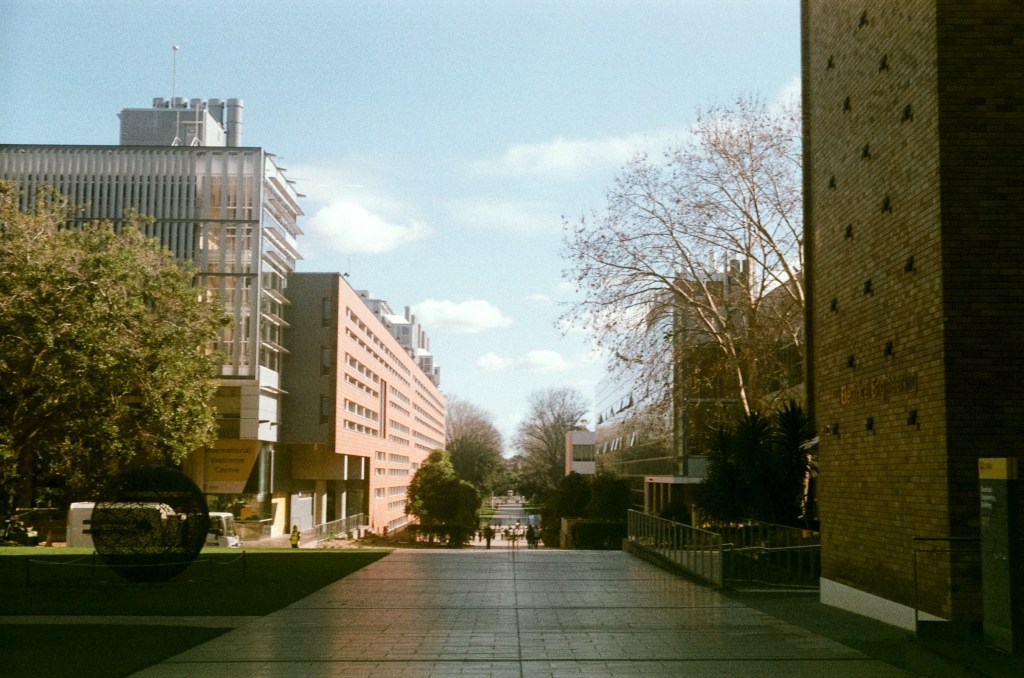
University of New South Wales at the Eastern suburb of Kensington.

I think it was me not fully advancing the advance lever of the camera – there were a couple of pictures that were double exposed at the border between each frame due to the film not advancing fully by 1 full frame when the film was advanced. See the adjacent borders of the pictures above.

When I tried to rewind the film after taking the last photo, I could feel a lot of resistance trying to rewind the film. After trying to use some force to rewind the film, I felt a sudden give. I knew something had given in the film chamber. Not risking exposing the film while outside, I took the camera back to the darkroom at home before opening up the camera back. The film had broken away from the film canister and I had to manually rewind the film from the camera spool in the dark.

All in all, I was pretty pleased with the performance of this vintage Durst Automatica camera.

Here is a nice write-up of the Durst Automatica camera by Mike Eckman: https://mikeeckman.com/2023/04/durst-automatica-1956/

Thanks for reading.

Olympus Trip 35

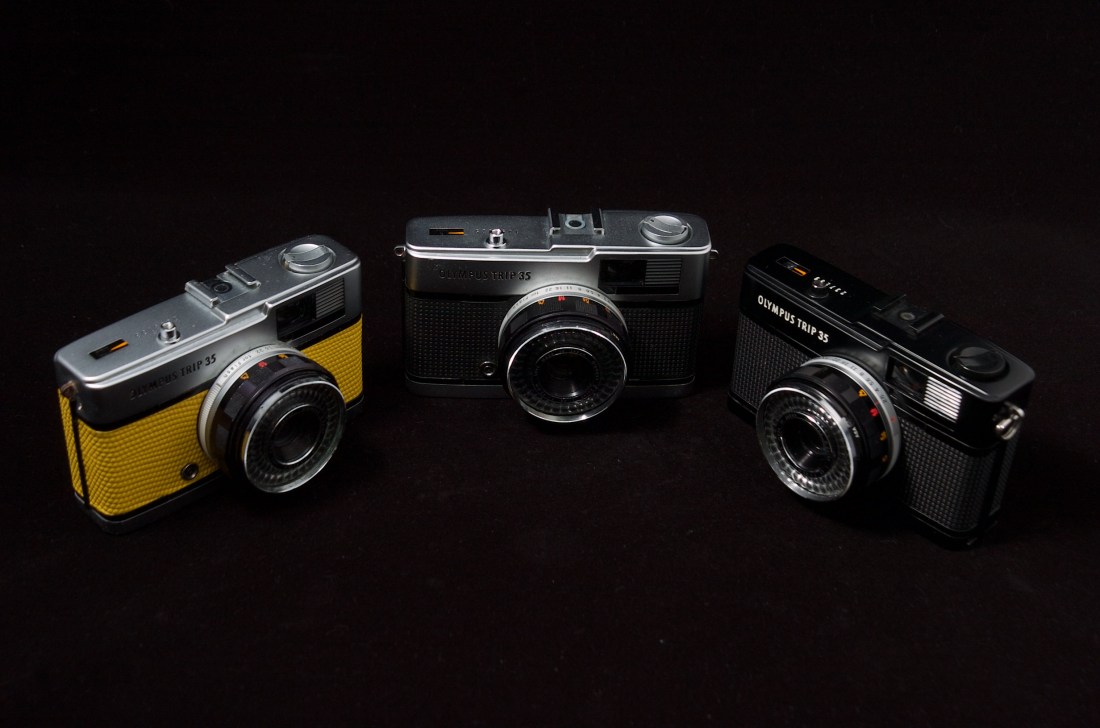
Earlier model of the Olympus Trip 35 with the chrome shutter button (left) and later model made after June 1978 with the black button (right)

The Olympus Trip 35 was an extremely popular camera. Over 10 million units were sold from 1967 to 1984. It is a fully automatic 35mm camera and simple to use but ingenious design. With the aperture ring set to “A”, the camera operates as a programmed automatic. There are only two shutter speeds, 1/40 and 1/200 of a second. The combination of aperture and shutter speed that the exposure mechanism chooses depends on the amount of light available – 1/40 in low light situations and 1/200 when there is bright light. The camera will refuse to fire if the light is too low even for a 1/40 sec, f2.8 exposure. A red plastic flag will also appear simultaneously in the viewfinder in those situations. Its simplicity made it popular with the masses of people who just wanted to point the camera and shoot without worrying about exposure settings.

The 40mm f/2.8 Zuiko lens that the Trip packs has a reputation for being extremely sharp, even in the corners. Coupled with its small, light weight, inconspicuous design, makes the Olympus Trip 35 an excellent street photography camera.

Over the years, I’ve acquired several Olympus Trips of varying conditions often bundled with other old cameras that I wanted to buy. The chrome version of the Olympus Trip 35 are more readily attainable and can generally be acquired for cheap. The black Olympus Trip 35’s are rarer, making these more desirable among collectors.

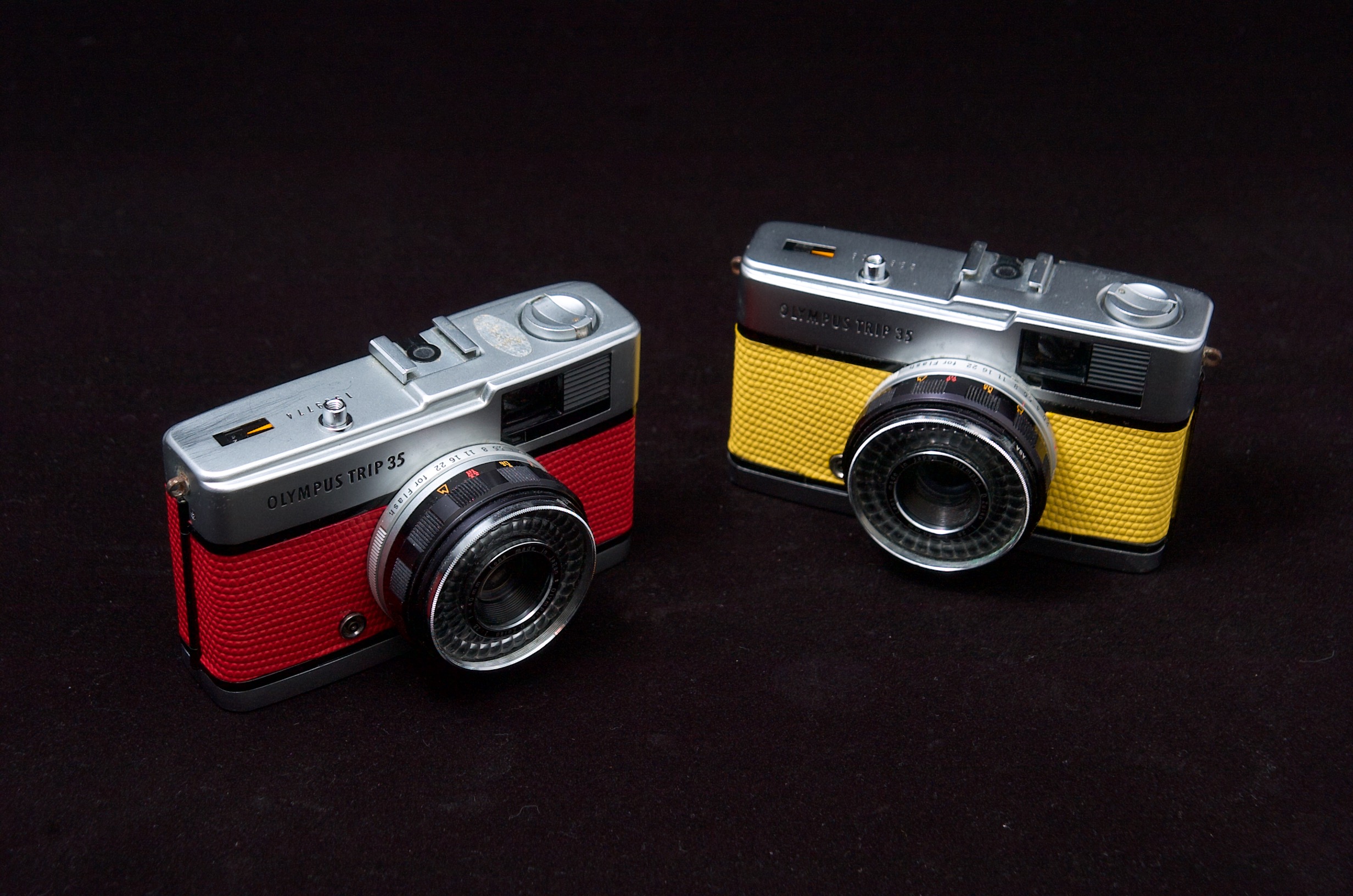
A couple of mine had been neglected and suffered from minor corrosion and deterioration. The grey-black plastic covering of the Trip is fairly durable and protects the main body from further damage however suffers from wear as a result. They are also easily removed and replaced. These can then be used as templates for new “skins” for the Olympus Trip. If you are not good with your hands, Aki-Asahi Camera Coverings offer reasonably priced coverings for the Olympus Trip 35 as well as other camera makes. As these already have adhesive backing, you don’t have to mess around with adhesives/glue and can easily just put them on. I replaced mine with Aki-Asahi coverings and they now have a new lease of life!

Red and yellow lizard embossed (cowhide) leatherettes from Aki-Asahi Camera Coverings

Fruitful day at the Flea-Market

This weekend’s trip to the flea-market netted 4 nice little pieces of photographic equipment.

It was a fairly large flea market located in a multi-level car park. My wife seemed to be finding more things to her liking than I was with used cameras. I was almost resigned to going home without anything, when at the final level of the flea-market at the top of the carpark, someone was selling old photographic prints and mounted photographic slides. Other items strewn around the table included some really junky old cameras from the 70’s and 80’s.

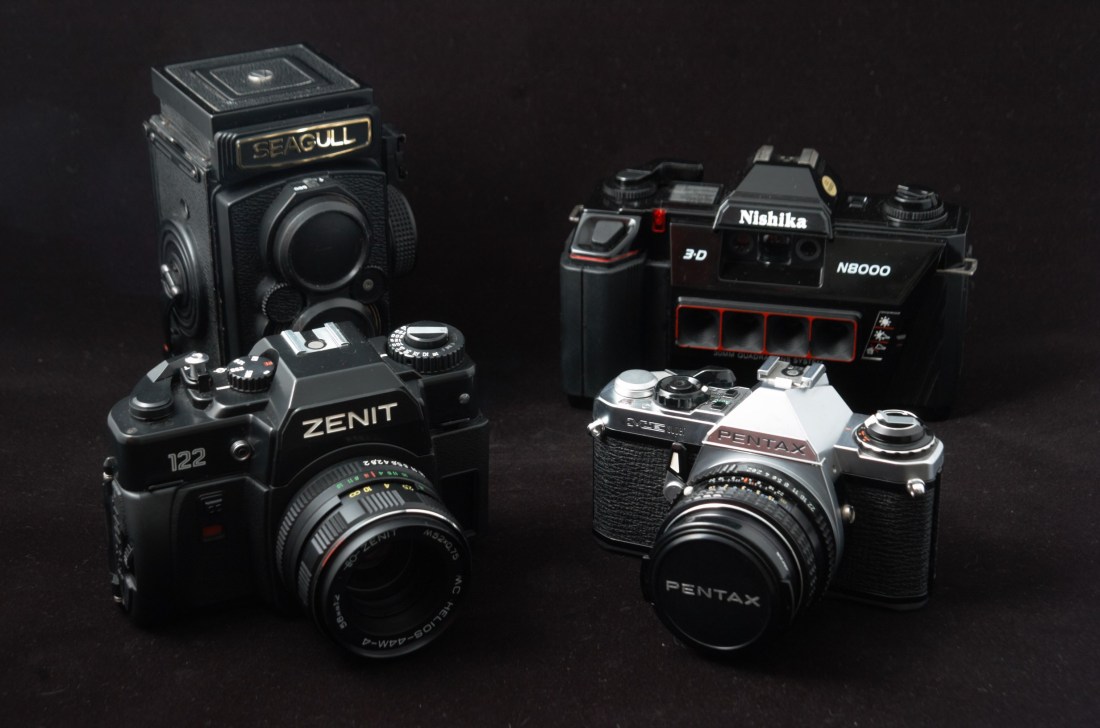
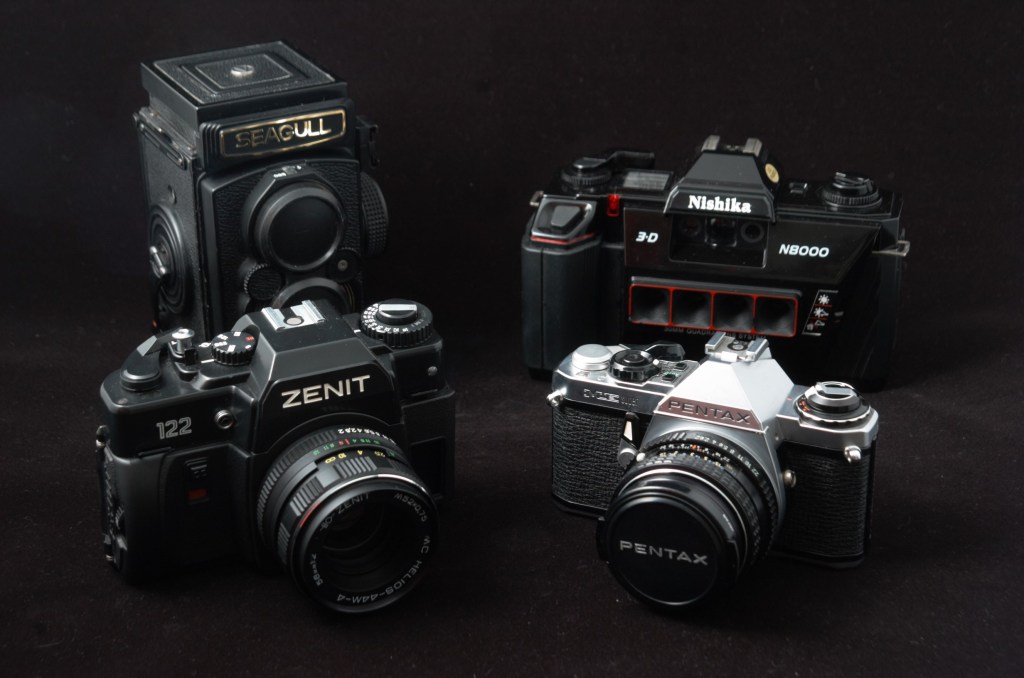
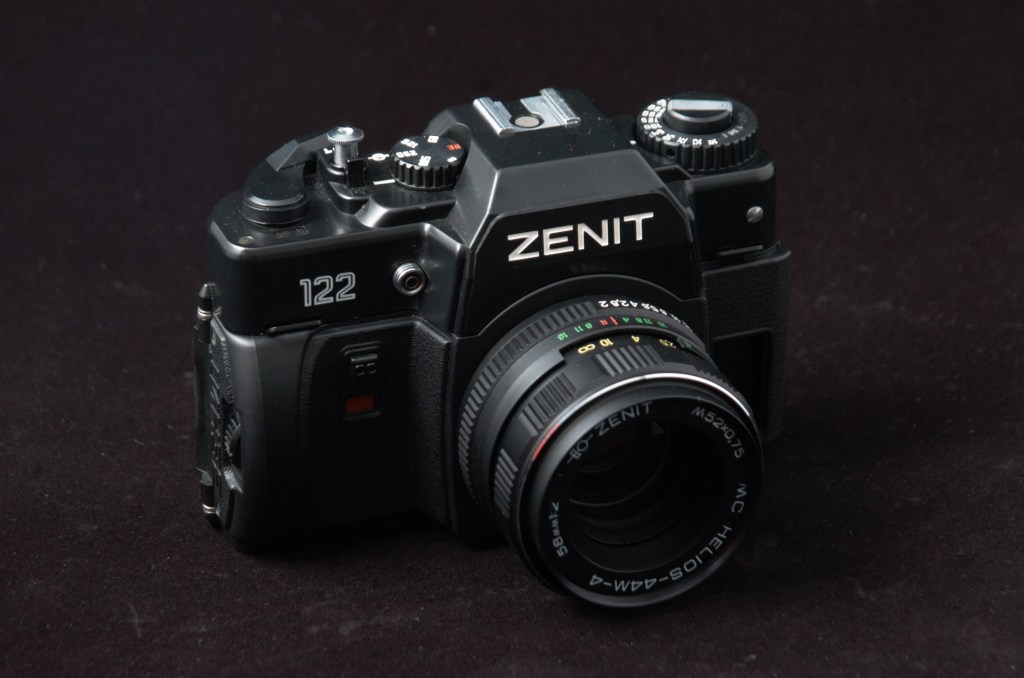
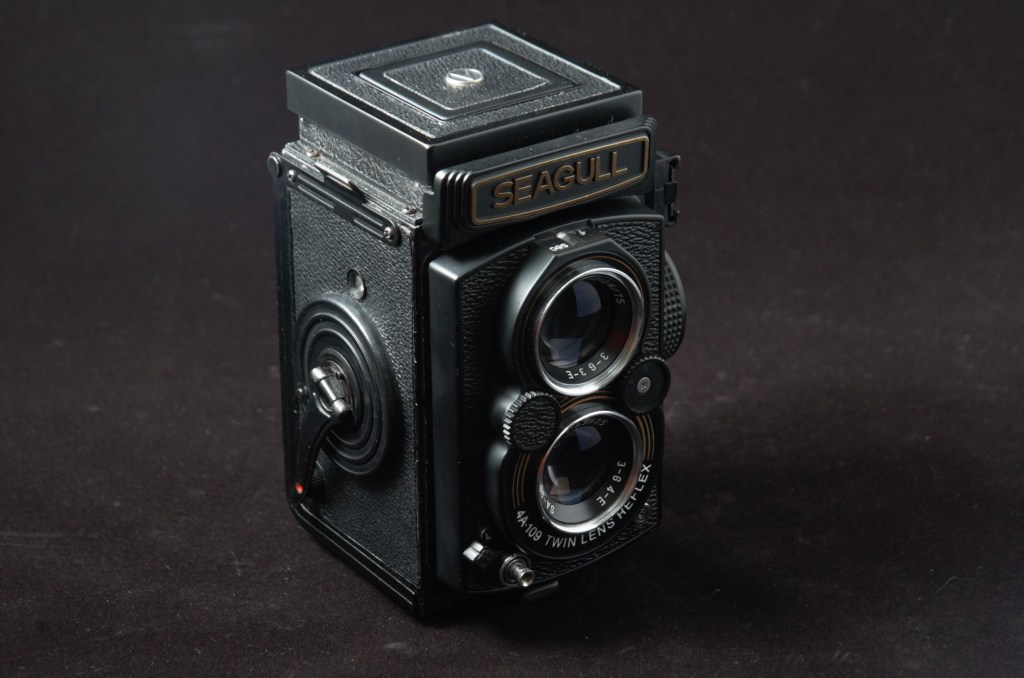
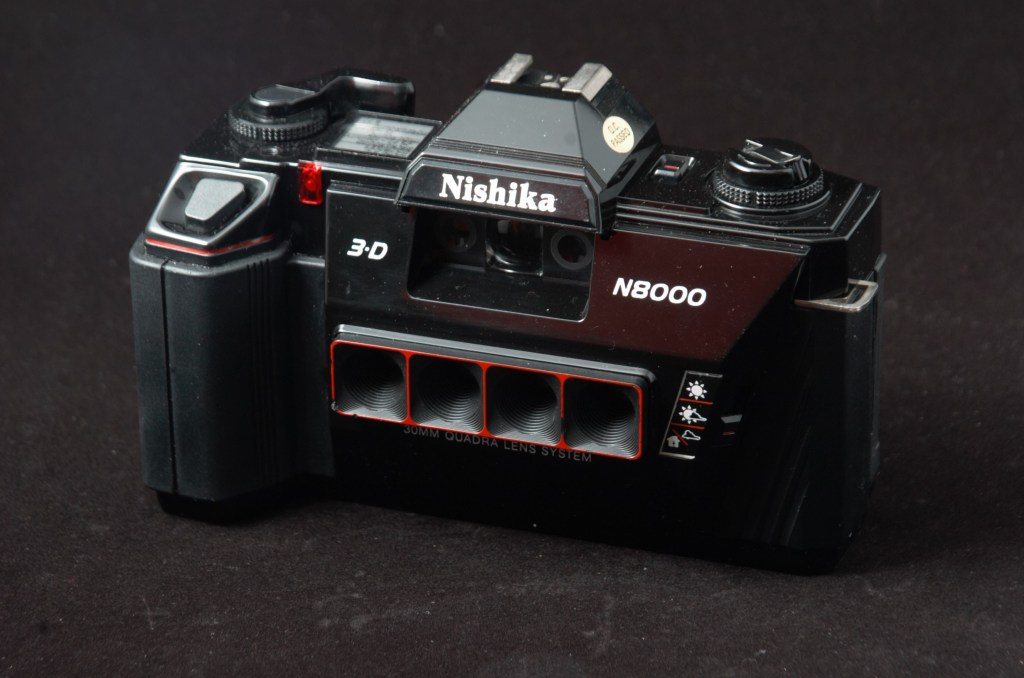
Well, junky to most people but interesting to others. They were a plasticky Russian Zenit 122 SLR with a 58mm f2 lens mounted on it, a Pentax ME super SLR with a SMC Pentax-M 50mm f2 lens on it, a Chinese Seagull 4A-109 TLR and finally a super cheesy plastic Nishika N8000 camera. Lucky for me the other person rummaging through the stuff on the table was not interested in these Russian, Chinese cameras. The only camera there with some quality was the old Pentax ME. The Nishika sounded Japanese but it was made in China and marketed by a company based in Nevada!

Why were these interesting to me?

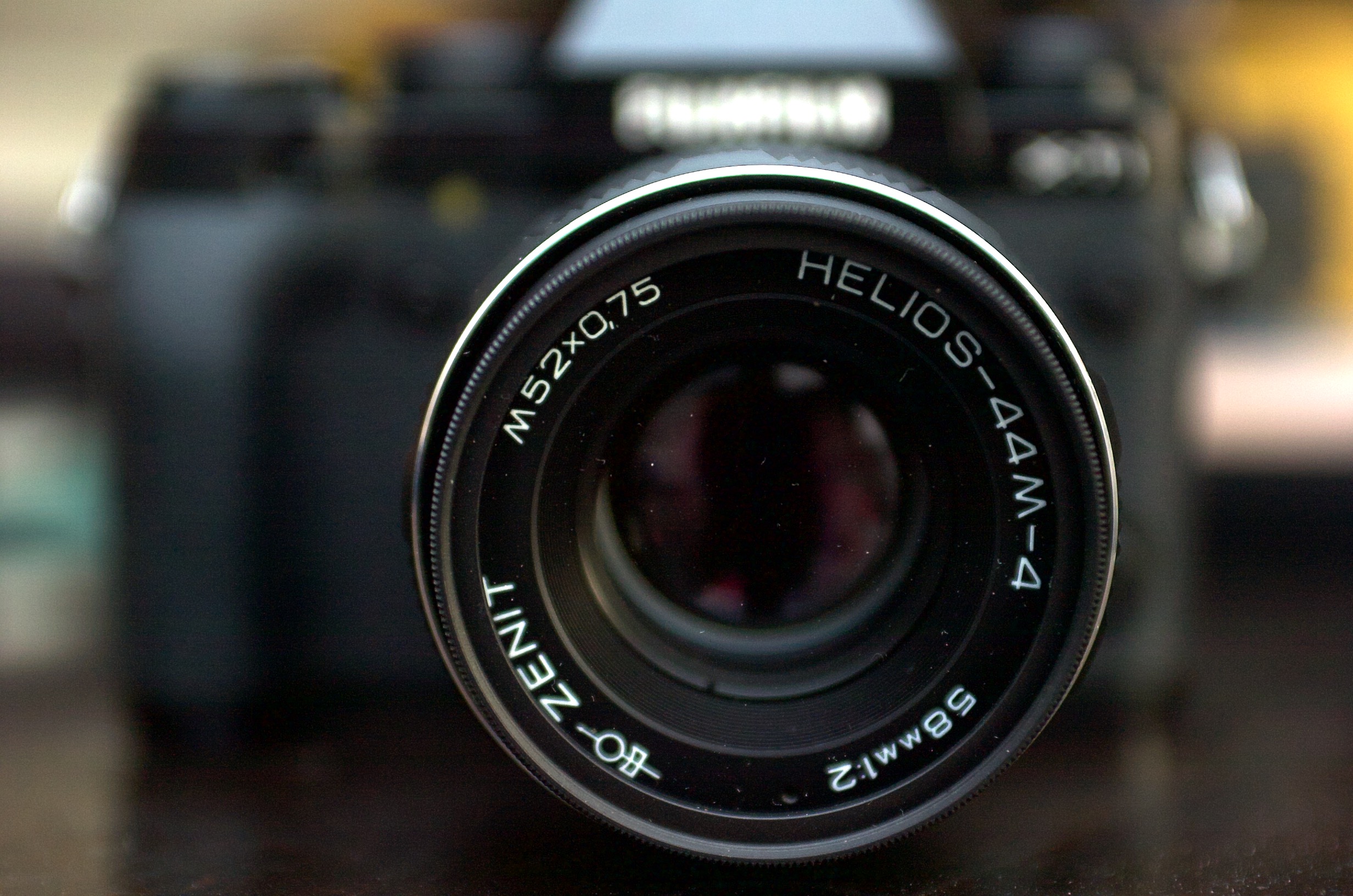
Let’s start with the Zenit 122. Really not a remarkable camera. Made mostly of brittle plastic, it will break the moment you drop it. Only 6 shutter speeds on the shutter dial: B, 1/30, 1/60, 1/125, 1/250 and, drum roll, a top speed of 1/500. At the bottom the words “Made in USSR” – the USSR was defunct since Dec 1991. However what made me pick this up was the lens. Yes, you guessed right, it was a Zenit Helios-44M-4 58mm f2 lens. This is a later version that was multi-coated (MC). Probably among one of the last to come out of production from the old Soviet Union – its serial number was 90xxxxxx. The first 2 numbers to my understanding denoted the year of manufacture. As noted in my previous blog, the Helios 58mm f2 lenses while not the most advanced of design and manufacture, had a most peculiar quirk that give the photos it took a swirly bokeh under the right conditions.

As for the Pentax ME super, it was to bundle the purchase to get a better price overall. Really didn’t need to have the camera but the price bundled up was too good to let go. Furthermore the camera and the SMC Pentax-M 50mm f2 lens were in good condition.

The Seagull TLR is trashed by many people in various chat groups, mostly comparing it to the Rollei and Yashica TLRs. I doubt a majority of these people have ever used a Seagull TLR. I had a Seagull 4A-103 TLR and it gave me pretty good quality 6×6 slide photos. At f8, it was pretty sharp edge to edge. The 4A-109 is the last 4A TLR model that the Shanghai based Seagull company was to make, as a consequence of declining sales from the digital revolution. Other than its collectible value, I will be sure to give this TLR a test run.

Finally, the Nishika. It is completely made of plastic except for the base. All the features like the pentaprism, powerwind handle, LCD screen and electronic hotshoe contacts are fake! Reminds me of toy cameras from the 80’s and 90’s. It also has a weird lens arrangement or lenses – four of them in fact. For most people this is junk. But for other people, including me, this is a unique quirky camera from the past. It is essentially a point and shoot camera with four plastic 30mm lenses. It has 3 apertures – indoors (f8), cloudy (f11) and sunny (f19). Only one shutter speed of 1/60 sec. No film ISO dial – you are advised to use ISO 100 or 200 film. But ISO 400 film could be used too, unofficially. The only control you have are the 3 apertures and a non-TTL flash can be attached for very low light shooting. The hotshoe is a hotshoe and nothing else. It doesn’t communicate with the camera. If the light is too low, the camera projects a big red dot in the viewfinder to tell you. But you can still take a photo despite this.

What the four lenses of the Nishika N8000 does is it takes 4 photos of the same scene at the same time from slightly different horizontal angles. It does this on 2 frames of 35mm film. So if you put in a 24 exposure roll of film, the Nishika will give you 12 “3-D” photos. When the company was still in existence, you could send your exposed roll of film to them and the company will produce lenticular 3-D image cards where you could view the “3-D” image as you tilt the card horizontally from side-to-side. Unfortunately the company went bankrupt and was investigated by US federal authorities for illegal marketing practices.

These days the Nishika still has a use for film enthusiasts. Taking the four images produced, one could superimpose them into 1 gif image and produce quirky moving 3-D images.

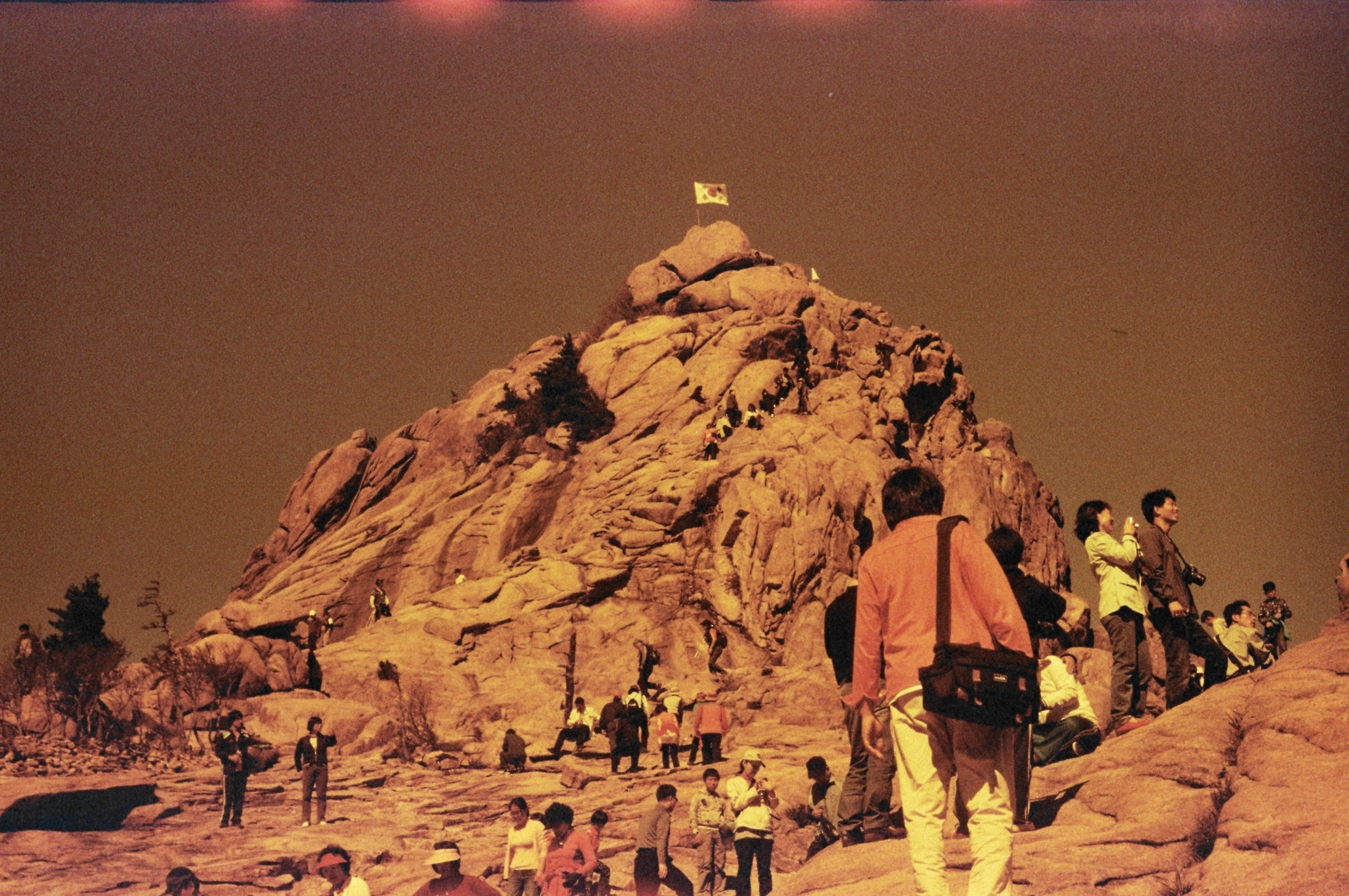
As a bonus to this bundled purchase, there was a roll of exposed Lomo-film in the Zenit. I exposed the last few frames of the undeveloped roll to sunlight when I opened the back thinking that the film chamber was empty. I don’t know how long it has been in there. After developing, it turns out these were photos of someone’s visit to the Naksansa temple in South Korea at dawn and early in the far east morning – with weird colors from the old film and me partially opening the back! Enjoy!

Helios-44 58mm f2 Lens

I must admit I love the swirly bokeh of the Helios 58mm f2 lens. It suits portraiture best when the right conditions are met for the bokeh to swirl around the subject.

The right conditions usually mean the right camera to subject distance, in this case from about 2 to 4 metres for the camera to subject distance.

The right background needs to be chosen. The swirling effect of the bokeh seem to come from imperfect formation of light circles from the center of the frame (where they are round) to the edges of the frame (where they are elliptical). So the background should have many points of light. For example, light coming through leaves or light coming from the many buildings in a city background at night or light coming from a lighted Christmas tree. It is a unique imperfection of the Helios lens design. With modern lenses perfectly designed through the aid of computers, you only get perfectly round light bokeh.

Lastly, you need to open up the lens to its largest aperture – f2. The subject matter is best placed in the center of the frame as that is where the lens is sharpest at full aperture. The sharpness falls off steeply toward the edges at this aperture.

The Helios-44 lens comes in many variants and were made by several different former Soviet eastern bloc manufacturers. Camerapedia has a good description of the many variants.

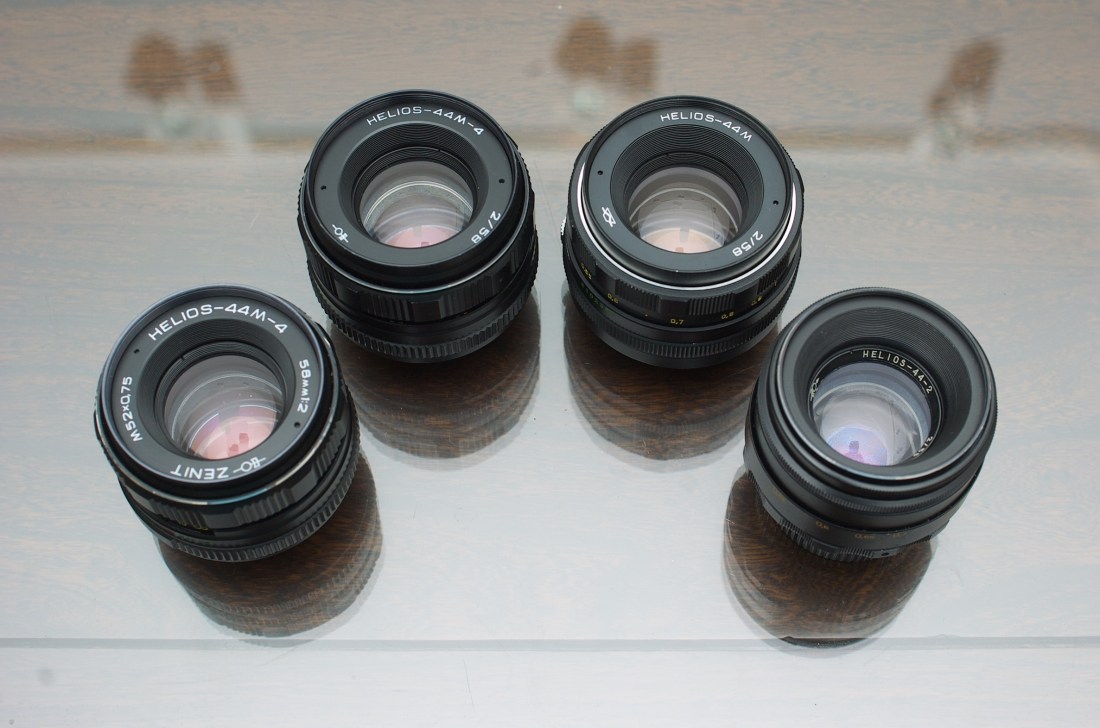
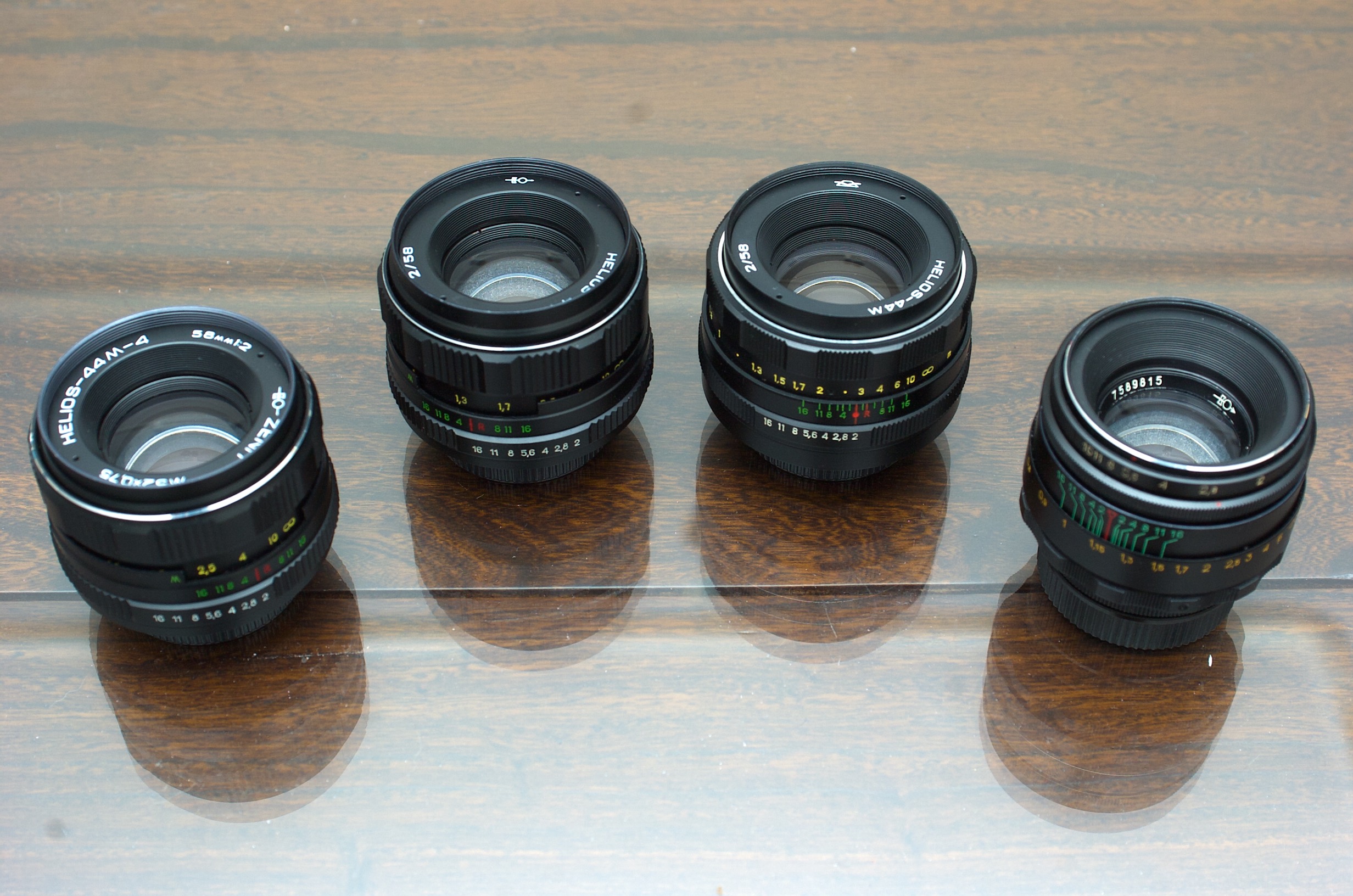
Recently I conducted a quick and dirty comparison of four Helios-44 lenses for their swirly bokeh and center sharpness. They are, in order of manufacture year, the Helios-44-2, Helios-44M, Helios-44M-4 (2 lenses).

These were attached to a Kipon M42-FX BAV-Eyes 0.7X adapter and mounted on a Fuji X-T1 to have full lens coverage with no crop (and hence full extent of the swirly bokeh) on the APS-C sized Fuji sensor. All shot at their widest aperture of f2.

The comparison photos below:-

Helios-44-2 (8 blades, stepless aperture)

Helios-44M (8 blades)

Helios-44M-4 (6 blades)

Helios-44M-4 (6 blades)

The verdict? Seems like all have a similar bokeh effect and more or less the same center sharpness (handheld). Colour is warmer from the Helios-44-2. Perhaps this difference is from the coating of the lens – single coated vs multi-coated lens. I am not the expert here. Perhaps someone could tell me.

The 44-2 and older 44M-4 (SN87405245) do not focus to infinity. Hence the only usable ones to me for photography are the 44M and newer 44M-4 (SN88158346). This was the primary reason I did the test.

These lenses are fun, relatively cheap and have a cult following. In fact so much fun, I am taking one out for a spin in the near future and hopefully post more swirly bokeh photos in this blog.

Thanks for reading!

Why I Like Lenses from the 70’s and 80’s

Recently I acquired a Nikon SLR with an AF-S DX Nikkor 35mm f1.8 G lens attached to it. While I was not planning to get the lens, I thought this was a bonus.

This particular Nikon lens was released in Feb 2009 primarily for Nikon’s DX range of DSLRs (digital SLRs). The lens was primarily targeted as an inexpensive, large aperture option for users of the entry-level (D40 / D40X /D60) series of DSLRs. It is small, light and cheap and had relatively good reviews. It had the silent-wave auto-focusing system, meaning that the autofocus mechanism was in the lens and not the body, theoretically making it faster to autofocus.

When my lens arrived, it looked in good condition. The glass was clear, the focusing ring was smooth. However, when I attached it to the camera, it could not focus fast enough. It kept hunting for focus. I thought it was the camera body, so I changed the body. Same issue. Cleaned the electronic contracts, tried it outdoors in bright light and larger apertures, no difference. The lens still hunted for focus.

Eventually I looked to the internet to see if anyone else had similar problems. There were a couple of posts mentioning focus hunting issues with this model of 35mm lens. One poster, disassembled his lens and cleaned the gears of the silent-wave mechanism. Apparently that got rid of the problem. I decided to do the same.

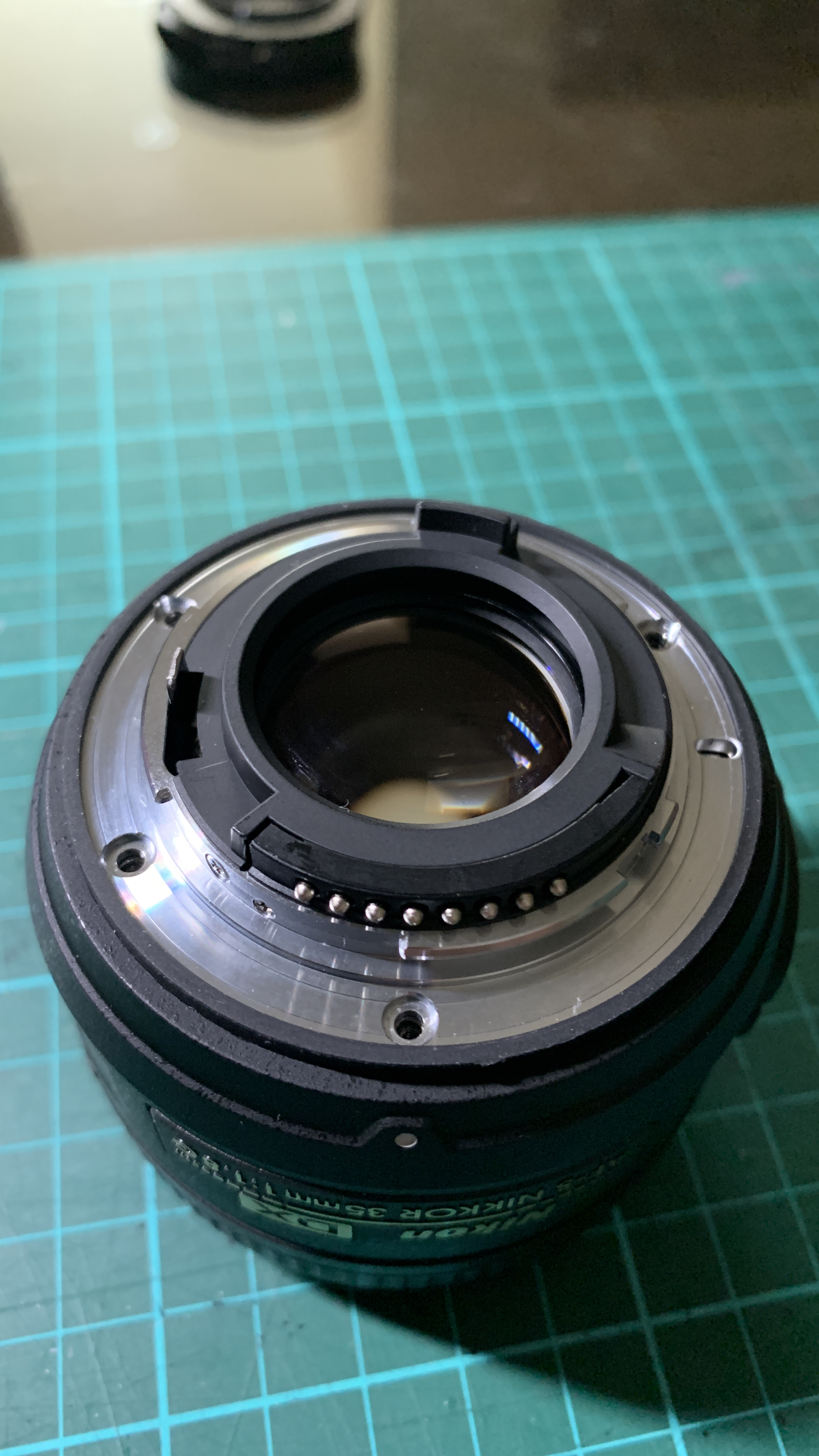
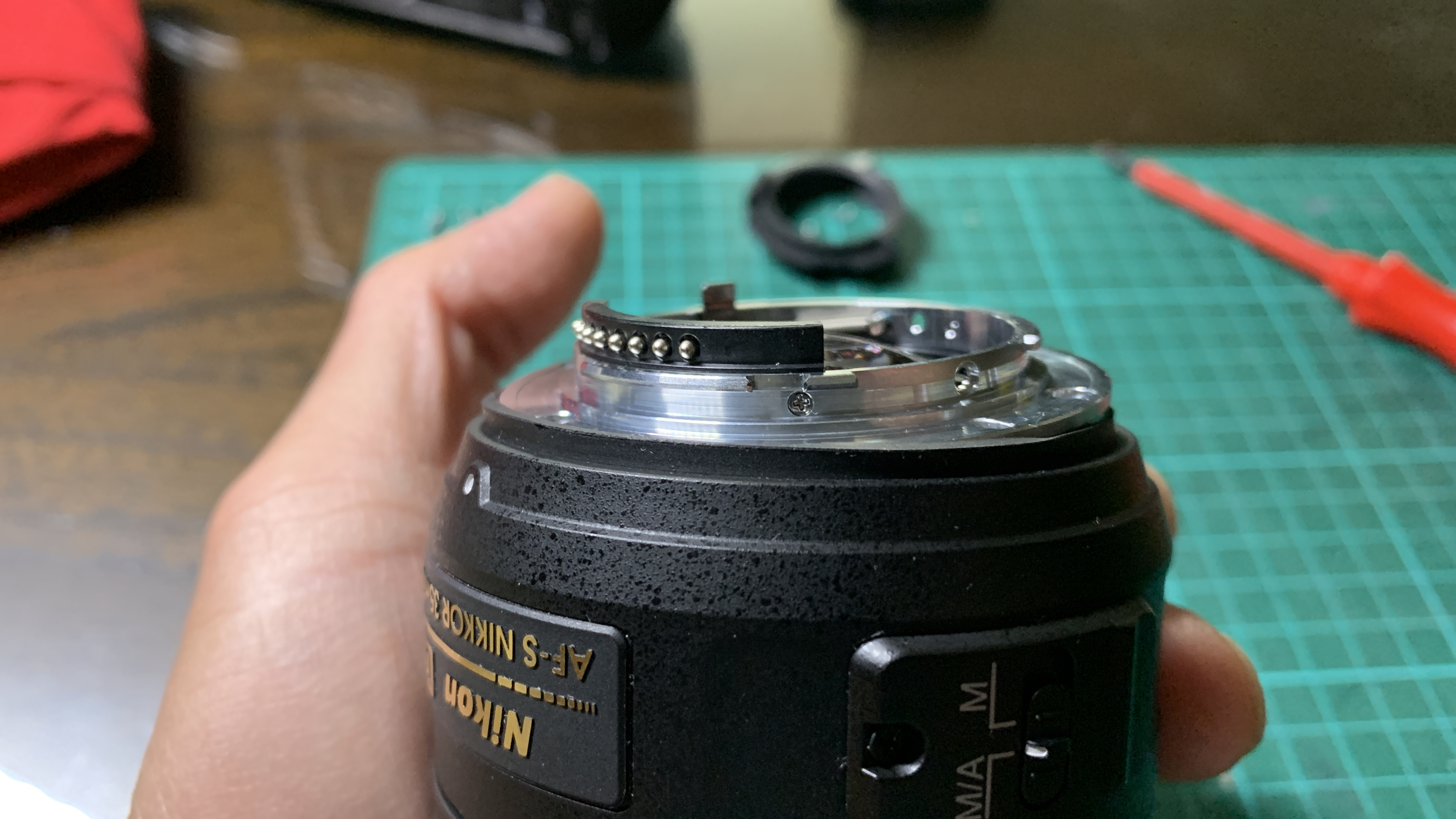
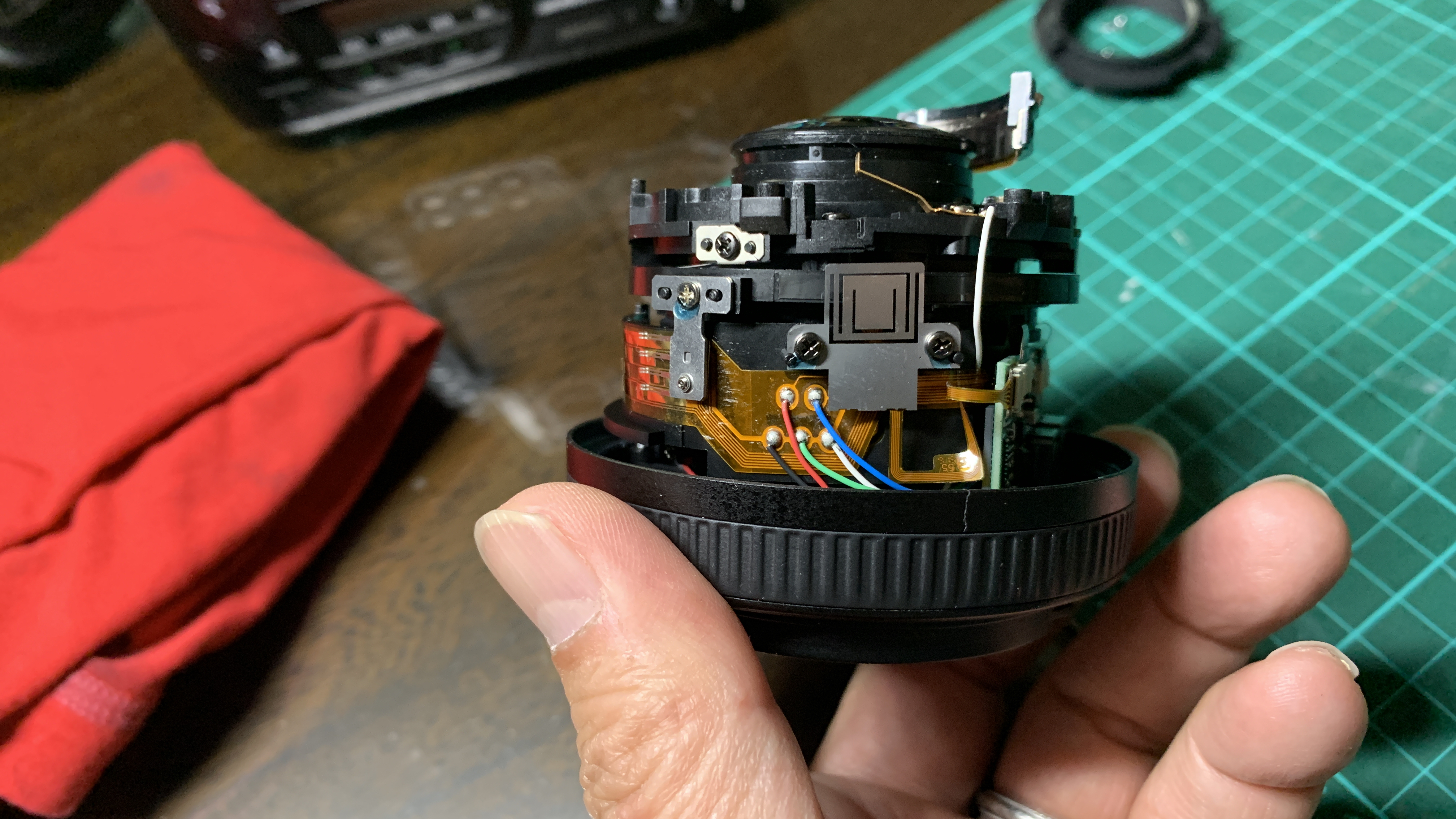
Starting with the rear of the lens, I unscrewed the 4 small screws securing the mounting ring.

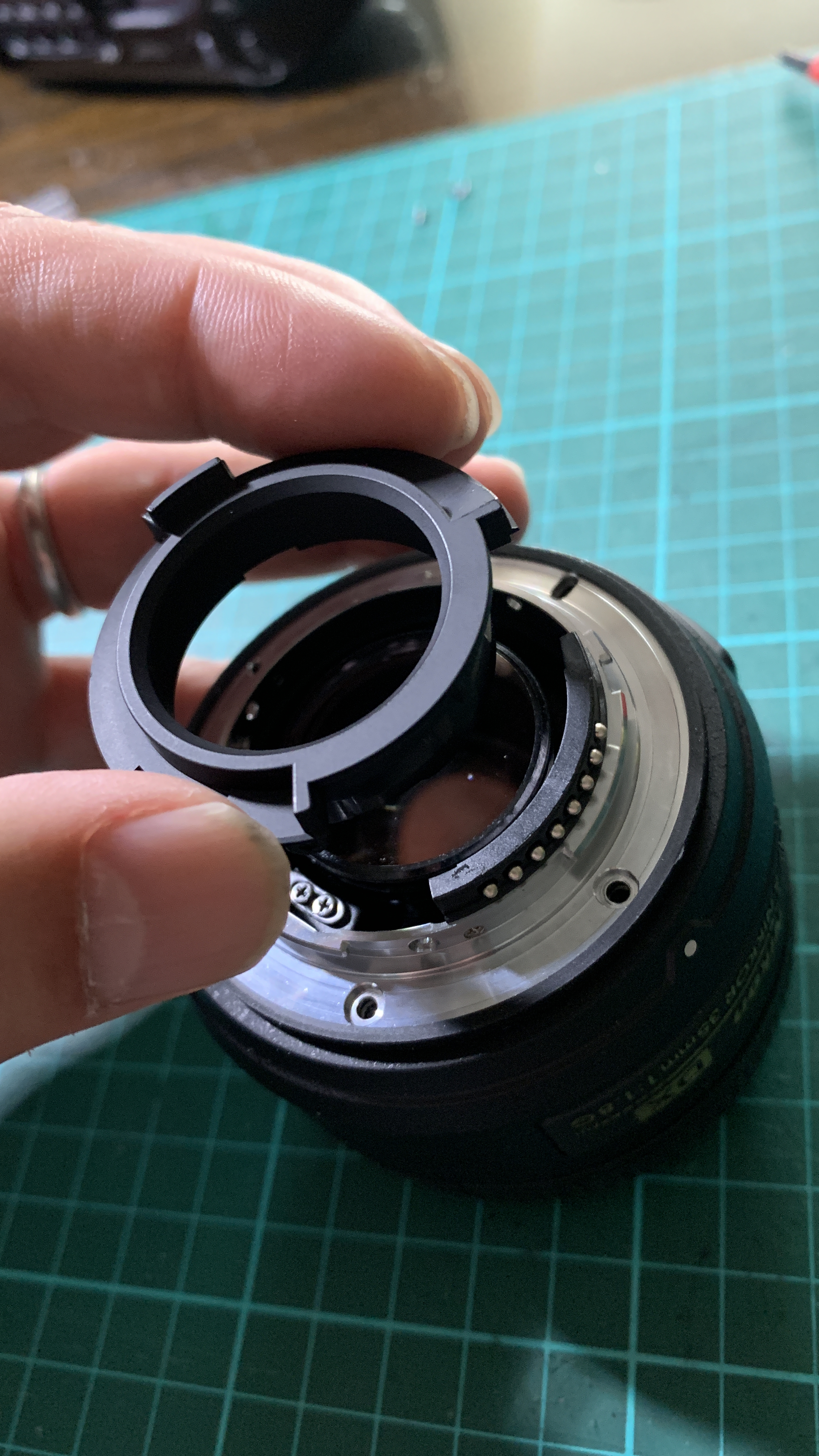
Next 3 screws to come off were the ones holding the black plastic part of the lens mount in place.

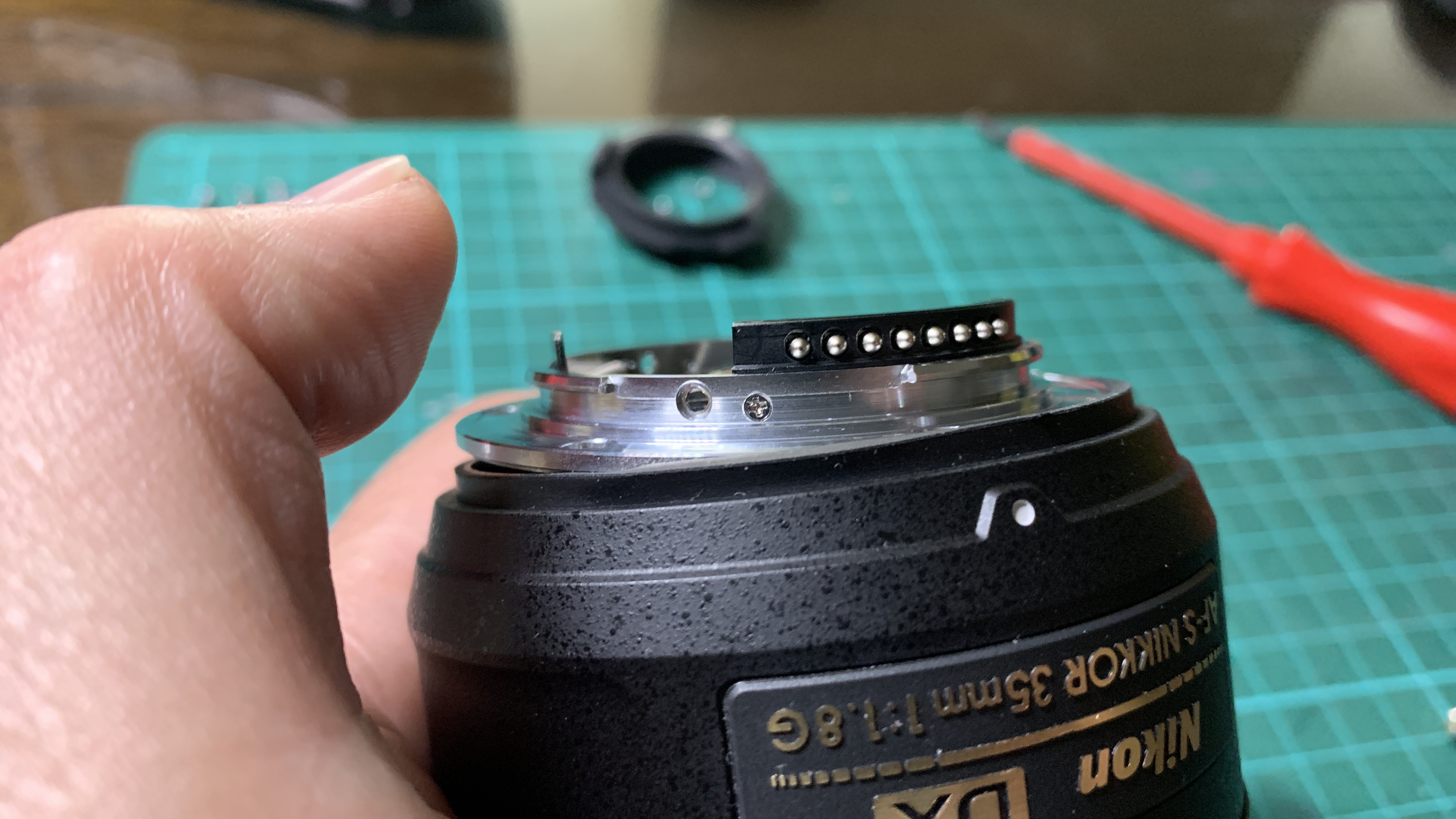
Before the metal lens mount ring could be detached, the lens contact points had to be released from the mount. This was held in place by 2 small screws. The lens contact points are connected to the lens CPU by a cable, hence the contact points have to be detached before I could remove the lens mount ring completely.

Care should be taken when removing the lens mount ring from the barrel, as there are several rings of different thickness below the main ring that can fall off if you remove the mount quickly. All these rings are held together by an outer rubber ring which also comes off when the mount is removed. This is the first of many inferior aspects of this G lens construction that I noticed. Nikon lenses of higher quality do not have all these rings and there is no rubber holding rings together. In the higher quality Nikon lenses, the lens mount is one solid block of metal.

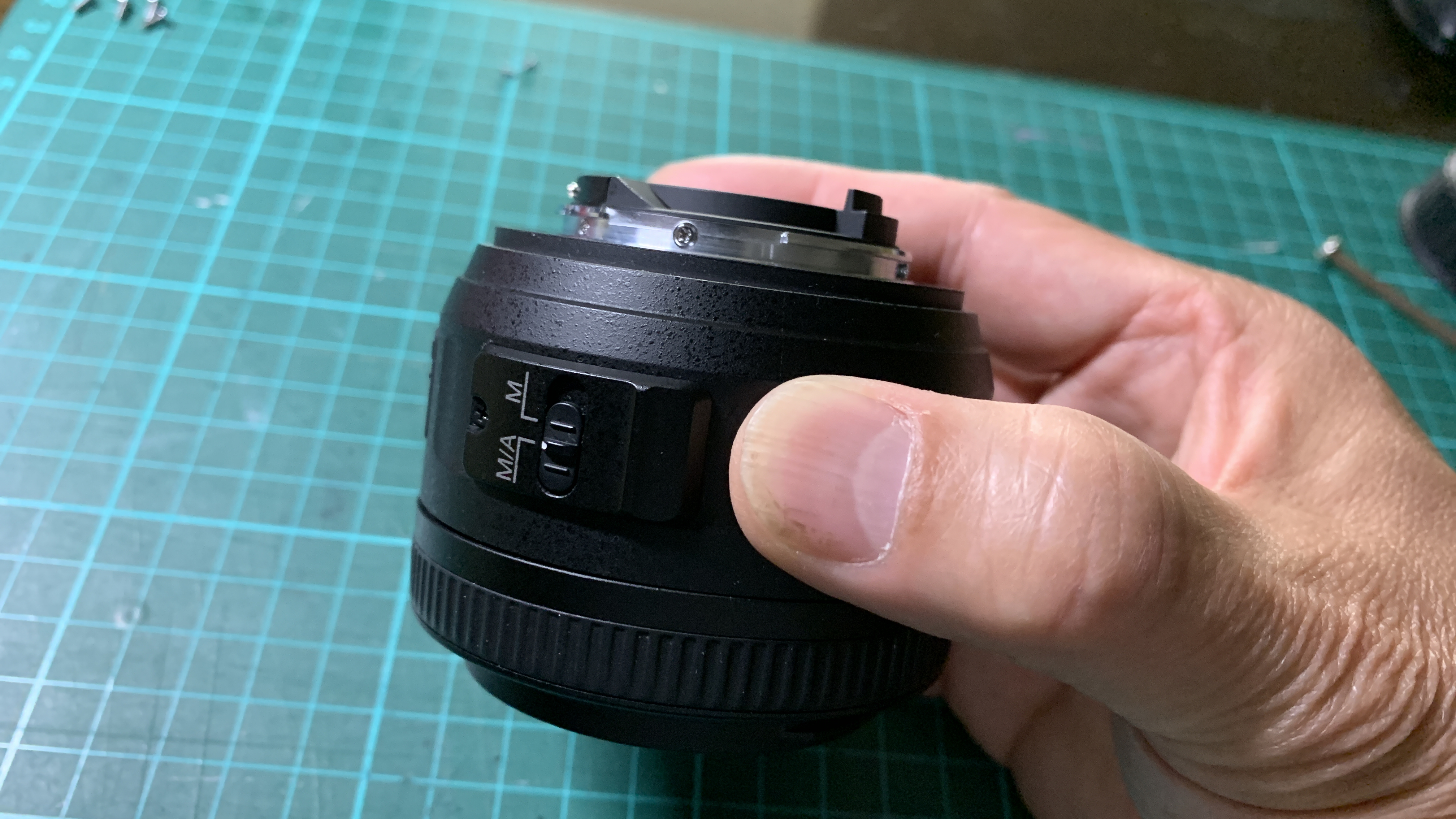
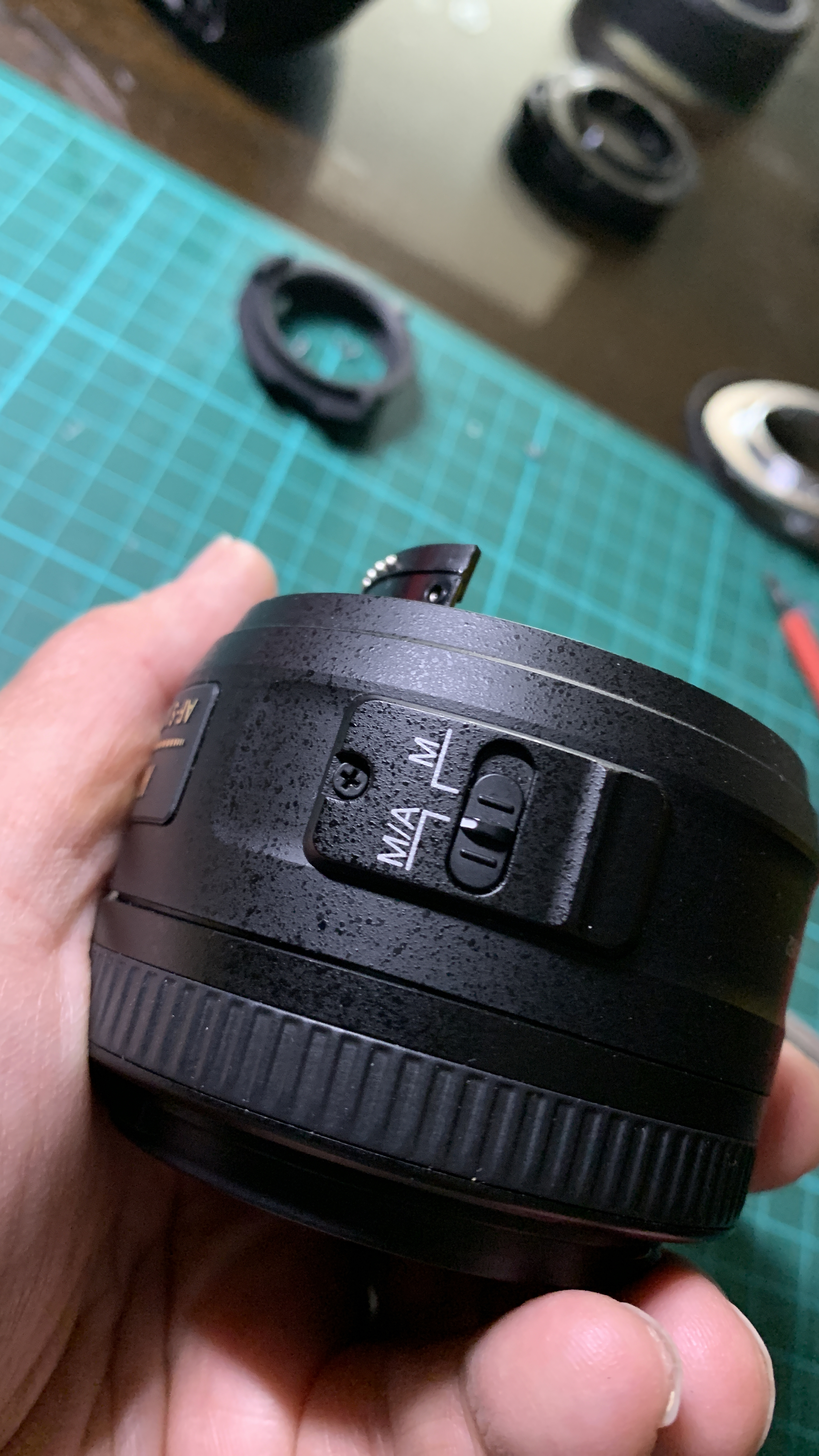
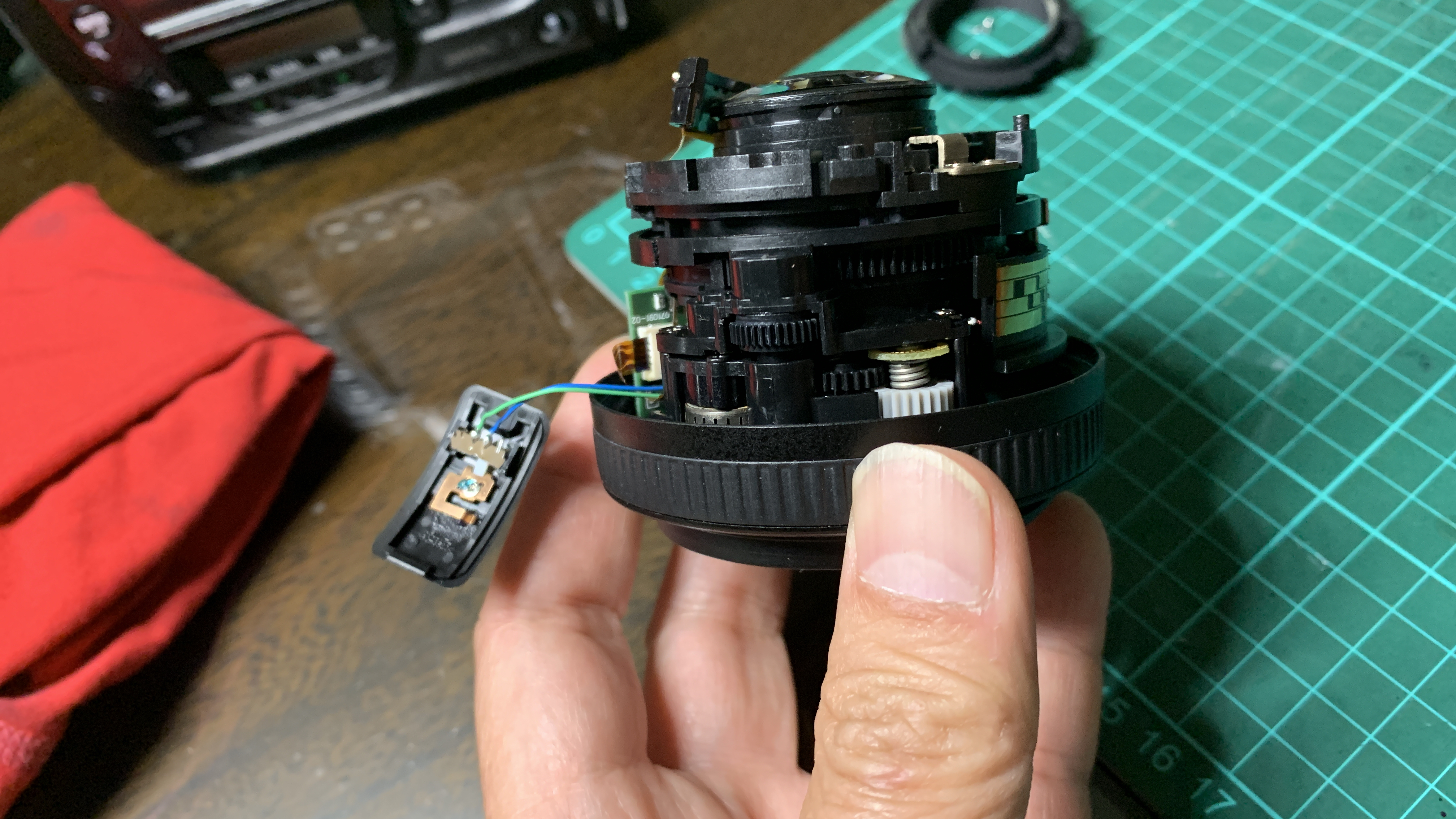
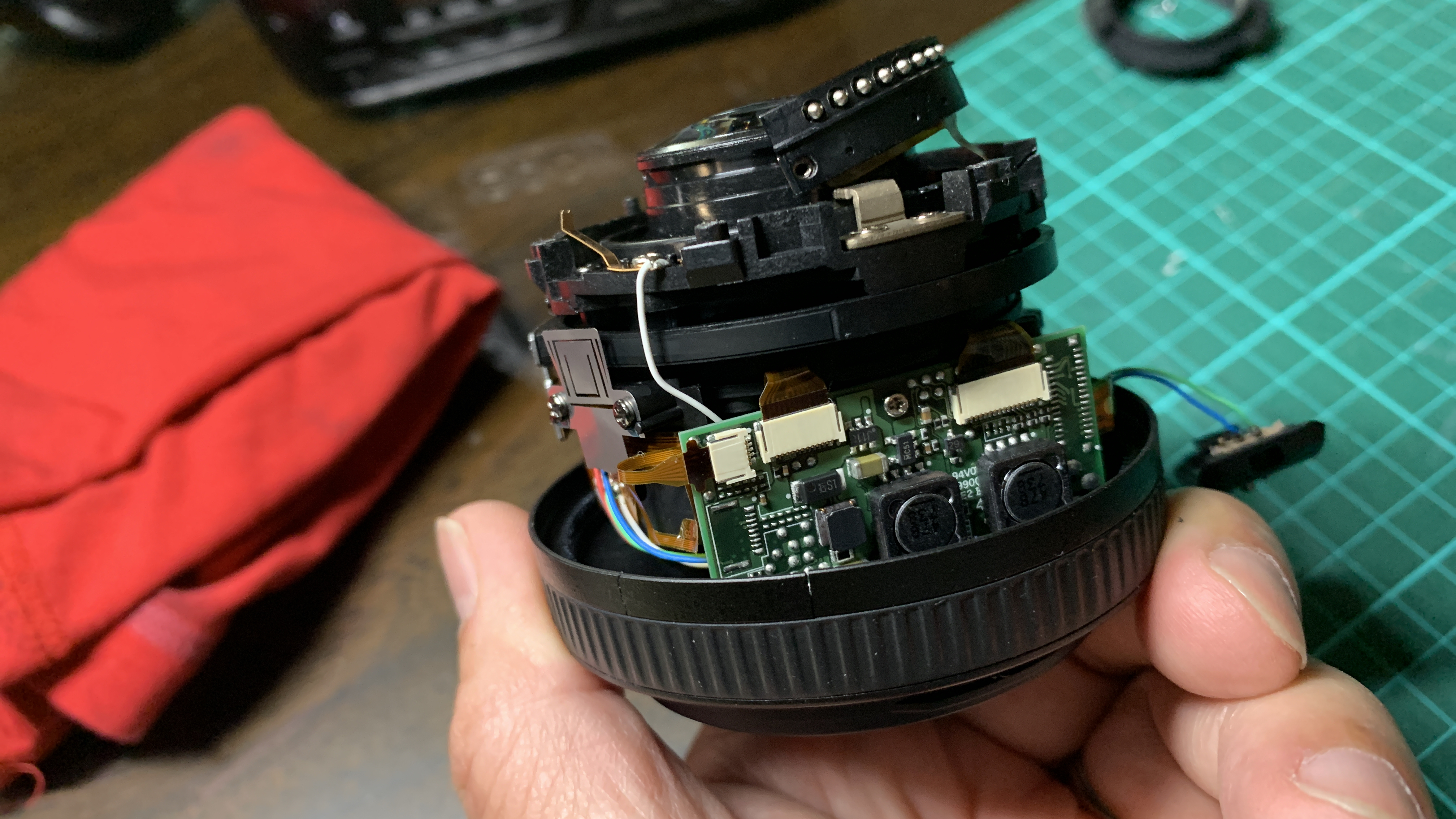
Once the lens mount ring and all the other rings are removed, the next step is to unscrew the single screw holding the focus selector switch in place. After this screw is removed, the lens barrel cover can be slowly slid out to reveal the inside of the lens. However, the focus selector is connected by wires to the CPU, hence, the lens barrel needs to be removed slowly leaving the focus selector dangling by the wires still connected to the main barrel.

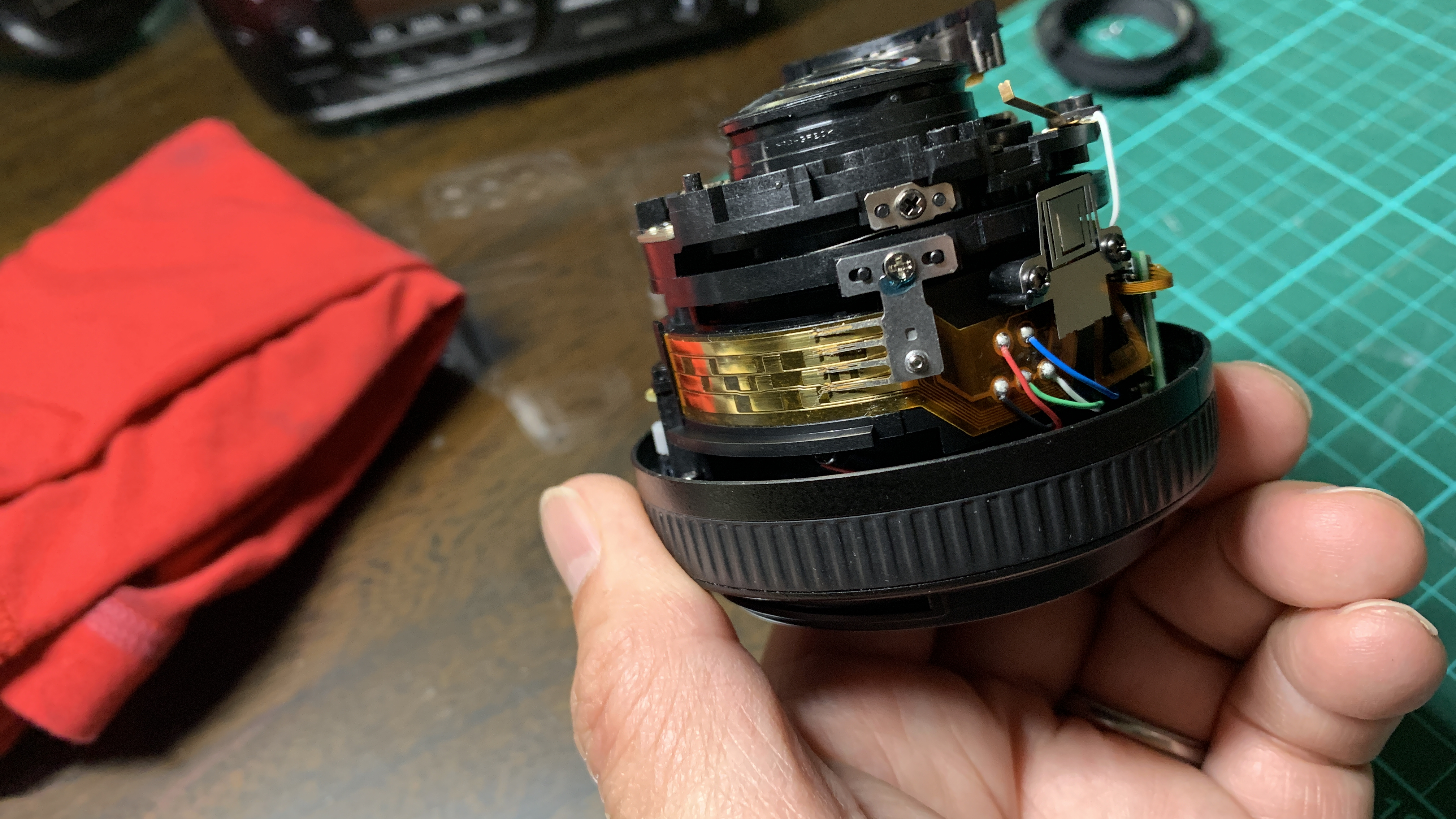
Once the inside of the lens is revealed, you can see the silent-wave motor and focusing mechanism (top left picture), the contact points for correct autofocusing of the lens (top right picture), cables to the lens CPU (bottom left picture) and the lens CPU (bottom right picture). All these are held together on a plastic barrel frame. There is hardly any metal in the barrel. The use of brittle plastic for the barrel frame is another inferior construction feature to keep the cost of this lens low. Even the lens elements are held in plastic frames.

To access the silent-wave motor next, the focusing ring needs to be removed. In the pictures above, the lens is held by the focusing ring.

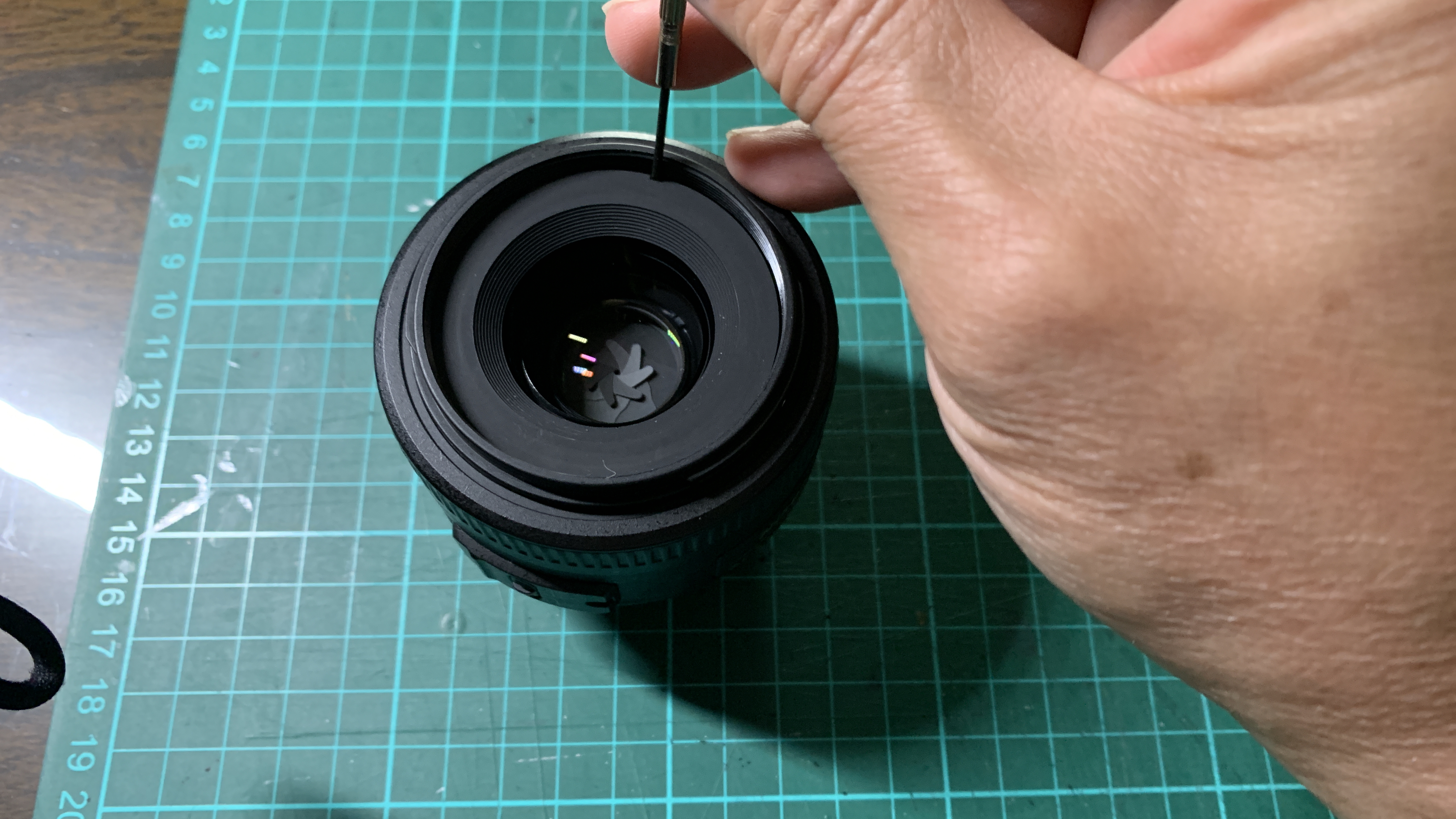
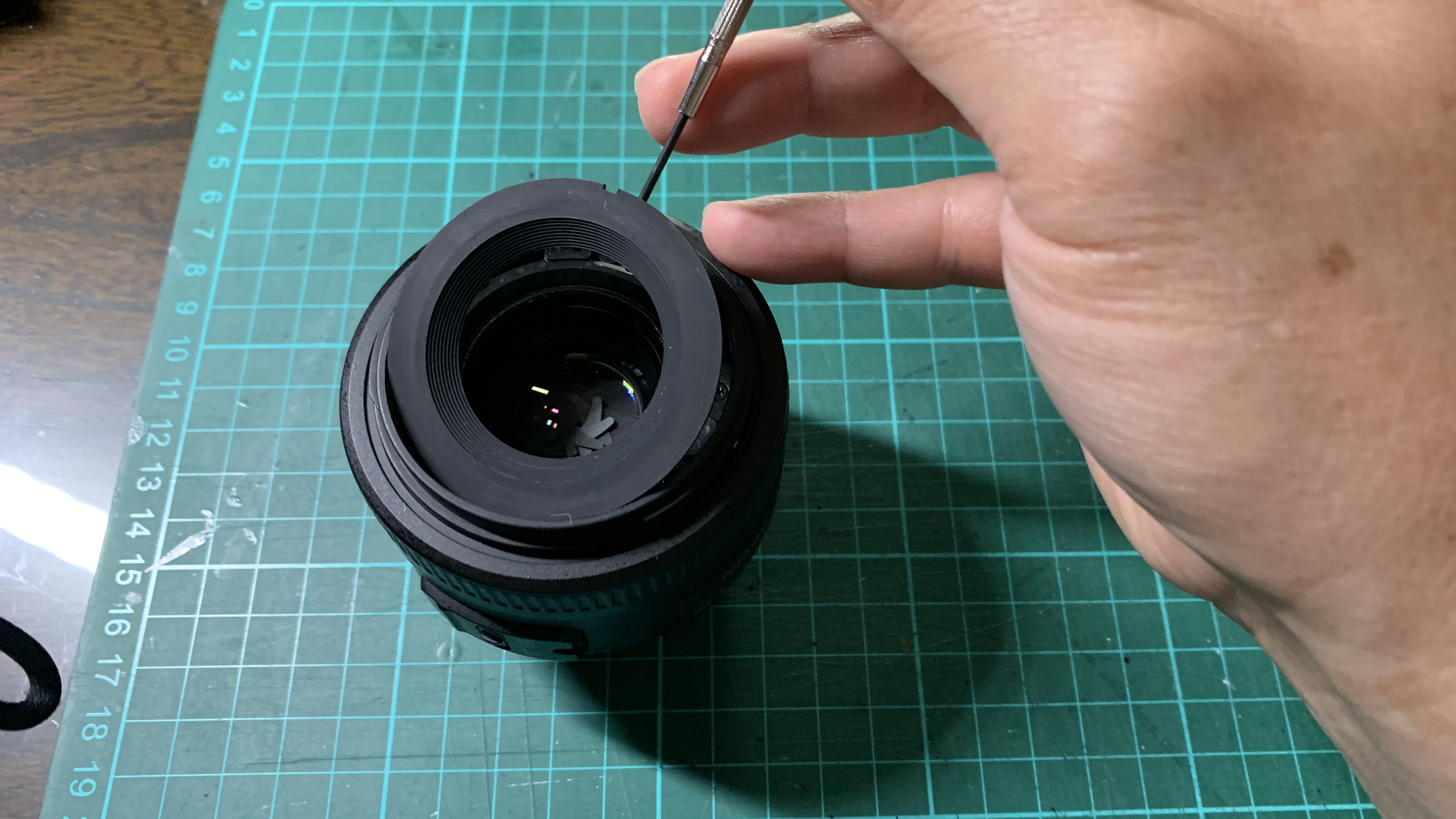
Turning the lens around, the first step is to remove the cover ring to expose the screws holding the focusing ring in place. Initially I was confused as to how to remove it as there is only one notch on the cover ring. Usually there are 2 notches directly opposite each other so that you can use lens ring wrenches to unscrew them. For this cheaper construction this cover ring is held by double-sided tape! All I had to do was to slowly pry it off with a small screw-driver.

There are 2 sets of 3 screws that can be seen once the cover ring is removed. Not sure which ones hold the focusing ring in place, I proceeded to unscrew the metallic screws. Wrong ones! Those hold the plastic frame that houses the front lens element. This is a first time I have seen lens elements housed in plastic frames! Another cost cutting construction by Nikon.

Removing the black screws finally released the focusing ring, which has plastic gear teeth that locks into the focusing gear (plastic as well) of the barrel.

With the motor mechanism exposed, I cleaned the motors and gears with 90% alcohol. After which I reassembled the lens mount but not the barrel cover to check if the lens focussing issues were resolved. Unfortunately, the lens performed no better.

Puzzled, I examined the barrel closer with my loupe. Sad to say, I noticed a crack in the plastic gear that moves the brass auto-focusing contacts. In fact the crack was more extensive, extending diagonally from the base of the focusing ring to the base of the lens mount. What!

The crack completely separates the ring that forms the plastic gear for the auto-focusing contacts. This was obviously the problem.

This lens must have suffered a knock previously and while the damage was not obvious externally, it caused a long diagonal crack in the internal all plastic frame of the lens barrel.

This will never happen in a lens constructed in the 70’s or 80’s, which have far superior metal construction. While the AF-S DX Nikkor 35mm f1.8 G lens looks nice, I wouldn’t recommend it for its cheap all plastic construction. An accidental knock on a wall, or a knock on a lamp post or a drop from the camera bag to a concrete floor will likely render the lens non-functional!

I am sticking to pro-level lenses or old metal lenses even if they don’t have fancy autofocus. The Nikkor of years gone by were quality “glass in metal”!

Nikon D2H Digital SLR

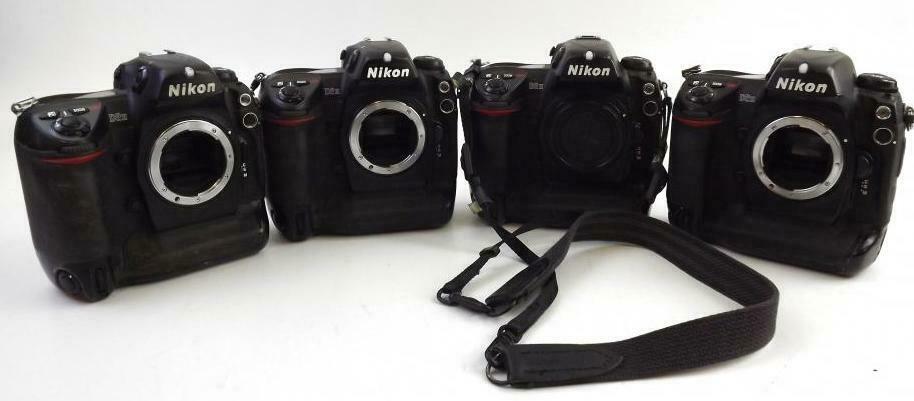
Some months back there was a lot sale of 4 Nikon D2H SLRs on eBay. The seller was a warehouse store based out of Willow Grove, Pennsylvania. They were described as former journalism cameras and the batteries were dead. The seller did not know if they worked or not. No battery charger with the lot. One in the lot looked in reasonable condition and all were dusty. The paint on the other three looked like they were used in wartime journalism!

Fearsome foursome!
The Terminator

The Nikon D2H is the fourth out of Nikon’s line of professional digital SLRs, after the D1, D1H, D1X. It was introduced by Nikon in 2003 with an off-the-shelf price of $5,000. Intended for professional use, the D-series are made for heavy duty use and weather resistance. They all have tough magnesium alloy frames and thick rubberized coverings.

The D2H uses Nikon’s own digital sensor with a 4.1-megapixel resolution. This was more resolution than the D1 and D1H but less than the D1X. 4.1-megapixel is low by today’s standards but for an amateur like me, this is more than enough resolution. This lower resolution is optimised at that time for sports and action shooting and is capable of capturing 8 frames per second (fps) for up to 40 frames. The D2X, while identical in appearance to the D2H, had more resolution (12.2-megapixels) and is optimised for more detailed photos.

Nikon F that took a bullet in Vietnam. Probably still took photos looking at where it got hit!

Knowing that these were journalism cameras and they are beat up meant that they have had heavy use over the years. However, I have great faith in Nikon pro-level cameras. They have been used by journalists and professional photographers all over the world, have been abused, dropped into raging rivers, knocked around in weightless space, dropped from heights and they still kept taking photos. They have even saved lives of photo-journalists.

After the cameras’ arrival and charging up the batteries with my own MH-21 battery charger, 3 of the of the D2H’s worked as they should but the fourth was completely dead.

One of the cameras had a sticker with the words “Intelligencer” on it. Curious as to what newspaper this was, I searched the internet for newspapers around Willow Grove. The Intelligencer is a daily newspaper published in Doylestown, Pennsylvania (12 miles from Willow Grove). These D2H’s have had a good working life and I guess the newspaper felt it was time to retire them. Also I guess the photo-journalists now prefer to use today’s newer full-frame D4’s and D5’s.

Digital cameras are like laptops, once a new model comes out with better specs (higher mega-pixel count, larger buffer, faster frame-rate), the price of the older model goes down really quickly. After cleaning and retouching the paint on the working D2H’s, I must say that I am very pleased with my $35 D2H’s!

Nikon D2H with a manual focus Nikkor AI 50mm f1.8 lens (taken by another D2H)
Everything functions as they should!

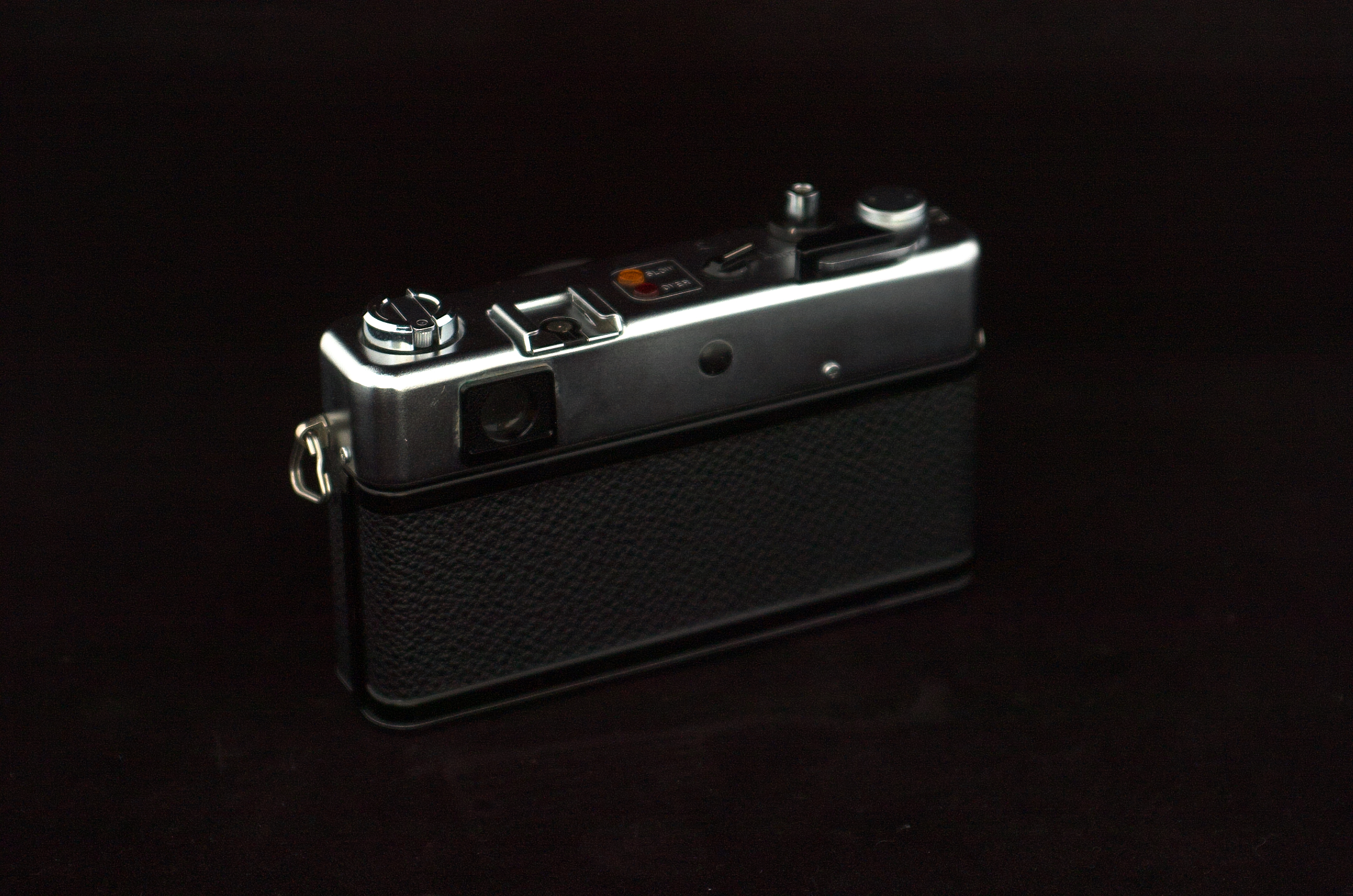
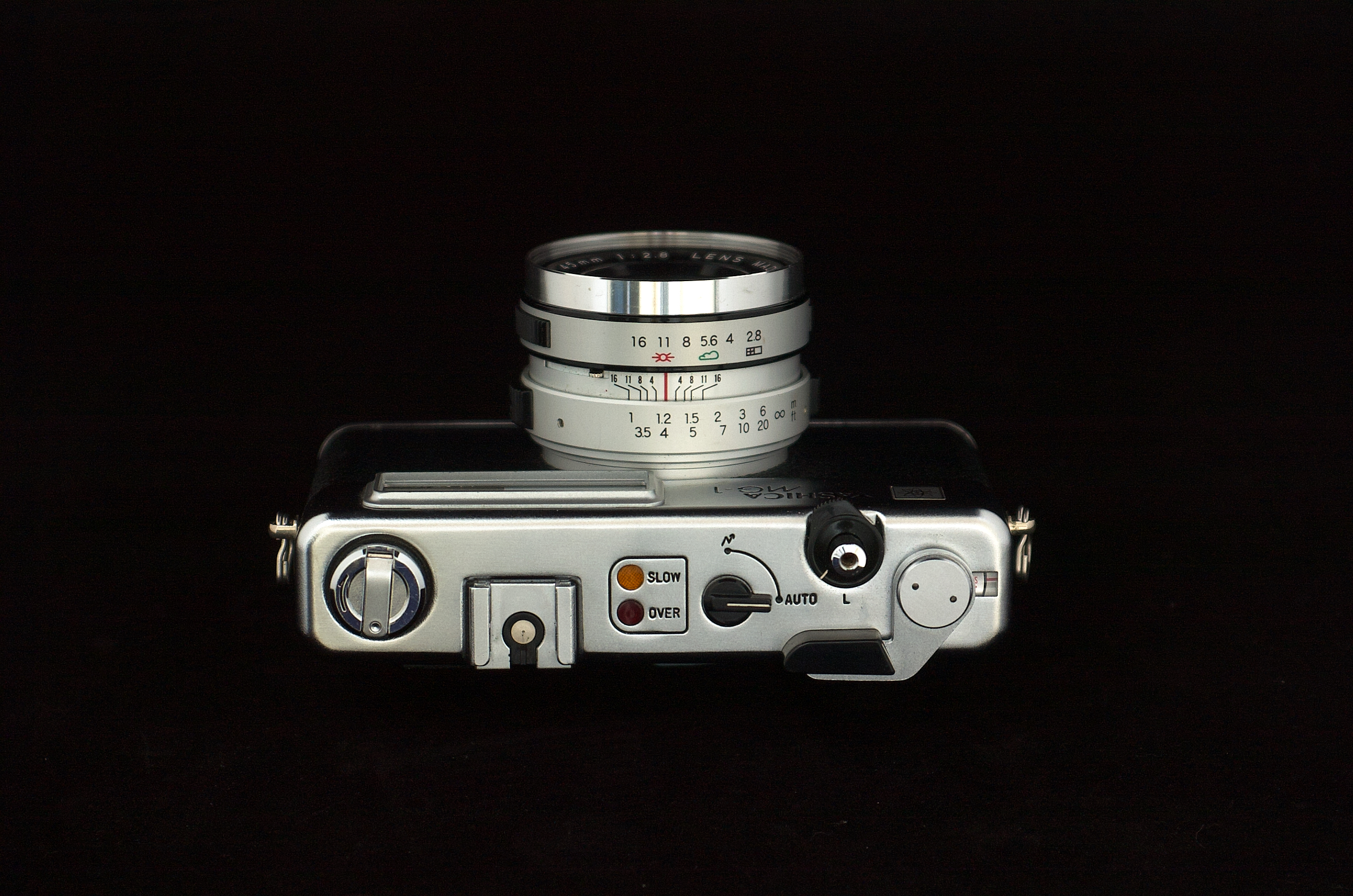
Yashica MG-1 Rangefinder

Went to the fleamarket for a second weekend in a row. Hot and humid today. It was already near boiling at 9am in the morning. Not much to see today, lots of knick-knacks but not anything interesting for me. There were some cameras but not anything that appealed to me. Mostly compact digitals, some Polaroids from the 80’s and 90’s and also a Yashica FX-3 SLR but the condition was bad. As with all Yashica FX-3’s and later Yashica SLRs, the fake leatherette flaked off with use over time and this one was no different. It had a Yashica 50mm lens attached to it. I was surprised when I picked it up, it was very light and felt plasticky. I was expecting it to be all metal and heavier. The seller wanted $25 for it, so I passed it off.

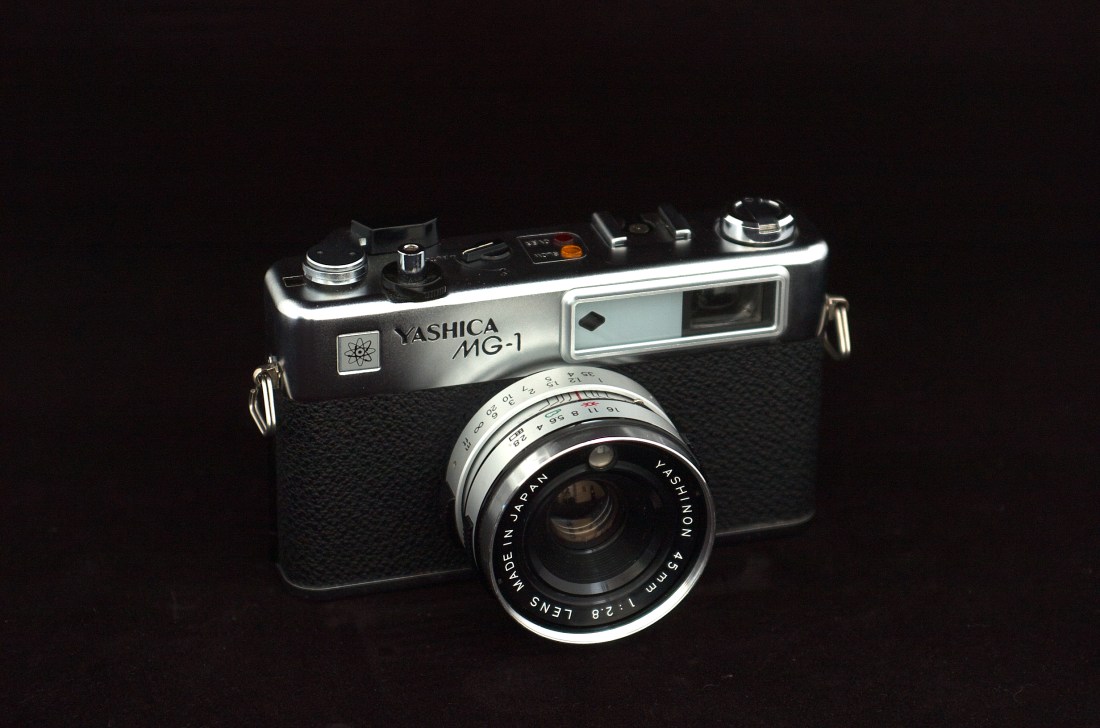
My black Yashica MG-1
(note that the black version does not have the “atom” logo)

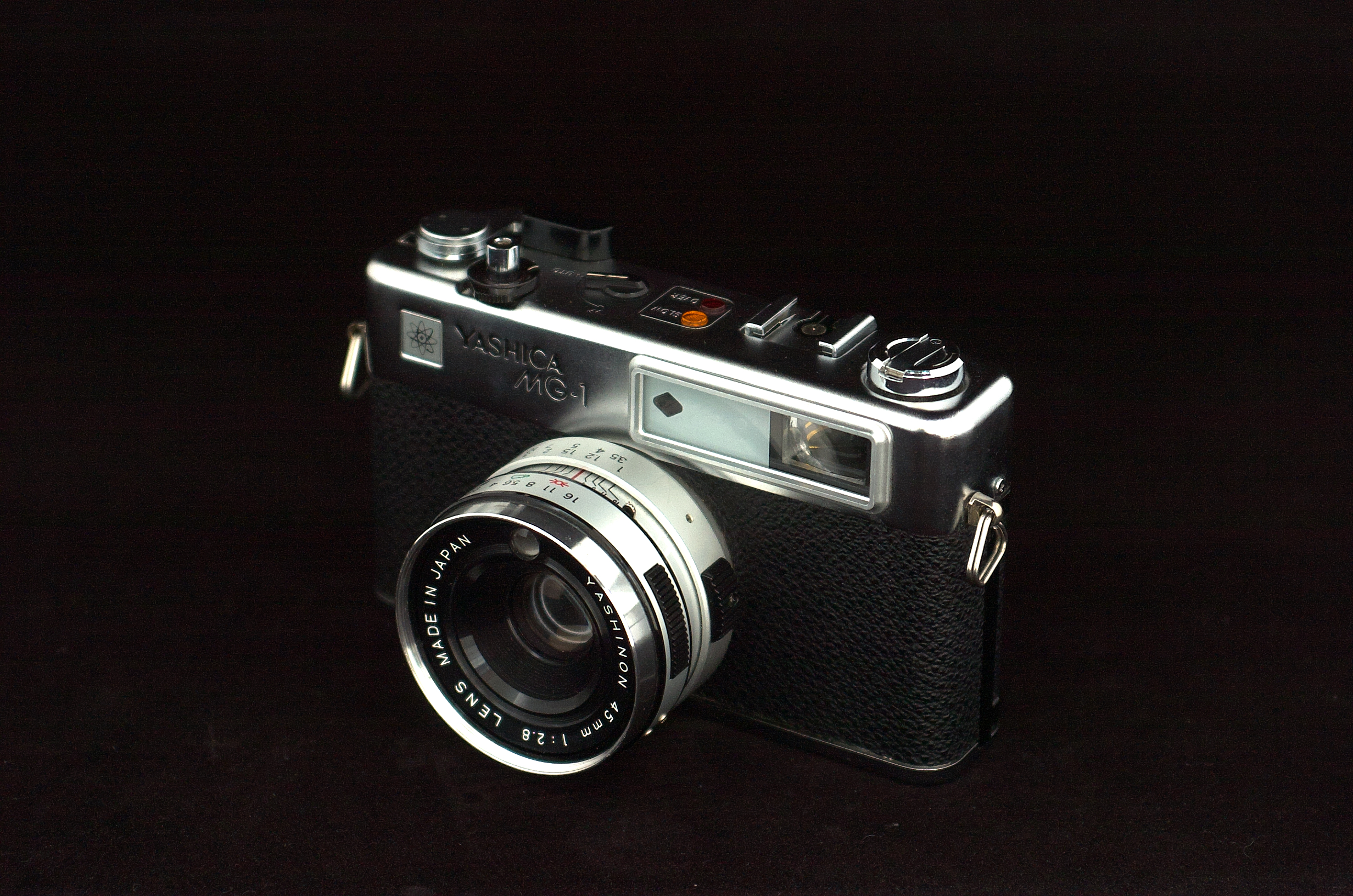
Walking further on I saw another Yashica. This was made earlier than the FX-3 and a rangefinder. Yashica rangefinders are excellent and available for cheap ever since the digital revolution. People were selling them off for AUD$15 to $20 in Australia a decade ago. Prices now have stabilized to around US$25 to $50 nowadays on eBay. This particular rangefinder was the Yashica MG-1 in chrome finish. As I already have an MG-1 (in black finish), I wasn’t planning on acquiring another one. “How much?”, I asked the seller. $5 was the answer. Without much further thought, I took out my wallet and handed her the $5.

Examining it more closely at home, this particular MG-1 is in excellent condition. It looked like it just came out from a camera shop from the 70’s. The chrome body is pristine and mint, the Yashinon 45mm f2.8 lens is super clear.

In the 70’s, the MG-1 operated with a 5.6V mercury battery. These are no longer available. When I pressed lightly on the shutter button, the orange and red exposure indicator lights flashed meaning that there was power supply to the camera. The MG-1 is an aperture-priority camera and the CdS light sensor on the lens barrel needs power to work. Opening the battery chamber, a working new looking Duracell 6V PX32A battery popped out – an extra bonus! Not sure when this battery was put in but apparently Duracell stopped making the PX32 batteries in Jan 2000. No worries, the Yashica Guy sells battery adaptors for the Yashica series of rangefinders.

The camera is missing the lens cap and currently a 57mm diameter Yashica lens cover/cap cost 3 times more than what I paid for the MG-1. So I’ll make do without a cover until such time one comes across for cheap!