The Balda Baldina Camera – Servicing Notes

I bought a Balda camera along with a Kalimar Reflex medium format camera from a flea market seller. I hadn’t heard of the Balda before, but I offered to buy both for a lower price on the Kalimar. The Balda needed a full service because it had corroded parts, a non-working shutter and peeling leatherette. Despite this, I was satisfied with the price I paid for both cameras.

Back home, I focused on the Kalimar and put the Balda aside. A few weeks later, I took out the Balda camera to examine it and learn how to service it.

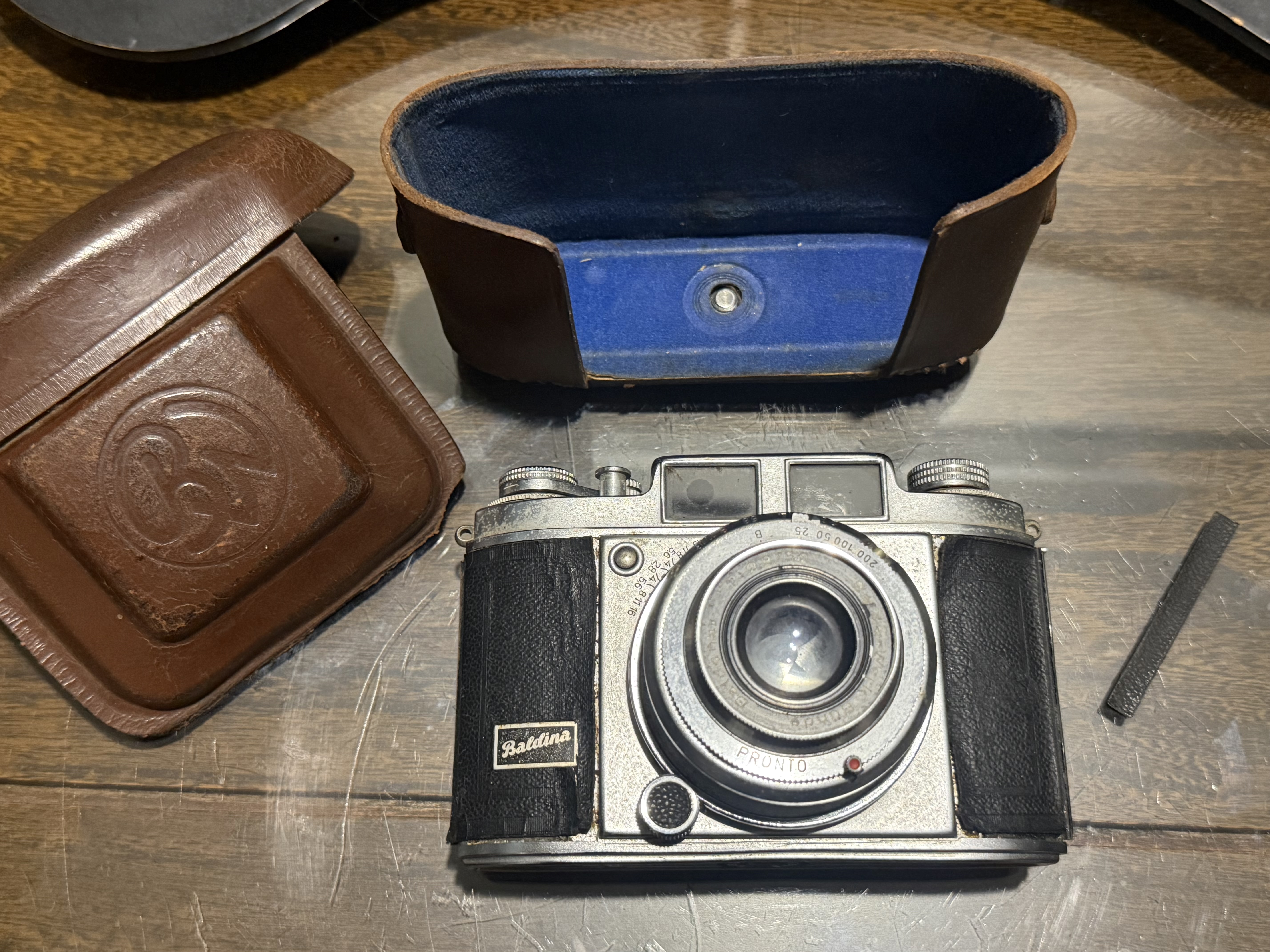
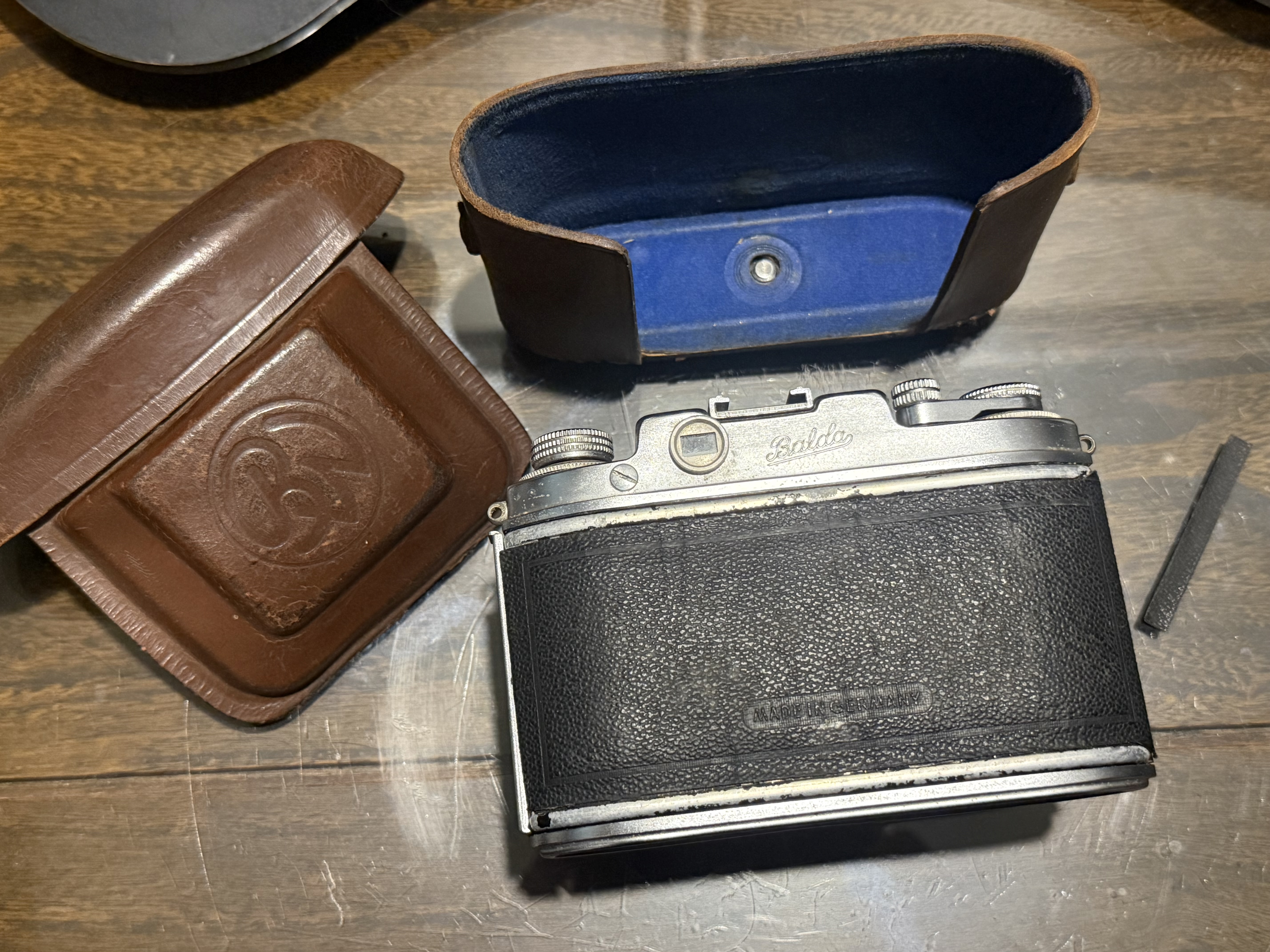
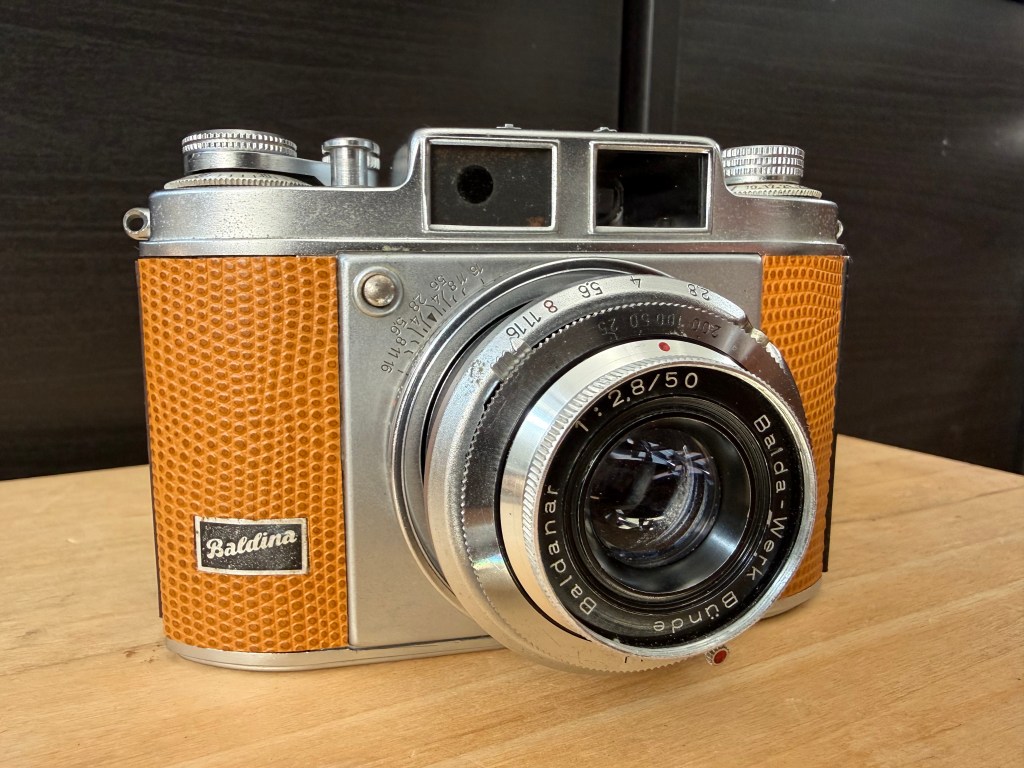
The Balda Baldina was a viewfinder camera from the mid-1950s made by the German company Balda-Werk. Although it resembled a rangefinder camera, it was not one. To reduce costs, Balda-Werk produced both rangefinder and viewfinder versions using the same body. The rangefinder version was called Super Baldina, while the simpler viewfinder version was just Baldina. Balda-Werk offered these cameras with various lenses and shutters. My version had an in-house Baldanar 50mm f2.8 lens and a non-working Pronto shutter.

I am writing this blog because I couldn’t find posts about servicing or disassembling the Balda Baldina or Balda Super Baldina cameras. Here are my notes on how to service and reassemble the parts of this camera.

I began by carefully taking off the leatherette from the camera. I hoped to reuse it when putting everything back together, but it was too damaged and cracked.

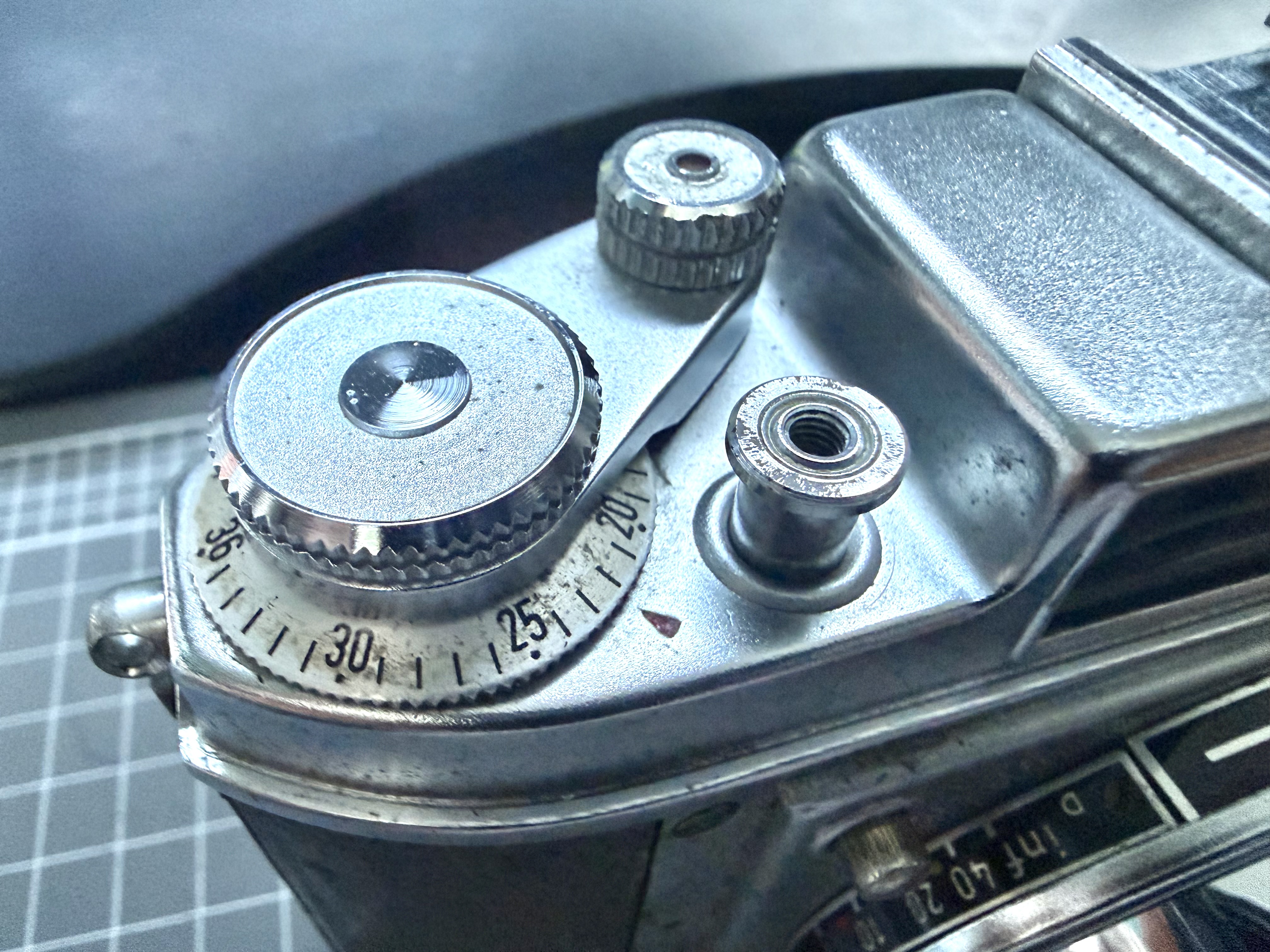
I next removed the top cover.
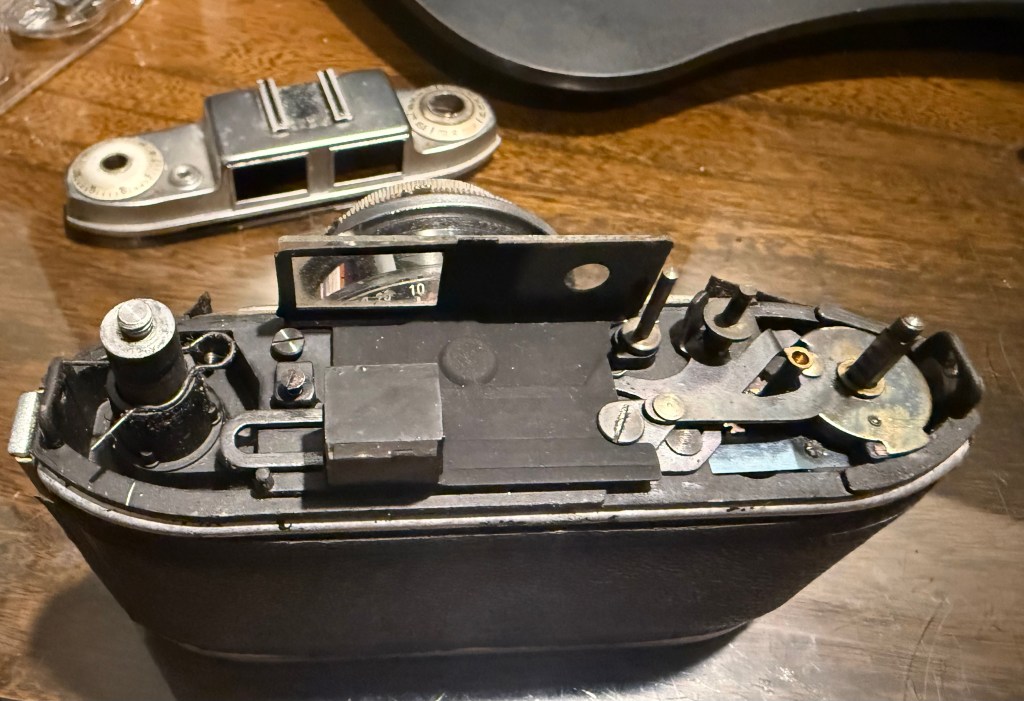
The Baldina does not have a rangefinder, merely a viewfinder prism

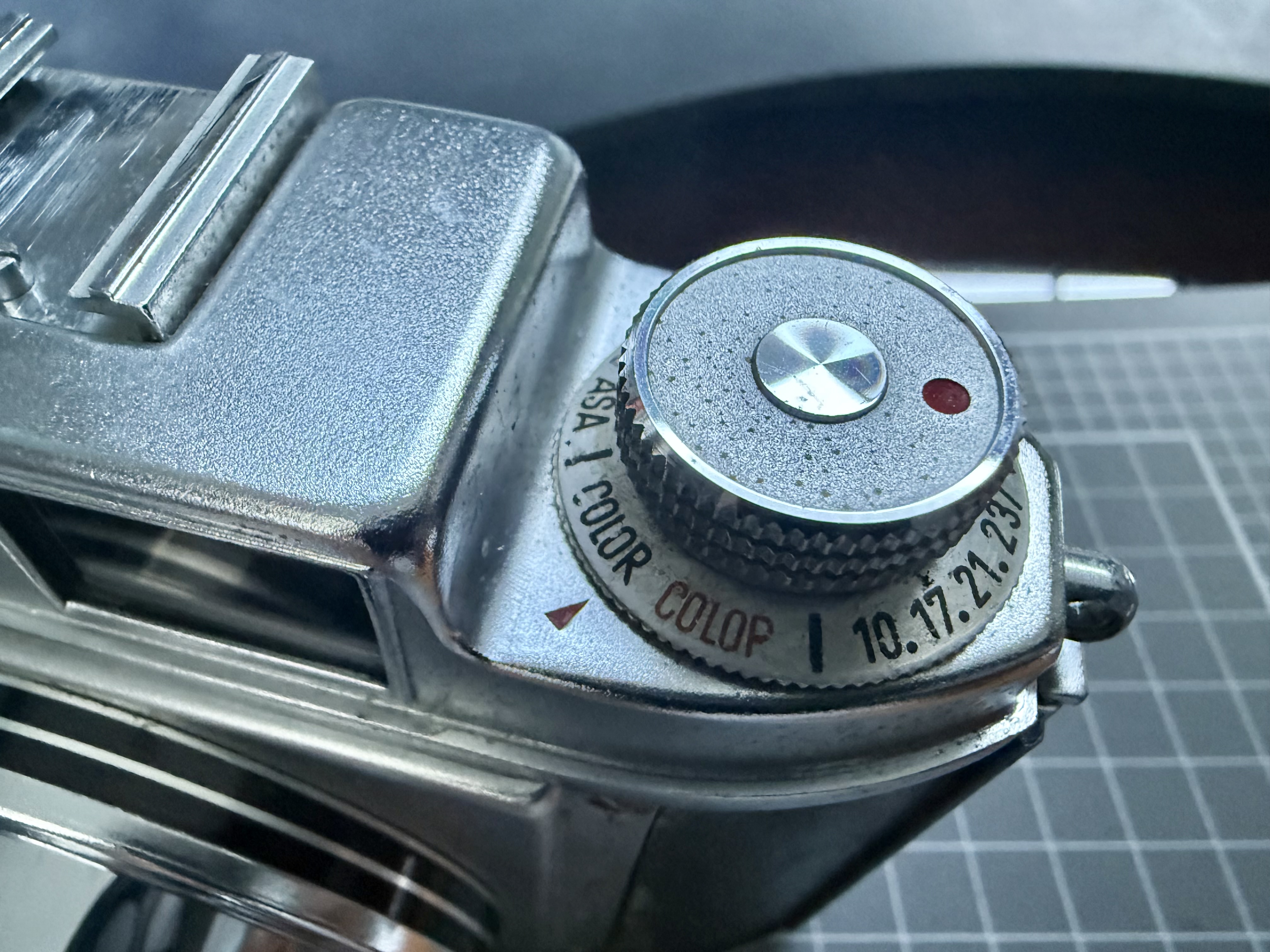
To remove the film advance lever untwist the cap counter-clockwise. The film rewind knob is removed by opening the film door, jamming the film prongs with the blunt end of tweezers, and turning the knob counter-clockwise. After unscrewing the neck-strap lugs on both ends, carefully take off the top cover, avoiding damage to the viewing glass.
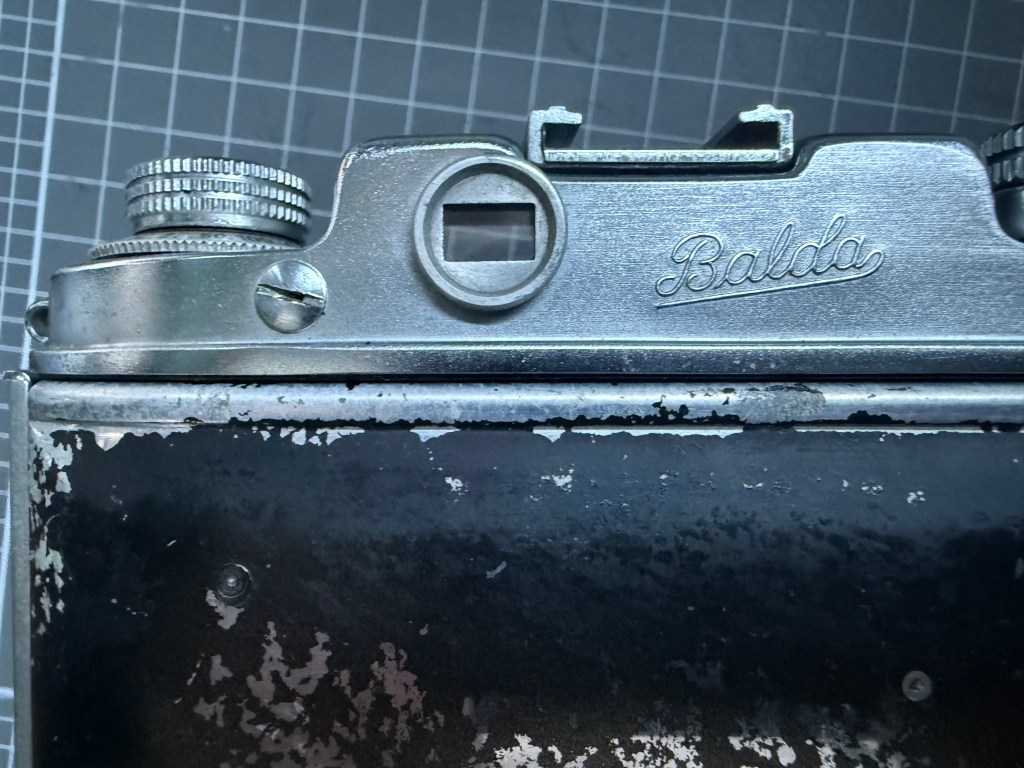
The screw on the left does not screw to anything, I suspect it is for easy access to adjust the rangefinder in a Super Baldina

I initially didn’t know how to take off the bottom plate since there were no screws visible. I removed the front lens and shutter housing and found a big screw inside that secured the tripod mount and bottom plate from the inside. When reassembling, I realized there’s a way to access it without removing the front lens and shutter housing, as it’s nearly impossible to put the housing back on if the bottom plate is reattached.
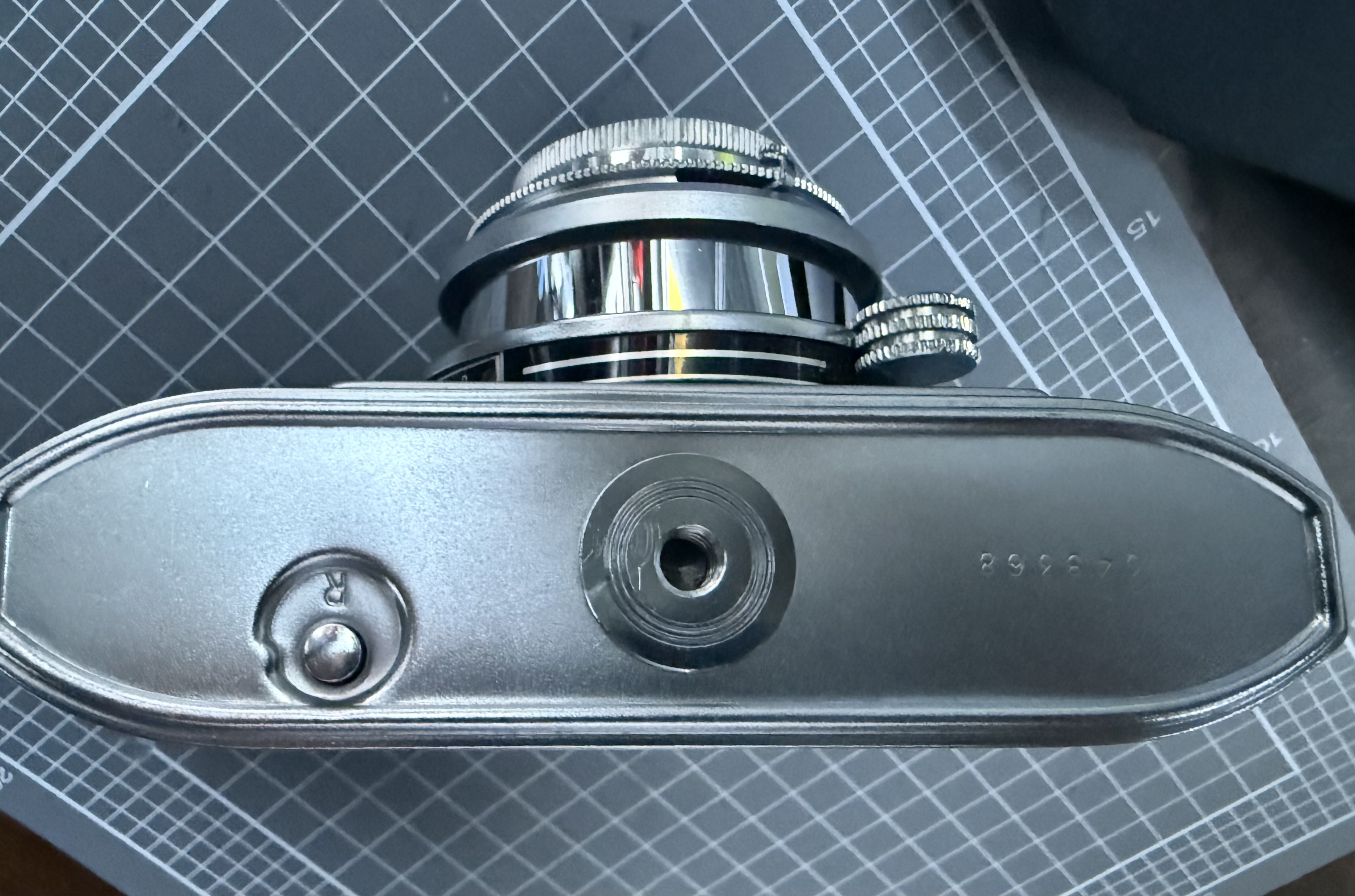
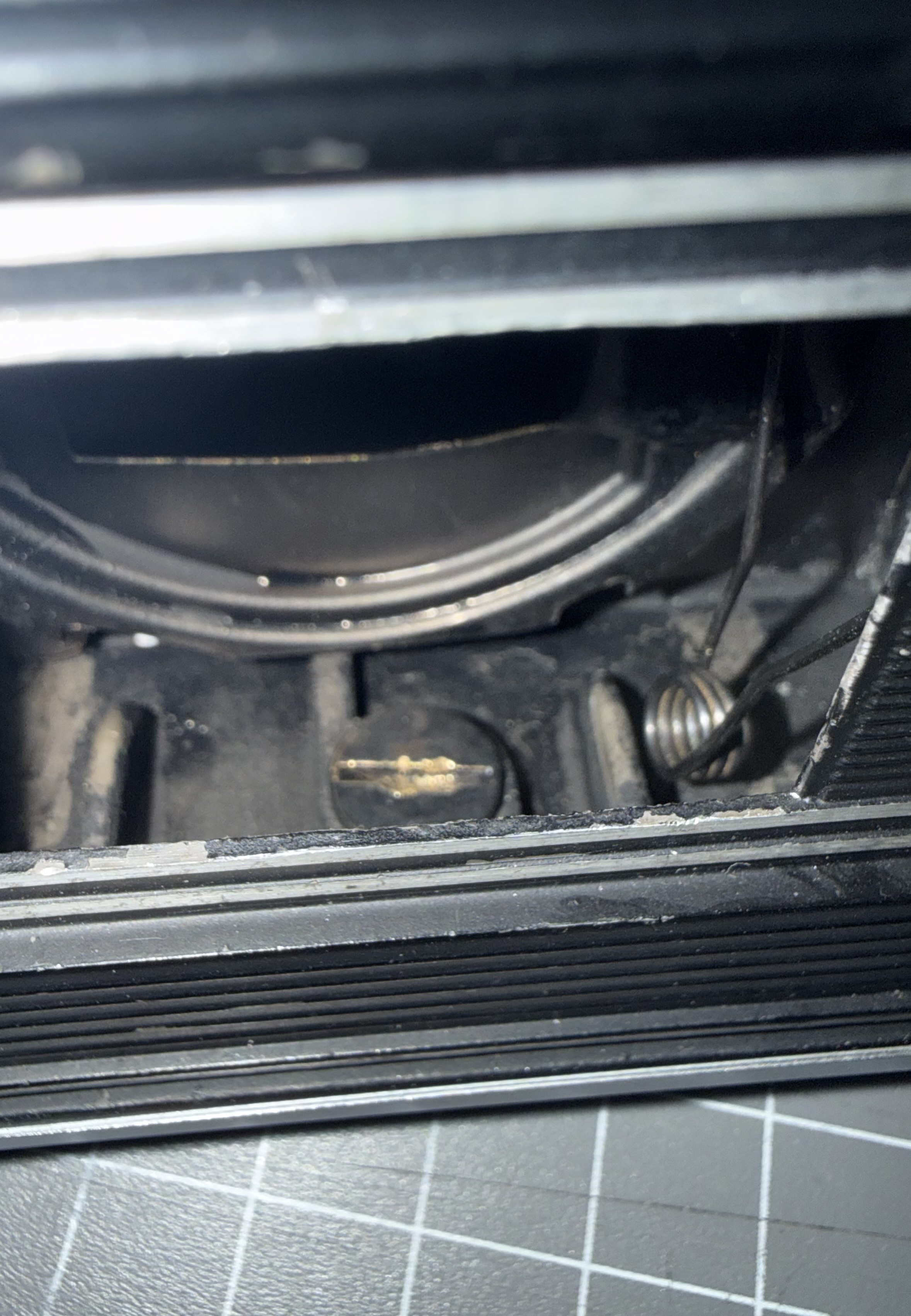
Both the Baldina and Super Baldina share the same camera bodies and have collapsible lenses that pop out when you press the button on the top left of the lens housing. The lens does not use helicoids for focusing; instead, the focusing knob moves the tube in and out. When reassembling the lens housing, it is easiest to set the focusing knob at the midpoint between the nearest and infinity focus.
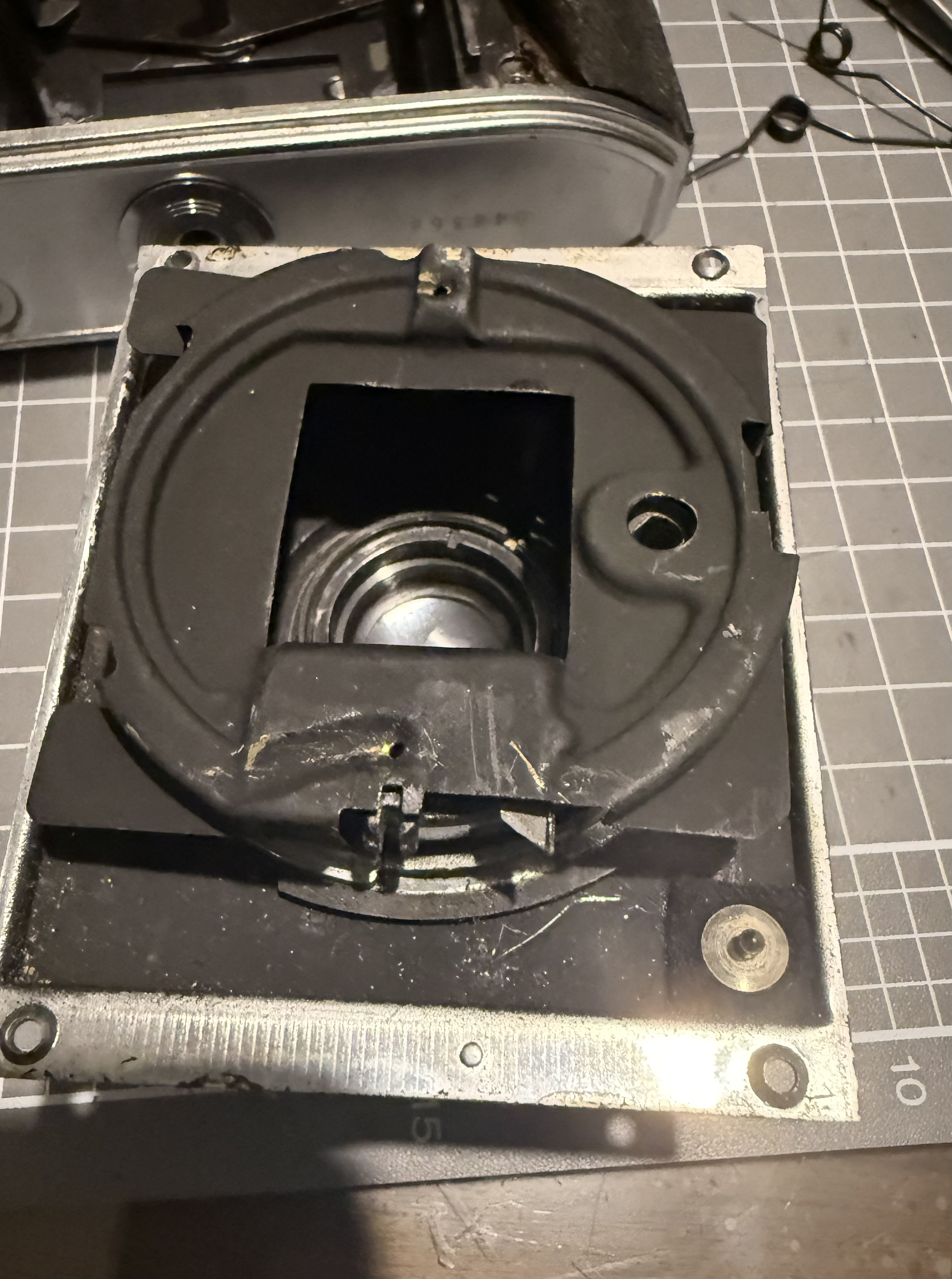
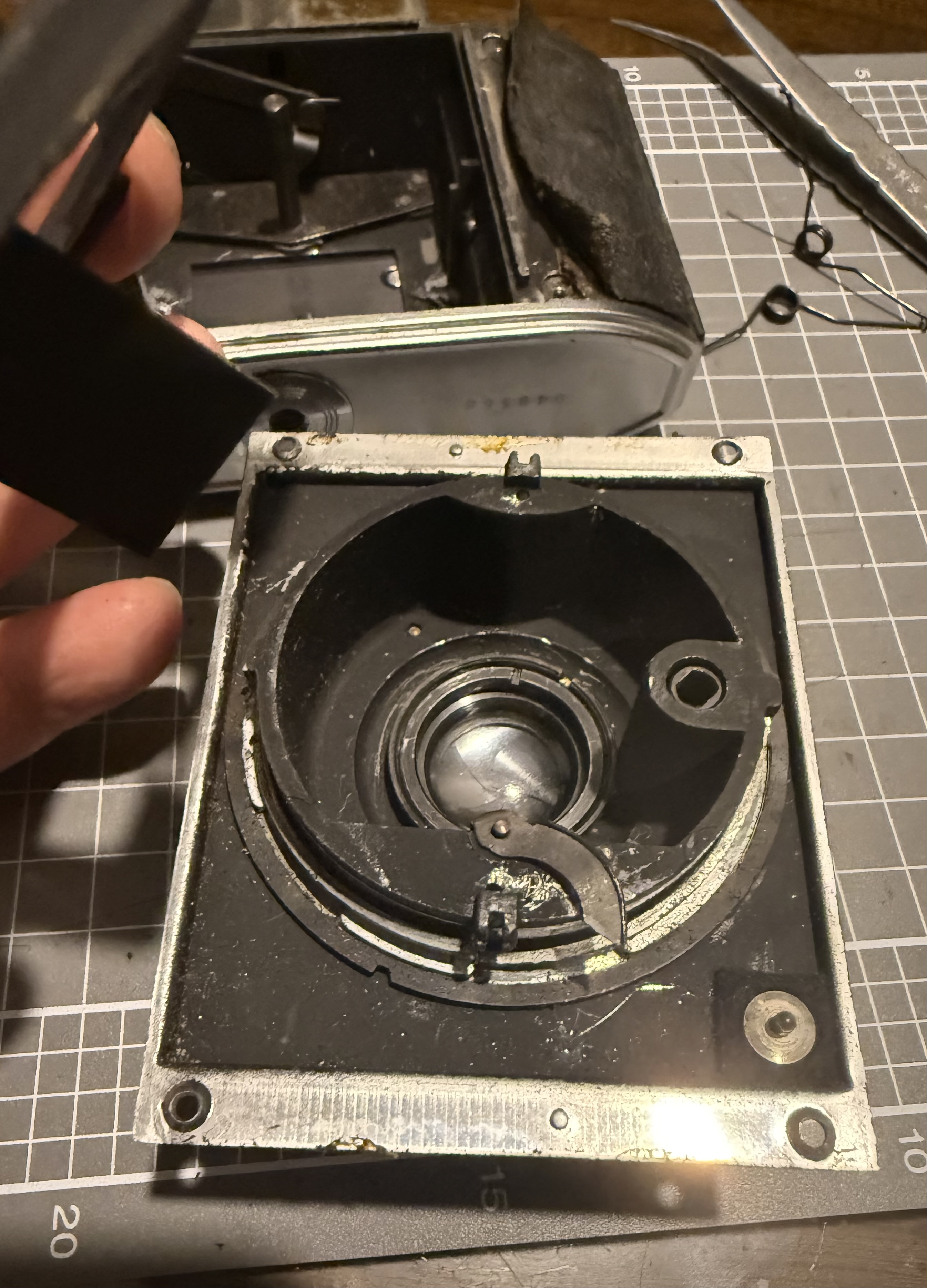
There are four screws that hold the front lens plate to the body. The two screws on the left have larger heads, while the two on the right have smaller heads. Be sure to put them back in the correct spots during reassembly to ensure a flushed fit.

When taking off the screws, hold the front lens plate firmly onto the body. The collapsible part of the lens tube is under tension from two large springs that aren’t tightly secured inside. You should extend the lens tube before unscrewing the plate to lessen the tension on the springs. In my case, the springs popped out when I removed the front lens plate.

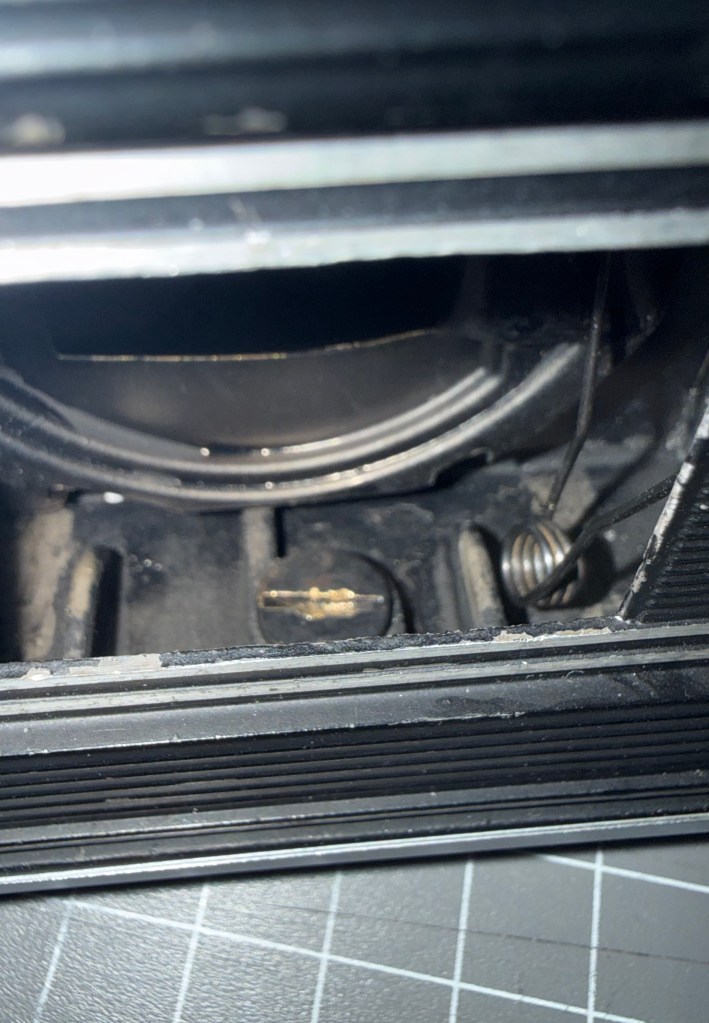
Later, I discovered that the springs are held in place by two holes in the body and two on the lens tube. To reassemble, first secure the springs in the holes, then push the inner plate to hold the springs under tension. Next, attach the front lens plate while making sure the collapsible tube release button and shutter cocking lever fit into their holes. This was the hardest part of reassembly. The design is poor, and it took several attempts to get everything back in place. It’s not impossible, but it becomes very difficult if the bottom camera plate is already attached.
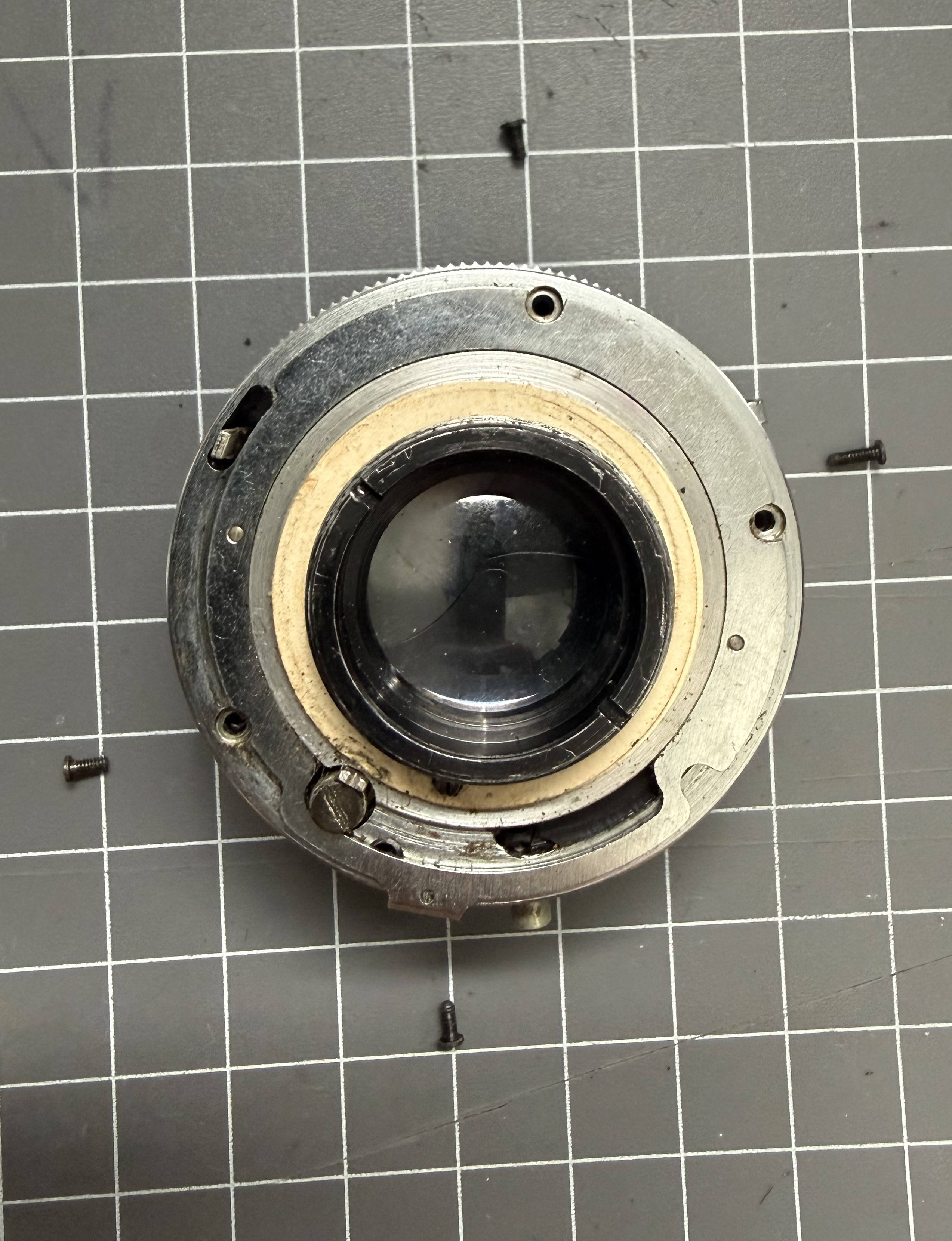
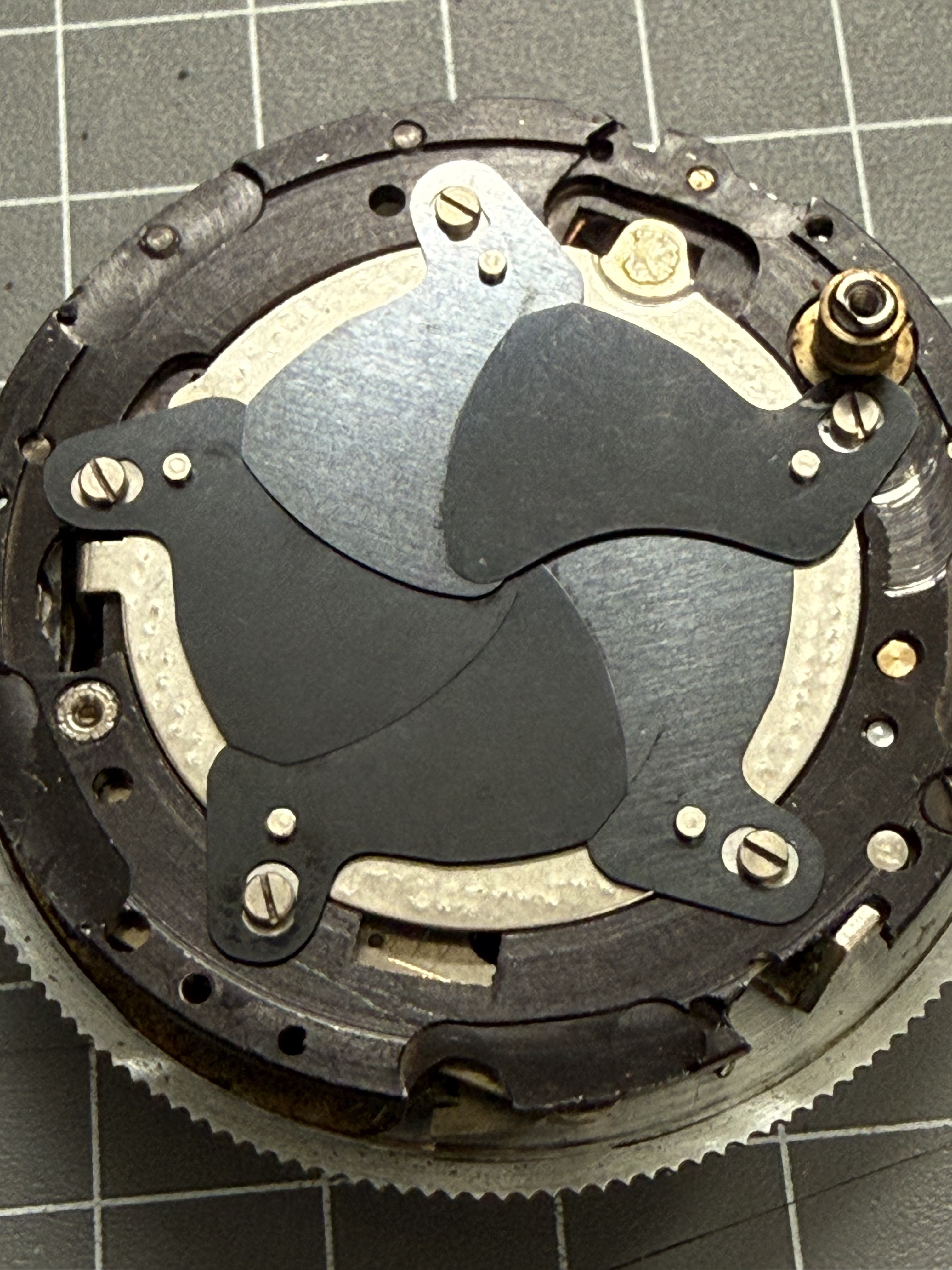
Compared to the front lens plate, the lens and shutter are easier to handle. They are attached to the front plate with a retaining ring at the rear, which can be removed using a lens spanner.

I accessed the shutter blades from the rear since I couldn’t unscrew the front lens elements despite using acetone and naphtha. When taking apart the Pronto shutter from the rear, be cautious of the cardboard shims and four screws, one of which is longer and also serves as a stop for the spring that tightly closes the shutter blades. Remember where each part goes. The shutter blades can be easily removed, cleaned, and reassembled, so note their positions before disassembly.
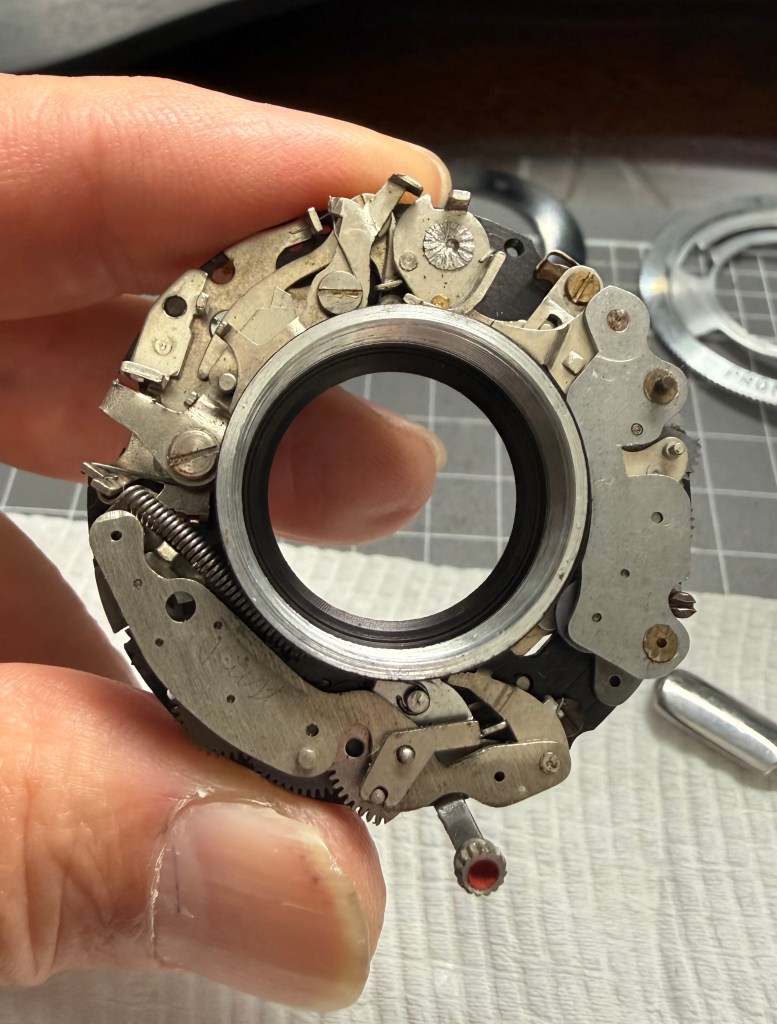
Later, I managed to remove the front lens element to access the Pronto shutter from the front. I won’t explain how to service the shutter, as you can find that in videos online.

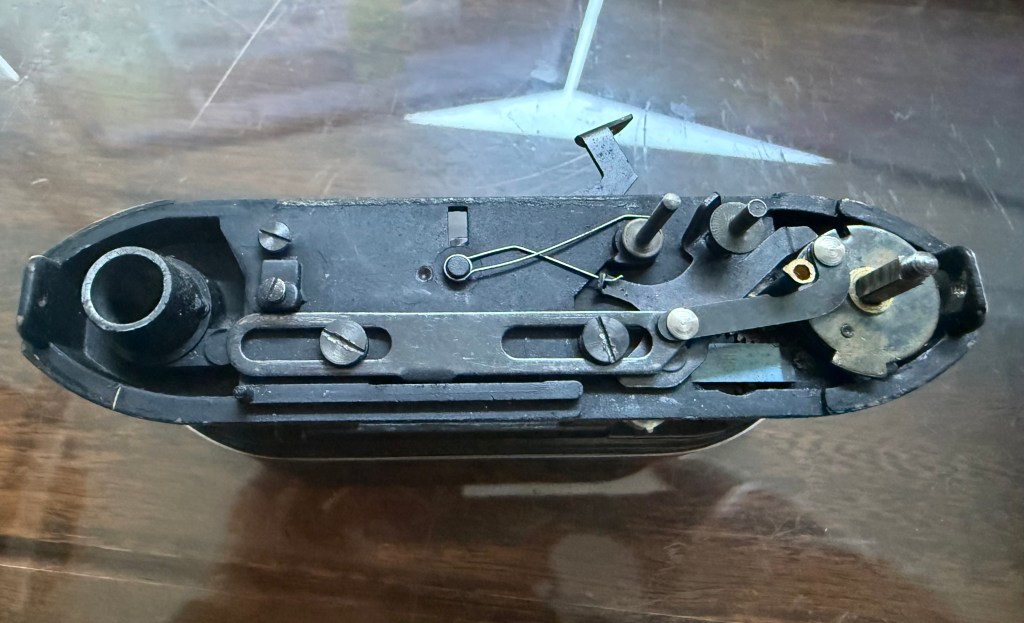
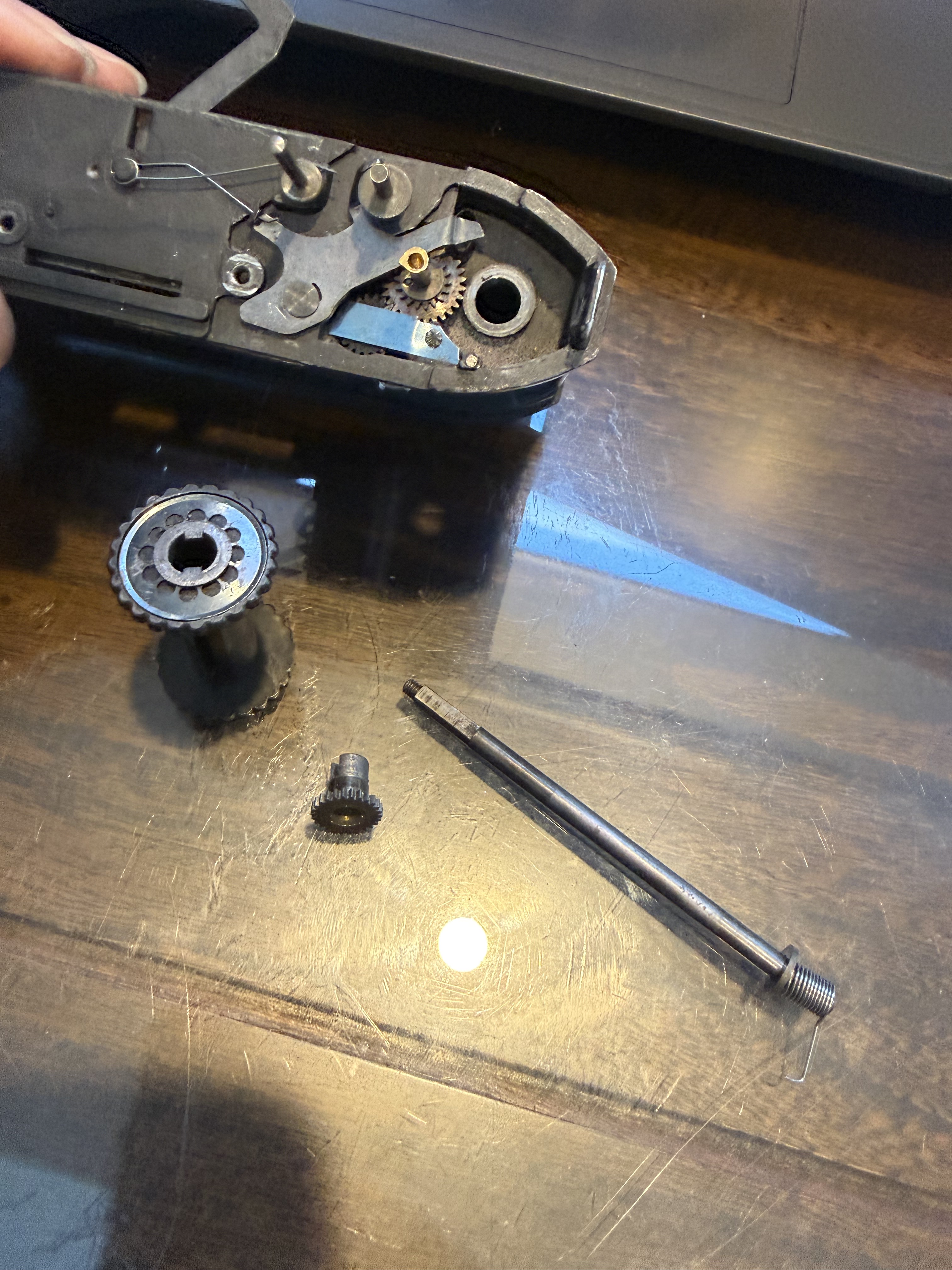
To service and lubricate the film advance mechanism, first remove the viewing prism and the viewing glass housing. Gently wiggle the prism out of its holder, and unscrew the exposed screws to take off the viewing glass housing.
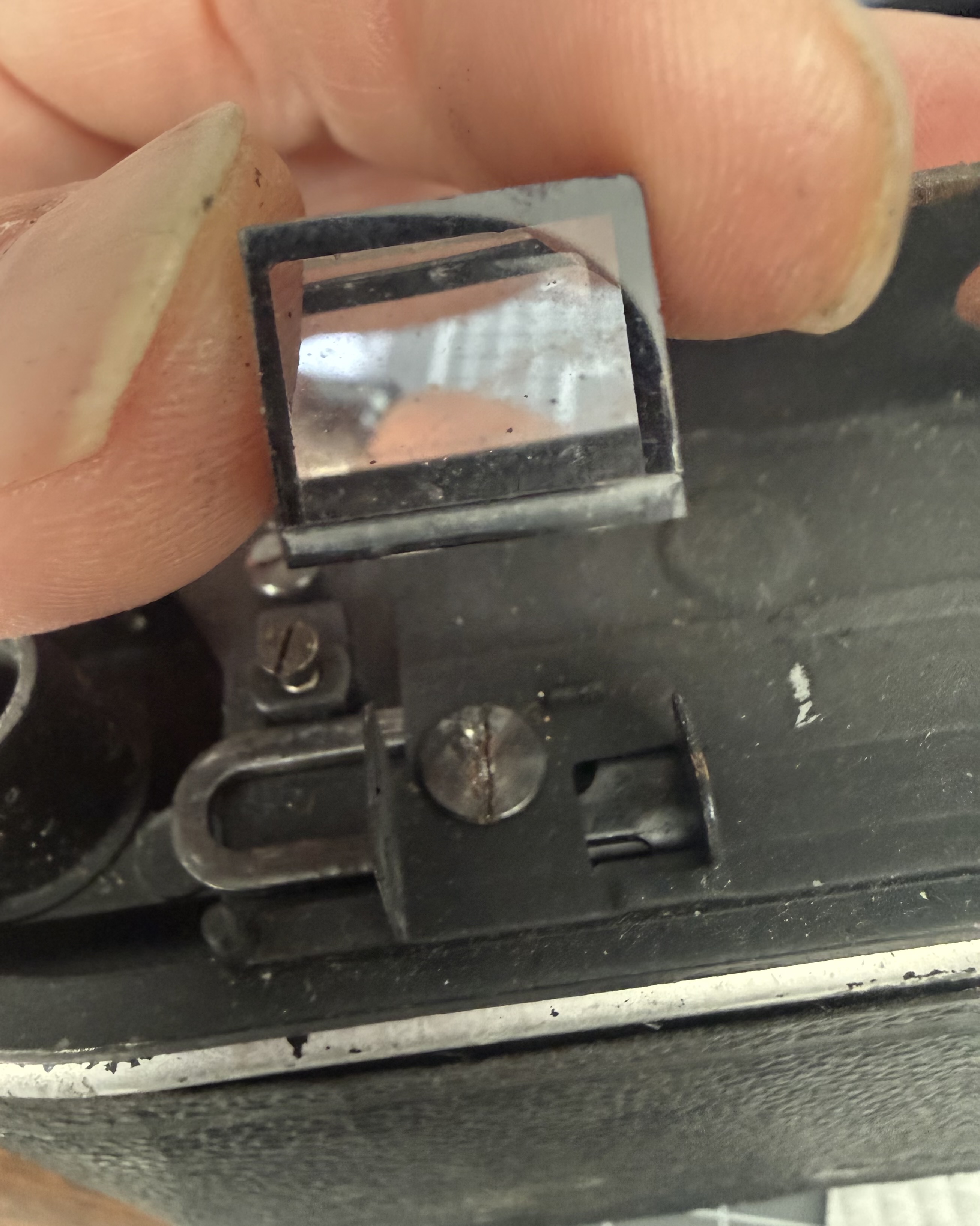
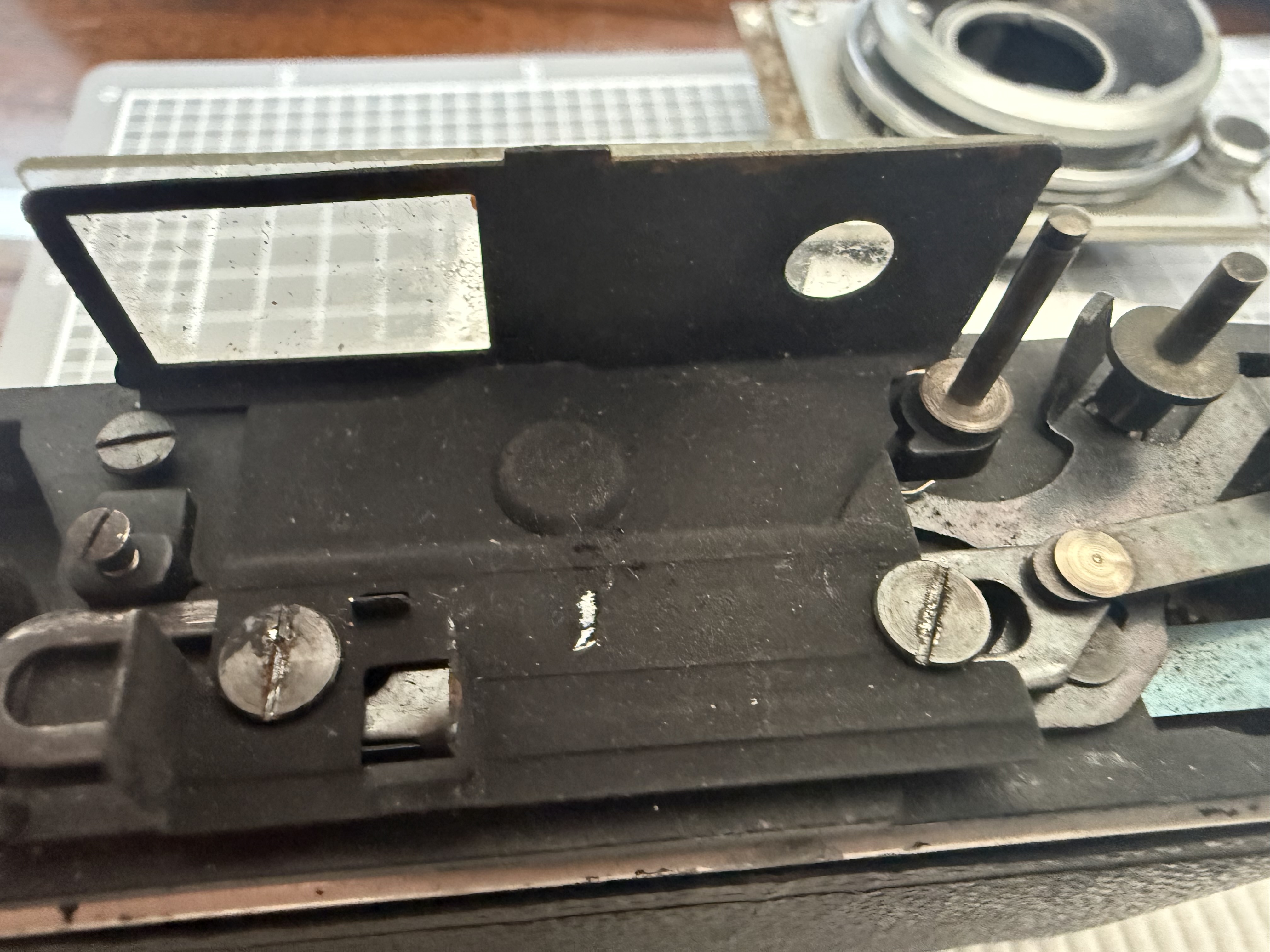
Note how the film advance and shutter cocking mechanisms are put together as you take them apart. It’s not a complicated mechanism, but understanding how they work before disassembly is important.
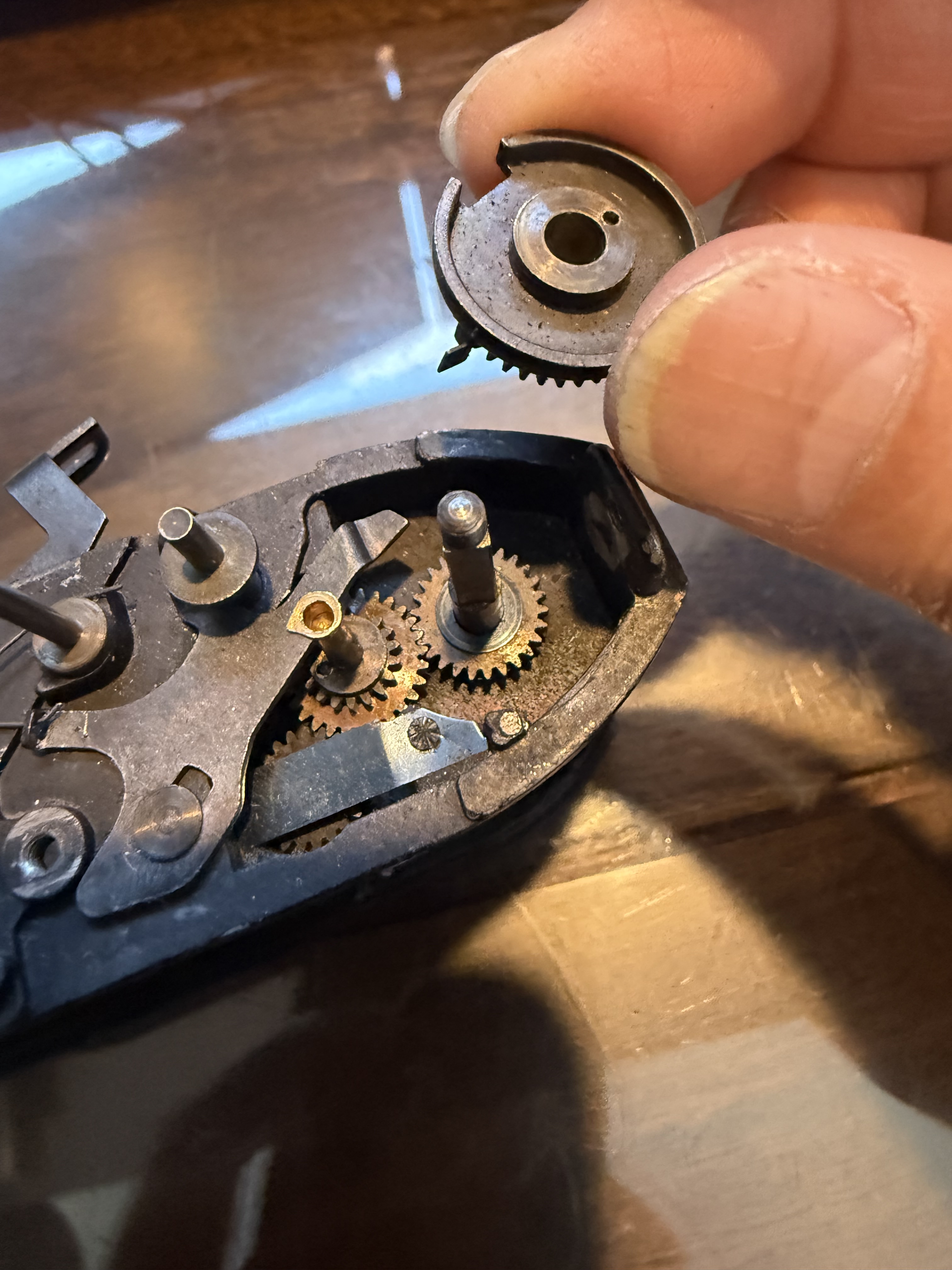
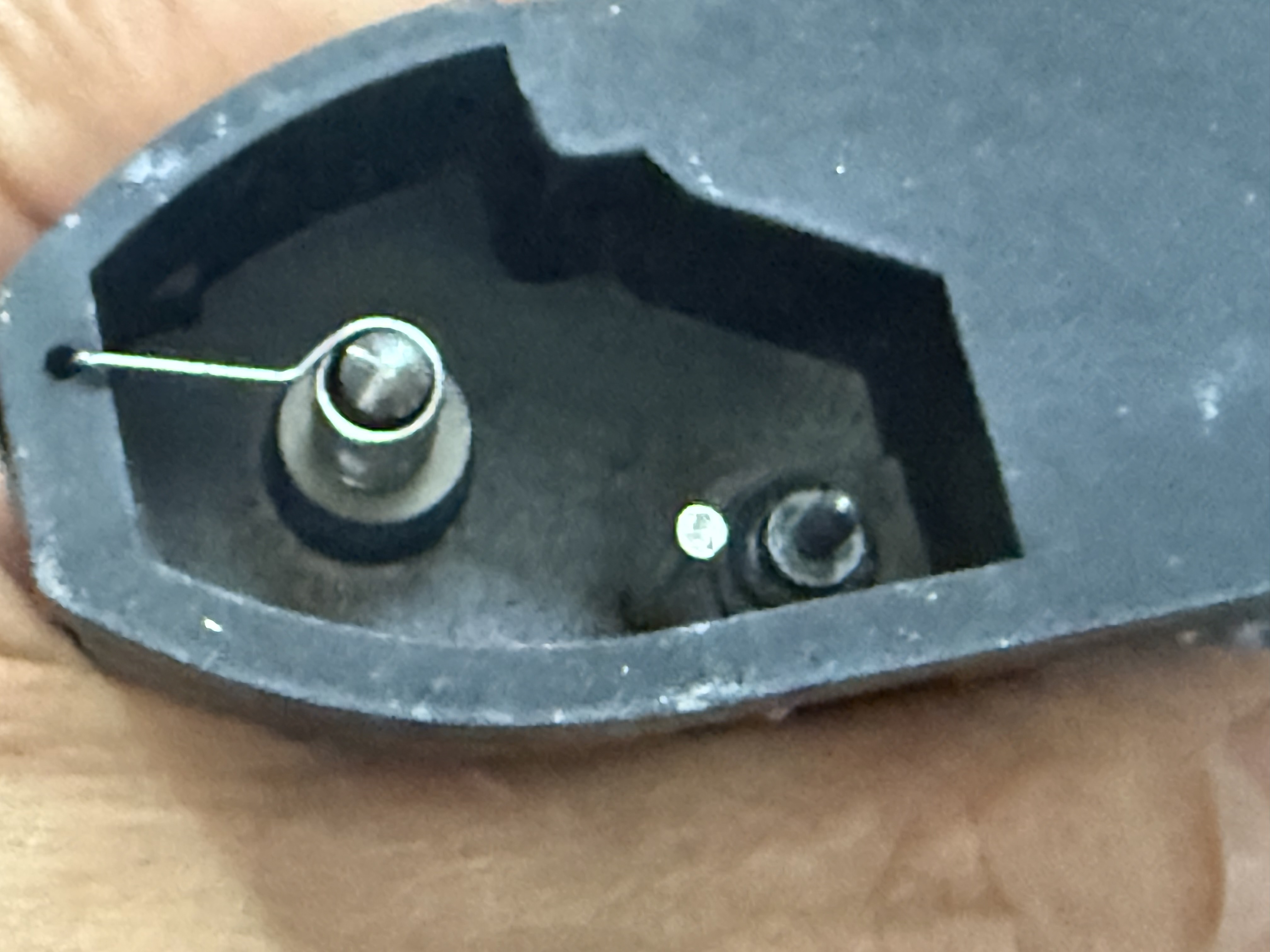
Once everything is cleaned and lubricated, reassembly is the reverse of assembly. Start by putting the lens and shutter mechanism back together, followed by the film advance mechanism, and then attach the lens front plate to the body. This part is tricky because of the springs, so be patient, take breaks, and it will fit together.
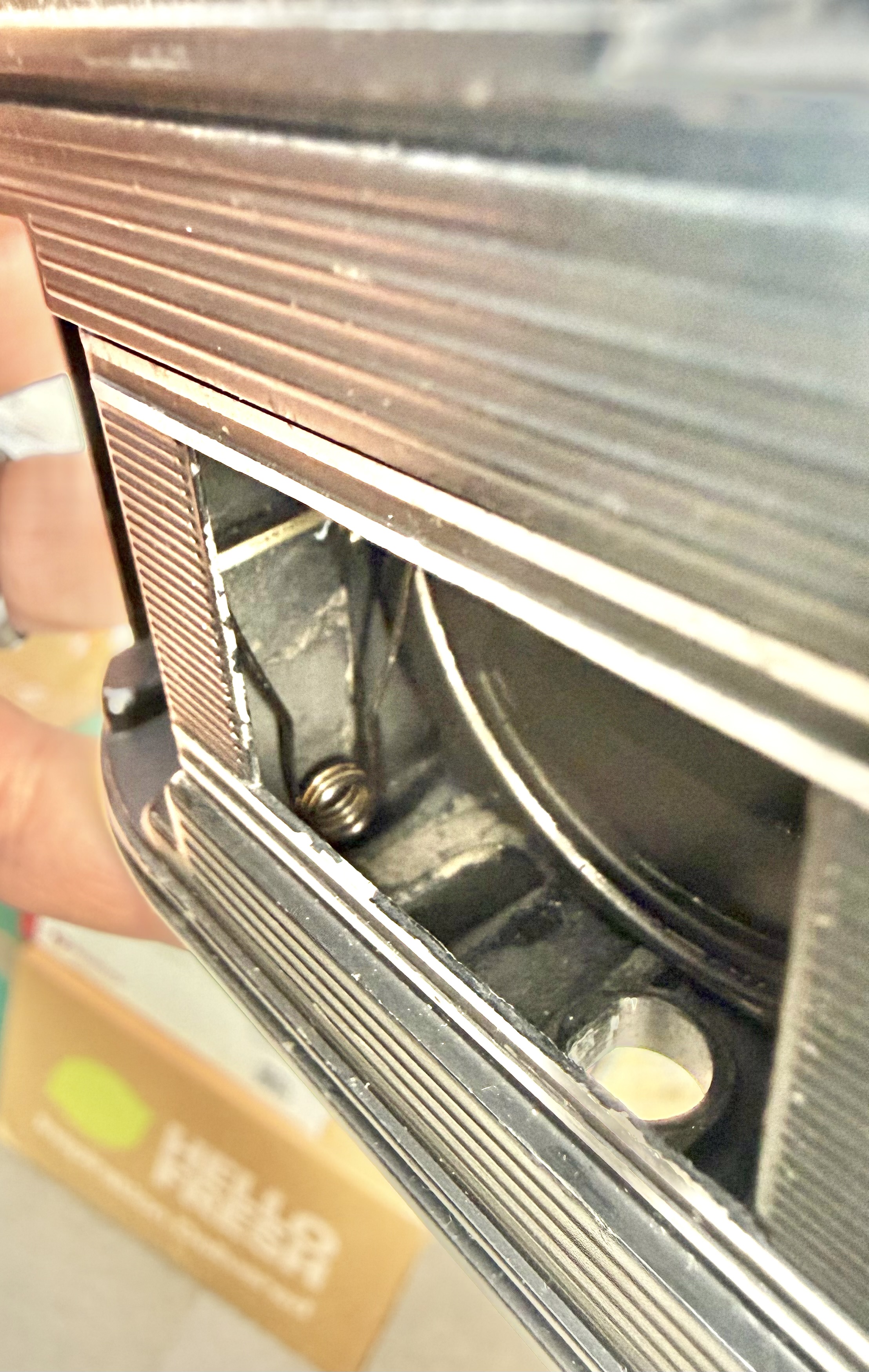
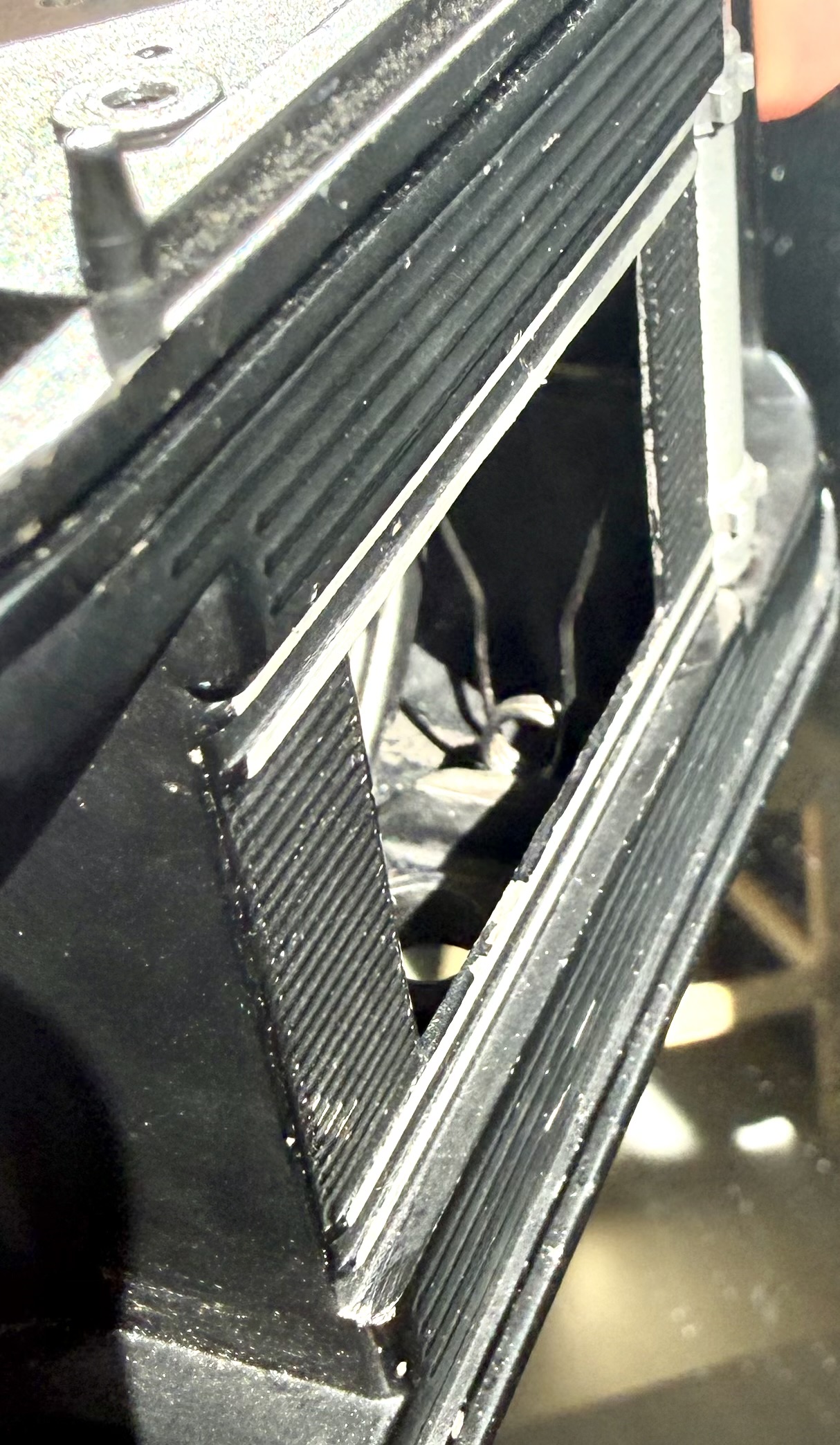
The lens tube springs are fixed in the camera to two small holes at the front and back.
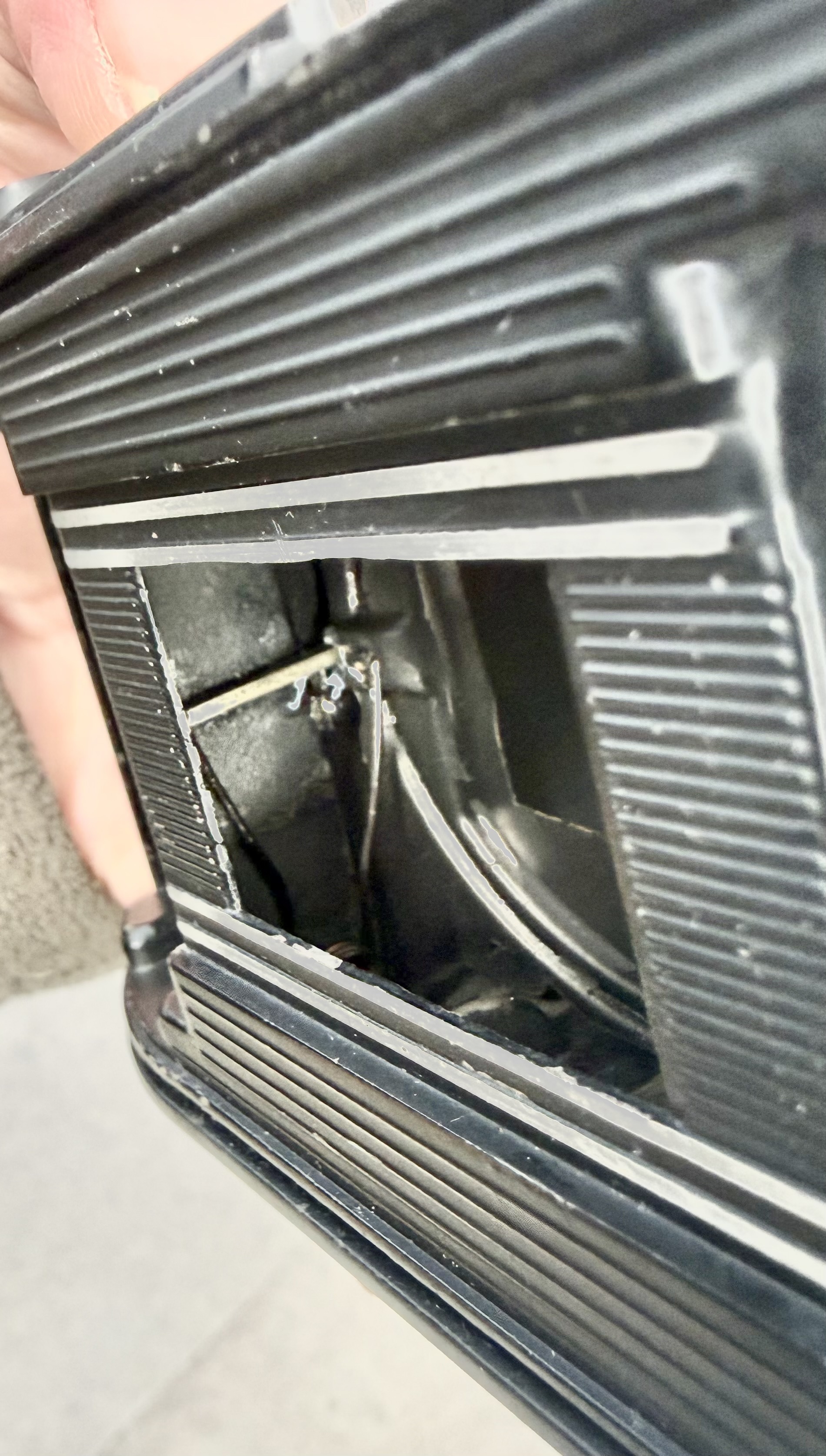
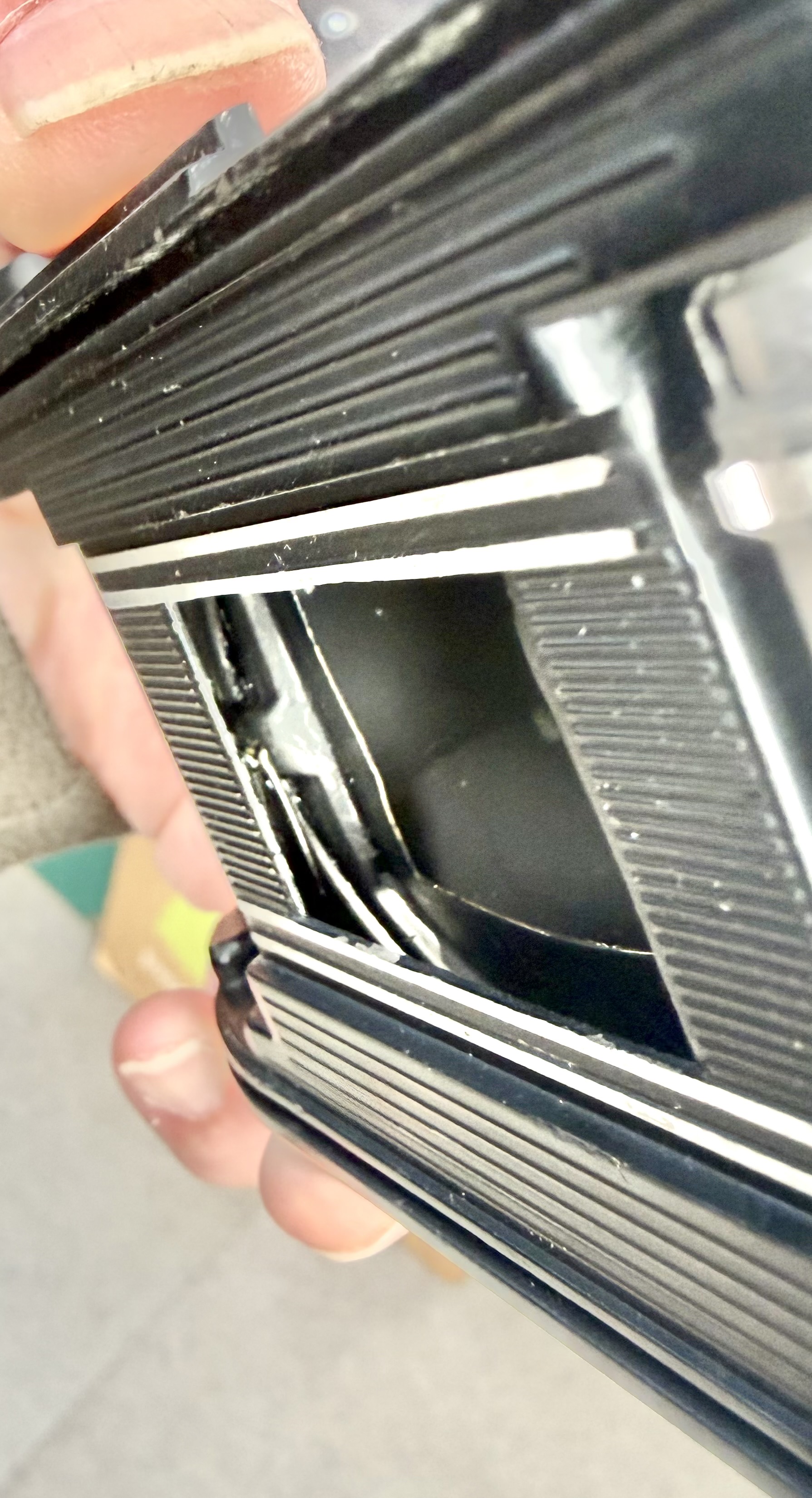
In the first picture above, the lens tube is extended. In the second picture, the lens tube is retracted. Note that the springs are under maximum tension when the lens tube is retracted. Hence when you press the lens release button, it pops out very quickly.

Once the front lens plate is re-assembled, then re-assemble the bottom plate first. Place the tripod mount into the hole in the bottom plate and then screw on the circular screw from the inside of the film chamber (with lens tube extended) to the tripod mount to secure the bottom plate.
Finally check that everything is connected properly i.e. film advance working properly, shutter cocks, shutter releases properly, before re-installing the viewing glass and prism and the film rewind shaft. Once everything is in place, re-assemble the top plate, film advance lever and film rewind knob and camera lugs.

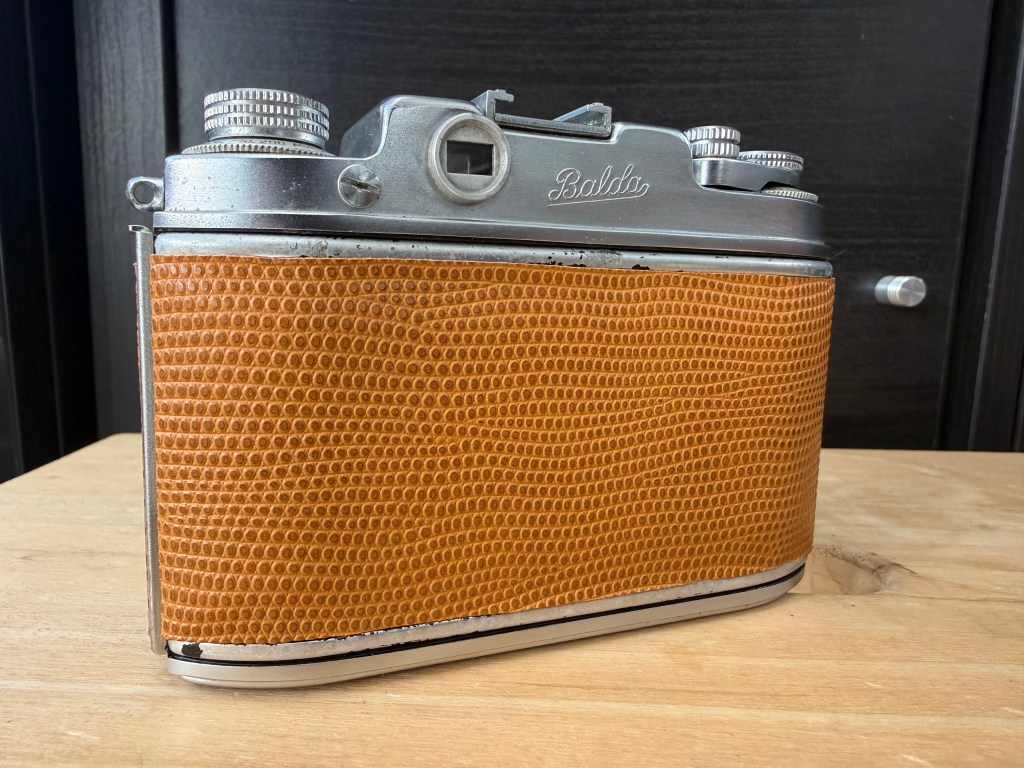
Below, Balda Baldina fully serviced with new skin.
Thanks for reading.
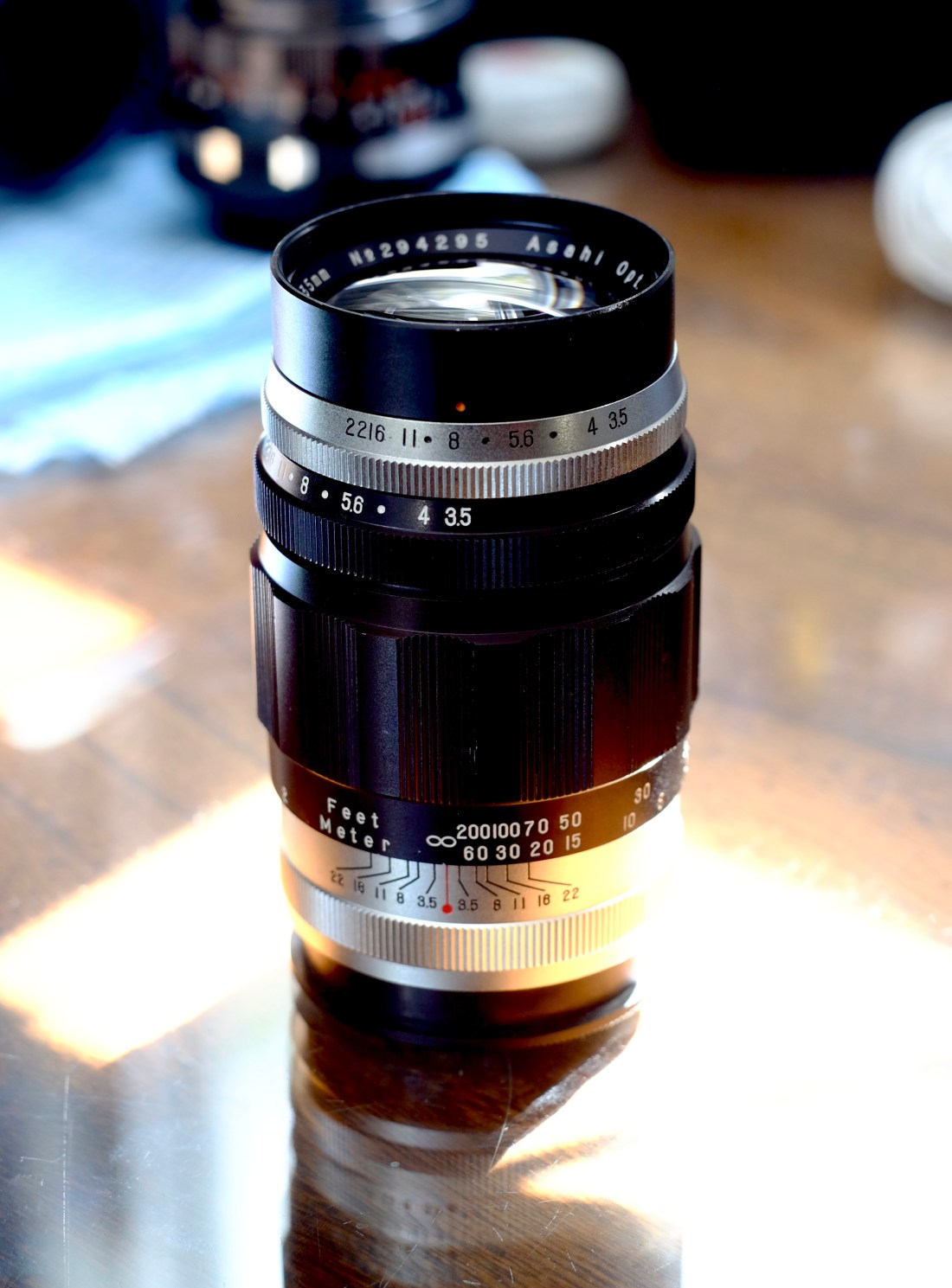
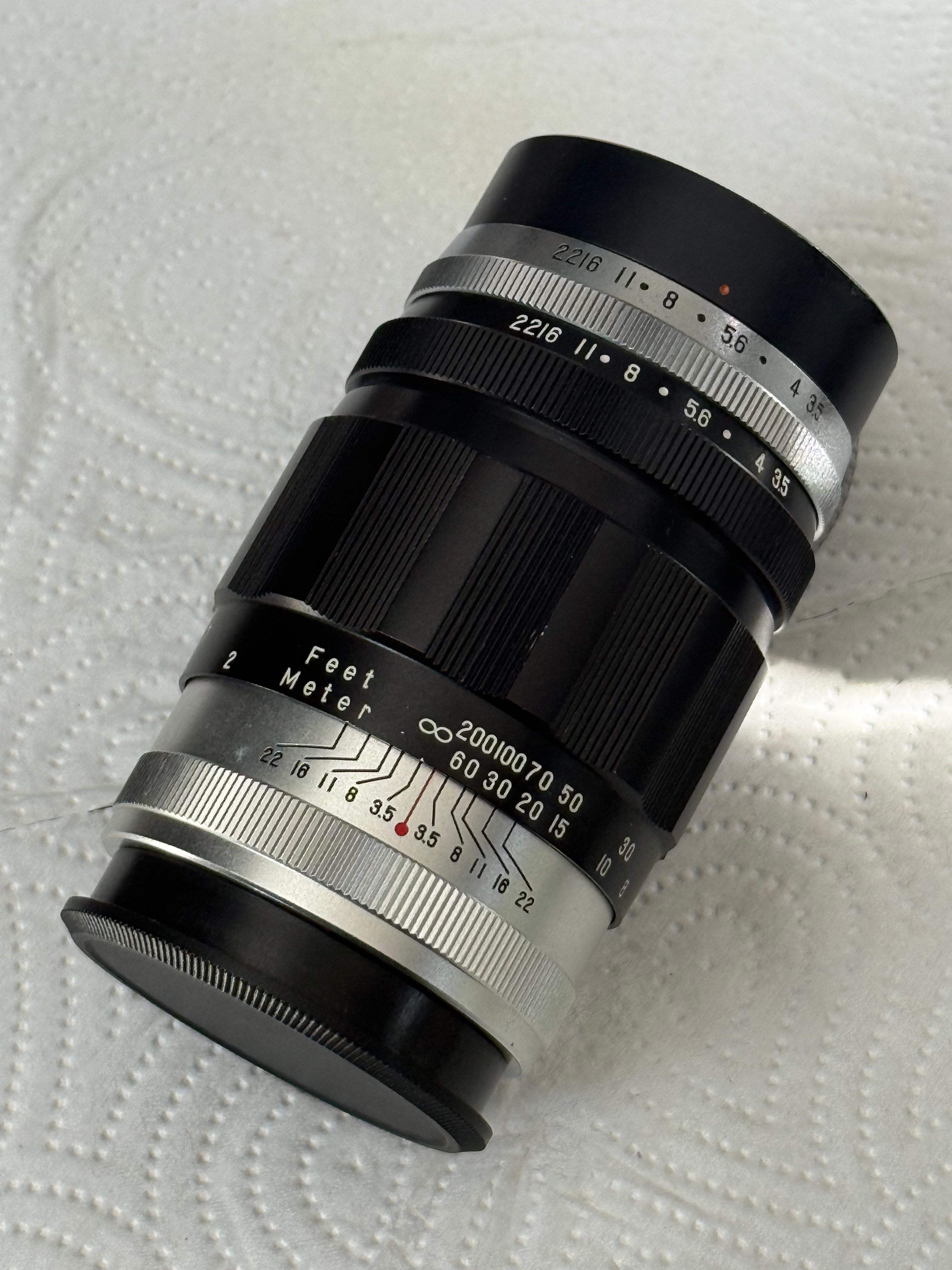
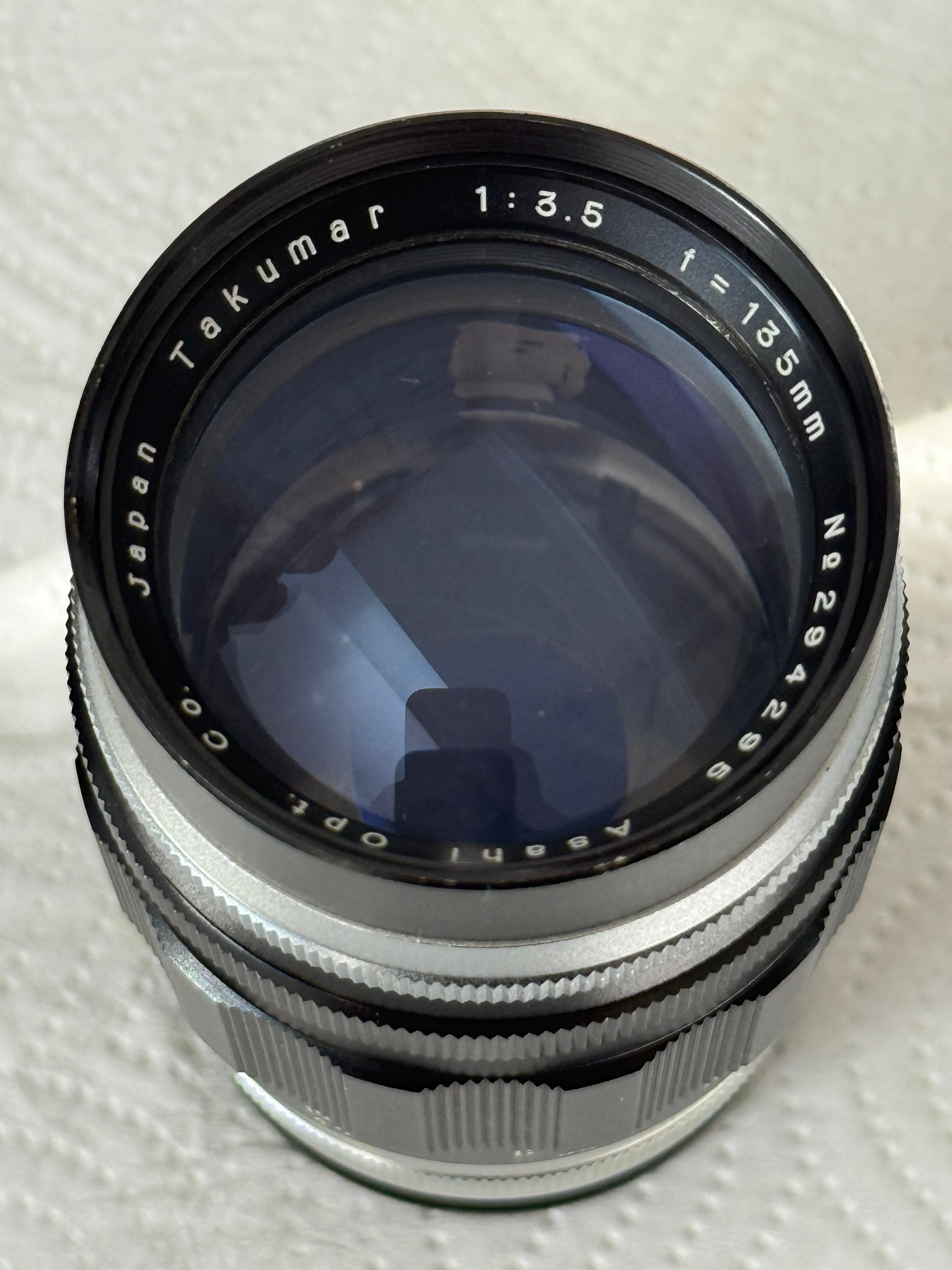
Disassembling the Asahi Takumar 135mm f3.5 (Pre-set v.1) Lens

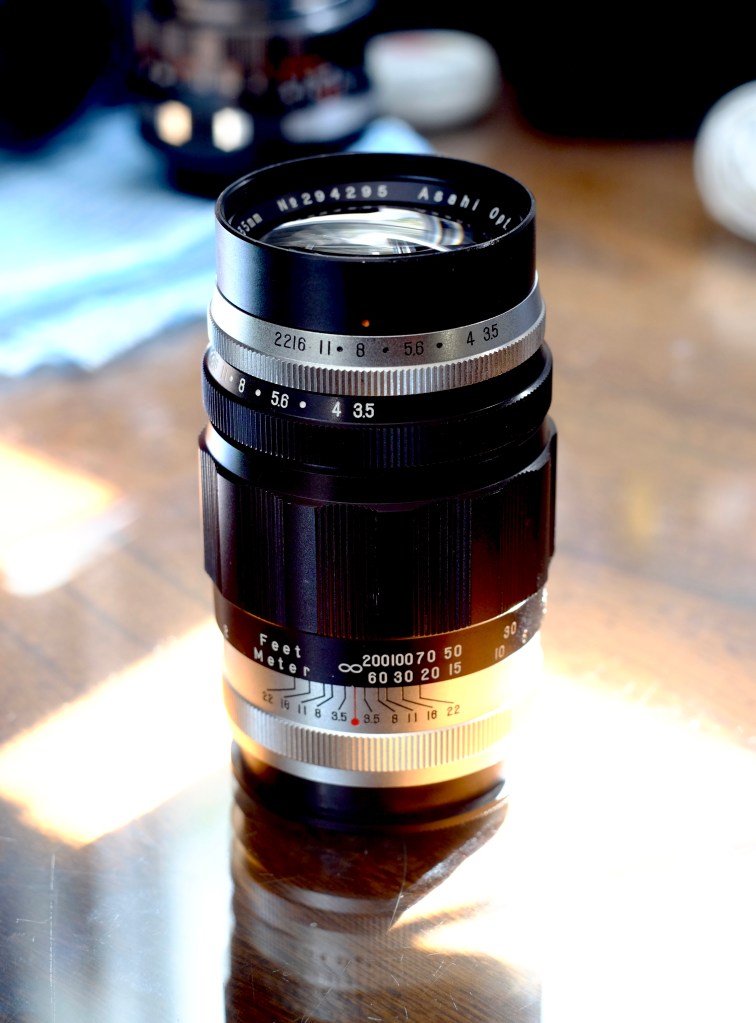
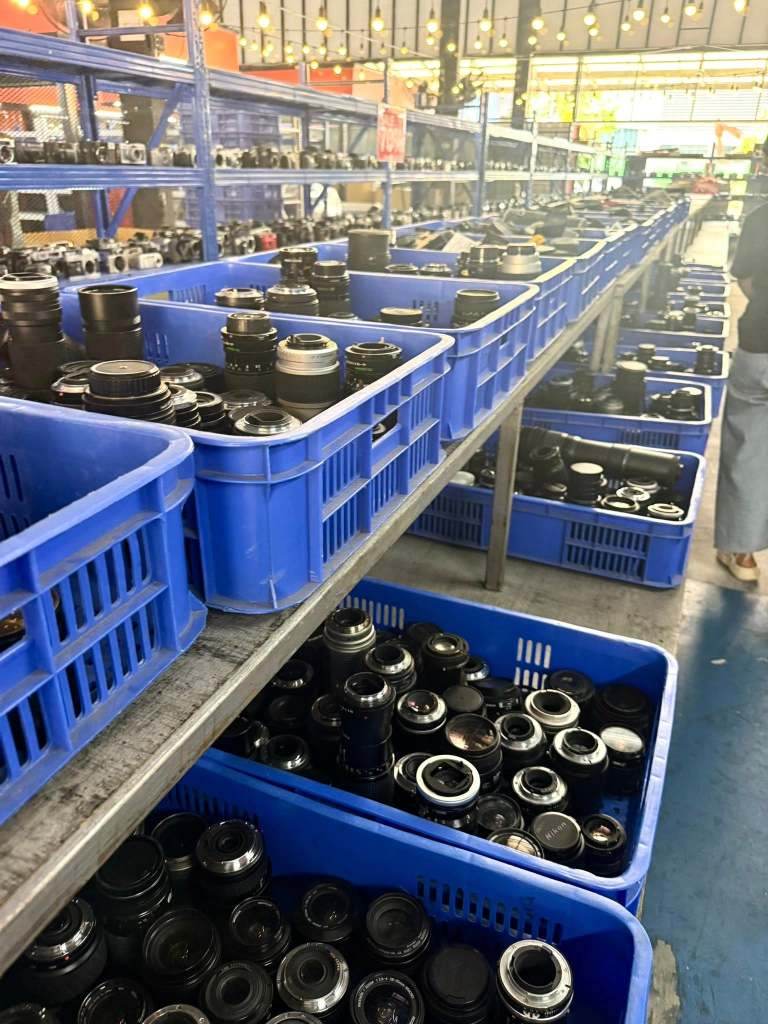
I picked up a near-mint vintage Asahi (Pentax) 135mm f/3.5 version 1 lens from Lucky Home (LH) Cameras, tucked away in the Miami Bayside Bangpu area of Bangkok. The place is a treasure trove of old and vintage Japanese cameras and lenses—though the pricing seems to depend entirely on the day you visit. When I dropped by on a Thursday, they were advertising a 70% discount across the board. Whether that’s a genuine deal or just a clever marketing ploy, I couldn’t resist. The lens was in beautiful condition, and at that price, it felt like a steal.

I snagged this Takumar lens for just 600 Thai Baht after the discount—roughly USD 18. A total steal, if you ask me. For a 65-year-old piece of glass, it was in surprisingly good shape: nearly mint, with only a hint of fungus and a slightly stiff focus ring. I scoured the internet hoping to find a disassembly guide, but came up empty-handed.

The build quality is impressive—classic Takumar craftsmanship. No visible screws anywhere on the barrel, save for three tucked away at the rear mount. It’s the kind of lens that feels like it was engineered to last generations.

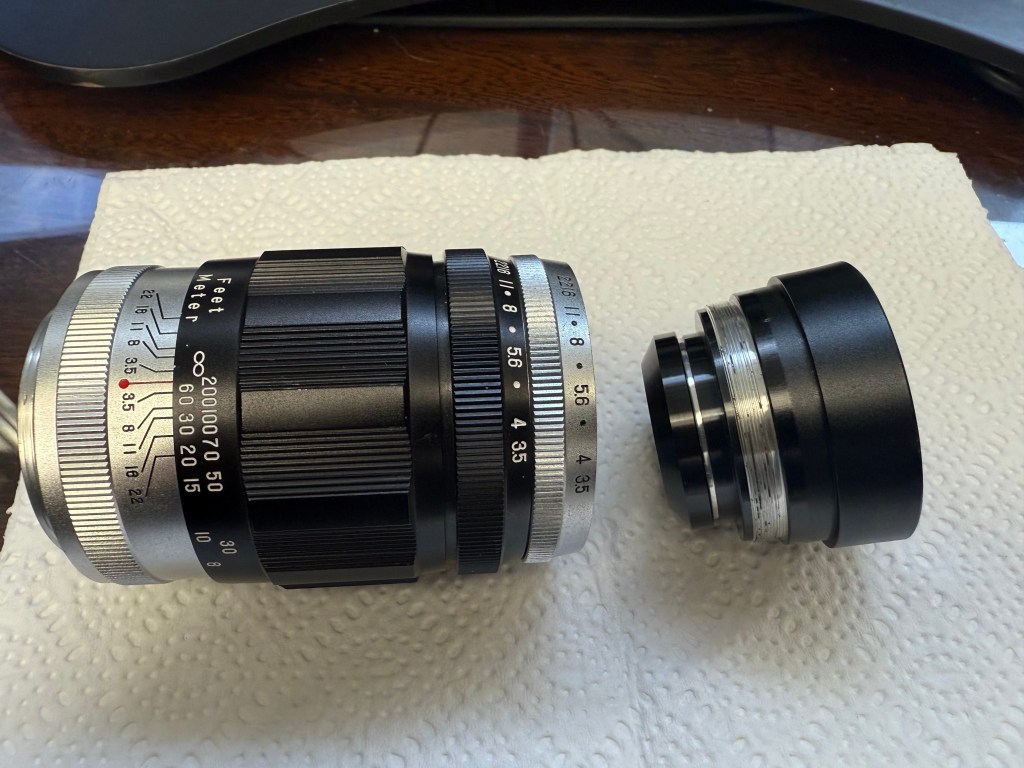
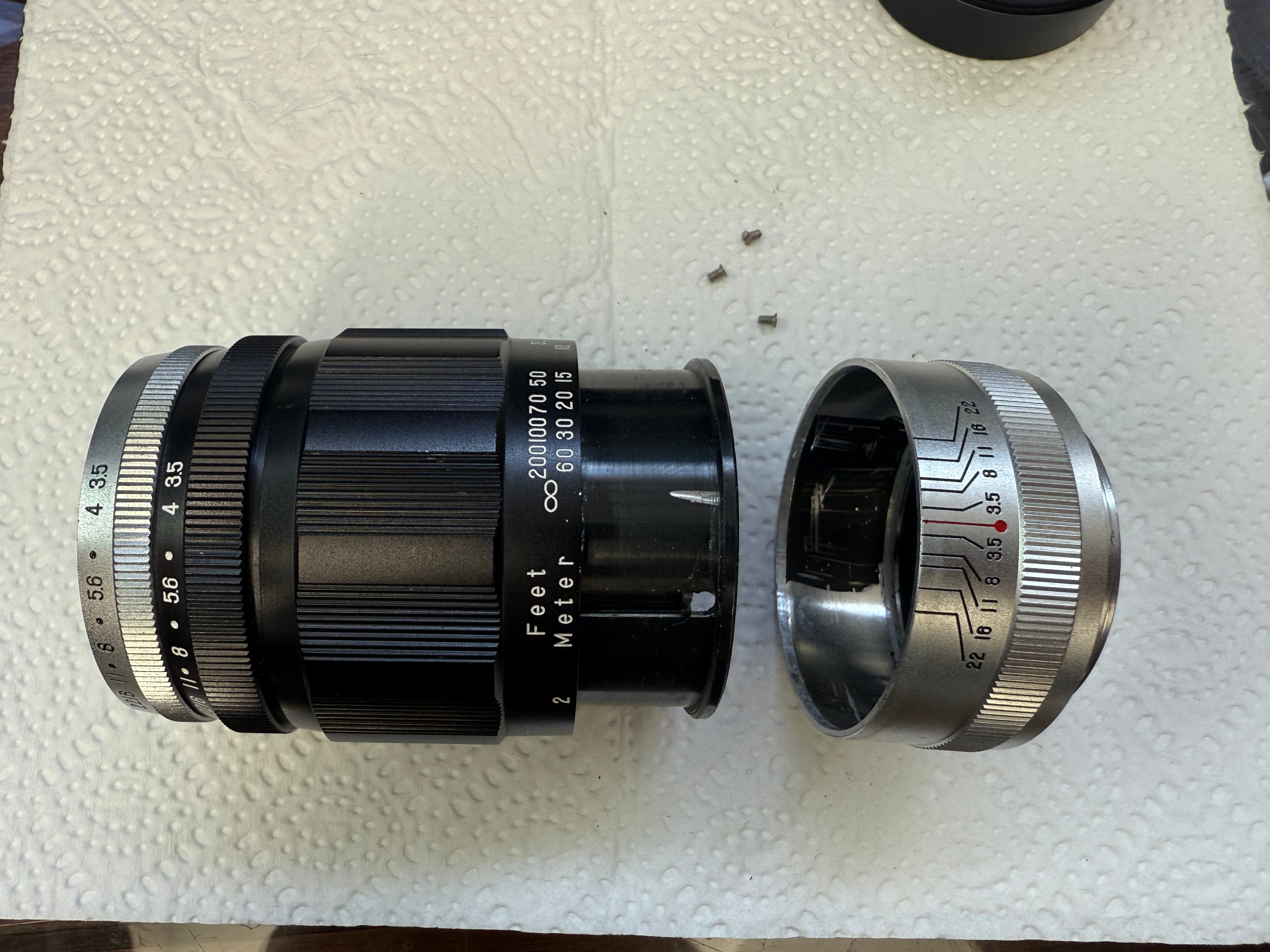
Removing the front elements is straightforward—just unscrew the entire front element group.

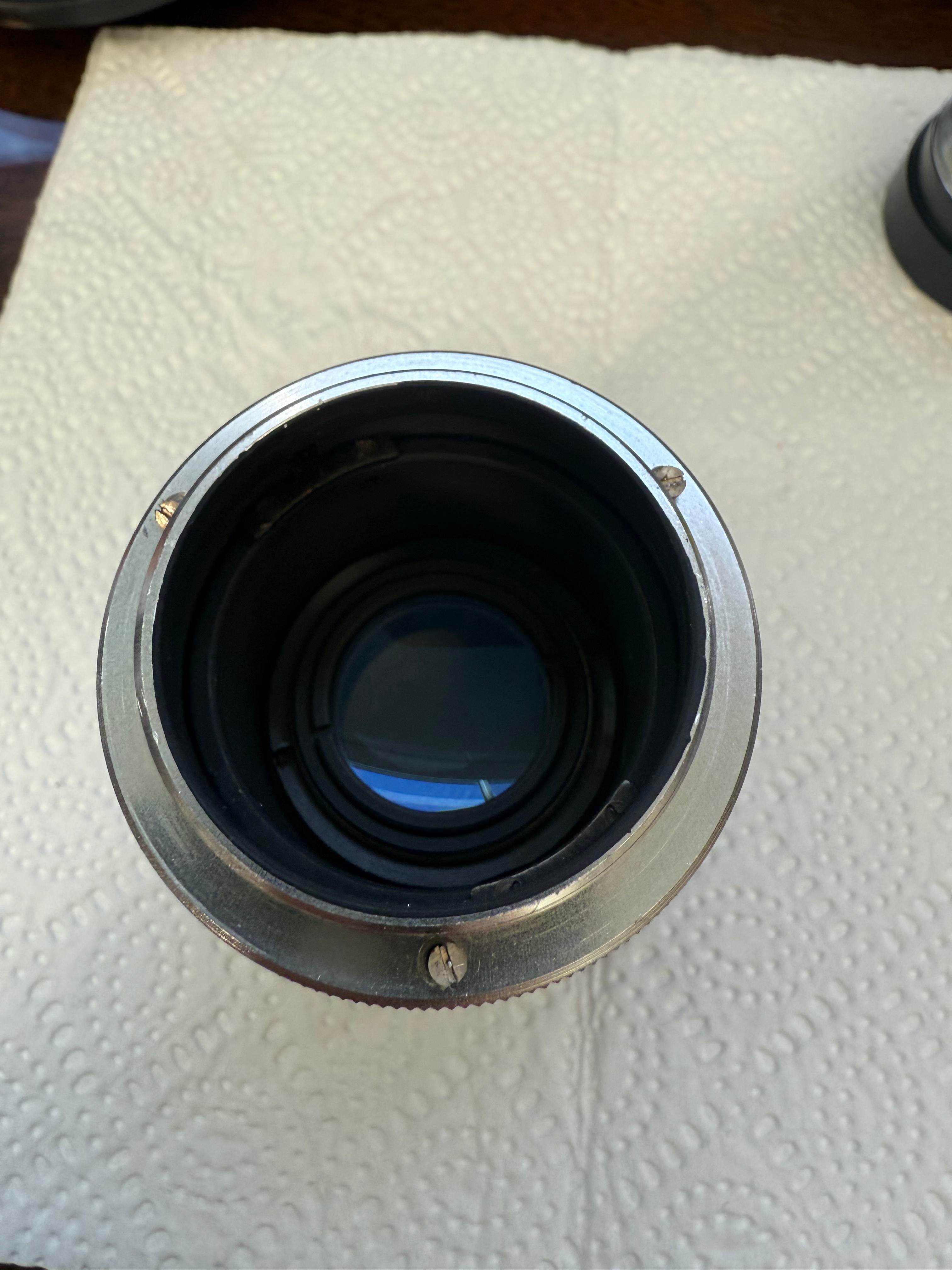
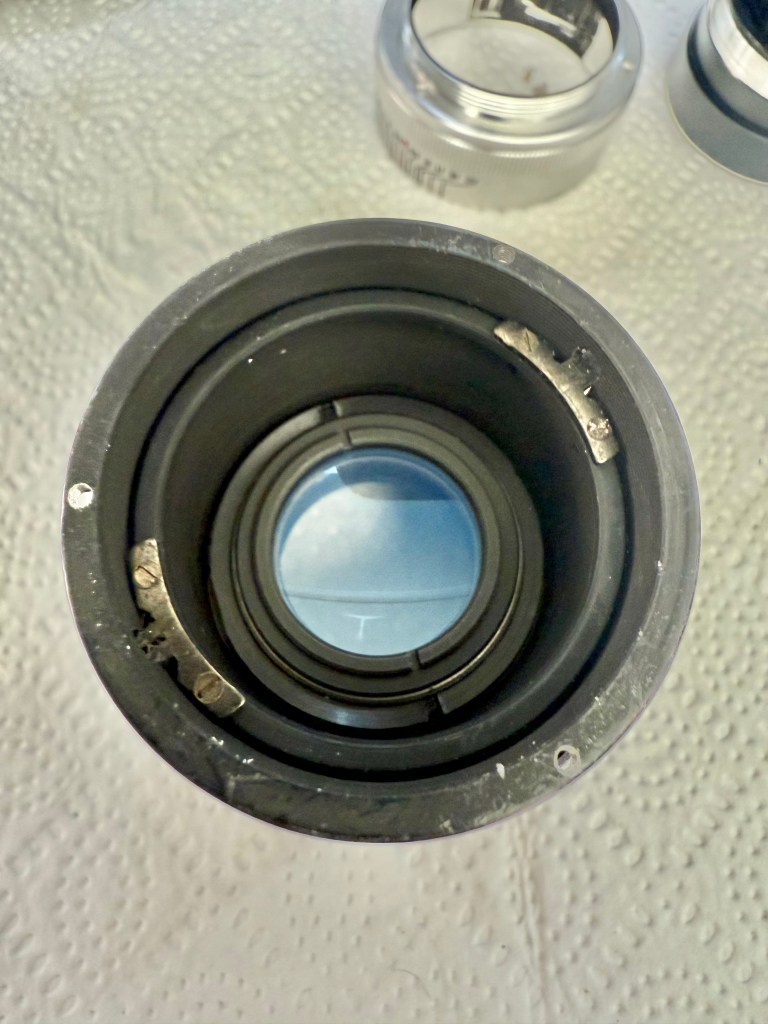
Next, detach the rear lens mount assembly by unscrewing the three visible screws located around the rear section. Once removed, the entire mount should lift off cleanly, giving you access to the internal components.

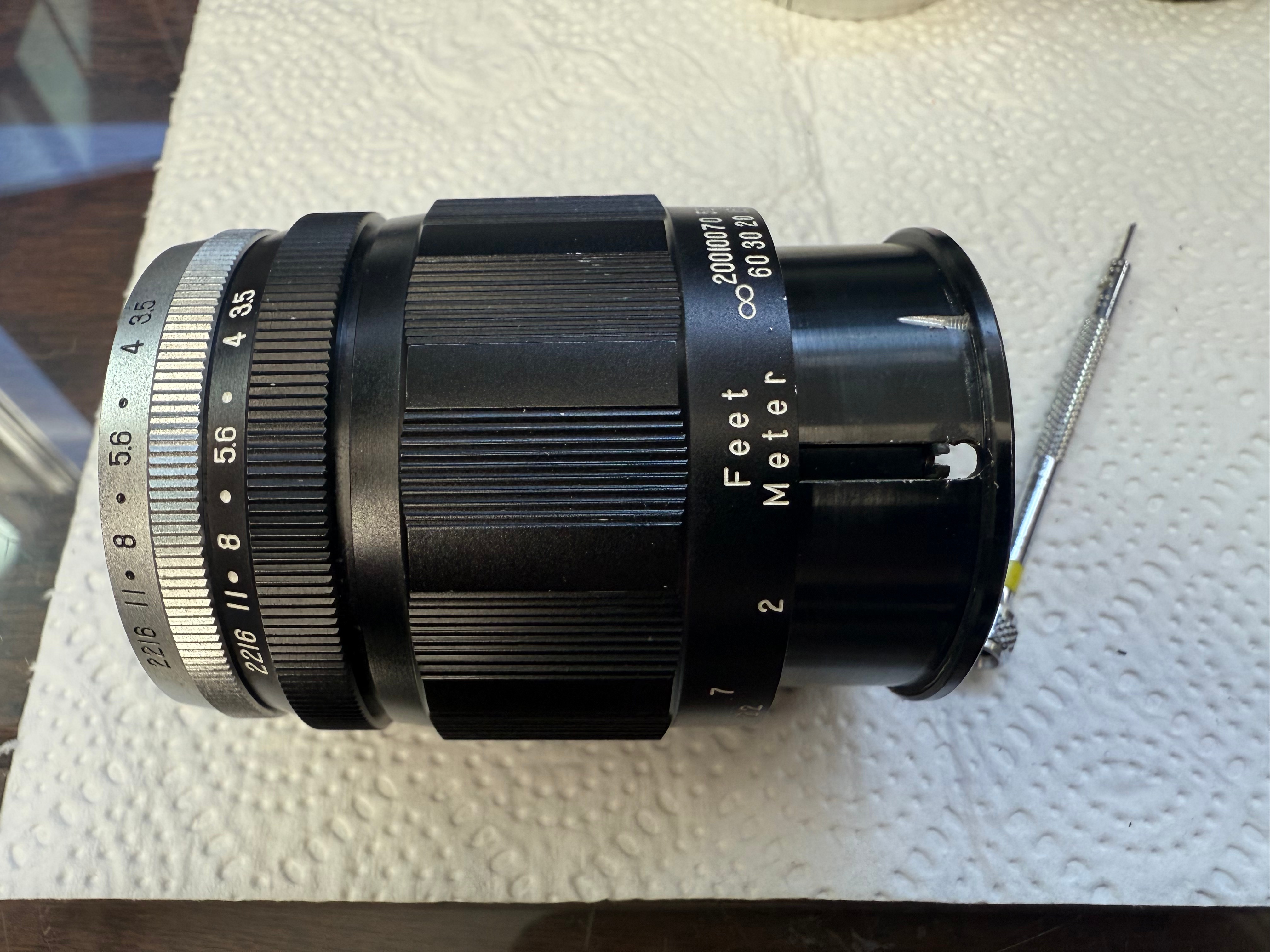
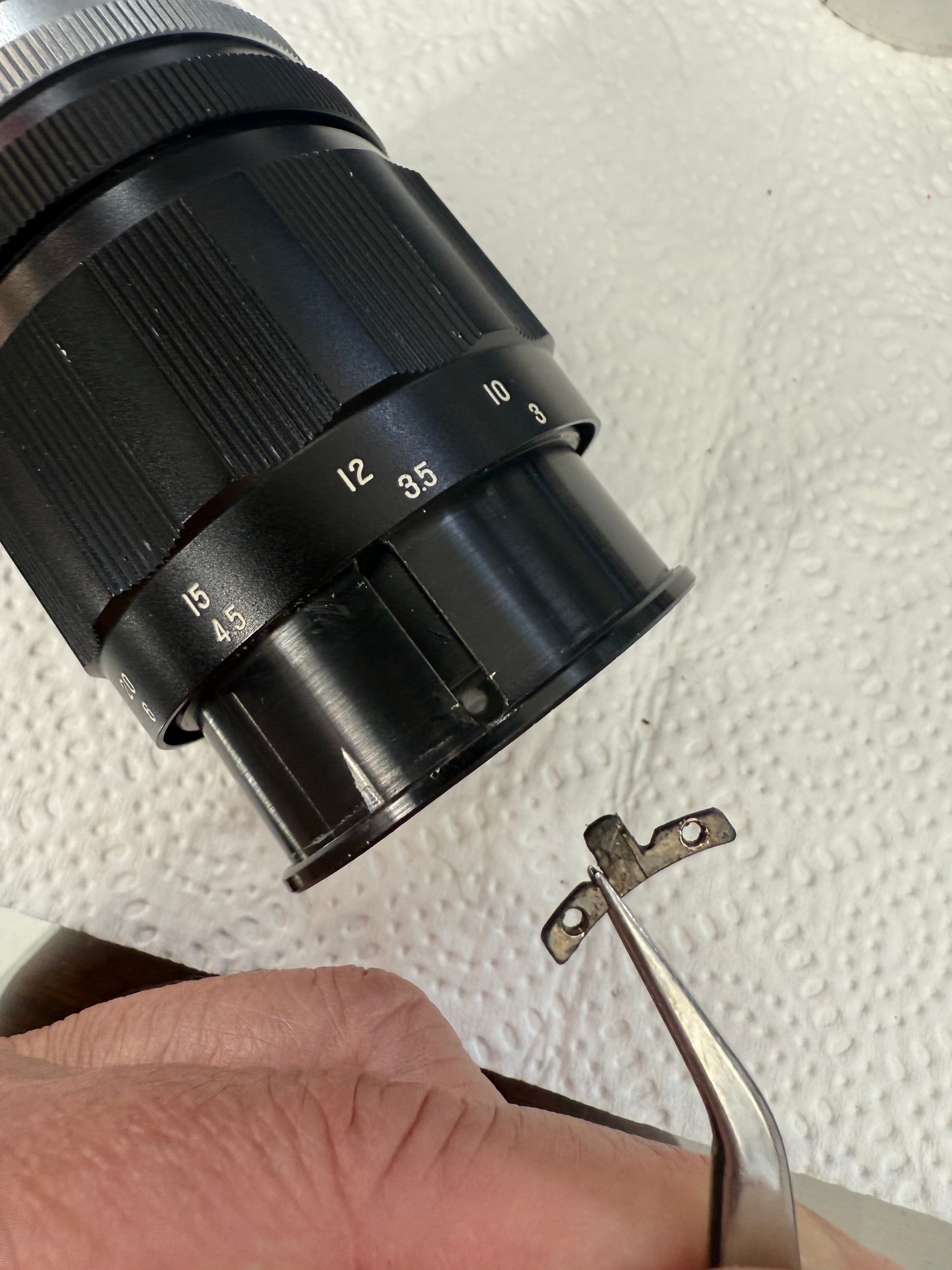
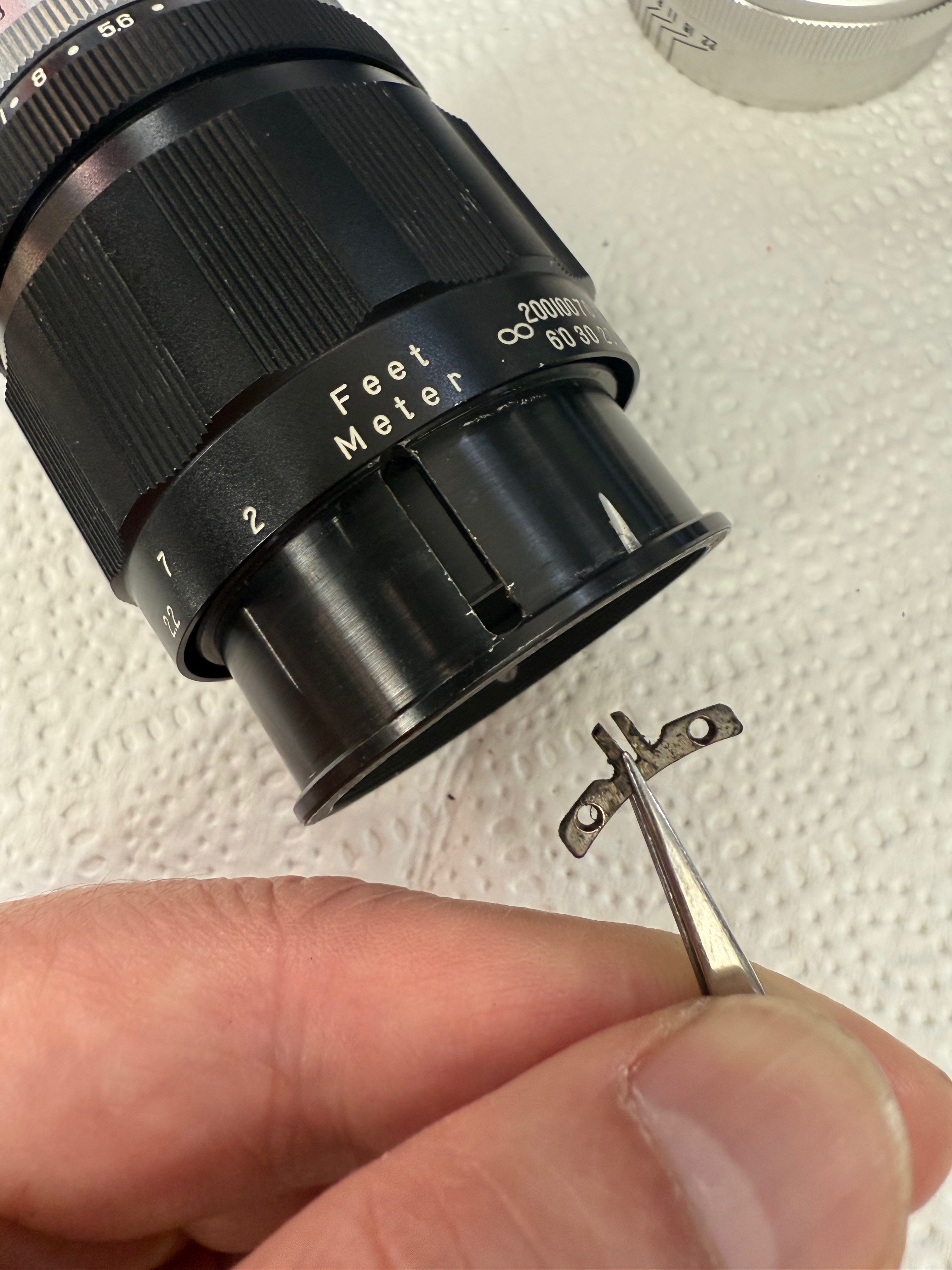
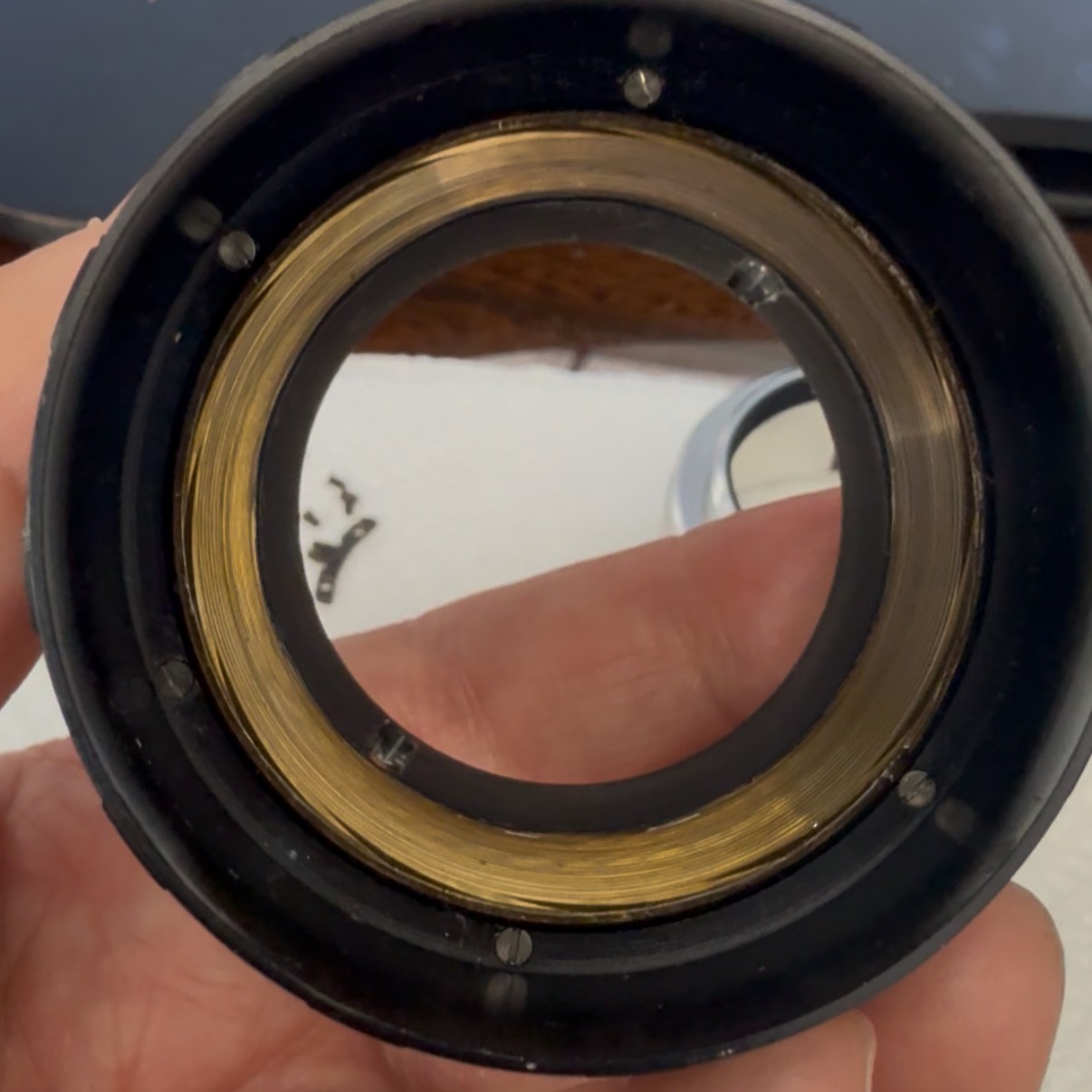
To remove the front pre-set aperture assembly, you’ll need to unscrew the two helicoid guide pins now visible from the rear. These guides secure the focusing mechanism and must be taken out to allow the aperture assembly to rotate out free. I chose not to remove the rear lens elements, as they were already clean and in excellent condition.

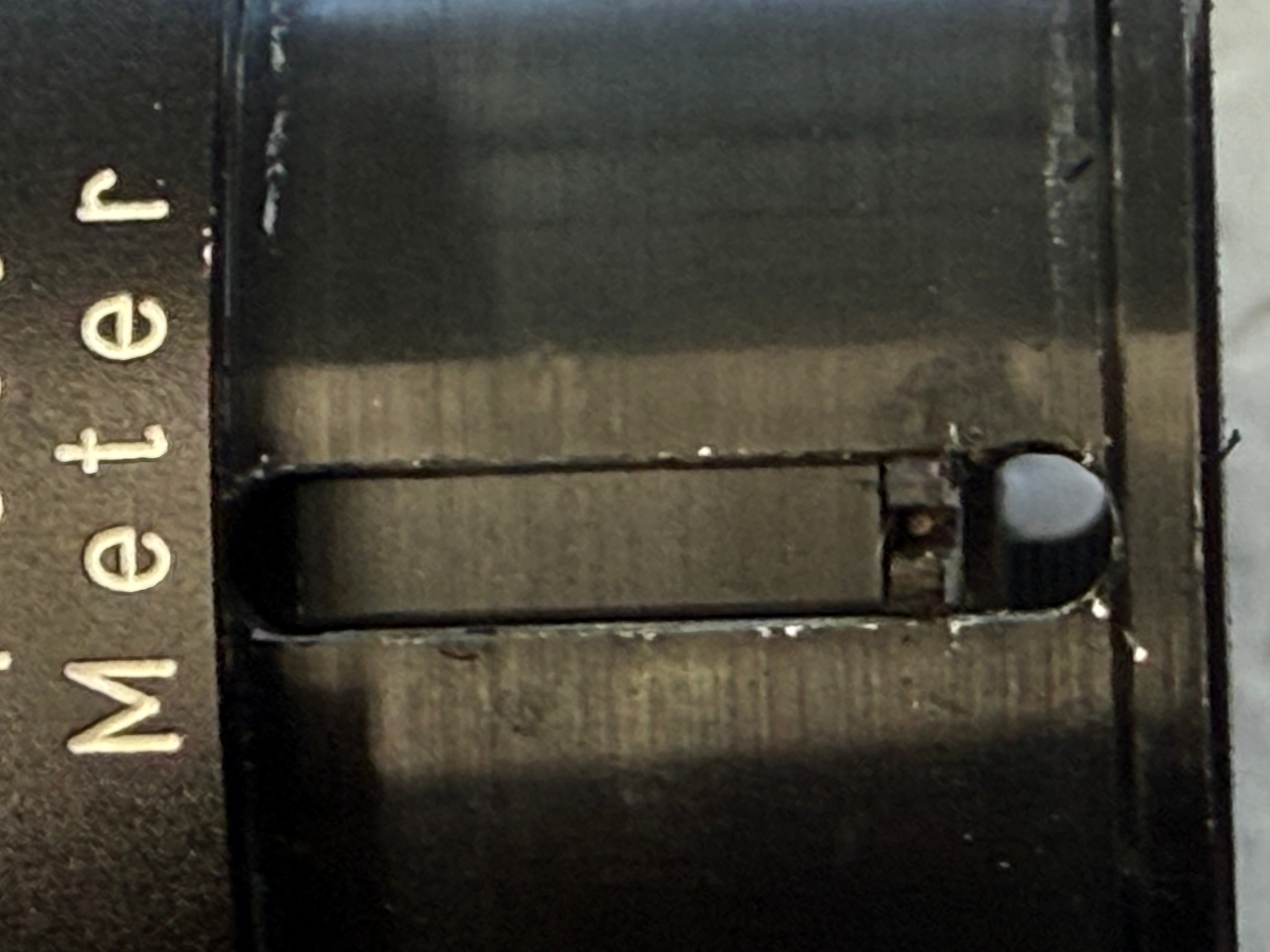
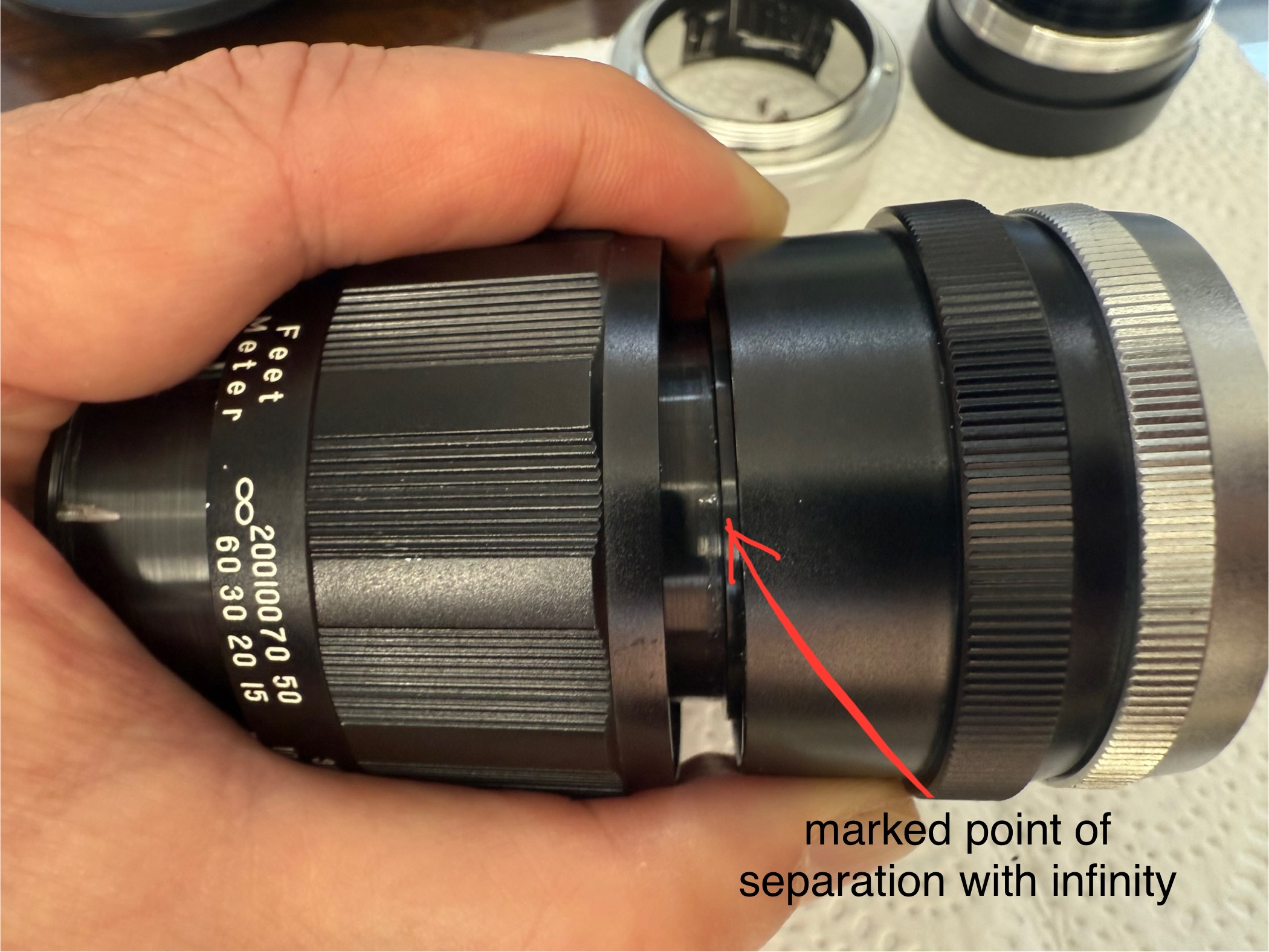
Before removing the helicoid guides, I carefully marked their positions to preserve infinity focus. I rotated the focus ring to the infinity setting, then scratched two faint reference lines where the tops of the guides aligned. These marks will serve as crucial alignment cues during reassembly, helping ensure the lens maintains proper focus calibration.

When removing the helicoid guides, make sure to note which guide fits into which groove. Each guide is slightly different, though the reason behind this design choice isn’t immediately clear. It might have been for fine-tuning focus alignment or simply a quirk of the manufacturing process. Either way, keeping track of their original positions is essential for smooth reassembly and accurate focusing.
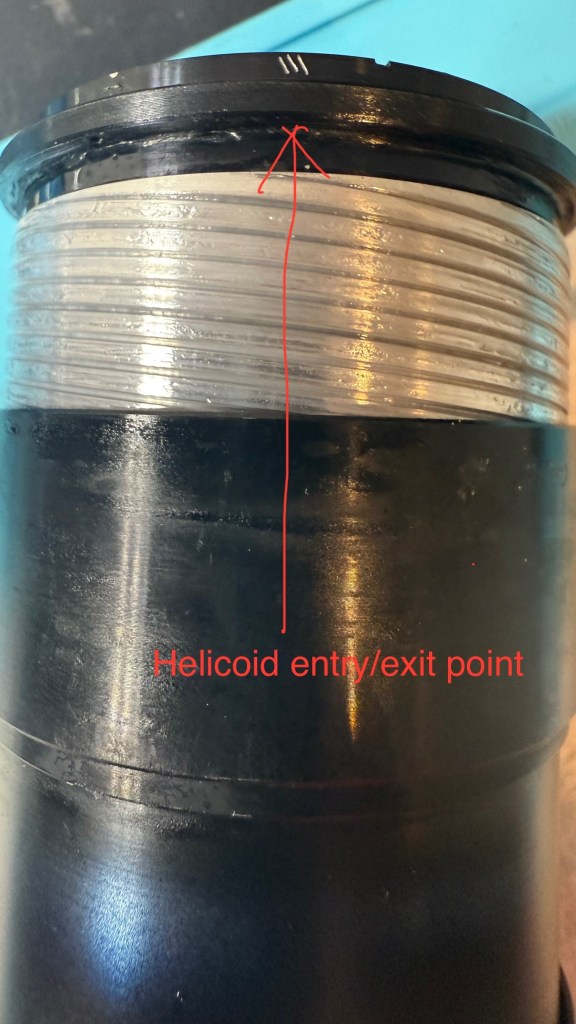
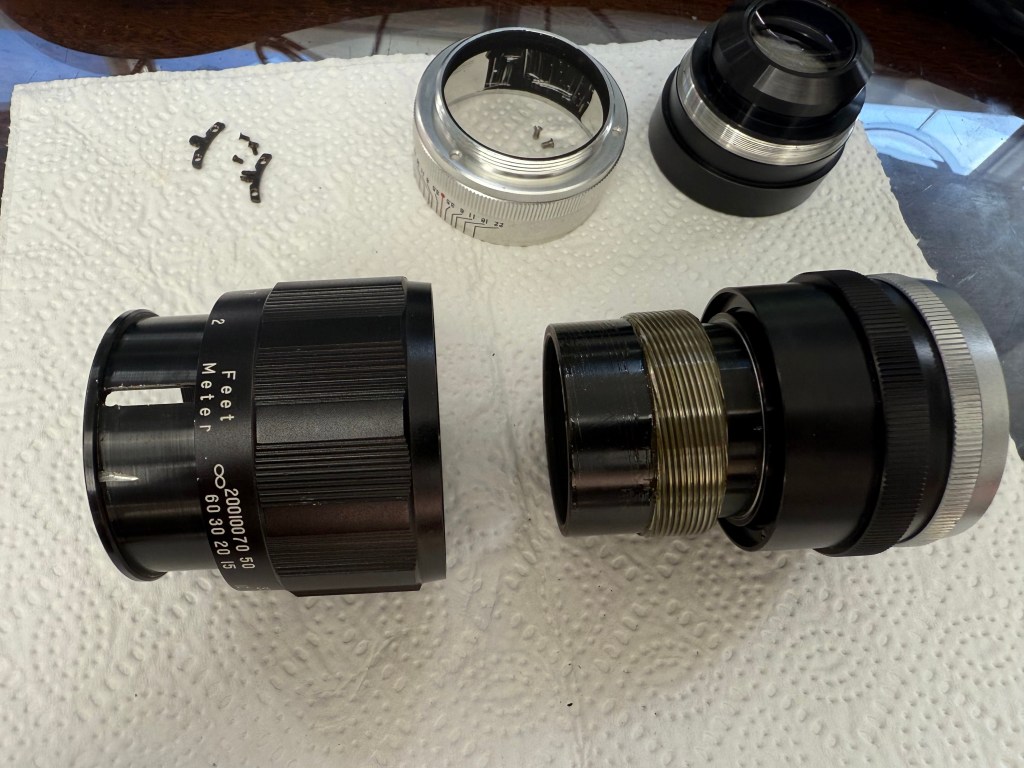
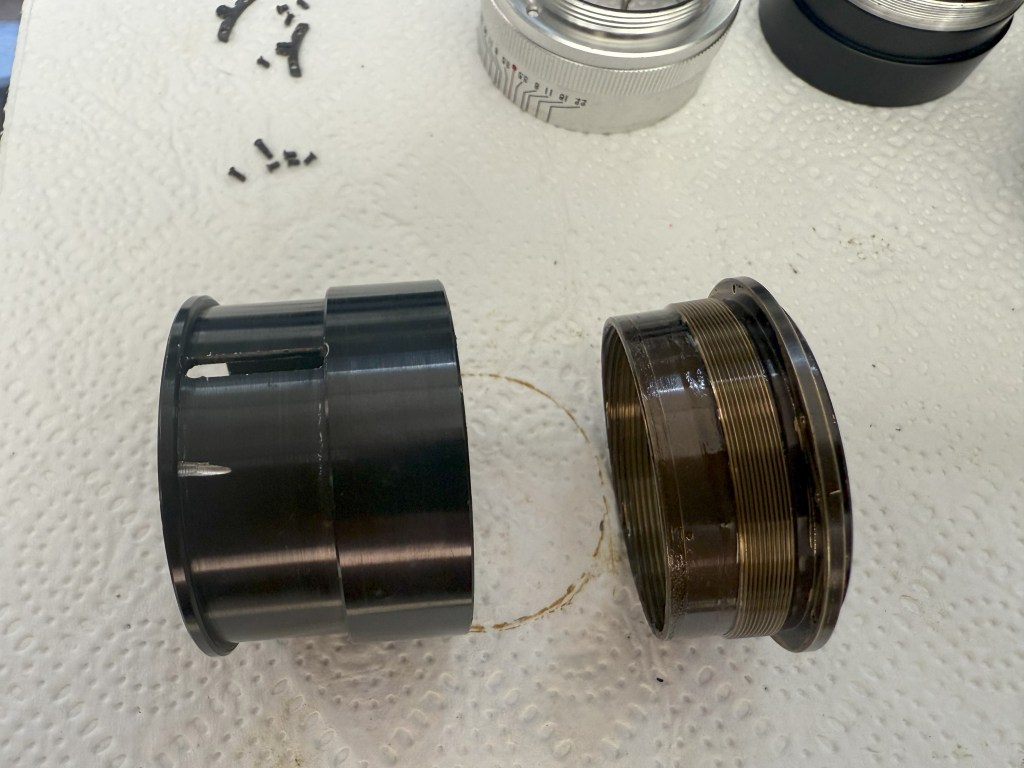
Finally, the aperture housing can be separated from the focusing mechanism. However, before you disengage the helicoids, it’s absolutely critical to mark the exact point of separation. A small scratch or reference line will ensure you maintain the correct orientation during reassembly. Without this, you risk misaligning the helicoids—since they can thread together in multiple configurations, but only one will restore proper focus calibration. Skip this step, and you’re in for a frustrating reassembly process.

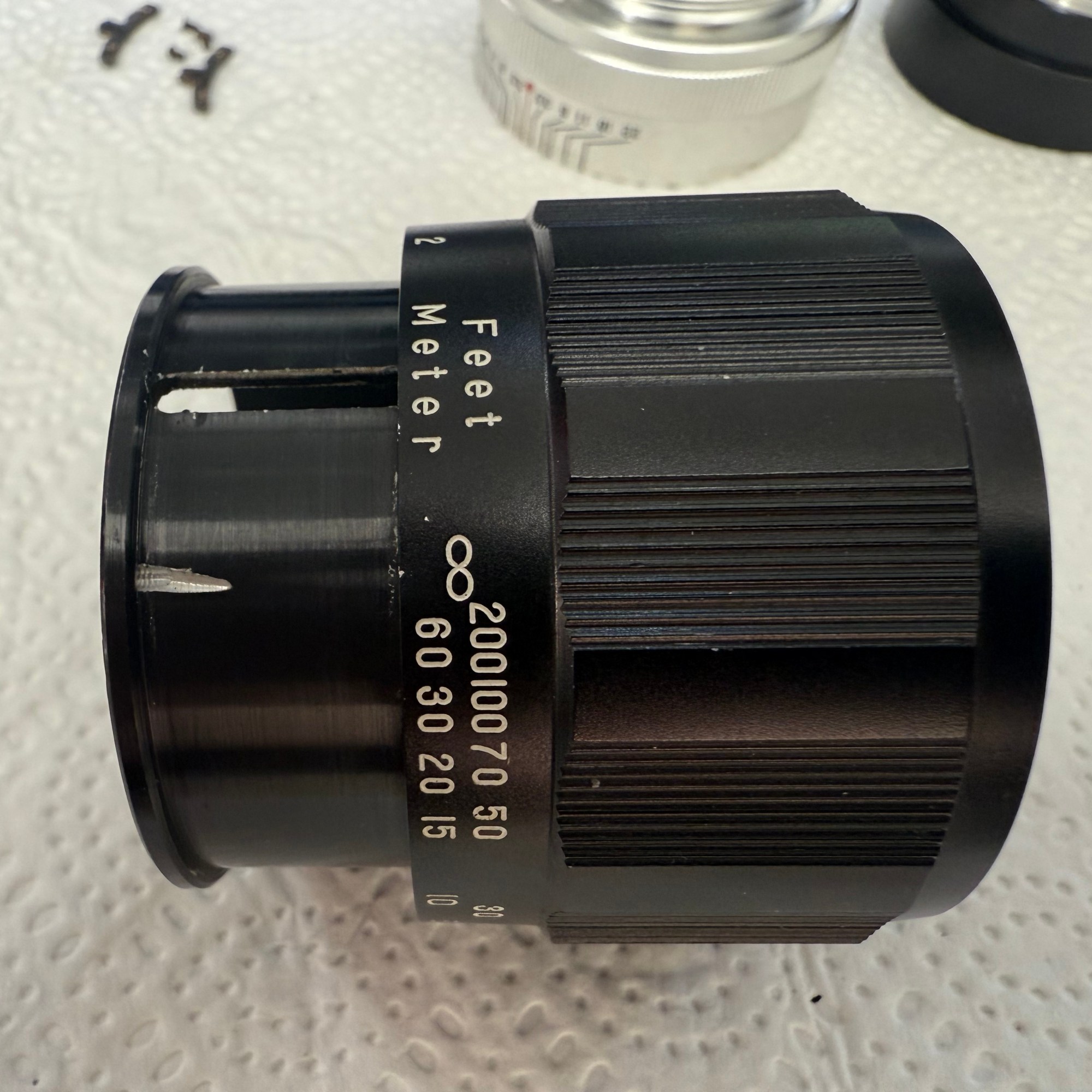
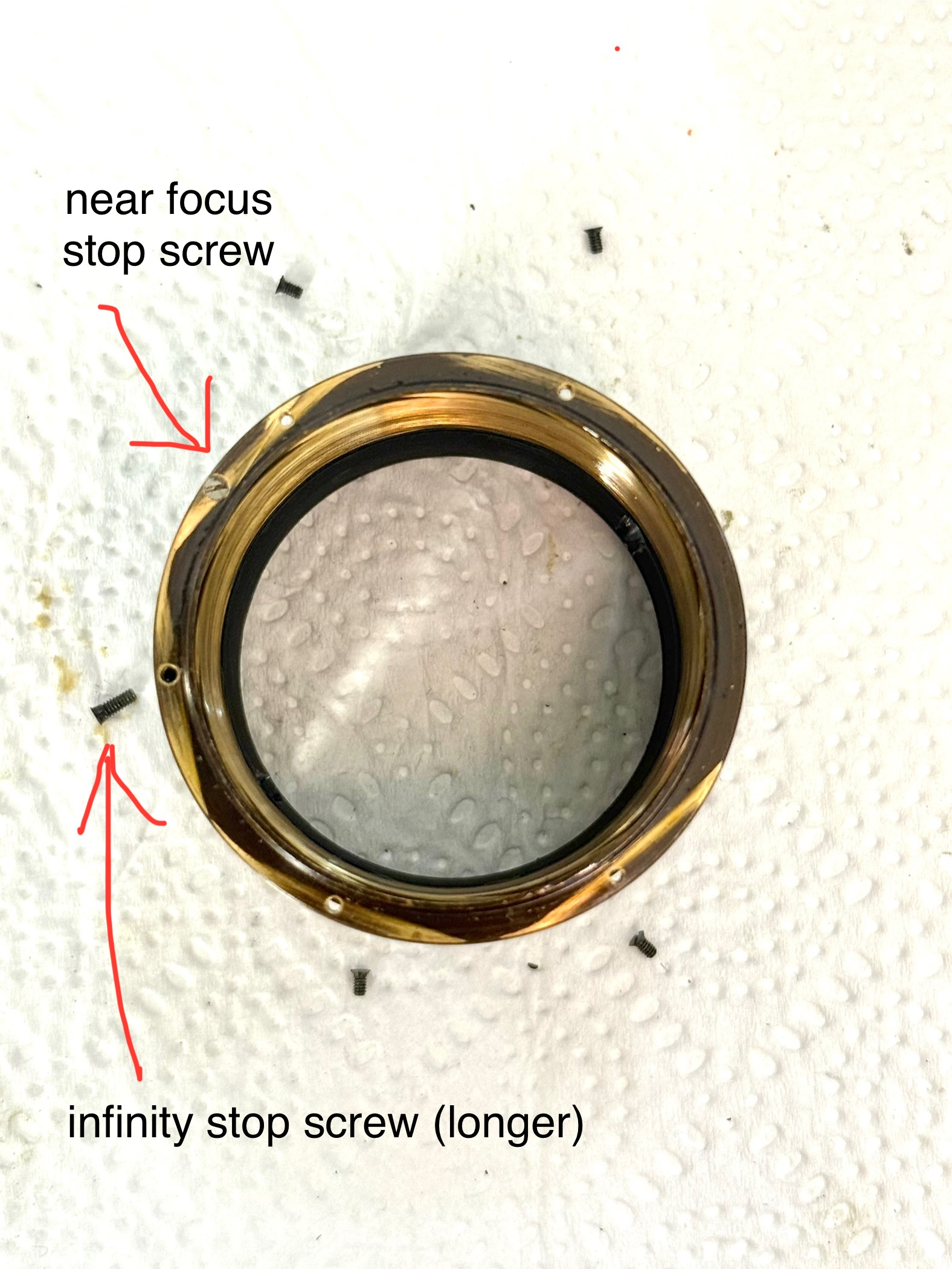
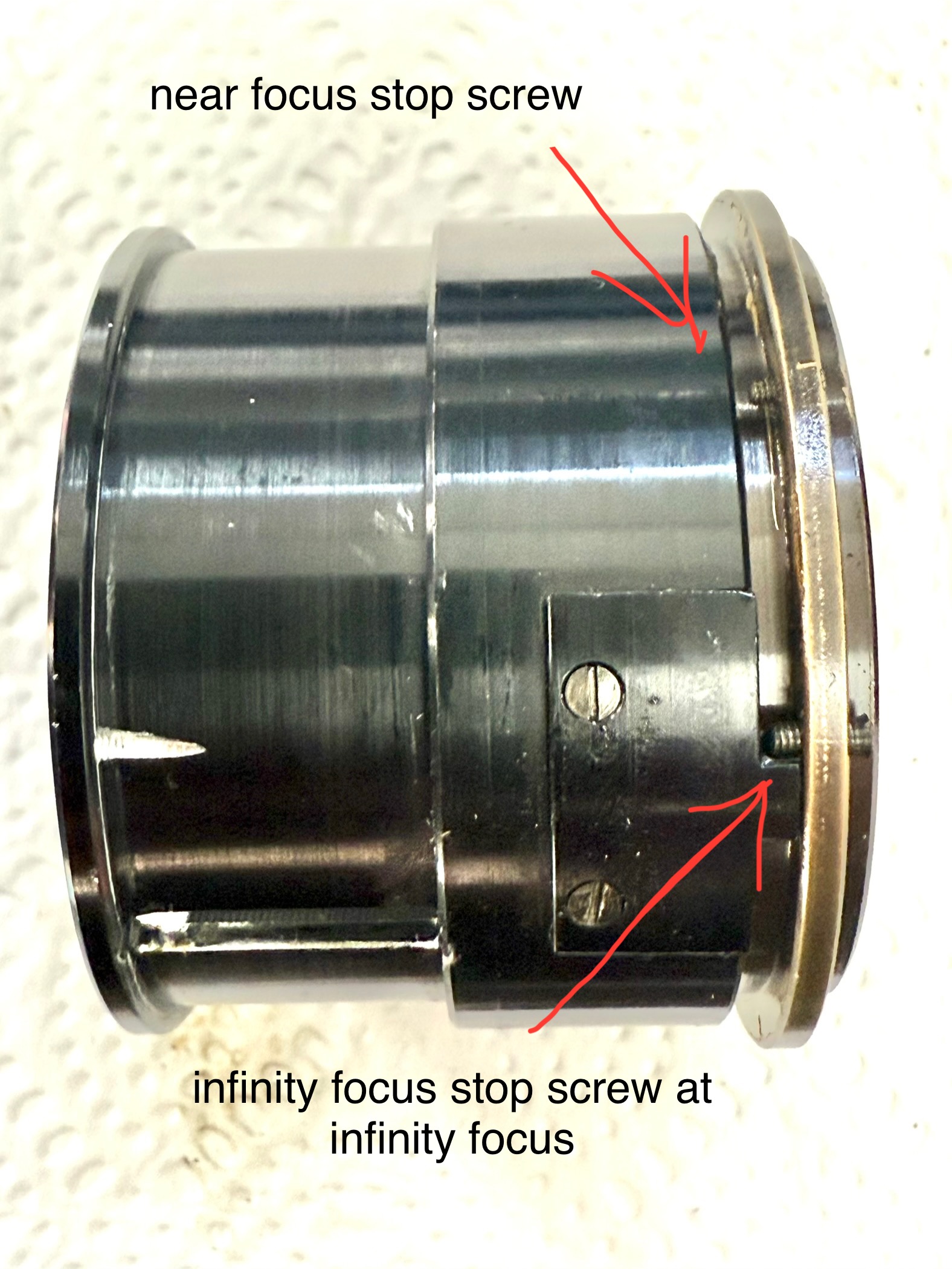
Next, you can remove the distance scale ring. It’s secured by five screws positioned on the inner side of the ring. Pay special attention to the middle screw—it’s longer than the others and also functions as the mechanical stop for infinity focus. Before removing it, make sure to note its exact position when the distance scale is set to infinity. This reference will be crucial for restoring accurate focus during reassembly.
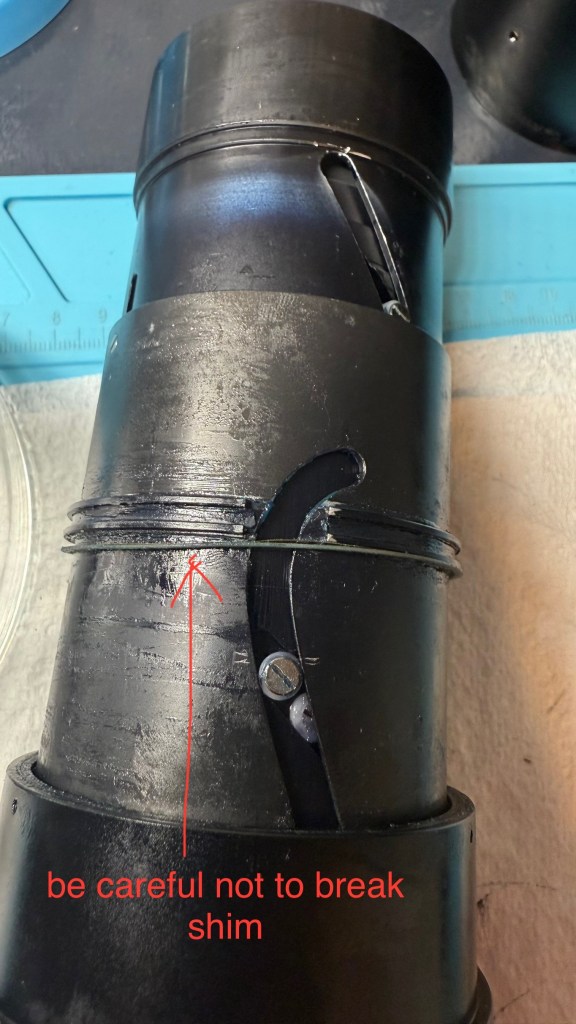
Once the distance scale ring is removed, the orientation of the screws becomes clearly visible. At this stage, you’ll also notice a sixth screw—the near-focus stop screw—revealed after the focusing ring is taken off. It’s important to carefully note its position relative to the infinity stop screw, as both play a crucial role in defining the lens’s focusing range. Marking or photographing their alignment before disassembly can save a lot of guesswork during reassembly and help maintain accurate focus calibration.

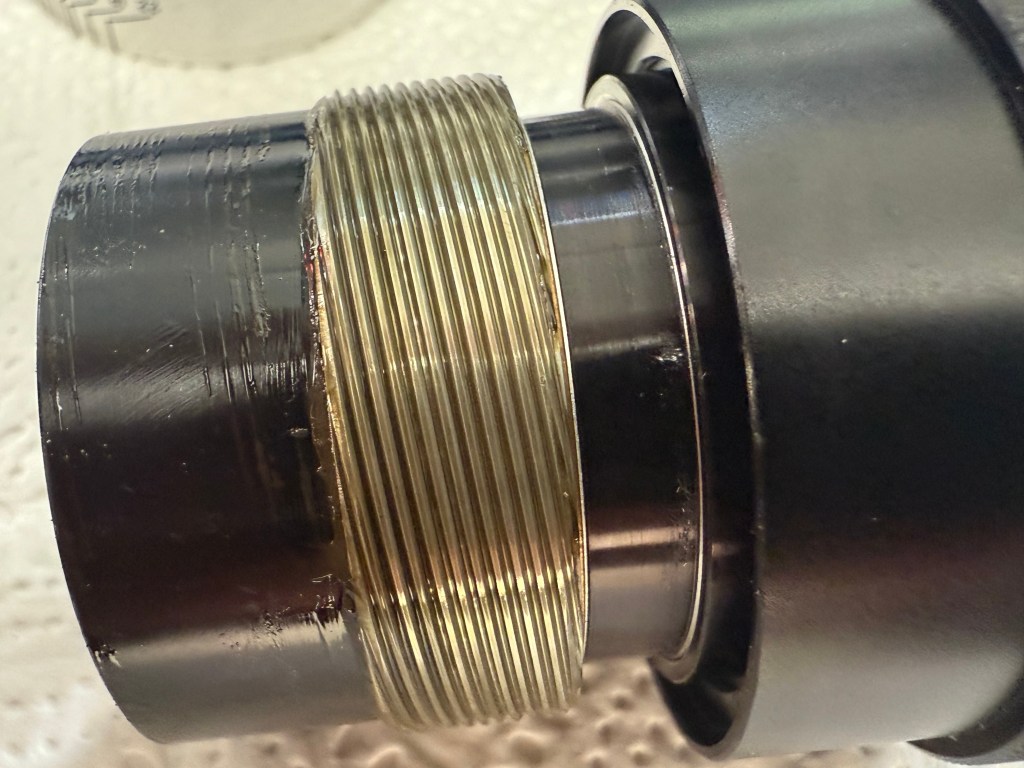
Remove the near focusing stop screw and the brass helicoid ring can be rotated out.

After thoroughly cleaning and relubricating the helicoids, reassembly was smooth and uneventful. Everything clicked back into place with satisfying precision—no surprises, no fuss.

Thanks for reading, and I hope this walkthrough helps fellow vintage lens enthusiasts breathe new life into their classic gear!

Disassembling and Cleaning the Pentax Takumar 85–210mm Zoom Lens

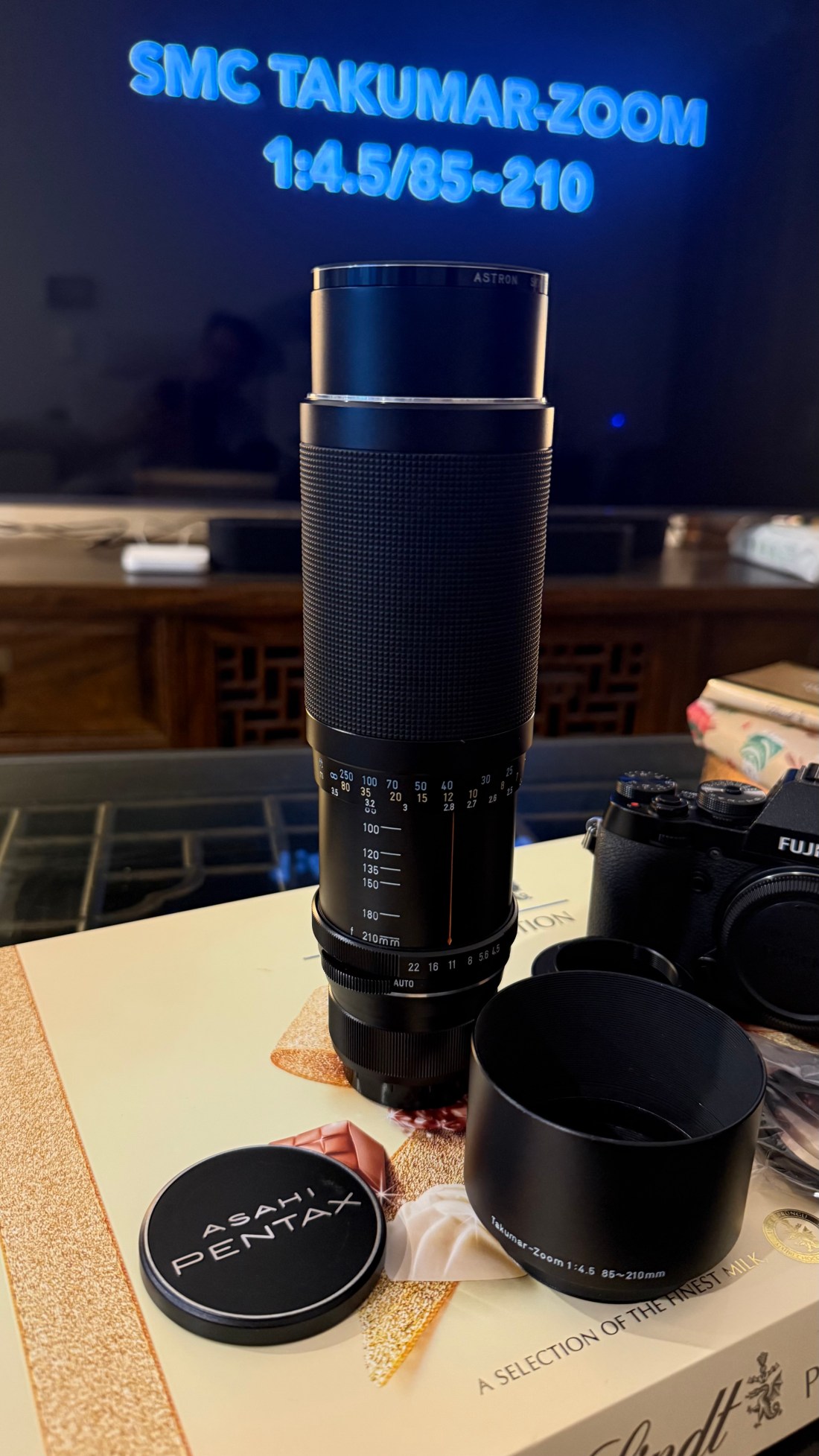
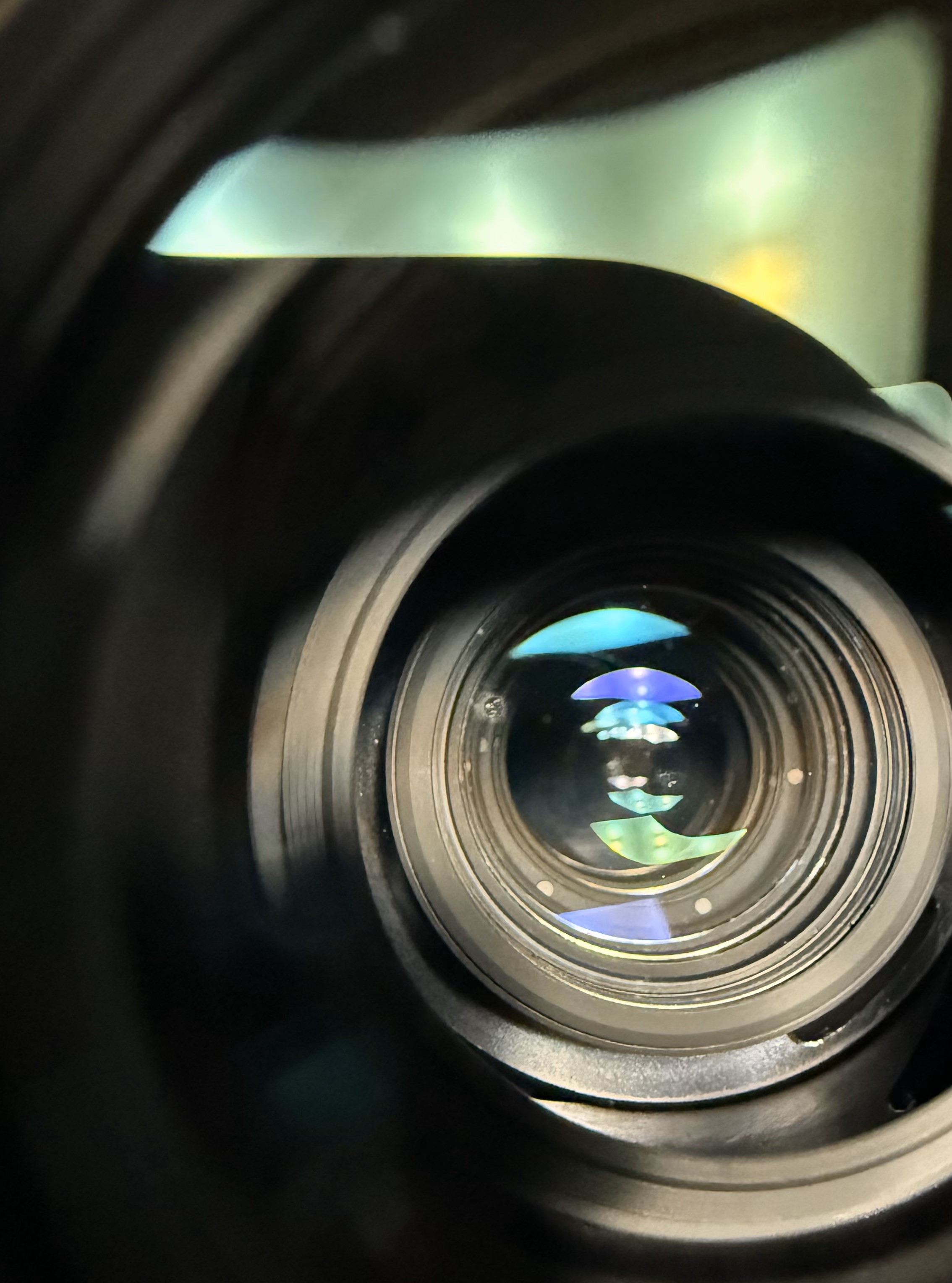
I picked up the Pentax Super-Multi-Coated Takumar 85–210mm f/4.5 zoom lens as part of a lot sale at a local antiques market. To my surprise, it was in pristine condition—barely a mark on it, as if it had spent most of its life tucked away rather than in use. The offer was too good to pass up, and the inclusion of this classic M42-mount lens felt like an unexpected bonus.

On closer inspection, though, I noticed a faint trace of fungus inside the lens elements. It wasn’t extensive and didn’t seem to affect image quality, but my inner perfectionist couldn’t let it slide. So, with a bit of free time over the holiday break, I decided to take on the challenge: disassemble the lens and give its optics a proper clean.

The only post I found online about disassembling this lens was a blog in Japanese. Thankfully, Google translated the webpage for me, although the instructions could use some improvement, especially regarding marking the lens for easy reassembly. Despite a few challenges during the disassembly process, I persevered, and after two tries, I finally managed to align the distance scale with the correct focus distances upon reassembly. This blog is here to help others with the same lens who wish to service it, sharing my journey and tips for a smoother experience!

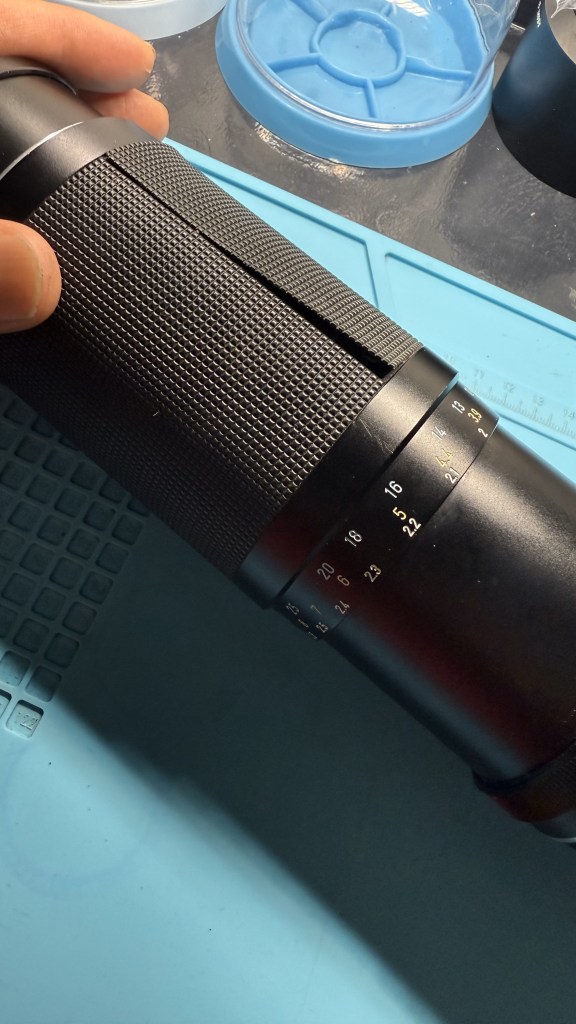
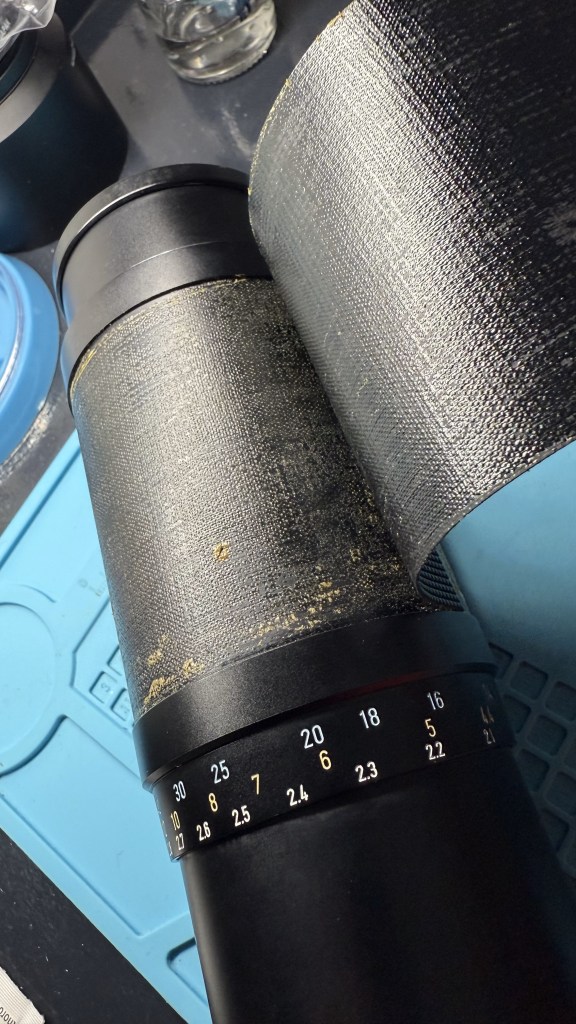
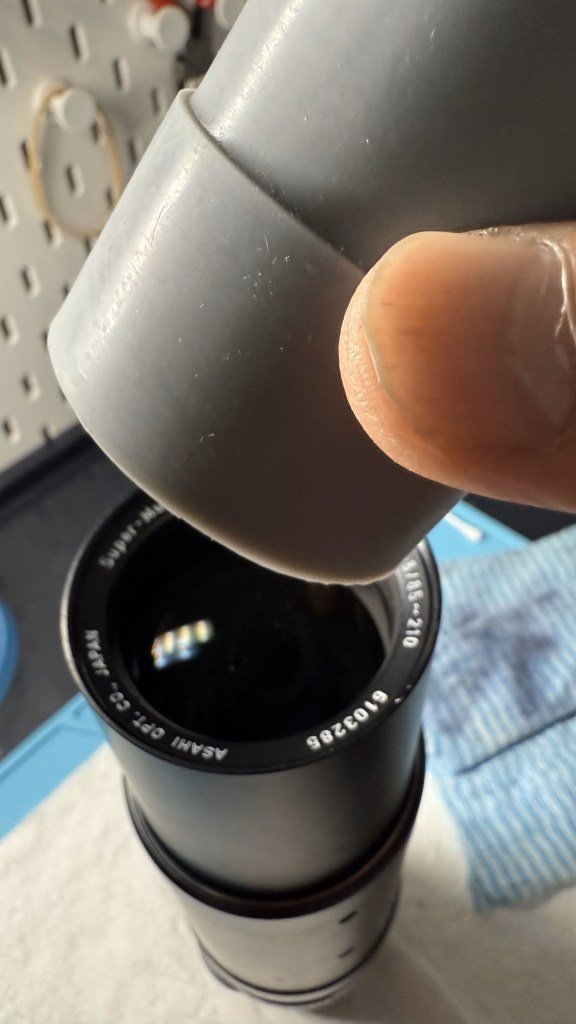
To dis-assemble, first remove the rubber lens zoom/focusing grip which is glued on the barrel. Be careful to use a blunt tool that doesn’t scratch the lens. Remove the residual glue for later re-gluing.

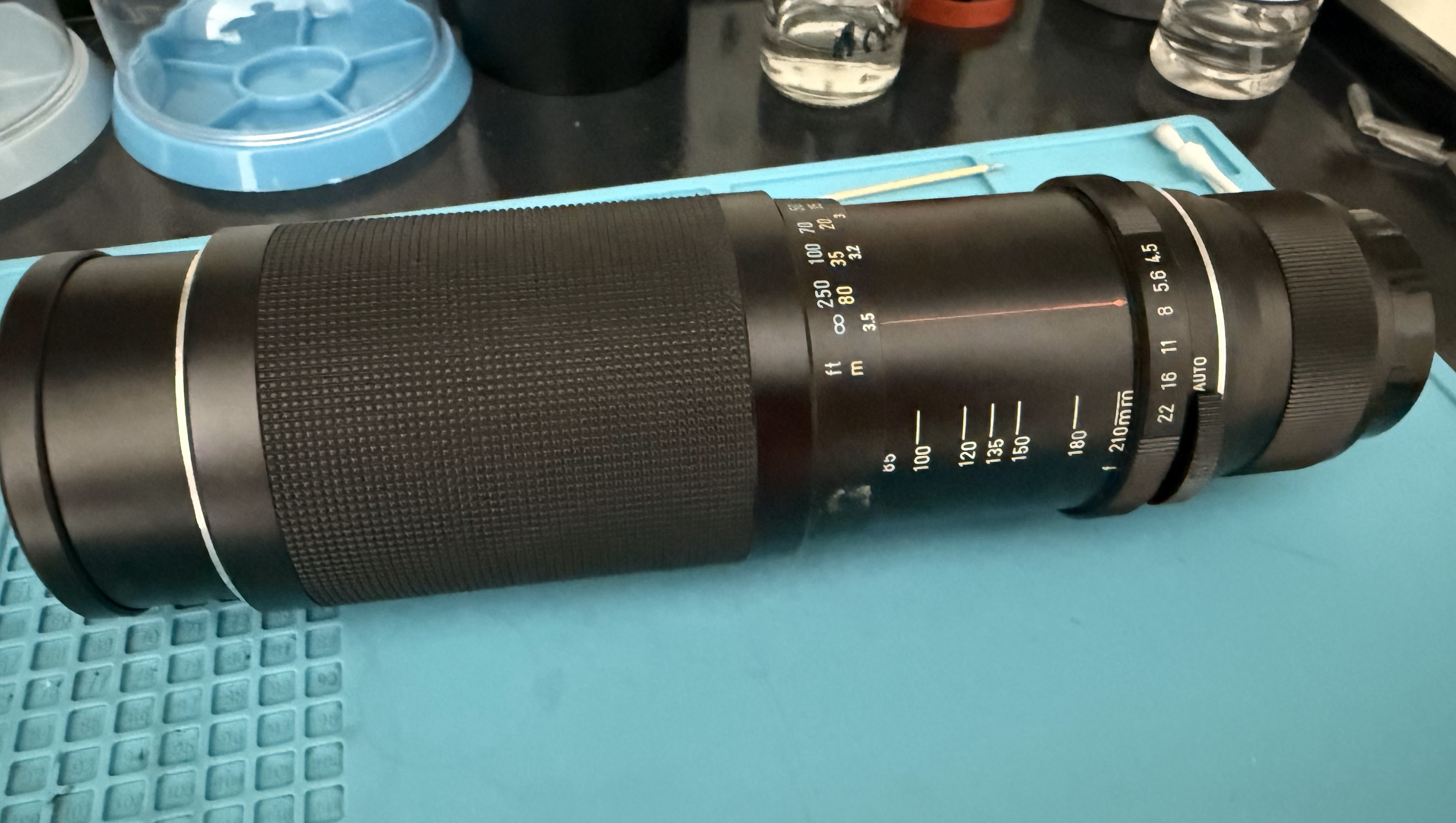
Set the lens at infinity focus, zoom at 210mm and aperture at f4.5. These will be your settings for re-assembly.

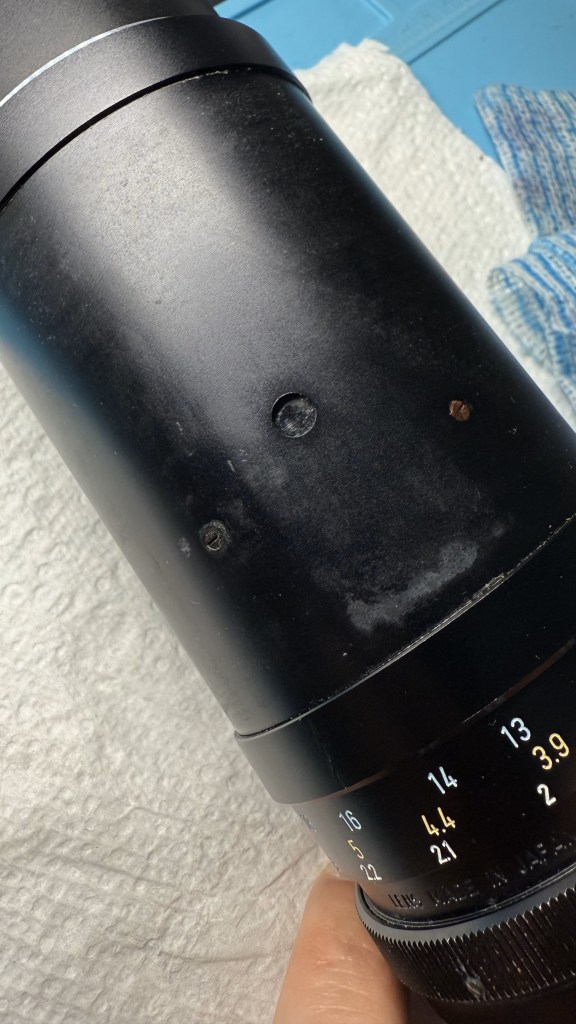
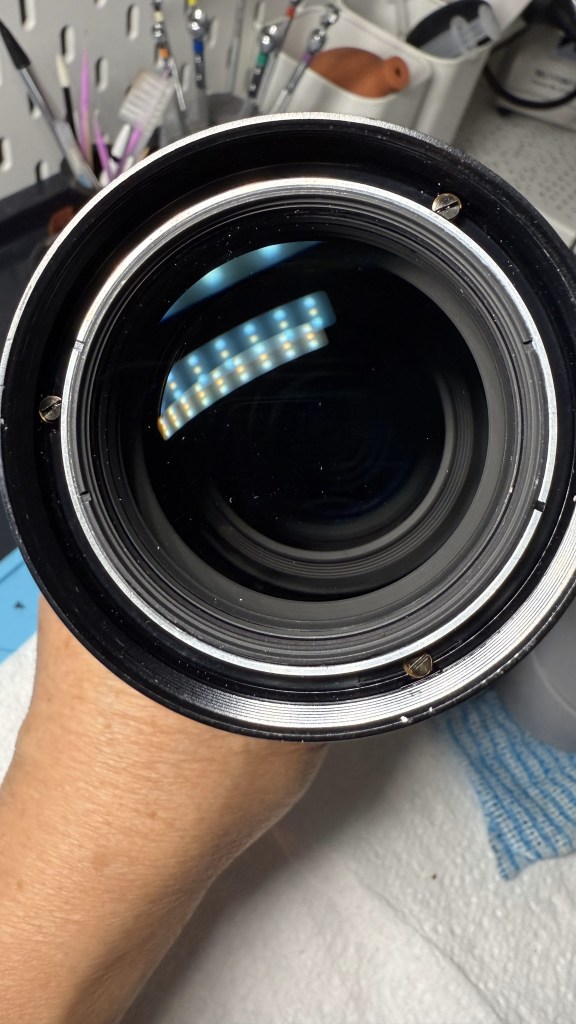
Once the lens is set at infinity, remove the lens name ring using a rubber grip tool to twist it anticlockwise out. Once this is removed, you can see 3 screws inside securing the front lens elements to the zoom/focusing barrel. These screws have a brass washer each. Remove those too. You will later use these screws to secure infinity focus with the front lens element group during re-assembly.

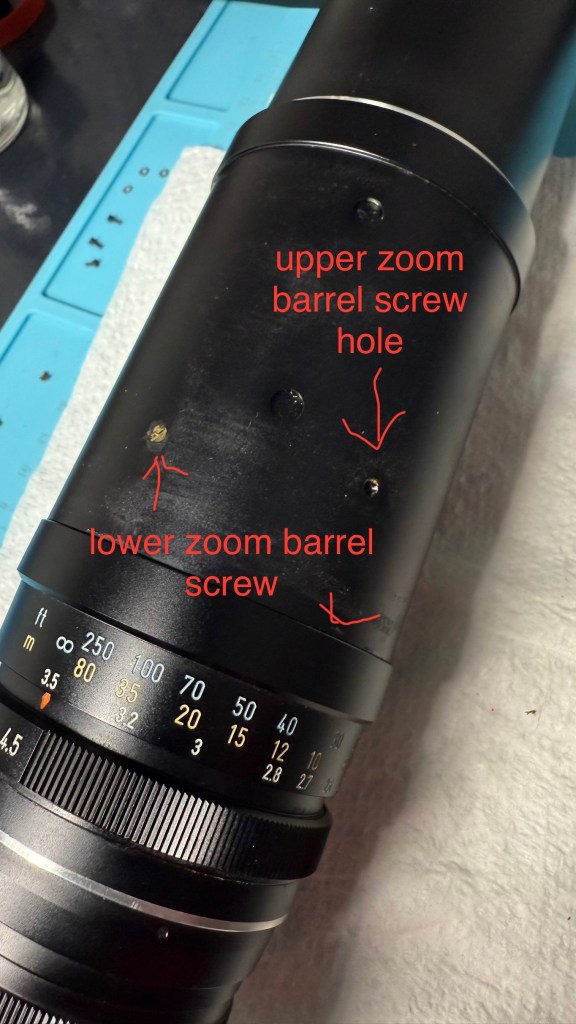
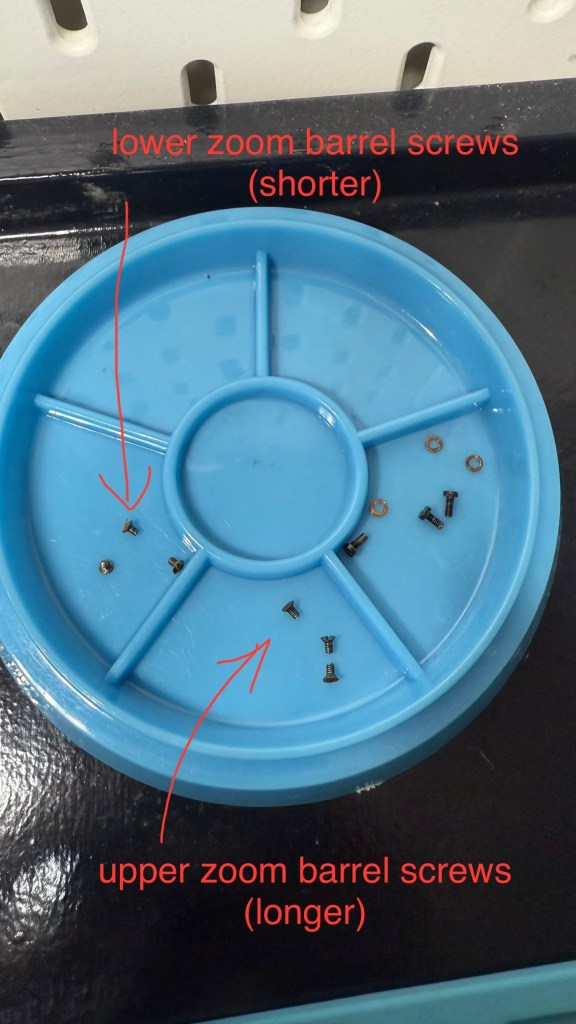
Turning your attention back to the zoom/focusing barrel again, you’ll notice 6 screws, one set of 3 closer to the front of the lens at an upper level and another set of 3 closer to the base of the lens at a lower level. First remove the 3 upper level screws. Keep them aside together, they are longer than the lower level screws. Once you have removed the 3 upper level screws, you can remove the barrel around the front lens elements by slowly pulling on it and turning the barrel at the same time. The front barrel will come out once the focusing stop screw comes free through a groove in the inner zoom tube. How the barrel with the focusing stop screw is reinserted during reassembly will determine if you are able to have a full throw of the focusing barrel or a limited throw as there are 2 grooves in the inner zoom tube to insert the focusing stop screw through. Only inserting through the correct groove will give the full throw for focusing.

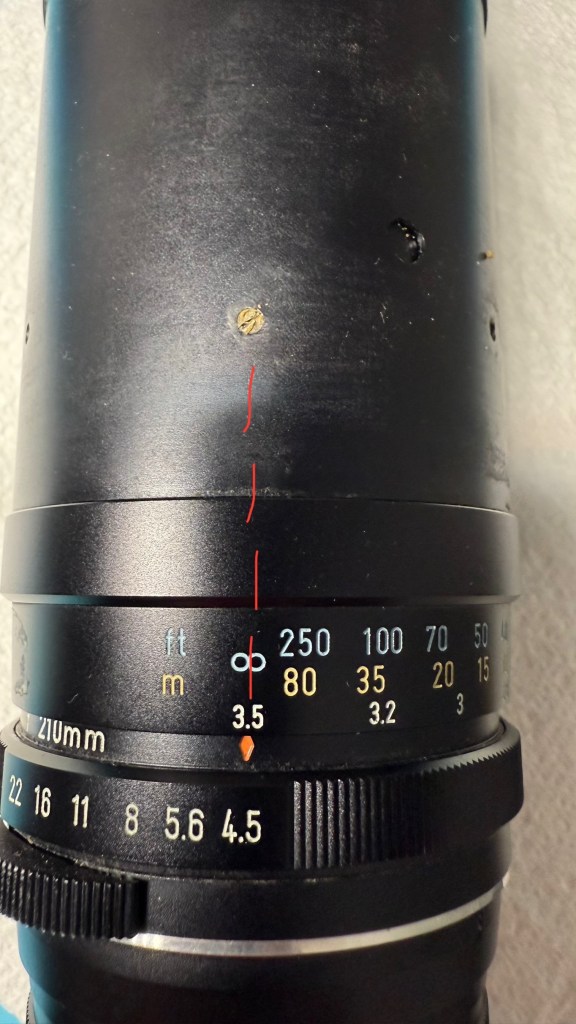
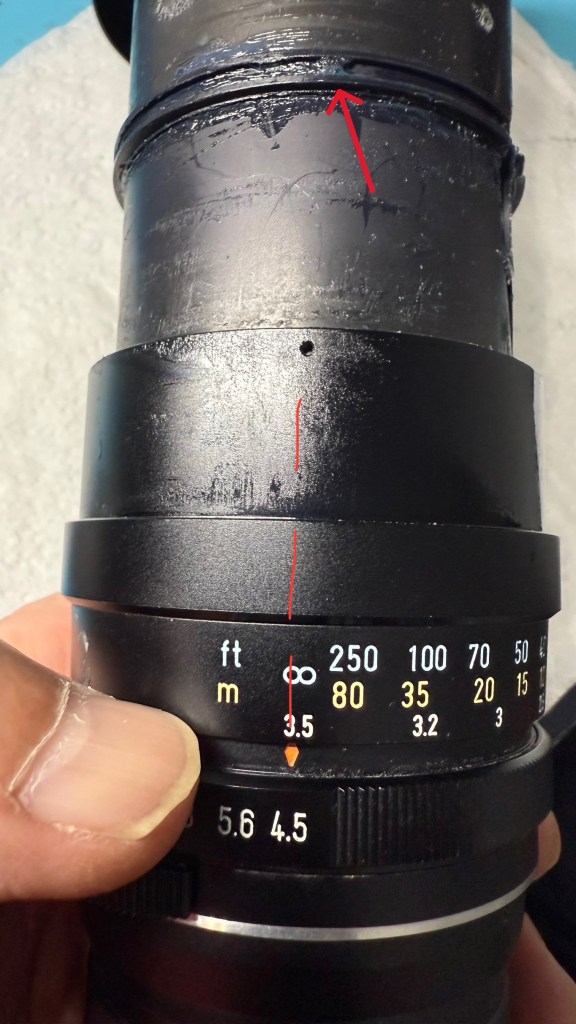
Once you remove the 3 lower zoom barrel screws, you will be able to separate the focusing distance scale barrel from the zoom/focusing barrel. At this stage you will be able to slide upwards and out the zoom/focusing barrel, revealing the inner zoom mechanism tubes (which are greased). To best work with the inner tubes, it is best to remove the grease and regrease later. Note the alignment of the focusing stop on the tube (red arrow) with the infinity mark. The stop should be aligned with infinity, otherwise you won’t be able to be able to get the distance scale aligned properly on re-assembly. I did not notice the focusing stop during initial dis-assembly because it was obscured by grease as in the picture on the left.

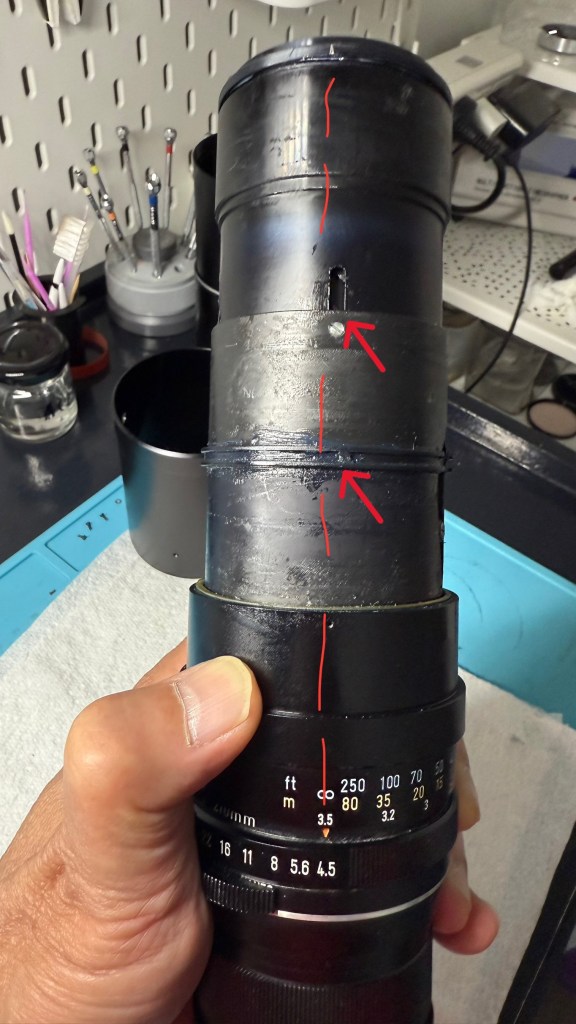
Note the alignment of the markings. This is the alignment for focus at infinity, zoom at 210mm and aperture at f4.5. Mark the position of the front element which was set for infinity focus. Note that the focus stop should be aligned. If it is not aligned, you won’t be able to get the distance scale correctly aligned properly once re-assembled. My mistake which I do not wish happen to anyone else.

At this stage you can remove the front lens element helicoid by twisting clockwise. Mark the point of separation from barrel. In my case, the Pentax factory had already marked it with 3 linear scratches. Much angst at reassembly if you forget to do this.

Also note the 2 shims (one brass and one plastic) on the distance scale barrel. These are easily deformed or broken.

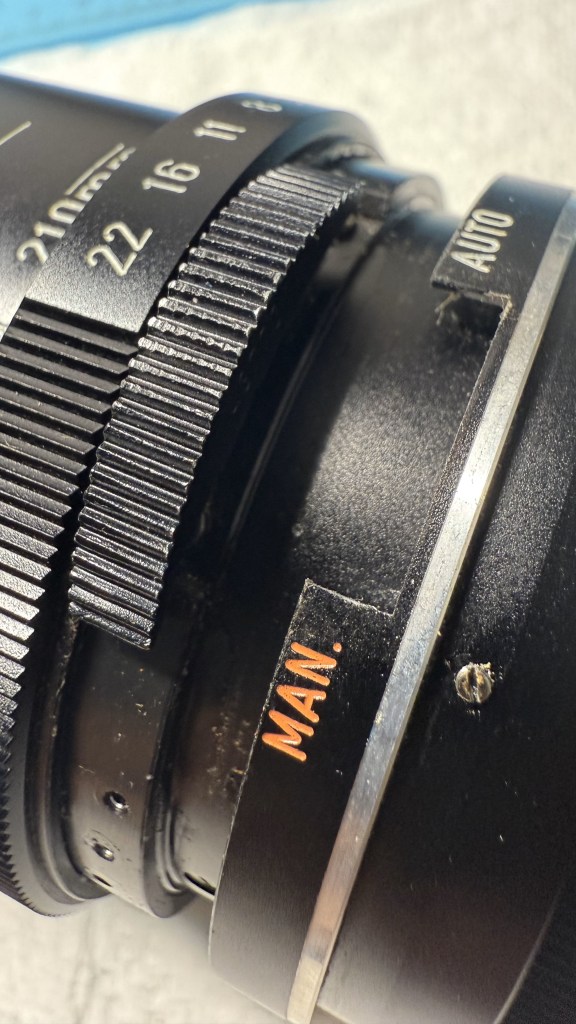
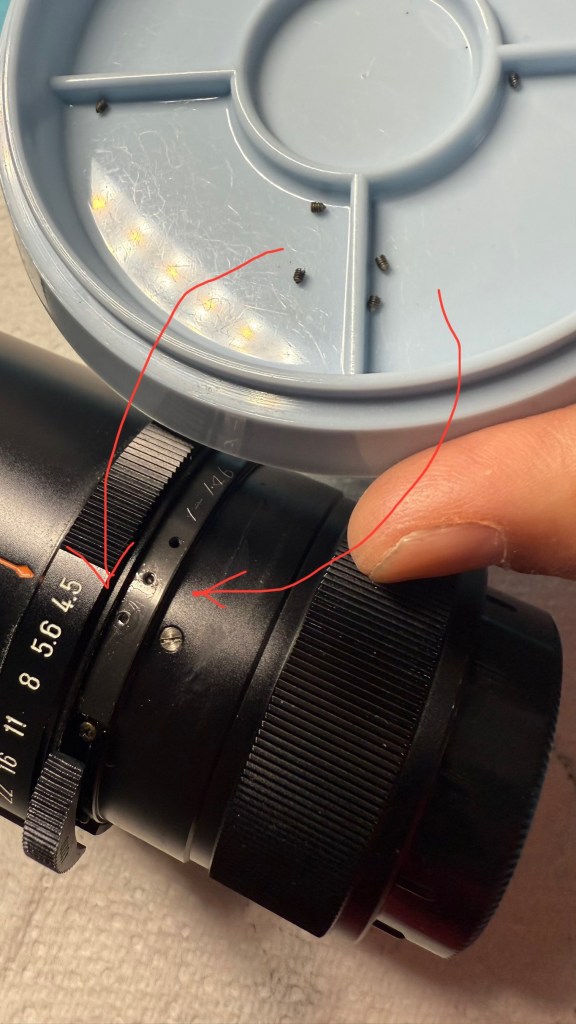
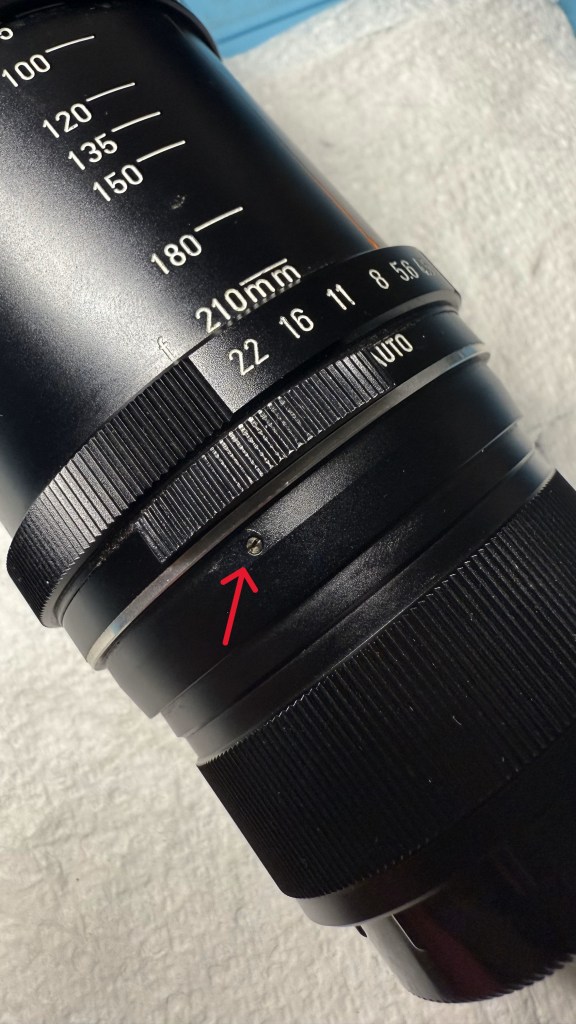
Once the front lens element is removed, you can turn your attention to the rear of the lens. Loosen the 3 holding screws for the aperture manual/auto indicator ring and remove the ring.

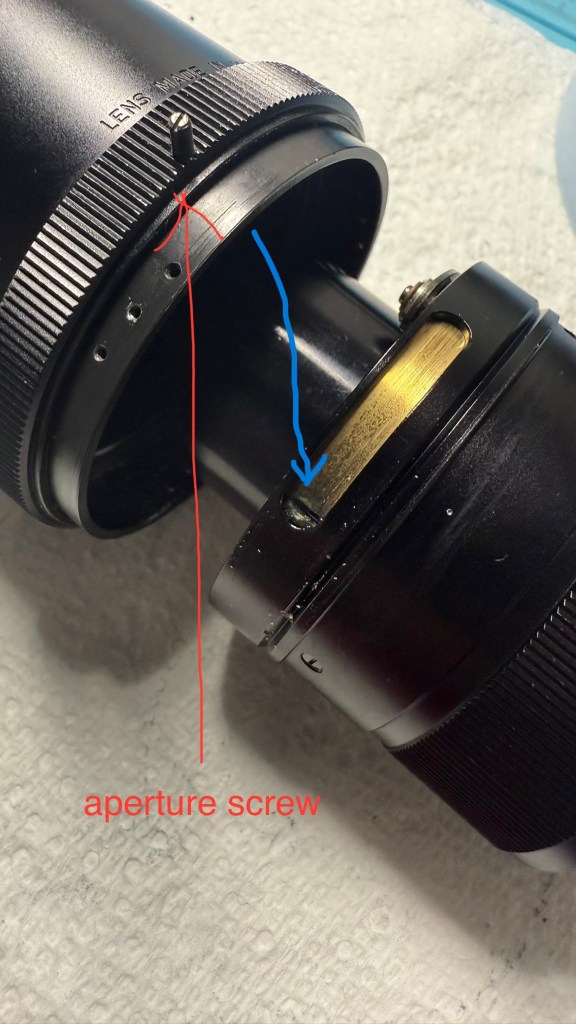
Next remove the six screws (in 2 sets) holding the aperture setting mechanism barrel. Note that the screws are slightly different in lengths. I separated them out accordingly. Also remove the aperture screw before you can separate out the aperture setting mechanism barrel.

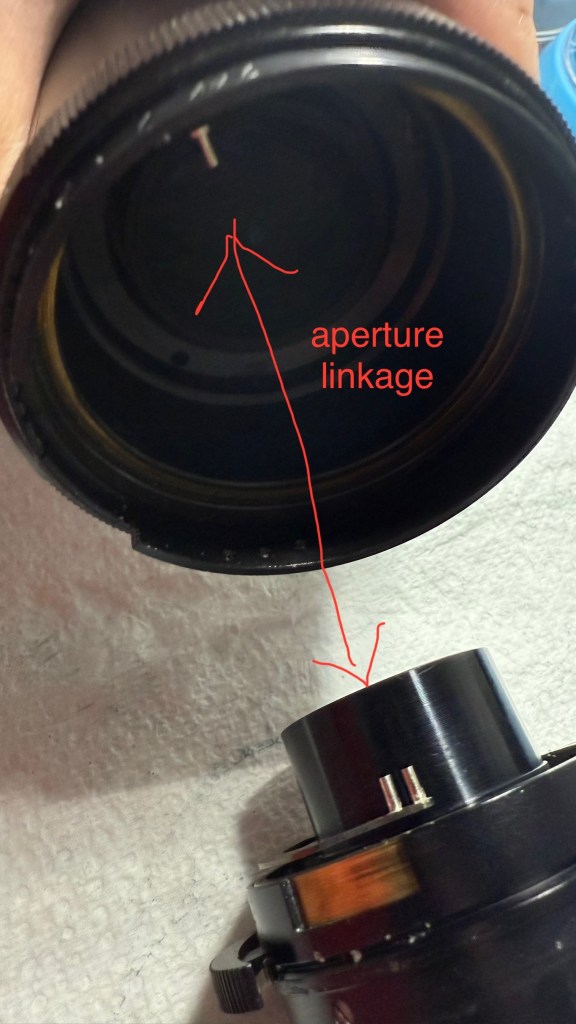
Note that the aperture screw should fit into the groove in the brass section (blue arrow). This will turn the aperture mechanism to set the aperture. Note how the aperture prongs link up with each other to work the aperture blades located in the rear element lens group.

When re-assembling, turning the aperture screw in too deeply will cause the aperture setting ring to be too tight. So, turn to the correct depth to ensure smooth aperture ring rotation and set the screw with some lacquer.

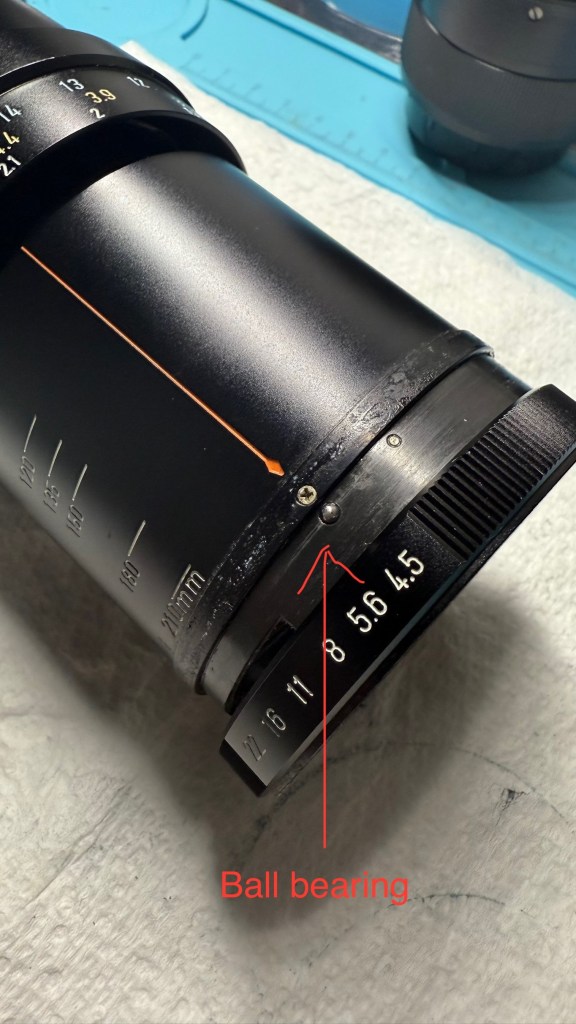
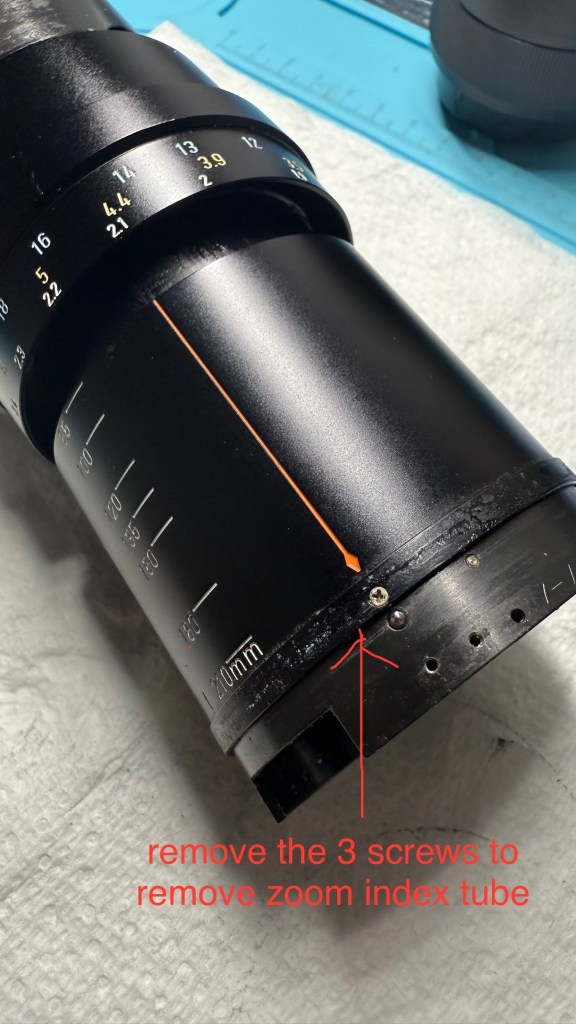
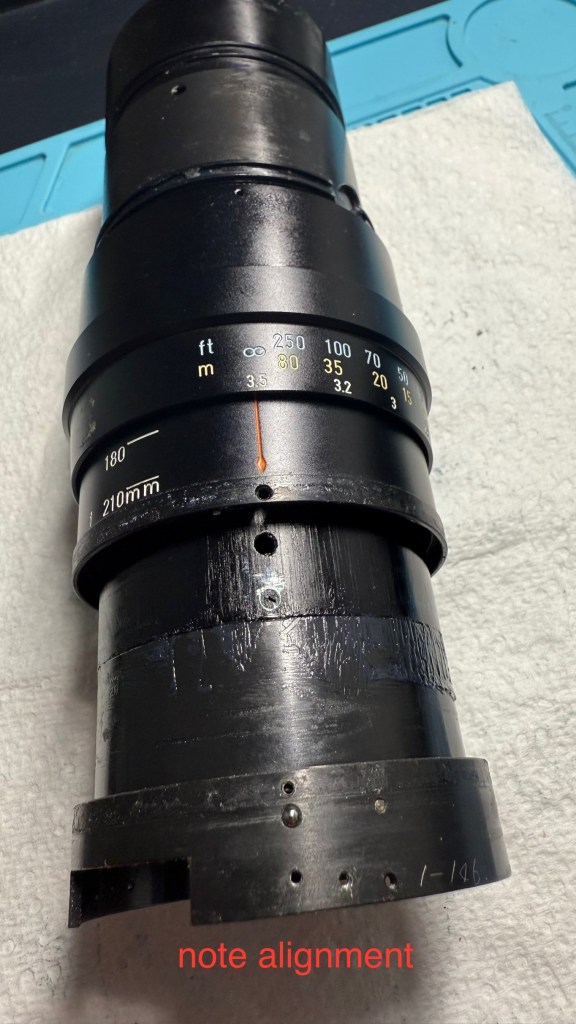
Next slowly ease out the aperture ring, making sure that the ball bearing does not fly into space. Remove the 3 screws to free the zoom index tube.

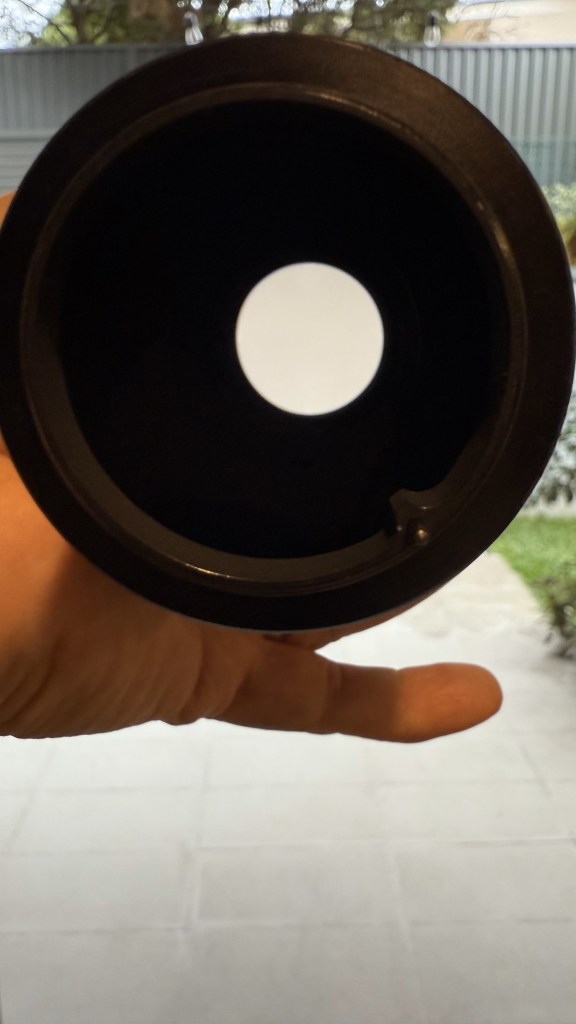
After moving the zoom index tube up, you will see another set of 3 screws which hold the rear element lens group and aperture housing in place. Note the alignment as you remove the rear element lens housing.

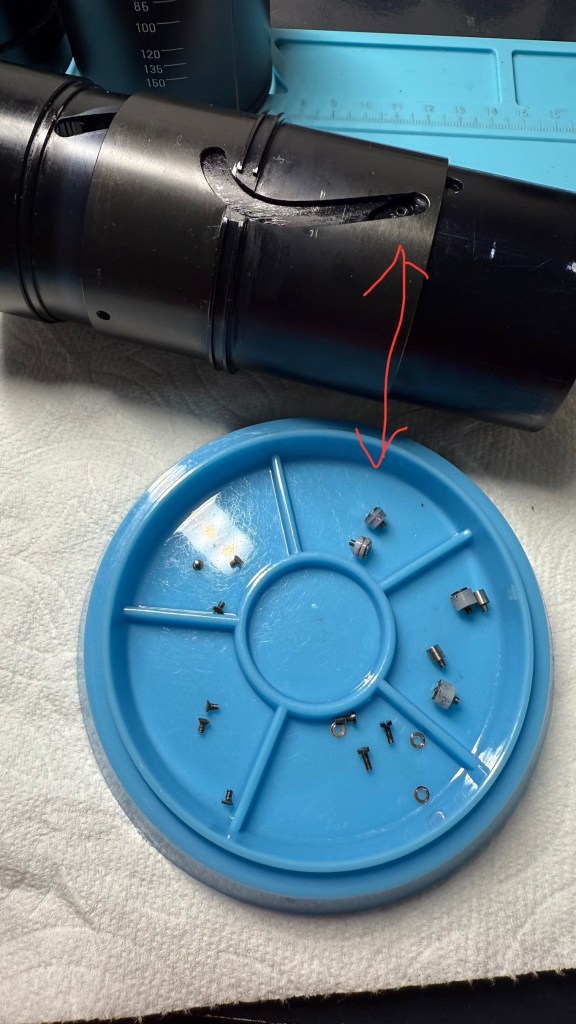
After the rear and front lens elements are removed, all the external lens tubes can be removed and you are left with the zoom mechanism tubes and zoom lens elements. Remove all the screws holding the zoom lens elements to separate out the pieces, taking care to note the lens orientation, where all the screws fit and how the tubes are aligned. This is where I made my mistake when re-assembling, as I secured the outer tube 180 degrees wrongly and the focusing stop screws were not aligned properly causing misalignment with the distance scale toward the end of re-assembly.

Re-assembly is just putting everything together methodically and carefully in reverse order, taking time to check alignment at each step.

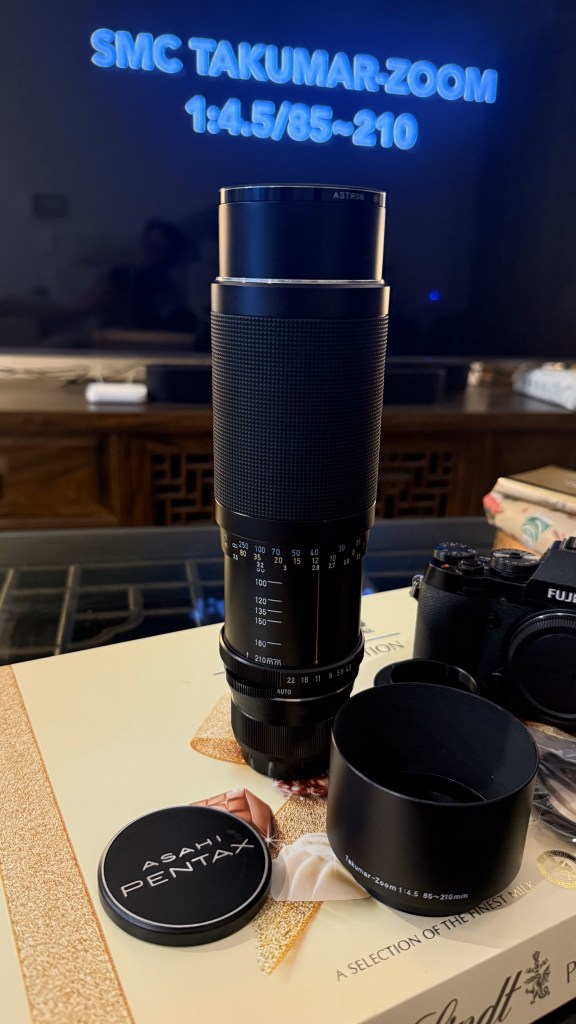
The Pentax Super-Multi-Coated Takumar all nice and clean. This one came with its original case, lens hood, close-up filter, lens cap and rear cap. A good collector’s item.

Thanks for visiting.